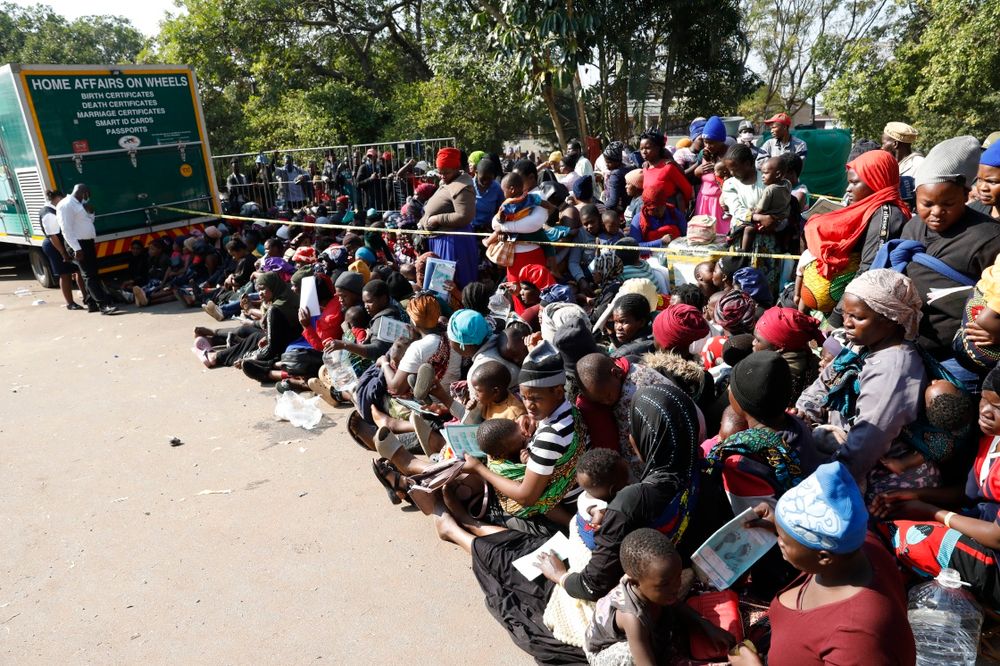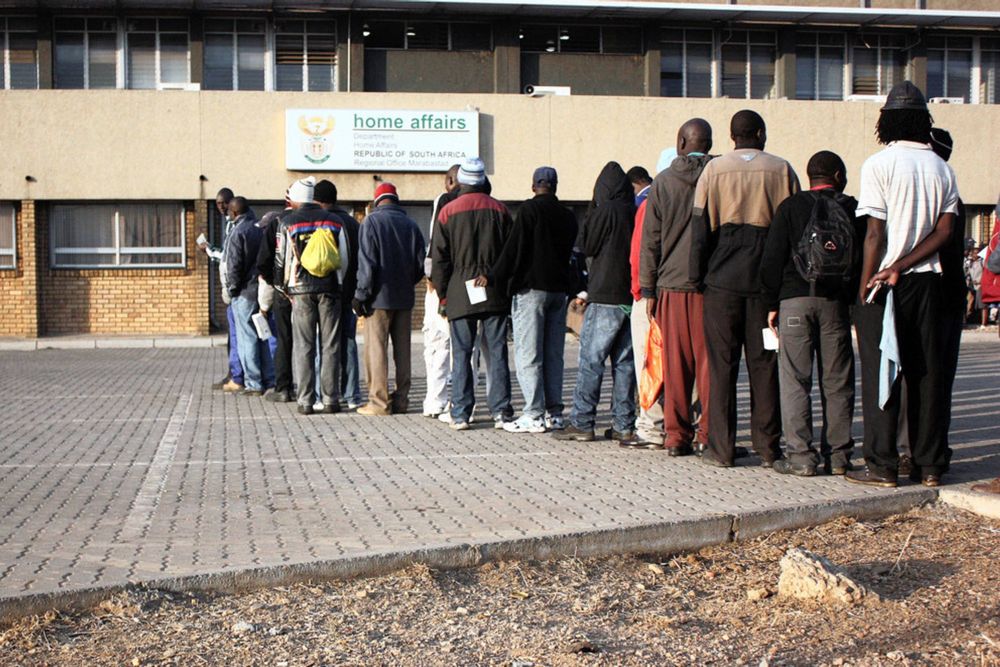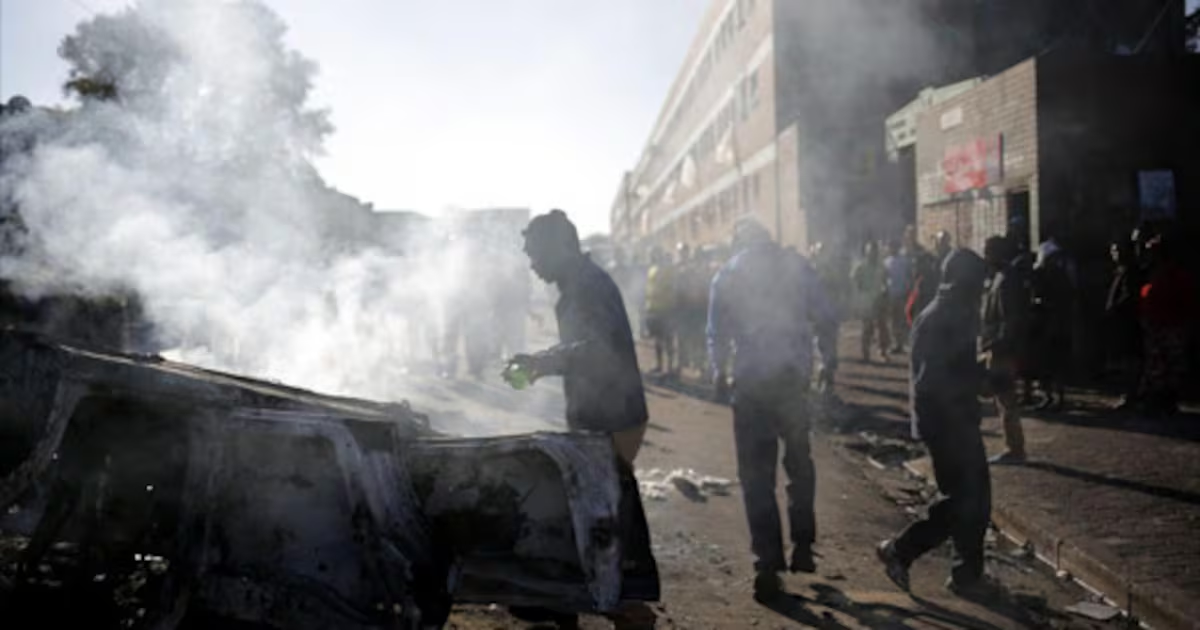
Recent reports of a young South African allegedly being targeted because he was believed to be a foreigner should concern every one of us. Not only because violence is wrong, and not only because no person should be judged by their nationality, language, accent or appearance, but because incidents such as these reveal something deeper.When lawful systems stop functioning properly, frustration begins looking for someone to blame. Immigration delays, mounting backlogs, repeated blanket concessions, court orders that require further court orders to enforce, growing contempt applications and declining public confidence may appear to be separate problems. They are not.They are symptoms of the same underlying issue: a growing gap between what the law requires and what the system delivers.The rule of law cannot be a one-way street. This should concern every South African. Not because it affects foreigners, but because it affects the integrity of our constitutional democracy.South Africans are understandably frustrated. We face unemployment, crime, economic pressure and strained public services. In that environment, immigration often becomes a convenient focal point for public anger. Yet many of the challenges attributed to foreign nationals are, in reality, symptoms of far deeper administrative, economic and governance failures.This is not an argument against immigration enforcement. Every sovereign nation has the right to determine who may enter, remain and work within its borders. Immigration laws must be enforced. Visa requirements must be respected. Illegal conduct must have consequences. But there is another side to that principle: a government that expects compliance with the law must itself comply with the law.As an immigration attorney who has worked in South Africa’s immigration system for almost two decades, I have represented multinational corporations, skilled professionals, entrepreneurs, tourists, refugees, South African citizens and foreign nationals from every corner of the globe. Most are not seeking special treatment, but rather lawful decisions taken in a reasonable time.Yet increasingly, what should be routine administrative processes become years-long exercises in uncertainty. Applications remain pending. Appeals remain undecided. Matters that should have been resolved administratively find themselves before judges simply because no decision was taken.A government that expects compliance with the law must itself comply with the law.The constitution guarantees lawful, reasonable and procedurally fair administrative action. Those rights are not aspirational ideals. They are binding constitutional obligations. Yet a growing reality has emerged in immigration practice: for many applicants, obtaining a court order is no longer the end of the process; it is merely the beginning.A constitutional democracy cannot function on the basis that citizens and residents must first obtain a court order, then a follow-up court order and increasingly a contempt application, simply to secure compliance with the first order. Court orders are intended to resolve disputes, not create new ones.Contempt proceedings were not intended to become a routine feature of public administration; they were intended to be exceptional. That they are becoming increasingly common should concern all of us.Normalisation of litigationEqually concerning is the growing normalisation of litigation itself. Court proceedings should be the exception, not the primary mechanism through which administrative decisions are obtained. Yet increasingly, practitioners, applicants and government officials alike find themselves trapped in a cycle of delays, litigation, follow-ups and further litigation. This serves neither applicants nor the state. It consumes public resources, burdens the courts and diverts attention away from the efficient administration that should have resolved the matter in the first place.This is not a criticism directed at any single official, office or administration. It is an observation about a system under strain.The government rightly expects applicants to obey the law, submit the required documents and comply with strict deadlines. Citizens are entitled to expect the same commitment to legality, accountability and urgency from the government.The consequences of these challenges extend far beyond individual applicants.Every delayed visa affects an employer. Every delayed decision affects productivity. Every unresolved application affects a family or an investment decision. Each unresolved matter creates uncertainty that reaches far beyond the individual applicant.For South African businesses, immigration inefficiency is not a foreigner problem; it is a competitiveness problem.A company waiting for a critical engineer, specialist doctor, software developer, academic researcher or senior executive is not simply waiting for a foreign national; it is waiting for skills, investment, growth and jobs.When those individuals choose another country because South Africa cannot provide certainty, the consequences are ultimately borne by South Africans.Meaningful efforts are being made to address some of these challenges. Under home affairs minister Leon Schreiber’s leadership, there has been a renewed focus on digital transformation, reducing opportunities for corruption, improving service delivery and engaging with stakeholders. Those efforts should be recognised and supported.Yet, acknowledging progress does not require us to ignore continuing challenges. Good intentions, policy reform and technological innovation must ultimately translate into measurable improvements in processing times, implementation and public confidence. South Africans should expect both.Immigration systems are among the first interactions investors, entrepreneurs, academics, tourists and foreign governments have with a country. Long before a business deal is signed, a factory is built or an investment is made, there is usually a visa application. Long before a multinational company expands operations, there is an immigration process. Long before an international conference is hosted, there are travel documents to be issued.Immigration administration therefore serves as one of the world’s first impressions of South Africa. That reality has implications for tourism, trade, diplomacy and international confidence. It also has implications for South Africa’s standing on the continent and beyond. Every African government whose citizens travel, study, work or invest in South Africa pays attention to how our immigration system functions. Every foreign mission observes how applicants are treated. Every multinational considering investment assesses regulatory certainty before committing capital.Immigration administration is not merely a domestic issue; it is an extension of South Africa’s diplomatic, economic and constitutional identity.Recent public attention on visa difficulties experienced by prominent international figures highlights that when immigration challenges affect high-profile individuals, headlines follow. Yet thousands of ordinary applicants encounter similar difficulties daily without attracting public attention.Uncertainty does not become significant only when it affects the famous; it is significant because it affects everyone.One of the clearest indicators that delays remain a serious challenge is the continued need for blanket concessions and extensions granted by the department of home affairs. These concessions are necessary and welcome. They prevent individuals from being unfairly penalised for delays outside their control. But they also tell an important story.The repeated extension of blanket concessions has become an unintended acknowledgement that many applications cannot presently be finalised in ordinary processing timeframes.This is not a criticism. It is simply a reality. The human cost of that reality is often overlooked.Behind every pending application is a person attempting to build a life. A family postponing plans. A child awaiting certainty. A business owner unable to make long-term decisions. A professional unable to travel freely. A spouse separated from loved ones.Years of uncertainty carry consequences that are difficult to quantify but impossible to ignore.Prolonged administrative uncertainty also creates fertile ground for public frustration and misinformation. When systems fail to function efficiently, people begin looking for explanations. Too often, migrants become convenient scapegoats for problems they did not create. Foreign nationals did not create application backlogs. Foreign nationals did not create administrative delays. Foreign nationals did not create systemic inefficiencies.Blaming migrants for those failures may be politically attractive, but it does nothing to solve them. In fact, it distracts attention from the reforms that are actually required.South Africa’s constitutional project demands better. We should expect compliance with immigration law, efficient administration, accountability, court orders to be respected and decisions to be taken in a reasonable time.We should resist the temptation to sacrifice constitutional principles in moments of public frustration. The answer to administrative failure is not hostility towards migrants. It is not scapegoating. The answer to backlogs is not blame.The answer is a system that works. A system that makes decisions, that respects deadlines, that respects court orders and that earns public confidence because it consistently does what the law requires of it.South Africa has the legal framework, the institutions and, I believe, the leadership capable of achieving that goal. What is required now is the collective will to ensure that implementation keeps pace with ambition. Because ultimately this debate is not about foreigners, visas, or even immigration. It is about whether the rule of law applies equally to everyone. The rule of law cannot be a one-way street.• De Saude Darbandi, an immigration attorney and director of De Saude Darbandi Attorneys, serves as an independent member of the Immigration Advisory Board appointed by the minister of home affairs. She writes in her personal capacity.
STEFANIE DE SAUDE DARBANDI | Immigration delays undermine rule of law
Delays and inefficiencies lead to litigation, undermining constitutional democracy
1,432 words~7 min read