The Desk — Finance, Policy & the View from the Street By Kemi Adeosun
Let me say it plainly at the start, because it is the only honest place to put it: there are no easy solutions to complex problems. Anyone who tells you otherwise is selling something — a manifesto, a slogan, a ministry brief that arrived at the right moment. Security in Nigeria is a genuinely hard problem with deep roots, competing interests, and a history of interventions that have each carried their own unintended consequences. I say this not to lower expectations, but to raise the quality of the conversation.
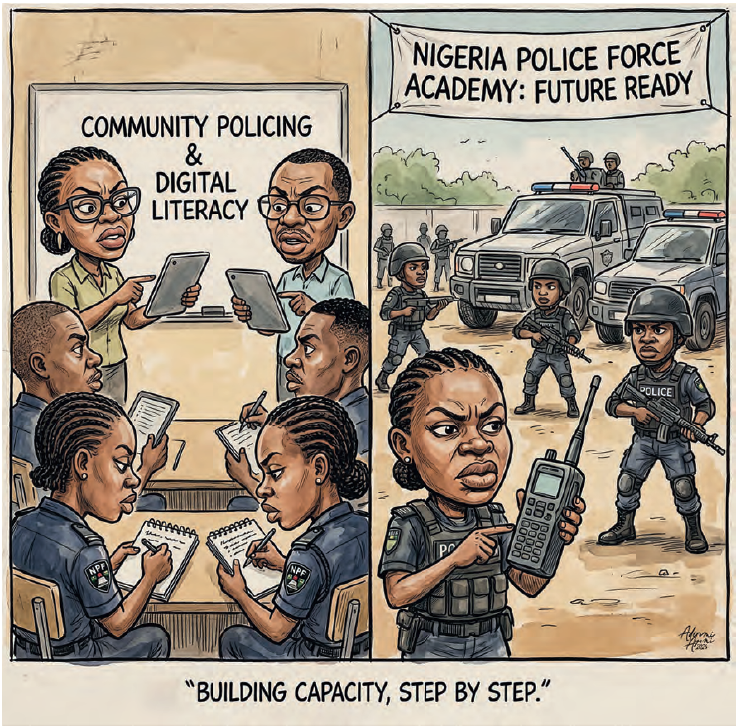
With that caveat firmly in place: I want to share what I know from following the money, and what it reveals about the structural inefficiency at the heart of how Nigeria polices itself. The architecture. Because the architecture is broken in ways that no amount of goodwill or additional recruitment will fix.[C1]
All Crime Is Local
Imagine a senior officer posted from Enugu to Kano. He does not speak Hausa. He has no relationship with the mosques, the markets, the community elders, the informal networks through which information about crime actually moves. He is starting from zero. Within three years, before those roots have had a chance to take hold, he is transferred again. The intelligence clock resets. The relationships dissolve. A new officer arrives from somewhere else, knowing nothing, starting over. Multiply that across thirty six states time and time again and you understand the routine operation of a federal policing system built on transferability. [C2]