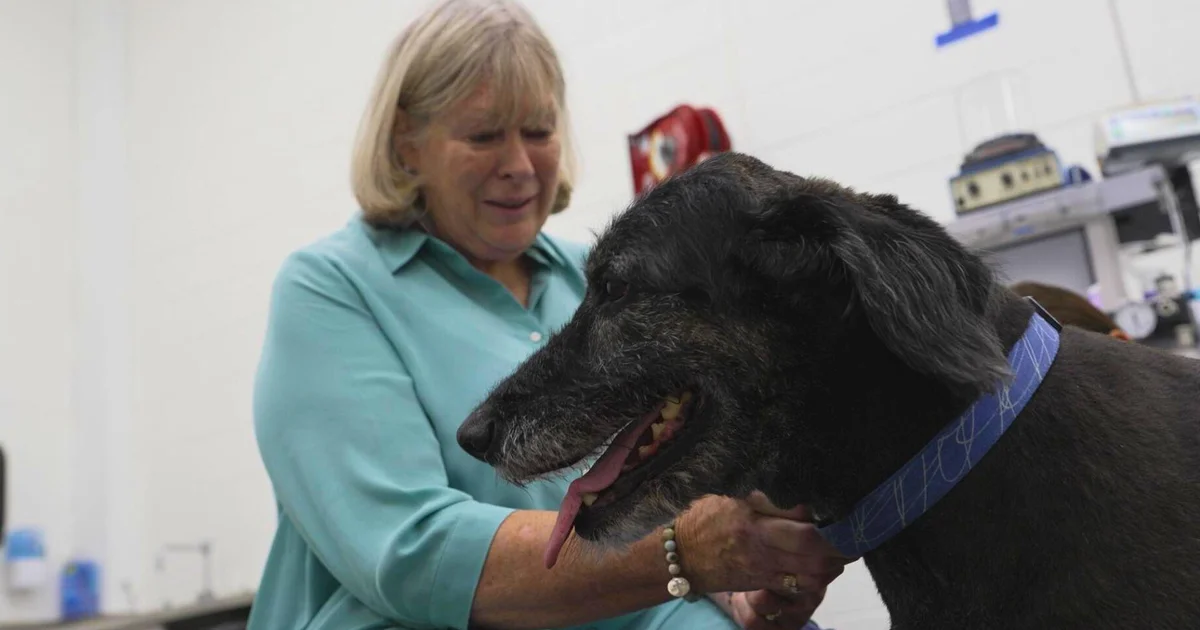
This is an updated version of a story first published on March 422, 2026. The original video can be viewed here. Everyone knows the old adage about dogs being man's best friend, but you may not know that dogs might also be one of man's best hopes to treat age-related illnesses. That's because our canines develop many of the same diseases we do, including dementia. As we first reported last March, dogs' brains are a lot like ours, so studying how dementia and other diseases naturally progress in them, may also help us. That's what the Dog Aging Project is all about: unlocking secrets to a longer, healthier life for humans, and our four-legged friends. At hundreds of vet clinics and hospitals around the country -- including here at Colorado State University College of Veterinary Medicine and Biomedical Sciences, people are bringing in their dogs. The Dog Aging Project is a collaboration of dog owners, scientists and veterinarians studying dogs -- more than 50,000 of them so far -- by collecting data on their diets and exercise, analyzing blood samples and doing MRIs of dogs' brains. Matt Kaeberlein, a biologist who has spent decades trying to understand -- and reverse -- the causes of aging, co-founded the project in 2014.Anderson Cooper: Where did the idea of the Dog Aging Project come from?Matt Kaeberlein: I had this lightbulb moment, which I still remember vividly. I realized, "Oh my God, we know about three or four or five ways to slow aging in laboratory animals. Some of those are going to work in dogs."
Research to help dogs live longer, healthier lives could unlock secrets for people to age better, too
The Dog Aging Project is working to help dogs live longer, healthier lives. The research results may help humans age well, too.
2,333 words~11 min read