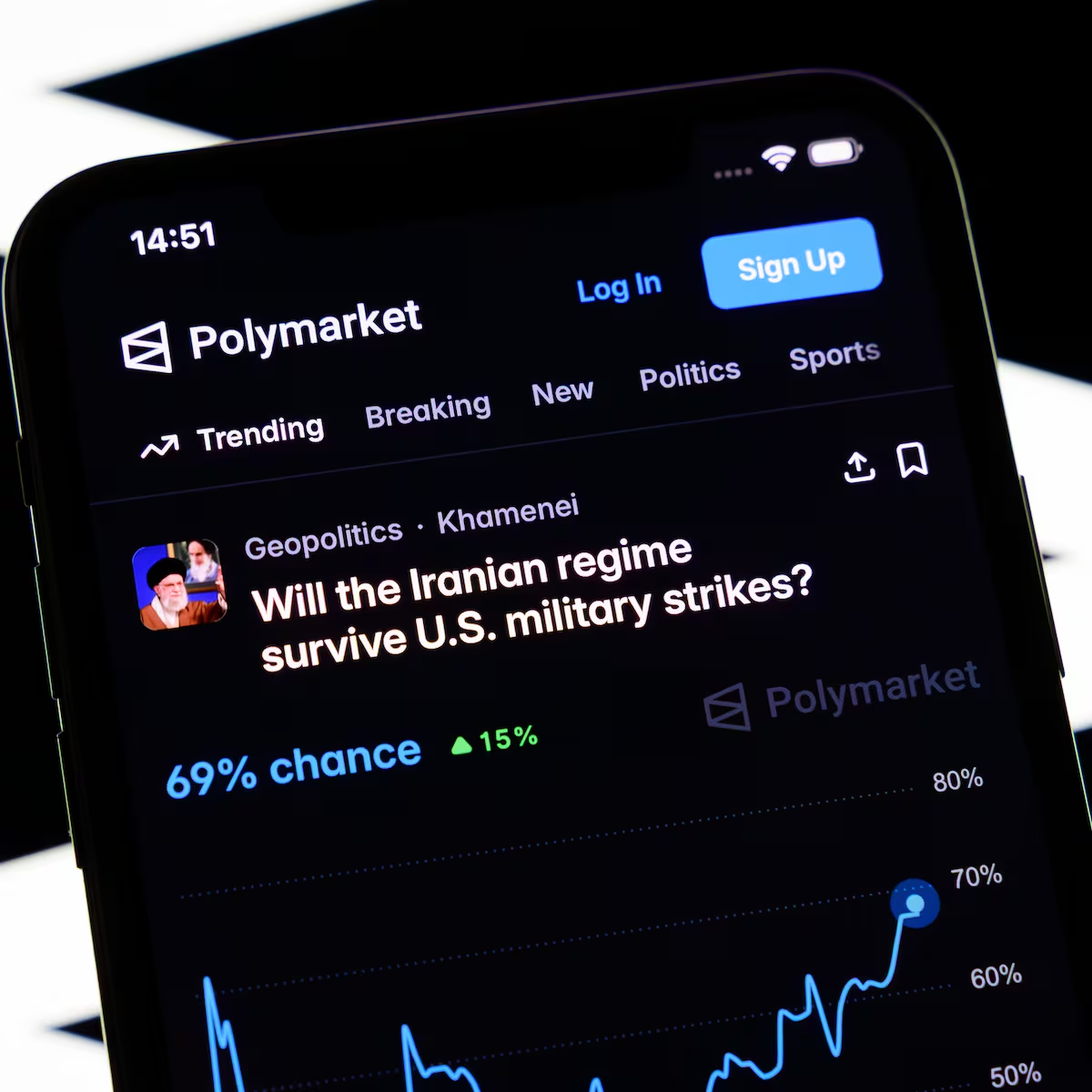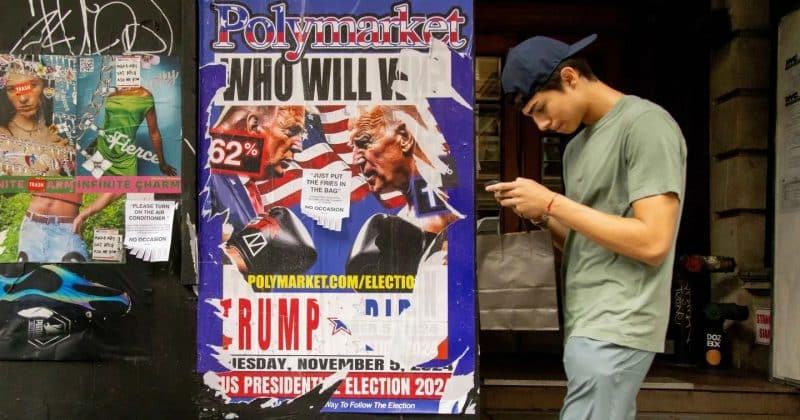
Imagine a courtroom where the judge has money riding on the verdict. That’s roughly the situation playing out on Polymarket, the crypto prediction market platform that has become the go-to venue for betting on everything from elections to geopolitical events.
A Wall Street Journal investigation published on May 17, 2026, found that nearly 20% of outcomes in Polymarket’s disputed markets involved judges who had financial stakes in the very markets they were adjudicating. Even more striking: approximately 60% of judges were directly linked to Polymarket trading accounts.
How the system is supposed to work
Polymarket doesn’t resolve disputes with a team of impartial arbitrators in an office somewhere. It uses UMA’s decentralized optimistic oracle system, a mechanism where anonymous token holders vote on contested outcomes. Here’s how the process flows: someone proposes a resolution and stakes a bond, typically around $750. If nobody challenges it within a two-hour window, the resolution stands. If someone does challenge it, the question goes to a broader vote among UMA token holders.
Once finalized, the outcome is immutable. No appeals court, no do-overs.