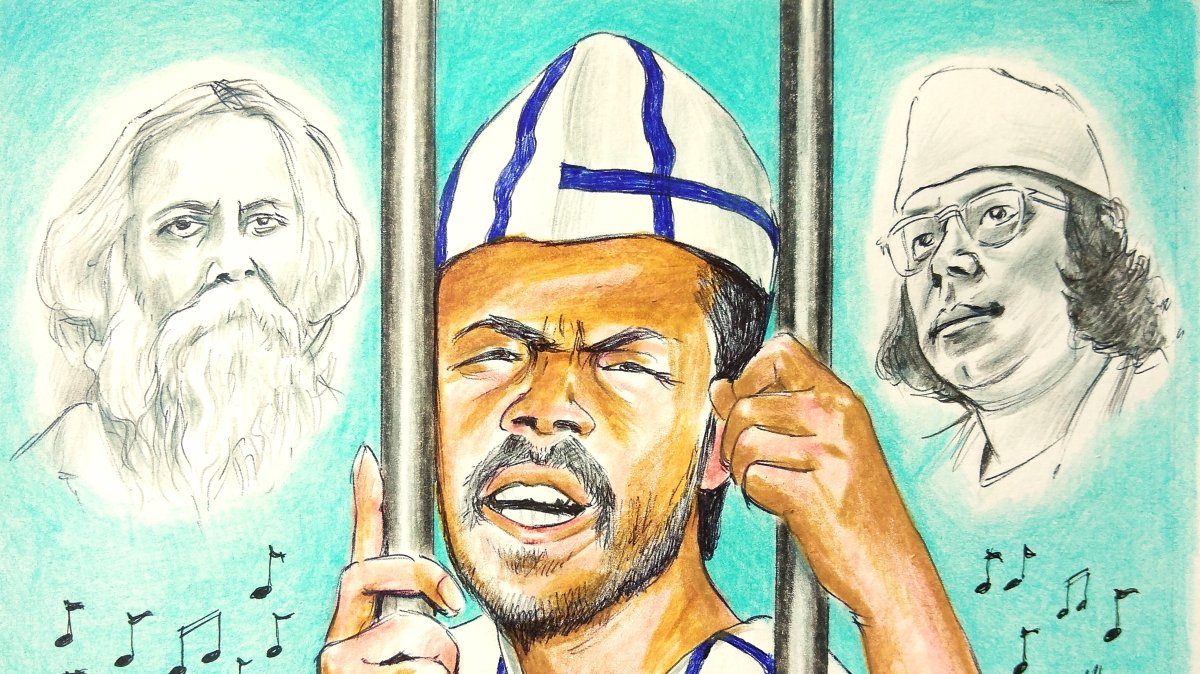
In 2022, Bangladeshi police summoned internet performer Hero Alom after outrage over his renditions of songs by poets Rabindranath Tagore and Kazi Nazrul Islam. Accused of “distorting” cultural heritage, he was reportedly pressured to stop singing them. An amateur online performance soon became a national controversy involving media debate, ridicule and police interrogation.
To an outsider, the episode appeared strangely disproportionate. Why would a singer face state attention merely for singing badly? The answer lies far beyond music.
Born Ashraful Alom, Hero Alom emerged from rural and economically marginal Bangladesh, far from the country’s traditional cultural elite. He became famous through low-budget videos, improvised performances and a public image many urban middle-class audiences considered aesthetically crude. He was mocked for his appearance, accent and mannerisms. Yet his popularity grew because he represented a figure outside elite cultural control.
Rabindranath Tagore, in contrast, occupies the highest place in Bengali cultural life. Born in colonial Bengal, in what is now Kolkata, India, he wrote in Bengali, shaped modern Bengali literature and composed “Amar Sonar Bangla,” which later became Bangladesh’s national anthem. His authority in Bangladesh cannot be explained through present-day national borders alone. For many cultural elites, Tagore is not simply a poet. He is a symbol of refinement, moral imagination and civilizational inheritance. Through him, one learns who counts as properly Bengali.