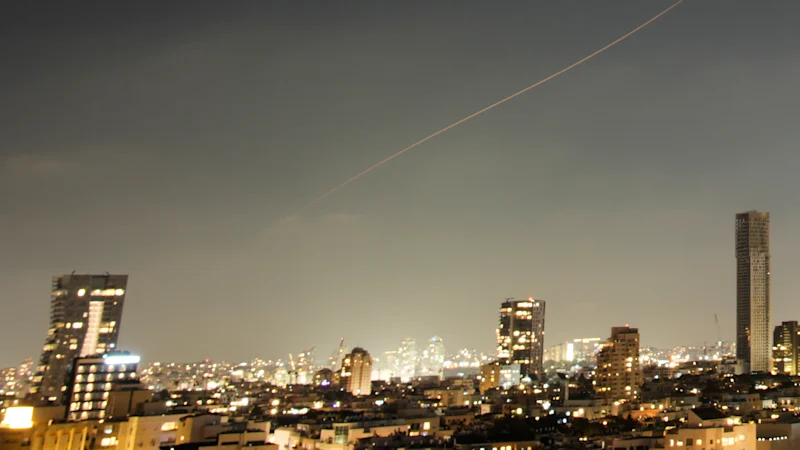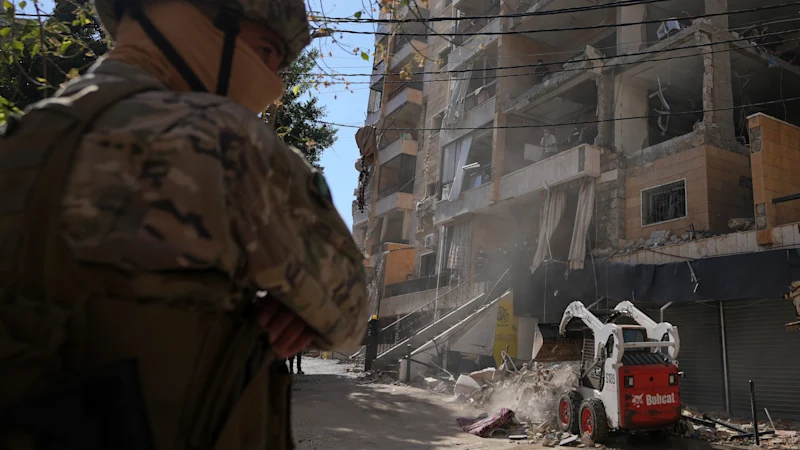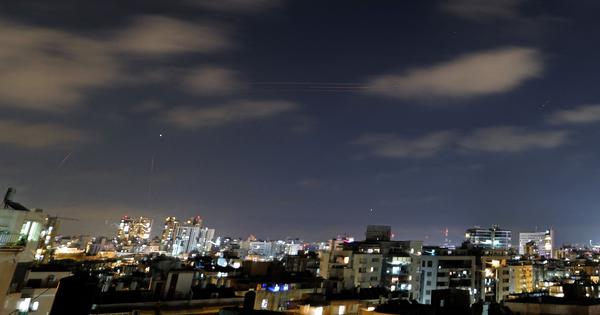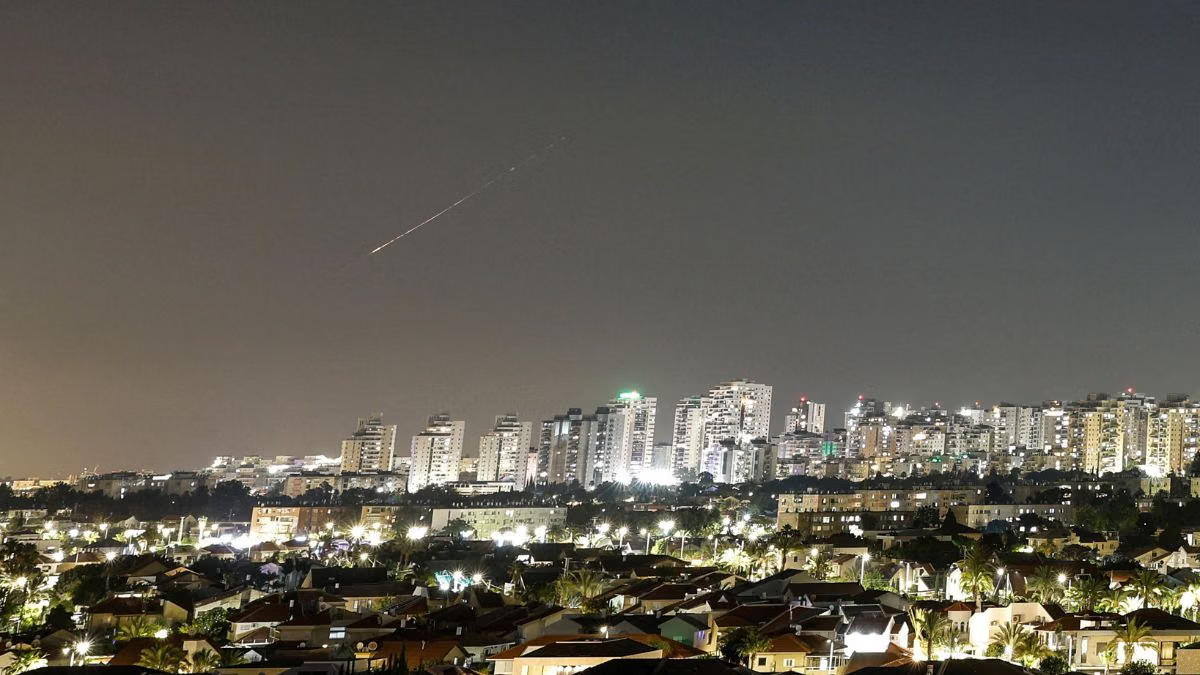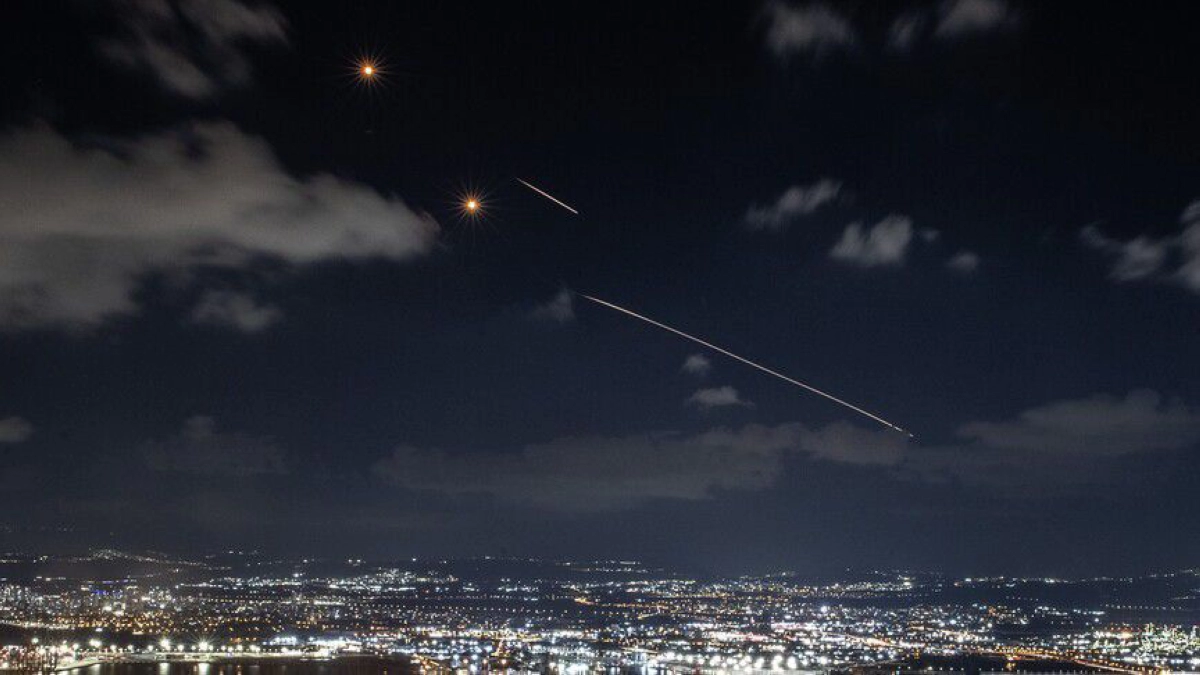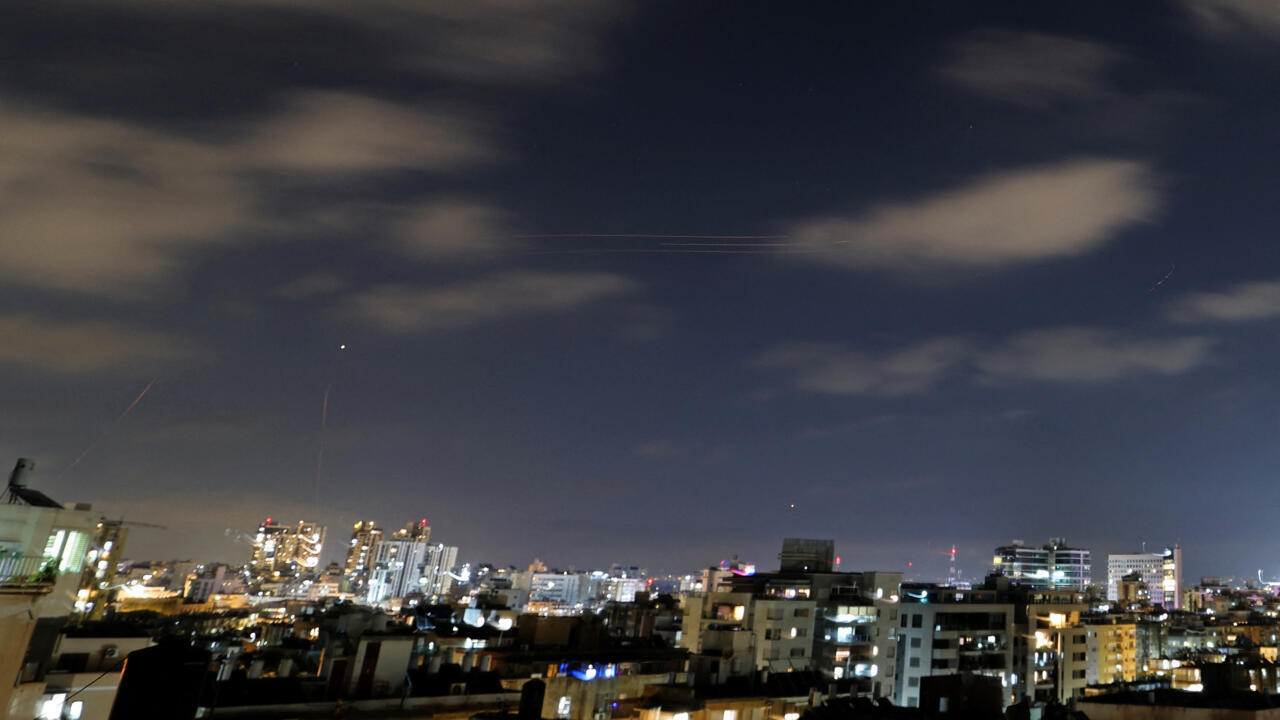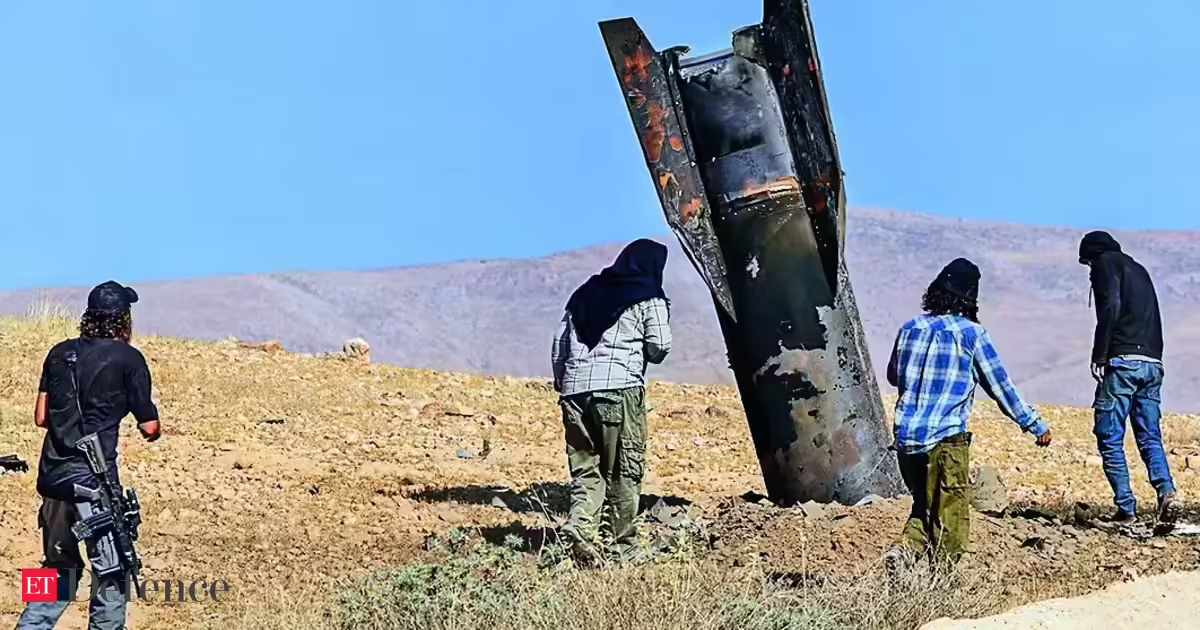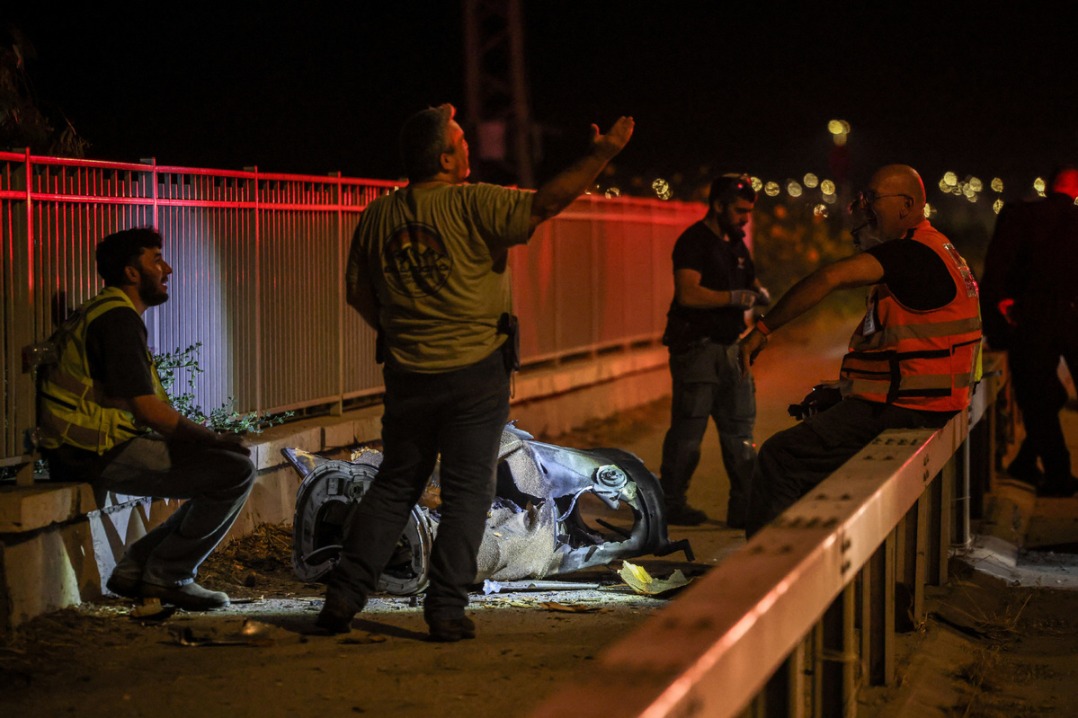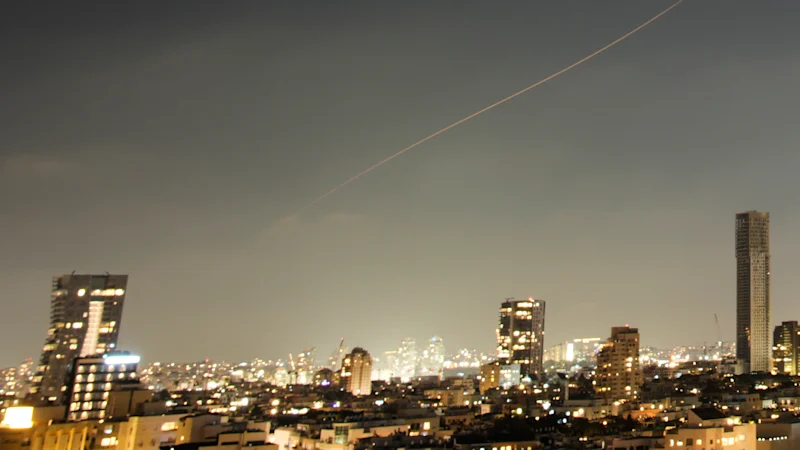
Kareem Chehayeb and Hassan AmmarUpdated June 8, 2026 — 6:32am,first published 5:45amJerusalem: Israel says Iran has launched missiles at it in the first such bombardment since a fragile ceasefire took effect in early April, complicating mediation efforts for a deal to end the war.Iran’s state broadcaster confirmed the missile launches and cited the armed forces as saying that “if Israel responds to Iranian attacks or does not stop its attacks on Lebanon, Iranian attacks will continue”.A projectile streaks through the sky over central Israel during an Iranian missile attack on Sunday.AP Photo/Ohad ZwigenbergIsrael’s military said it intercepted all missiles from Iran but warned “the defence is not hermetic”, adding that sirens sounded in several areas of the country. Multiple explosions were heard in northern Israel, but there was no immediate comment from the Iranian-backed Hezbollah, which often fires at the area.There were no immediate reports of casualties or damage in Israel.The White House did not immediately respond to messages about the missile launches, though US news outlet Axios reported that President Donald Trump said he would call Israeli Prime Minister Benjamin Netanyahu and press him not to retaliate for Iran’s missile attack.“I am going to call Bibi right now and tell him not to retaliate. Each of them had their fun. Israel had its strike, and Iran had its strike. We don’t need another one,” Trump told Axios, using Netanyahu’s nickname.“The Iranian strikes didn’t hurt anybody. Hopefully Israel is not going to retaliate. If Bibi strikes them back, it’s just gonna keep going like the last 47 years – or the last 3000 years.”“We are very close to a final deal with Iran. It is going to be a good deal. I don’t want it to blow up because of what is happening now.”Tehran had warned of retaliation after Israel on Sunday struck Beirut’s southern suburbs in defiance of Washington’s request days ago to stand down. Israel called it retaliation for the Iranian-backed Hezbollah firing at northern Israel earlier in the day.Israel’s attack on Beirut came a few days after the Lebanese and Israeli governments agreed to a ceasefire in U.S.-hosted talks, though Hezbollah rejected the deal. The strike on a residential building killed two people and wounded 20, Lebanon’s health ministry said.The Israeli air defence system fires to intercept missiles launched from Iran on Sunday.AP Photo/Ariel SchalitIran had warned that an attack on Beirut would renew full-scale war across the Mideast, even as Pakistan tries to restart talks between Tehran and Washington. Iran wants a deal to include ending the war in Lebanon.“US forces across the Middle East remain vigilant and ready,” the US Central Command posted on X shortly before the missile launches.Associated Press journalists also heard loud explosions in the sky over Damascus. State media in Syria attributed the booms to Israeli air defences. Syria has temporarily closed its southern airspace for 12 hours and suspended operations at Damascus airport.Iraq has also temporarily closed its airspace and suspended air navigation for reasons related to air traffic safety following the launch of Iranian rockets, civil aviation officials told Reuters on Sunday. The Iraqi Civil Aviation Authority said Iraqi airspace would remain closed for 72 hours.Israel’s strikes and ground invasion in Lebanon in pursuit of Hezbollah, and the militant group’s resistance to disarming, have complicated an overall deal to end the war in the Middle East. Iran says any deal must include an end to fighting in Lebanon.The White House did not comment on Israel’s strike in Beirut. Israel on Monday had announced it would strike the southern suburbs of Lebanon’s capital, but urgent talks via Washington halted that on the condition that Hezbollah stop targeting Israeli border towns.Hezbollah on Sunday night claimed responsibility for firing at Israel earlier in the day.Hezbollah wants the direct talks between Lebanon and Israel to end and instead supports Iran’s stance that an overall ceasefire deal between Tehran and Washington include the situation in Lebanon.A soldier stands at the site where an Israeli airstrike hit a building in Dahiyeh, Beirut’s southern suburb, Lebanon on Sunday.AP Photo/Hassan AmmarMediation efforts on that larger deal continued Sunday as Pakistan’s interior minister visited Iran to talk with officials and Egypt said its foreign minister and his Qatari counterpart discussed “proposed elements” of a potential agreement, with no details.Trump, in an interview taped on Friday and aired Sunday with NBC’s Meet the Press, said that “I’d like to see Lebanon have a better life. I’d like to see a more surgical attack on Hezbollah. I think it should be more surgical”.Trump added that he was “not demanding” that Lebanon be part of the short-term deal to extend the ceasefire in the Iran war.More than 3500 people have been killed in Lebanon since the war began March 2 when Hezbollah fired rockets at northern Israel, two days after Israel and the US began attacking Iran. More than 1 million people in Lebanon have been displaced. The fighting has killed at least 31 Israeli soldiers and three civilians.A man stands next to an unexploded missile at the site following an Israeli airstrike in Dahiyeh.AP Photo/Hassan AmmarMeanwhile, Iran continued to assert its grip on the Strait of Hormuz and the U.S. continued its blockade of Iranian ports, with shipments of oil, natural gas and fertiliser affected and the global economy in pain.Netanyahu, who faces elections later this year, wants to press ahead with Israel’s offensive until he believes Hezbollah no longer poses a threat.Pakistan’s interior minister was in Tehran on Sunday. Mohsin Naqvi was delivering a message to Iranian Supreme Leader Ayatollah Mojtaba Khamenei from Pakistan’s army chief Field Marshal Asim Munir, according to Iran’s state-run IRNA news agency. There were no details on the message’s contents.Khamenei has not been seen in public since he was named the Islamic Republic’s ruler after his father was killed on February 28, the first day of the war.Naqvi met with Iranian Interior Minister Eskandar Momeni late on Saturday and Foreign Minister Abbas Araghchi on Sunday, according to official Iranian media.Pakistani authorities have said Islamabad, with support from regional countries including Qatar, Turkey and Egypt, is working to help bridge differences between the United States and Iran.In Cairo, Egyptian Foreign Minister Bader Abdelatty and Qatari counterpart Sheikh Mohammed bin Abdulrahman Al Thani discussed “proposed elements” of a potential agreement between the U.S. and Iran, the Egyptian foreign ministry said, without details.More:Middle East at warIsraelUSAIranDonald TrumpBenjamin NetanyahuLebanonFrom our partners
Iran launches missiles at Israel in first such attack since April ceasefire
US President Donald Trump reportedly said he would call Israeli Prime Minister Benjamin Netanyahu and press him not to retaliate to the Iranian bombardment, which was prompted by earlier Israeli strikes on Beirut.
1,063 words~5 min read