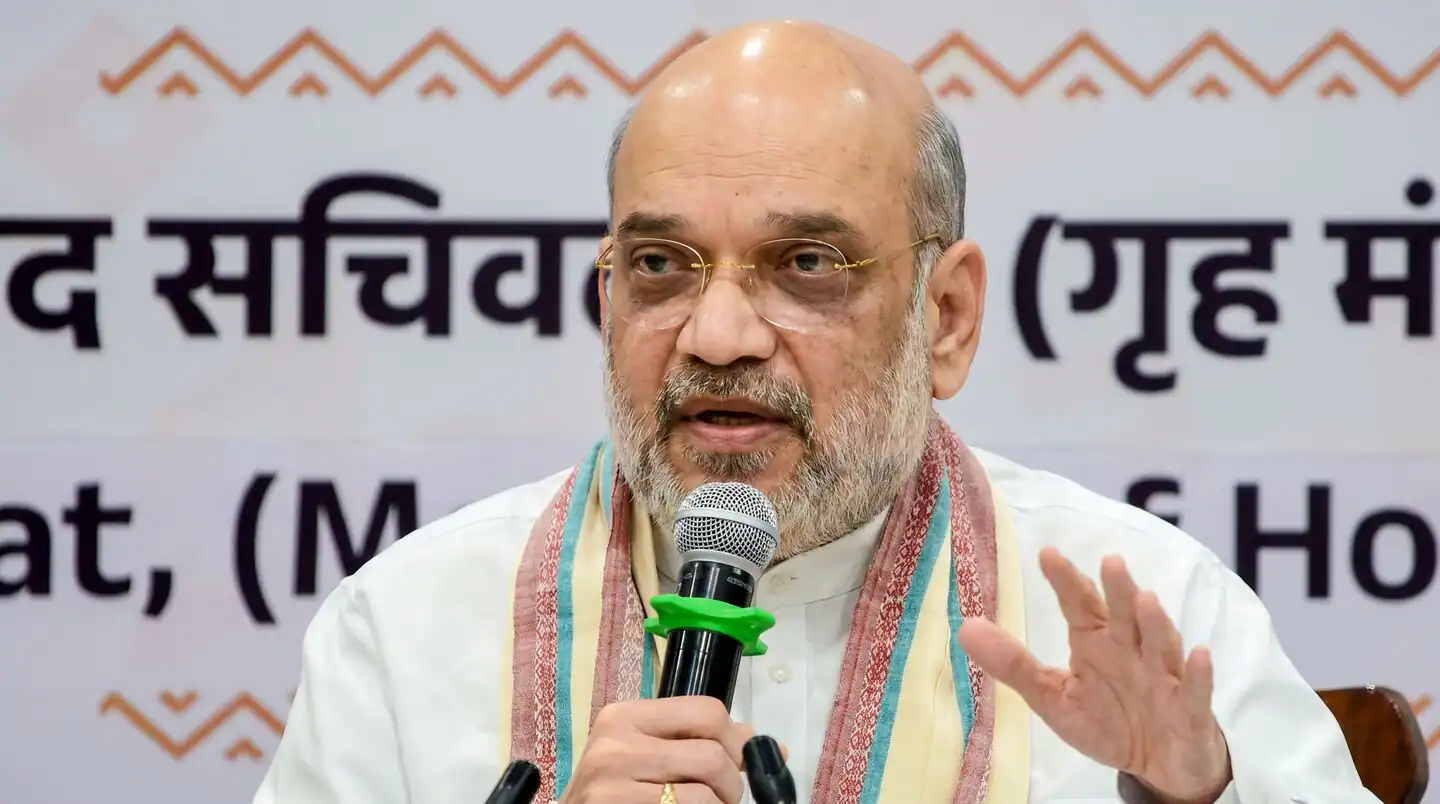
India is on the cusp of a demographic upheaval. Fertility rates across the country have been falling for decades and are now on or below replacement levels. We will soon have to shift from the challenges of finding jobs for the youth bulge to preparing to care for an ageing population.You would not think so looking at the Terms of Reference (ToRs) of the High-Level Committee on Demographic Change that the government constituted at the end of May. The ToRs are peppered with the need to address “illegal immigration” and border management. Home Minister Amit Shah said on the social media site X while announcing the formation of the committee that “Illegal infiltration and other reasons leading to Unnatural Demographic Change is a very big challenge for the present and future of any nation.” It is no wonder that the committee does not have a single demographer to guide its work. Its chairperson is a retired Supreme Court of India judge; it has a retired IAS officer and a retired IPS officer, the Census Commissioner and an economist.The infiltration narrative expandsUsing strong words about “infiltrators”, the Prime Minister had announced the need for such a committee from the ramparts of Red Fort on August 15, 2025. Indeed, this was the culmination of years of building a mythology that undocumented (Muslim) migrants from Bangladesh are swamping the districts on the border, spreading across the country and influencing electoral outcomes. It was way back in 2018 that Amit Shah, then Bharatiya Janata Party (BJP) President, said that Bangladeshi migrants were termites. The mythology about hordes of immigrants has seeped into the citizen’s consciousness and has served well the electoral purposes of the BJP.It has worked very well in Assam during a couple of election cycles, and it was stunningly effective in West Bengal during the recent elections where the need to deal with “infiltration” was a central feature of the BJP campaign. It is perhaps time now to make it a nation-wide campaign aided by the recommendations of the Demographic Change Committee.Given how the issue has been highlighted and framed, we can have a fair idea of what the recommendations of this committee will be. It is still important to understand why this has little to do with demographic challenges and is all about moving to the next stage of the “Othering” of India’s minorities, especially Muslims.To begin with, what is the evidence of large-scale undocumented immigration from Bangladesh? It is revealing that the only kind of official evidence we have so far of “demographic change” (i.e., immigration from Bangladesh affecting population size and composition) are observations by the Home Minister of large increases in the population of a few of the border districts. Highlighting such increases without reference to domestic migration or differential fertility behaviour among communities is not proof of undocumented immigration. It is instructive that studies that had been done by official agencies showing evidence of demographic change in the border districts were removed without explanation, according to a report in this daily (“Government proposal in 2024 for a panel on ‘demographic challenges’ never took off”, August 16, 2025). We can only presume that they were deleted because they did not stand scrutiny.This is not about undocumented migrationFor decades there has indeed been cross-border migration between India and Bangladesh across what is an integrated riverine ecology. But given the economic transformation that has taken place in Bangladesh in recent decades, it would be hard to argue for economic distress driving large-scale migration from Bangladesh to India. India’s neighbour is no “basket case” as it was derisively described decades ago.According to World Bank data, Bangladesh’s per capita income (in nominal dollar terms) grew faster than India during 2005-23 (10.4% versus 7.70% compound annual growth rate); it now has roughly the same income as India’s. In purchasing power parity terms, India’s growth is slightly higher. Both countries presently have roughly the same per capita income however measured, and both now have the same levels of human development, according to the UNDP’s Human Development Index. But the change in Bangladesh has been much faster. Why then would there be migration to India of a scale that there should be talk of being swamped? There would certainly remain pockets of distress forcing the poor to consider migrating to India and the more skilled to West Asia. But we cannot find economic evidence to suggest waves of Bangladeshis being pushed by distress to migrate to India, ending up affecting jobs and electoral outcomes here.Of course, all this is not about undocumented migration. All this is really a code for the place of Muslims in India and an acceleration of the social, economic and political discrimination of this community of Indian citizens that has taken place over the past 12 years. And here the government has given a more dangerous diktat to the committee. Item (iv) reads “to analyse structural population changes at the level of religious or social communities, particularly where they deviate from broader trends”. This in particular is about the fertility behaviour of Muslims and “where they deviate from broader trends”.For a century now, the Hindutva campaign has whipped up fears of Muslims overtaking Hindus in population.This is now firmly impregnated in the minds of Hindus of all ages, classes, castes and regions. It is to be found in everyday social conversations, on social media of course, and it is expressed in less than thinly veiled terms during electoral campaigns.When facts are ignoredIt is tiresome to repeat the facts, but one has to, even when confronted by a wall of disinformation and prejudice. Yes, the share of Muslims in India’s population has risen from 10% in 1951 to 14% in 2011, at the time of the last Census. Yes, in the past, the Muslim community on a whole has shown a higher fertility than the Hindus and other religious denominations. This has been on account of its poorer economic status, lower education of women and perhaps even religious beliefs. However, fertility among Muslim women has begun falling rapidly, with the result that the gap between Muslims and Hindus has narrowed and will soon disappear. On the desired number of children that women want to have, there is now almost no difference between Hindus and Muslims. So much for Muslims now having more children than Hindus. And to repeat what is well-known, the best example of why religion is not the determinant of fertility behaviour: Muslim women in Tamil Nadu, Kerala and Jammu and Kashmir exhibit lower fertility than the Hindu women of Bihar and Uttar Pradesh. Poverty and education matter more. This is the deviation that needs to be addressed, not fertility behaviour according to religion.To speak then about Muslim fertility “deviating from broad trends”, as one of the ToRs of the committee indicates, is to ignore the facts on the ground and fall back on familiar tropes about the behaviour of this minority, giving official validation of age-old misinformation.We cannot escape from the realisation that this committee is being asked to recommend steps to target minorities under the cover of checking undocumented migration. After all, we have already become an inhumane society where, according to reliable reports, government agencies have flown Rohingya refugees from Delhi to the Andamans and then pushed them into the sea with life jackets. So when the Demographic Change Committee is asked “to recommend a streamlined and permanent operational mechanism for the legal, fair, and time-bound identification, detention, and deportation of illegal immigrants already residing in the country”, there is a chilling similarity between the language of this “permanent operational mechanism” and the “Final Solution” practised in 1940s Europe.We should not say we have not been forewarned.C. Rammanohar Reddy is a writer based in Hyderabad
A targeting in the name of demography
The Demographic Change Committee is being asked to recommend steps to target minorities under the cover of checking undocumented migration
1,288 words~6 min read