A bug that let someone potentially mint fake Zcash tokens for four straight years without anyone noticing is not, on its face, the kind of thing you rally behind. But Cameron and Tyler Winklevoss are doing exactly that, publicly endorsing ZEC after the discovery of a critical flaw in the coin’s Orchard shielded pool sent its price cratering and rattled the broader privacy coin market.
The vulnerability, discovered on May 29 by researcher Taylor Hornby using AI-assisted tools during a commissioned audit, had been sitting quietly in Zcash’s code since the Orchard pool went live in May 2022. For roughly four years, it was theoretically possible to mint counterfeit ZEC without detection.
The fallout was immediate and brutal
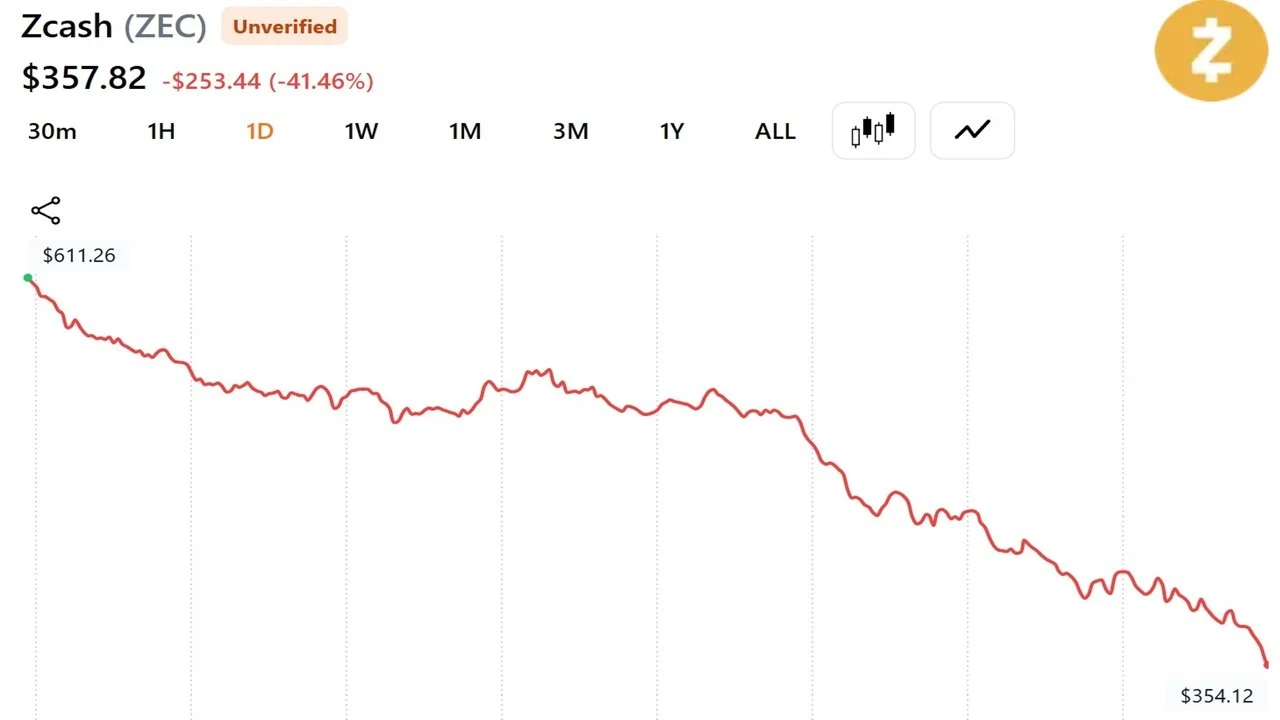
ZEC suffered an intraday selloff that, depending on when you looked at your screen, ranged from 30% to 57%. The token fell from around $640 to as low as $250.
That kind of drop doesn’t stay contained. Cypherpunk Technologies, a firm with significant ZEC exposure, saw its shares plummet roughly 37% to 40% in the aftermath. The company has been on a public mission to acquire up to 5% of ZEC’s total supply and reportedly holds hundreds of thousands of tokens, with earlier estimates placing the stash between 203,000 and 290,000 ZEC.