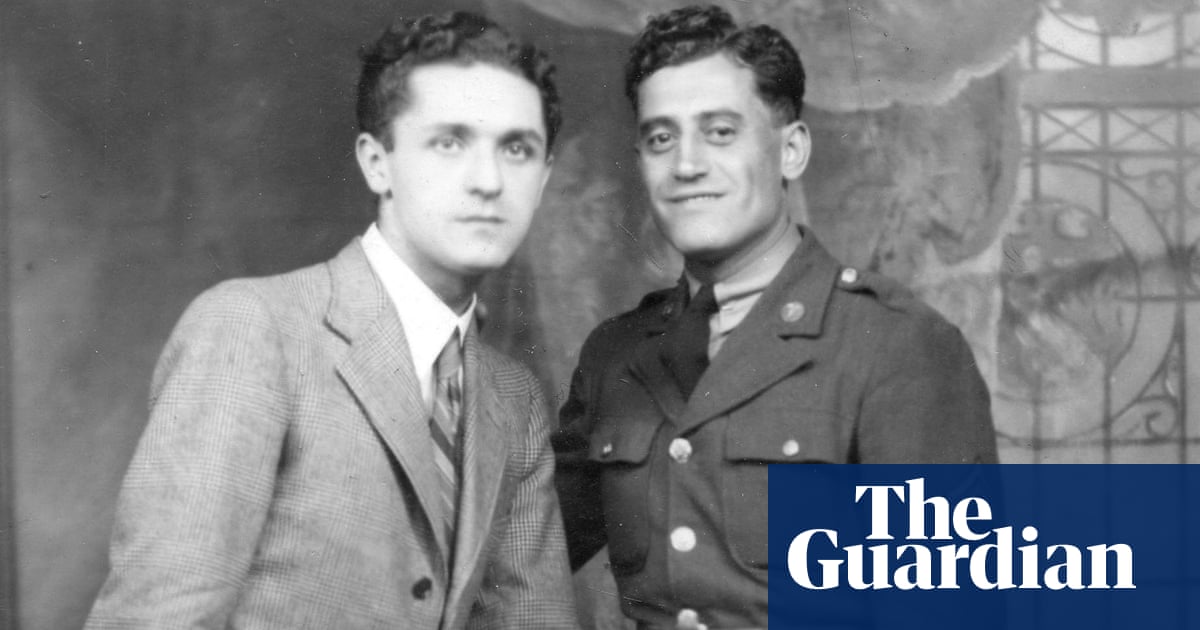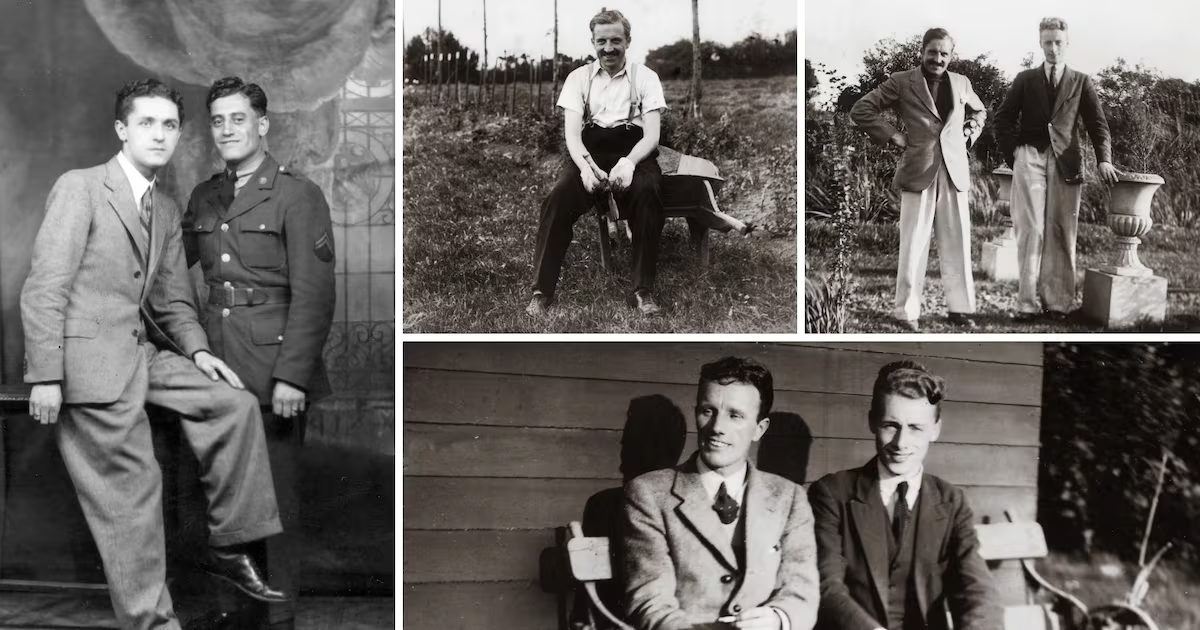
In 2016, Belfast was widely seen as the worst place in the UK to be gay. In the same year that the Police Service of Northern Ireland recorded more than 300 homophobic hate crimes, the Democratic Unionist Party again blocked a motion calling for same-sex marriage. So it was with some trepidation that I arrived in the city to take up a history lectureship at Queen’s University Belfast. I grew up secretly gay in a small English town in the 1990s and early 2000s, and I carry difficult memories of bigotry. After coming out in my early twenties and living in larger cities such as Manchester, Chicago and London, I worried about returning to a life of isolation and anxiety. What I found in Northern Ireland at first confirmed some of my fears. The most widely used gay dating app was a sea of faceless profiles. I met one man who had been through traumatic conversion therapy that took years to get over. Another told me he had a girlfriend only as we lay in bed together. Some I got to know had even found themselves disowned when they refused to stay in the closet, while others dared not tell their deeply religious families at all. When I started to accept that I would be living in Northern Ireland indefinitely, I decided I should try to understand how the place had reached this difficult present. I did not know much about gay history in Ireland, and there seemed to be little written about the topic either, at least until the movement for gay rights began in the 1970s. So, I emailed Jeff Dudgeon. He is one of the North’s most prominent gay activists and was the named litigant who took the UK government to the European Court of Human Rights more than 40 years ago. He was encouraging, but told me that researching early 20th-century gay history would be “a bit of a task”.On my own, I started to search the catalogue of the Public Record Office of Northern Ireland for mentions of “gross indecency” or “buggery”. These were the euphemistic terms used by the English legal system, which also applied in colonised Ireland. I was shocked to find that there were hundreds of examples in Belfast, dating all the way back to the late 1880s and continuing until sex between men was decriminalised in 1982. Jeff Dudgeon, one of the North’s most prominent gay activists. Photograph: Liam McBurney/PA I raced down to the archive to find out more. But the first file I opened punctured my optimism. It did not concern a romance between men, perhaps unfairly interrupted by the police, but instead a horrific case of familial child abuse. I soon discovered that the same laws used to prosecute adult relationships were also applied to cases of non-consensual sex. Thankfully, the next document delivered to my desk was more promising. Over several pages of handwritten witness statements, I learned about two male lovers who lived together in a Belfast hotel during the first World War. Even now that their “crimes” had been discovered, one of the men described their relationship in depth. They had dated over several months, visited bars and theatres, and even met each other’s families. Their hotel room also became a party spot for others, with soldiers and civilians drinking whiskey cocktails and sharing beds. Howard Aicken, a gay man who lived in Belfast, and an unnamed US soldier. Photograph: Courtesy of Basil and Simon Abbott, Howard Aicken's nephews Over the next eight years, I continued to look for stories of gay Belfastmen. The search has taken me to some surprising places. At Wheaton College in Illinois, a steadfastly Christian institution, there is a short diary written by Arthur Greeves. He is mostly forgotten today, though known to some as the closest friend of CS Lewis. Greeves describes in 1918 how important it was to him to discover textbooks and novels about his sexuality – a common journey for many gay men from more recent times too. His use of the religious network of Quakers to find potential lovers is probably less familiar, however. In the National Archives in London, I read about Ernie Smyth, a young Belfast clerk. During the first Troubles in the North, in the early 1920s, he was arrested for possessing ammunition. His sentence was eventually overturned, but he was then put back on trial because of what else the police had found in his house: letters from men living across Britain, Ireland and the USA. These lovers graphically described their desire for each other, talked about their favourite gay novels and promised gifts or even future domestic arrangements. My most exciting discovery was a diary that until now has been almost entirely unknown. David Strain was a linen merchant who wrote more than a million words from the 1920s to the 1940s. He describes in vivid depth a small but vibrant gay community in Belfast. These men met each other on the streets or in cafes, through coded adverts placed in local newspapers and, surprisingly, through connections made at church. Strain found it difficult to build a lasting relationship, but he still had many friends – some of them gay, many of them not. His solidly respectable Presbyterian mother suspected his sexuality and was disappointed, but his brothers seemed to be less concerned. Either way, he lived a fairly open gay life in Northern Ireland, even building a country hut that became known as a meeting place for fellow travellers. Cherished photo albums show these friends socialising together. David Strain. Photograph: Public Record Office of Northern Ireland Walter Smith and Arthur Fitzsimons, friends of David Strain. Photograph: Public Record Office of Northern Ireland David Strain and Arthur Fitzsimons, circa 1930s. Photograph: Public Record Office of Northern Ireland The deeper I got into researching men like Arthur Greeves, Ernie Smyth and David Strain the more intimate my approach grew. I started to pull together family trees, tracing connections backwards and forwards in time. I wanted to understand not just the romantic aspect of their lives but everything else too: where they worked, what they did for fun, and – hardest of all – how their communities reacted to their sexuality. From criminal files I found my way to death certificates and wills, some of which listed a next of kin. For men who have died within living memory, I managed to then trace relatives. Some – but not all – were willing to speak to me about their ancestors. I have been gifted old black-and-white photographs, shown treasured heirlooms and invited into homes to hear memories of kind uncles who “never married”. The closer I got to the lives of long-dead gay men, the more complex the picture of Northern Ireland’s past became. There is no doubt that Belfast was a conservative city. Religion was the most important everyday influence, and that meant it was difficult for most men to build an openly gay culture. There were certainly none of the sorts of bars that existed in North American or European cities by the 1920s. But as long as the church and Stormont remained committed to a belief that Northern Ireland was the most moral corner of the UK, there was also no desire to publicly talk about the fact that men who loved men walked among them. Silence may sound like oppression in today’s era of identity politics, but it was the best that could be hoped for at the time. A hundred miles down the road in Dublin, the new Irish Free State was far more actively persecutory. Undercover “pretty police”, at various points from the 1930s to the 1950s, entrapped gay men in public toilets.[ The gay patriots who helped found the Irish StateOpens in new window ]Over in Berlin, a nascent homosexual rights movement was viciously stamped out by the Nazis, with many gay men, lesbians and trans people sent to concentration camps. Belfast in 1939. Photograph: National Museums NI/Ulster Folk Museum In Northern Ireland, caution and secrecy was instead exercised when it came to what men might be doing with each other behind closed doors. For many, this provided an opportunity – if, no doubt, a difficult one – to live their truth. As long as no one was forced to openly confront the fact of same-sex desire, it could remain mostly undisturbed. This world began to collapse in the 1950s. The decade was marked by moral panics in Britain, with frantically reported stories of shadowy homosexual spies, corrupt politicians and seedy underground sex scenes in major cities. [ New law will undo hundreds of historic gay sex convictionsOpens in new window ]In 1954, the British government tasked a special committee with investigating the joint social problems of homosexuals and prostitutes (or Huntleys and Palmers as the members decorously termed them). Its report was launched in 1957, recommending decriminalisation of sexual acts between men over 21 in private, and in 1967 the law was finally changed in England and Wales. Unfortunately, the Northern Irish response to these developments was not positive. The various Protestant churches were unreceptive to what they saw as any condoning of moral laxity, and the Catholic Church chose to say nothing at all. It would be more than a decade before a campaign to extend the law in Northern Ireland was formed. In the meantime, a fraught public conversation began to happen for the first time. Secret lives of quiet and compassionate acceptance now became more difficult when the front page of the newspaper openly talked about “homosexuality”. Tom Hulme pictured at Belfast Pride in 2025: 'Sensationalist politics still sits alongside everyday acceptance in Northern Ireland' Writing this intricate history of gay Belfast has been an intensely personal and emotional journey. I became deeply invested in long-forgotten lives in a way that has helped me embrace my new home. The result is that I can now look past the often-fraught media coverage that made me so worried when I moved to the city a decade ago. Sensationalist politics, I have found, still sits alongside everyday acceptance in Northern Ireland. Those with the loudest voices are often heard first, but brave activists and their allies still organise for LGBT rights. A deeper appreciation of those who came before – and the fact that compassion, rather than oppression, has always been possible – can only strengthen the ongoing fight. Tom Hulme is reader in modern British history at the School of History, Anthropology, Philosophy and Politics, Queen’s University Belfast. Belfastmen: An Intimate History of Life before Gay Liberation is published by Cornell University Press
My search for the stories of gay Belfastmen has taken me to some surprising places
Writing a history of gay Belfast has been an intensely personal and emotional journey
1,770 words~8 min read