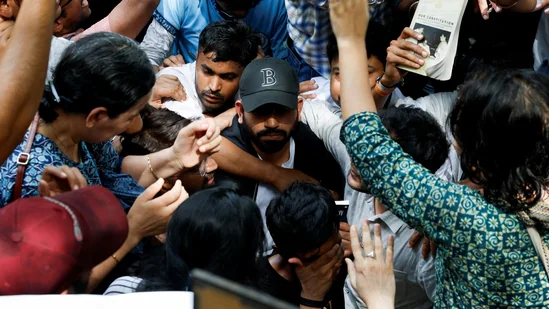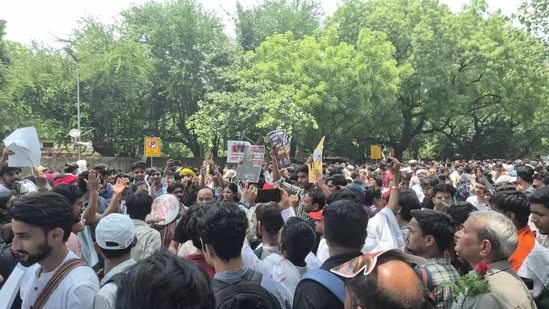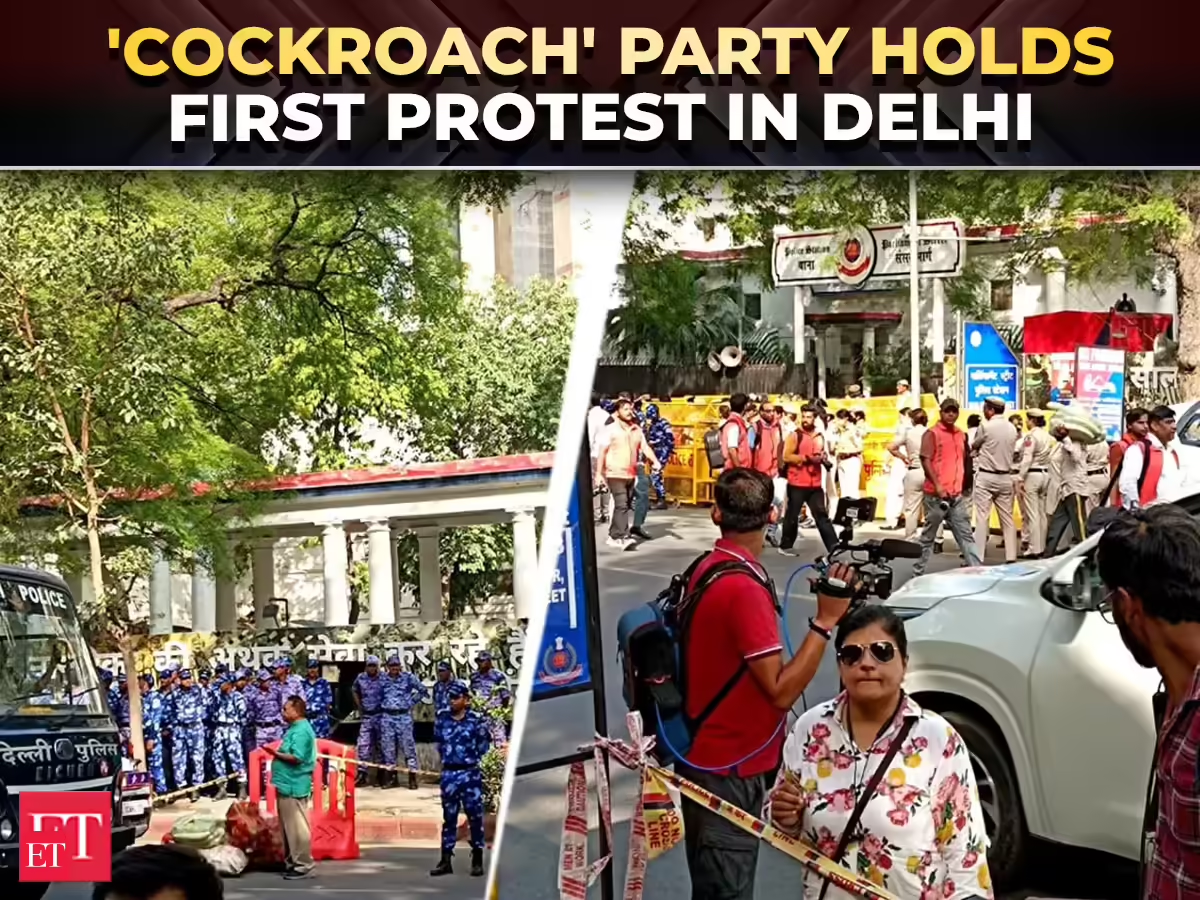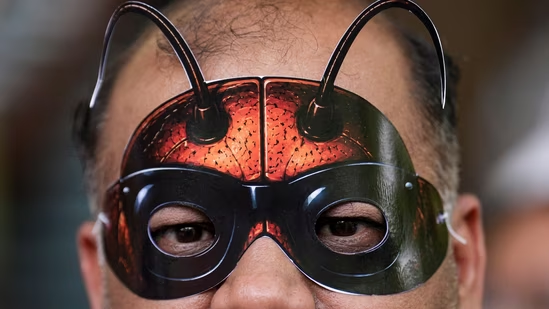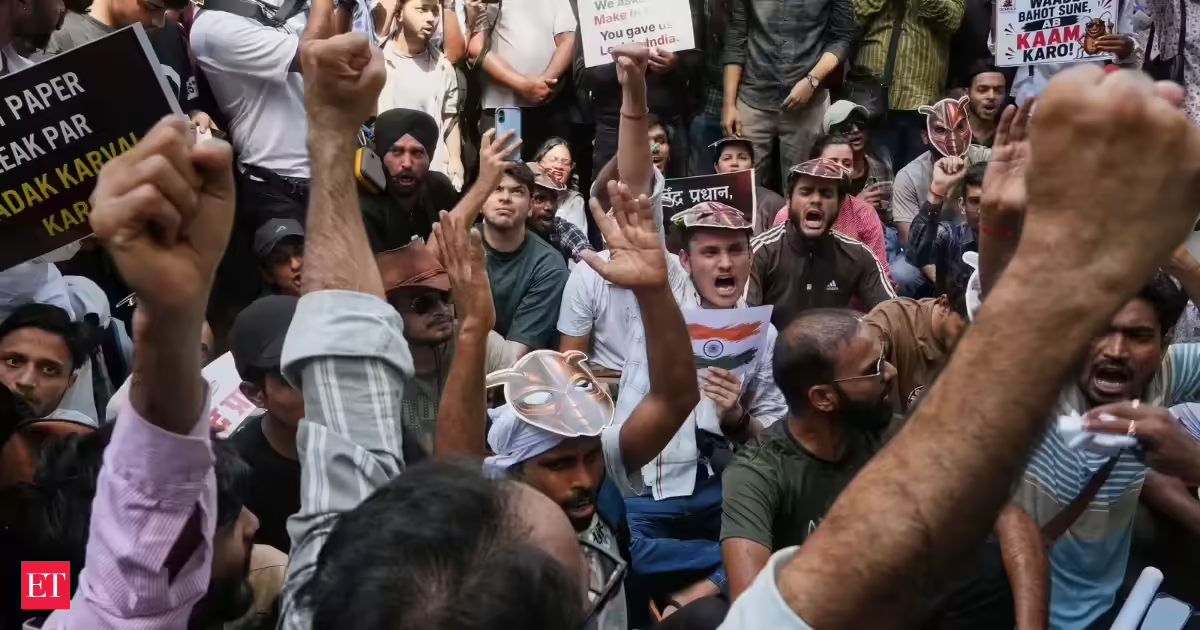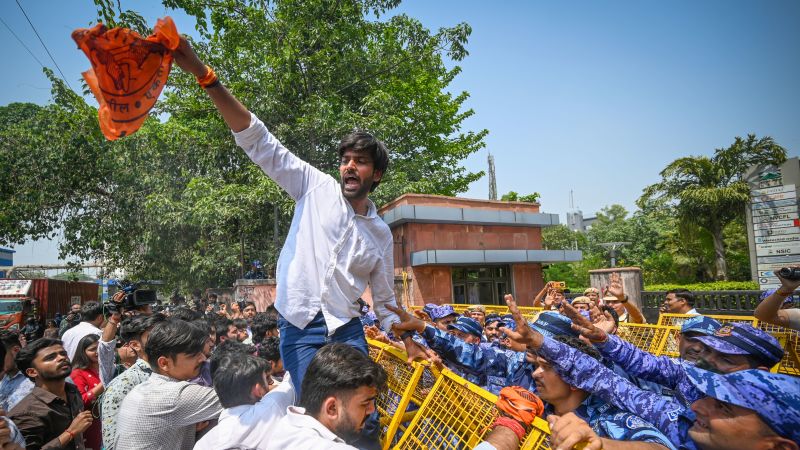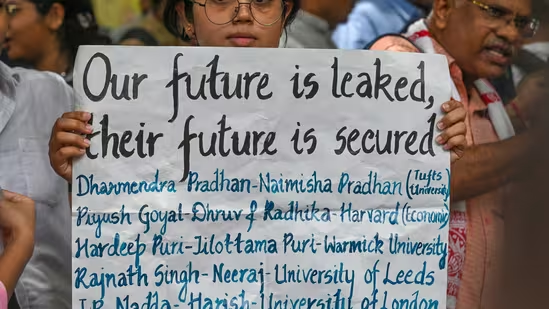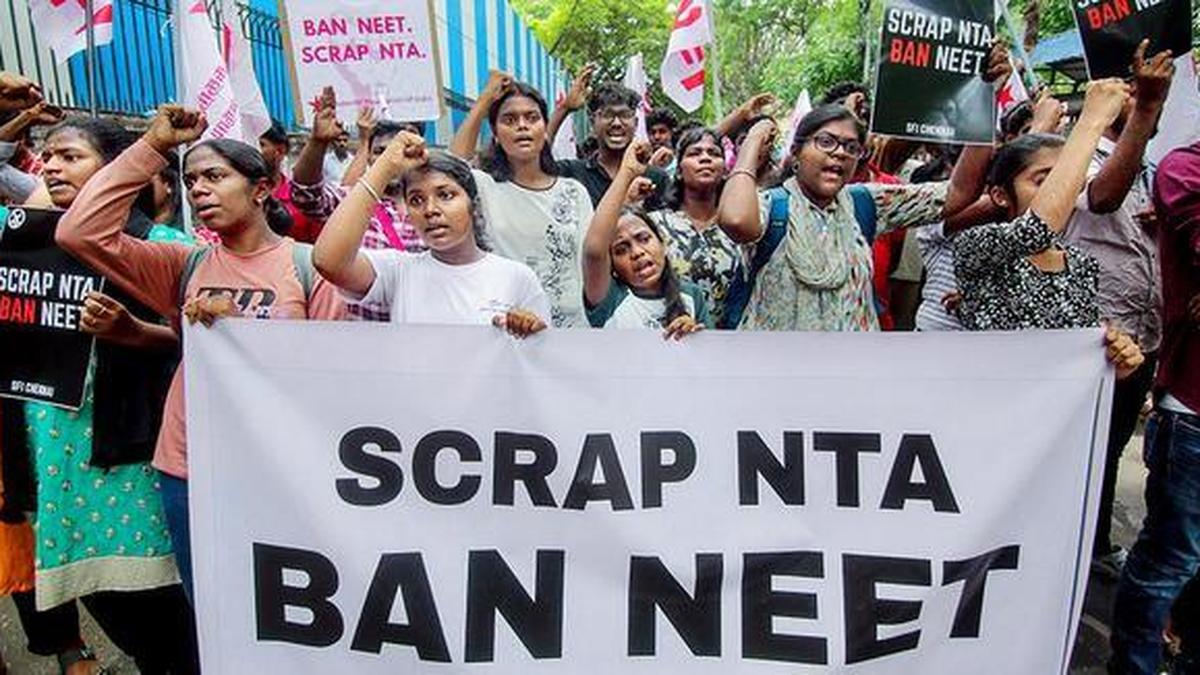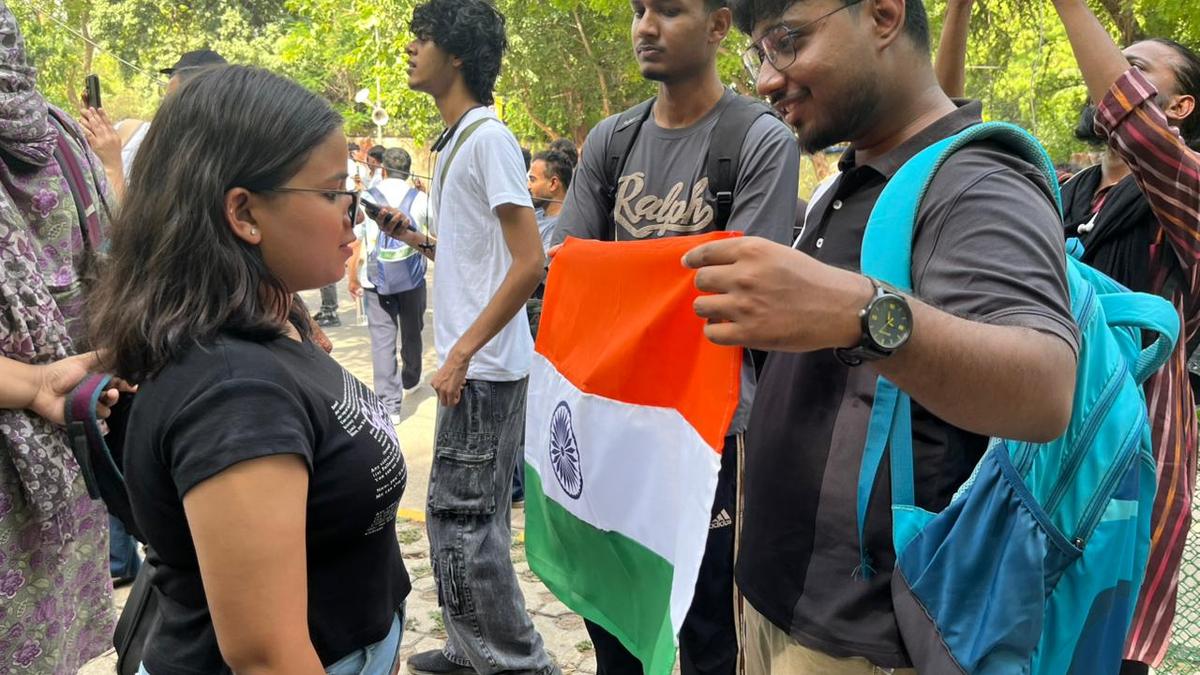
A little before 9 a.m., Gautam Tamboliya stood outside Patel Chowk Metro station, checking his phone every few minutes.Policemen were standing at the station exit, directing students to keep moving and discouraging groups from gathering. They gestured to Gautam as well, as he shifted his backpack from one shoulder to the other and looked towards the road. “We were told not to stand here,” said Kriti a little later.Kriti is a final-year B.Sc. Zoology student from Galgotias University who was waiting with Gautam at the station. “It felt strange. We hadn’t even reached the protest site yet.” The two were waiting for Raunak, Gautam’s cousin, who had received his class XII board examination results only days earlier. For all three, this was their first protest.Gautam had ordered a national flag on Blinkit that morning. As they were walking, Raunak picked up a stick to use as a flag mast.On June 6, several hundreds of students gathered near Jantar Mantar under the banner of the Cockroach Janta Party (CJP), demanding the resignation of Union Education Minister Dharmendra Pradhan over the NEET paper leak controversy, allegation of examination mismanagement and growing distrust in the National Testing Agency (NTA). Action on the groundBut for Gautam, the journey to Delhi had begun much earlier. The 21-year-old NEET aspirant has spent the last two years preparing for one of India’s most competitive examinations. Originally from Gurgaon, he moved to Sikar in Rajasthan, a city known for its coaching institutes, hoping to secure a medical seat. Since 2024, he has appeared for the examination three times. This year, he believed he had finally done enough. “My paper had gone really well,” he said. “Then everything got cancelled.” Until recently, Gautam’s involvement with the CJP was limited to social media. He followed their campaigns online but did not expect them to translate into action on the ground. “I thought it would become another trend and people would move on,” he said.As the three walked towards the protest site near Parliament Street, nervousness slowly gave way to excitement. Volunteers handed out posters and postcards. Students posed for photographs, waving placards demanding accountability from the government and examination authorities. Gautam and Raunak unfolded the tricolour they had carried with them. By 9:30 a.m., television reporters had begun approaching students for interviews. Questions repeated themselves: Why had they come? What did they hope to achieve? Why did they support the protest? Each time, Gautam seemed more certain of his answers. Nearby, Kriti watched students gather around makeshift banners. “India may not become the best overnight,” she said. “But it can become better”.The morning settled into a rhythm of speeches, slogans and interviews. Yet beneath the chants demanding Pradhan’s resignation was something more personal. Caste subtextFor Gautam and Raunak, both members of a Scheduled Caste, conversations about education inevitably led to conversations about caste. At one point, Raunak raised a loud “Jai Bhim” slogan to test how many people in the crowd would respond. Not many did. The cousins stepped away from the gathering and spoke quietly among themselves. “Caste is still a big issue,” Gautam said later. He recalled experiences from educational institutions where caste-based slurs were commonplace. In one hostel, he alleged, he was asked to clean a washroom because of his caste identity.Growing up, he believed resentment towards reservation policies explained caste tensions. Over time, reading the works of Dr. B.R. Ambedkar changed that understanding. “It made me see things differently,” he said. For Gautam, the issue was not limited to a single examination or a single minister. His understanding of education had gradually expanded beyond marks and rankings.Reading Ambedkar, he said, helped him see education as a tool for dignity and social mobility. That, more than the cancelled examination, was what drew him to the protest. “If students don’t speak about these issues,” he said, “nothing changes.” By late morning, the June heat had begun to settle over Jantar Mantar. Students drifted between different groups gathered around the protest. Gautam, Raunak and Kriti found themselves repeatedly returning to circles led by student organisations where Ambedkarite slogans resonated more strongly. “Jai Bhim, Jai Meem.” “Educate, Agitate, Organise.” The slogans drew them in. Around 11:30 a.m., exhausted and hungry, they sat on a pavement and shared plates of Bhelpuri. For the first time that day, the conversation moved away from politics. Raunak spoke about his board examination results and the uncertainty surrounding competitive exams. “I had actually unfollowed the CJP before,” he admitted with a laugh, thinking they wouldn’t do anything.
How a three-time NEET aspirant became a protester for a few hours
Follow Gautam Tamboliya, a three-time NEET aspirant, as he transforms from student to protester fighting for educational accountability.
1,081 words~5 min read