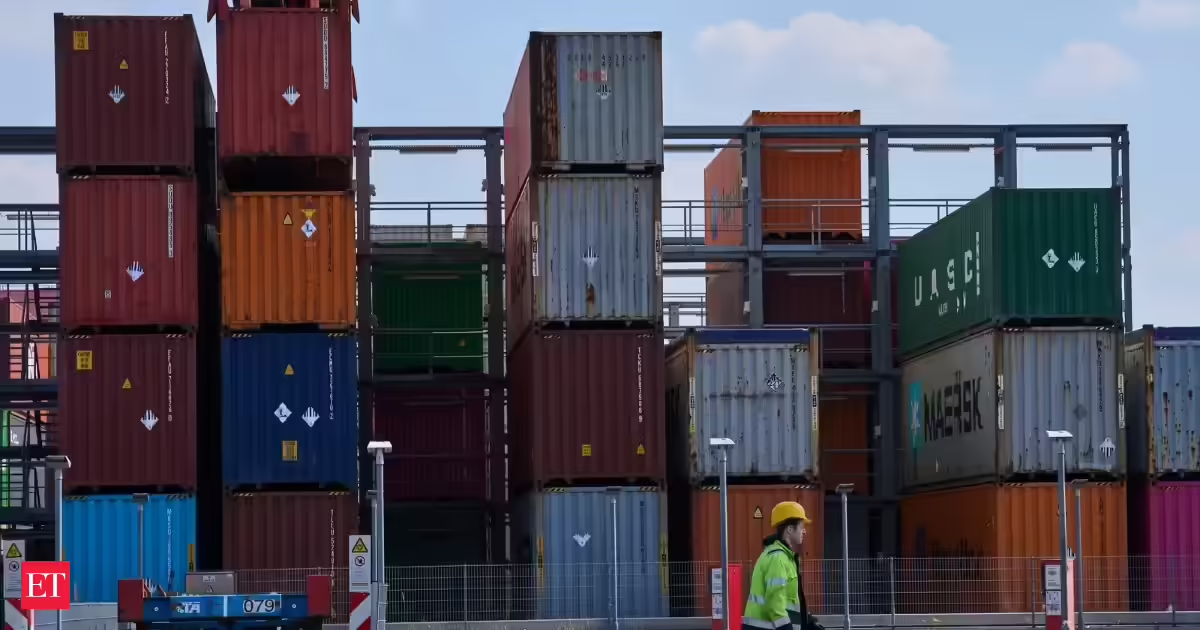
Single-source models are being replaced by diversified supply chains, regional ecosystems, and operational agility, allowing companies to offset ongoing geopolitical risks and economic uncertainties.
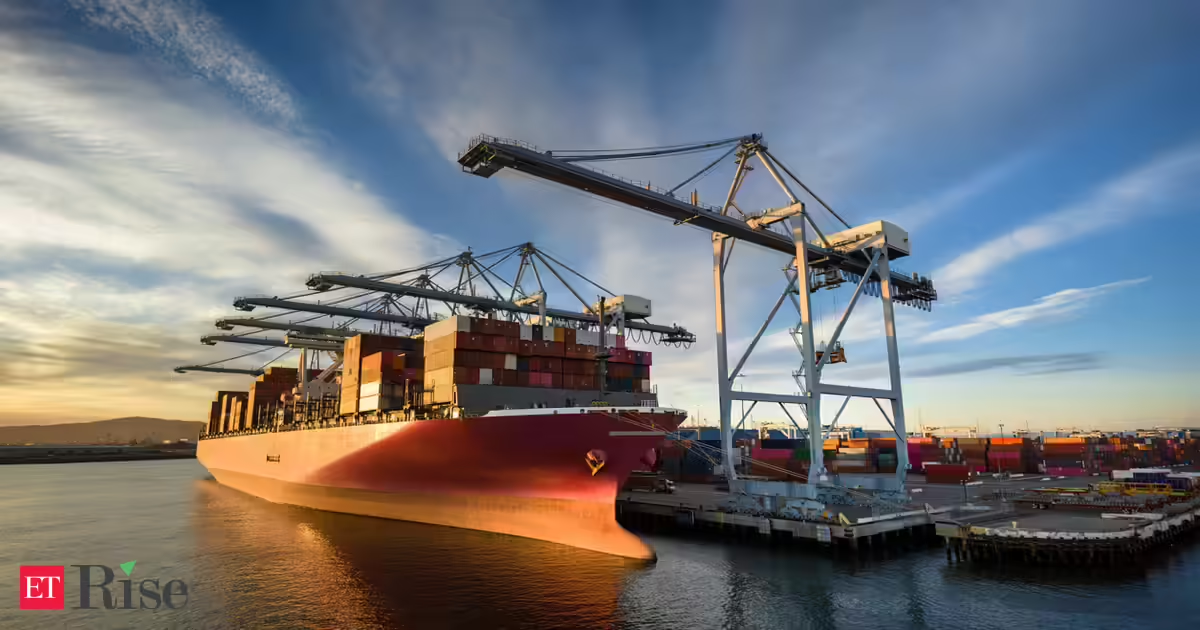
As geopolitical flashpoints, tariff tensions, economic volatility and business disruptions hit global supply chains, companies and countries are rejigging sourcing and manufacturing strategies. As a result, enterprises are shifting strategies from a cost-optimised lens to vibrant supply chains that can absorb the current global shocks.India’s rise as a reliable supply chain partnerSingle-source models are being replaced by diversified supply chains, regional ecosystems, and operational agility, allowing companies to offset ongoing geopolitical risks and economic uncertainties. As the world pivots away from unreliable trade partners by adopting the China+1 policy, India is steadily donning the mantle of a trusted manufacturing and speciality-chemicals hub.The country’s ascendance is backed by a combination of skilled talent, strategic location, and economies of scale, making it an attractive destination for global supply chains in electronics, engineering, speciality chemicals and agri-chemicals. Given the disruptions over the past few years, global sourcing has emerged as an essential enterprise strategy for cutting costs and reaching diverse markets while maintaining overall competitiveness.Accordingly, global trade dynamics have been transformed by new strategies such as onshoring, nearshoring, and friendshoring that derisk supply chains and enhance operational efficiency. Risk-averse diversification and reliance on regional ecosystems could lengthen sourcing chains across multiple continents, introducing geopolitical risks. Nearshoring and friendshoring can reshape trade alliances by partnering with trusted companies and countries and by building local supply chains that reduce cross-border barriers and shorten transit times.Varied strategies requiredTo establish dynamic, future-ready supply chains, forward-thinking companies should deploy several strategies and pivotal practices. Big agrochemical companies are already diversifying the procurement of raw materials and imports of intermediate goods from stable markets such as Japan. Additionally, as the Gulf region remains on the boil, agrochemical firms are preparing to avoid shortages of crop protection chemicals in the upcoming seasons. Therefore, the agrochemical industry is probing varied sourcing options from the US, Europe and Japan.Proactive measures are being undertaken because a substantial share of technical materials and intermediates comes from China. Apart from building inventories in advance, the agrochemical industry is diversifying its sourcing from Japan and other reliable trade partners.The impact and response in agri-commoditiesOngoing conflicts, such as the Hormuz crisis, are also reshaping agri-commodity supply chains as the segment diversifies its base of supplier nations, opts for land-based trade corridors and localises agri inputs. For example, the Strait of Hormuz carries about 13 per cent of chemical cargoes, such as fertilisers, and 2.4% of dry bulk cargo, including grains. As India is the largest importer of urea and diammonium phosphate globally, it is planning to switch its sources of supply to countries such as Belarus, Russia, Indonesia and China. Similarly, the closure of the Black Sea export route has forced major agri-product importers to seek other suppliers. Heavily dependent on Ukraine for wheat imports earlier, Egypt has now begun importing the same from India and Argentina.Besides diversifying supply chains, another critical element for operational efficiency is end-to-end digitalisation. By creating AI-enabled supply chain management solutions, companies can anticipate logistical chokepoints and achieve real-time visibility into inventory across their global transport ecosystem. Companies can also promote local sourcing and production. This ensures that sourcing strategies are aligned with end-consumer markets, substantially limiting exposure to transatlantic logistics and border tariff issues.India’s role in manufacturing ecosystemOne must also mention India’s growing role as an electronics manufacturing hub. By producing more than 300 million smartphones every year, India has become the world’s second-largest mobile phone manufacturer. In 2024, the nation’s electronics exports exceeded $29 billion, propelled mainly by smartphone production and investments in the semiconductor ecosystem.The World Bank notes that global value chains contribute to almost 50 per cent of international trade. Aware of its importance, India has made strategic moves to integrate itself within select global production supply chains. Towards this end, India has formed various partnerships to build diversified, trusted production ecosystems in key geographies.One of its earliest efforts came through the SCRI (Supply Chain Resilience Initiative), formally launched by India, Japan and Australia in 2021. As a trilateral framework, it encourages organisations to diversify manufacturing locations to lower excessive dependence on any single nation’s supply networks. This is just one of many initiatives that India has recently undertaken to emerge as a reliable manufacturing destination, even as it augments its global supply chain reputation.The author is Managing Director, Shivtek Spechemi Industries LtdPublished on June 7, 2026