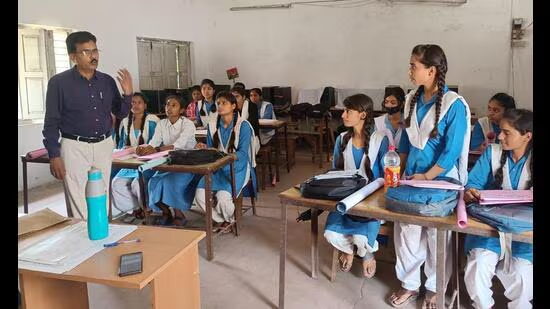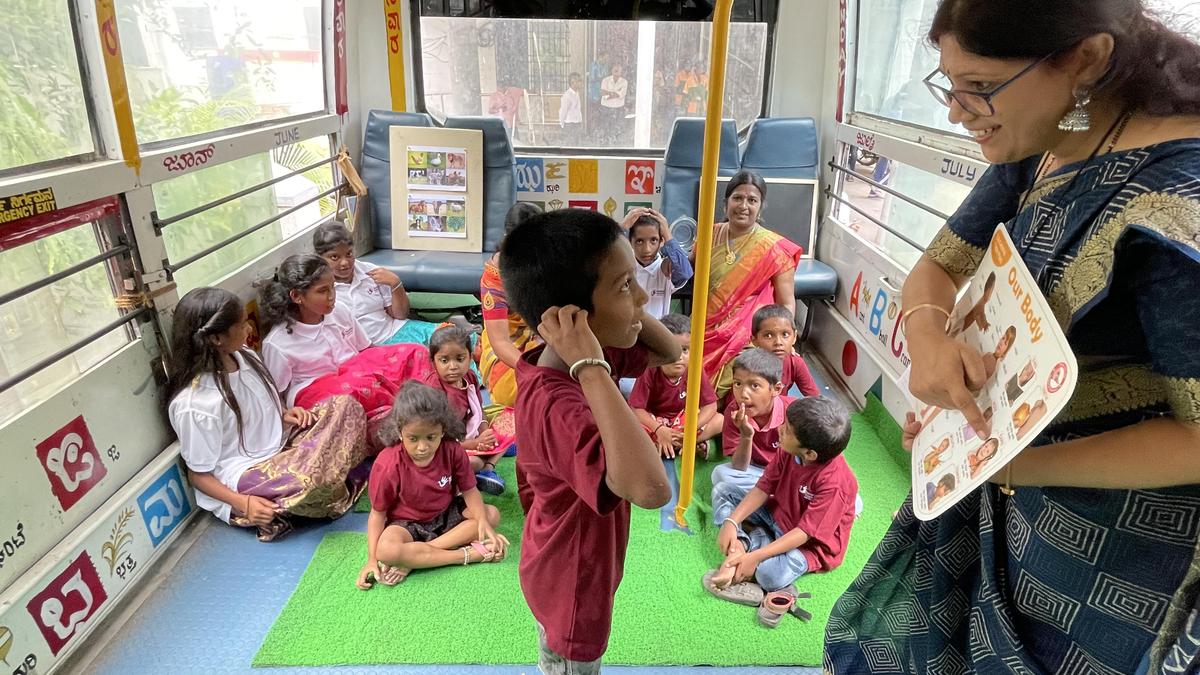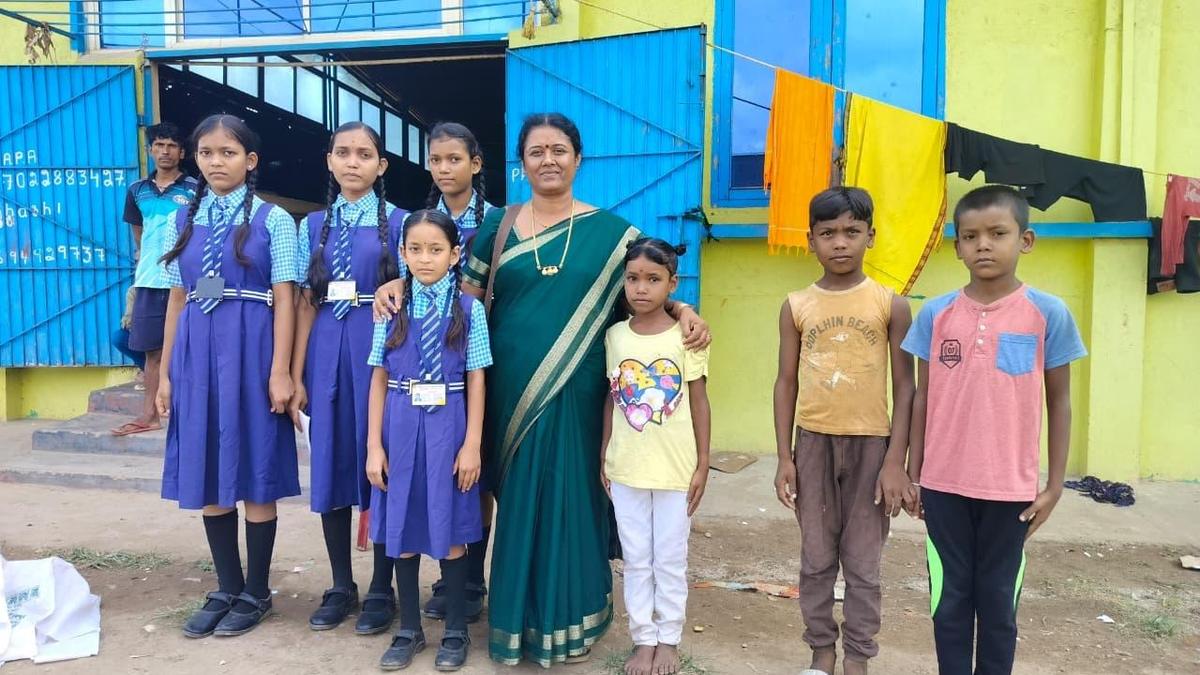
Teacher Pramila with her students, who are natives of Bihar.
| Photo Credit: SATHISH G.T.
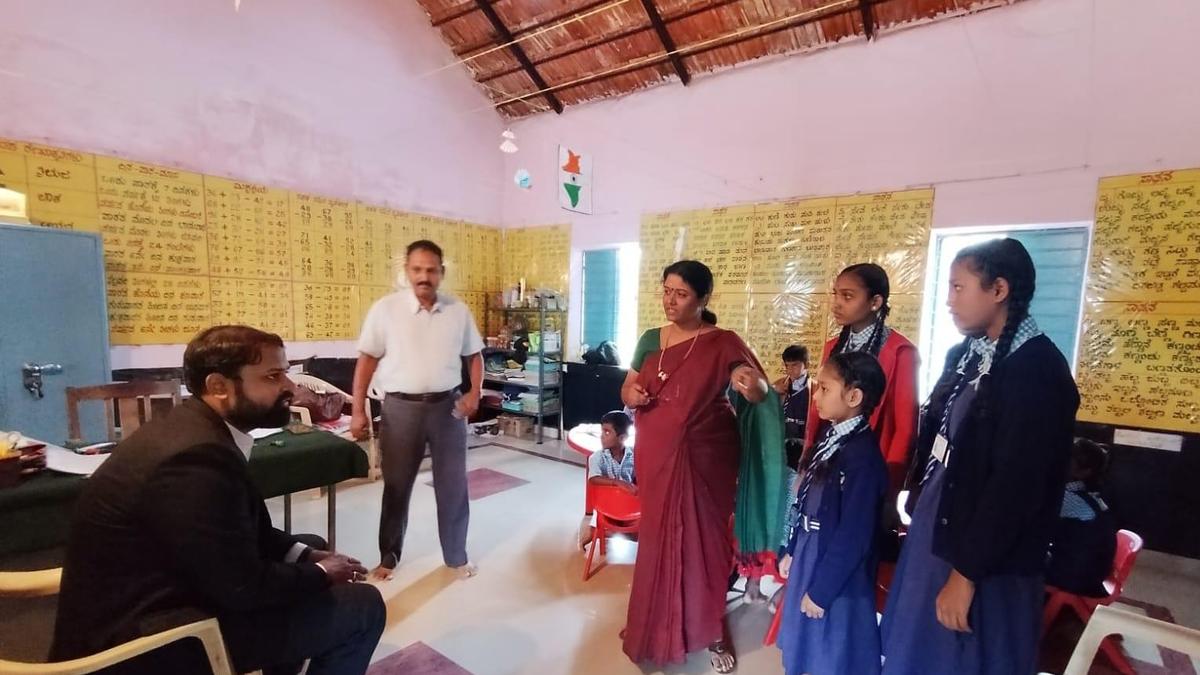
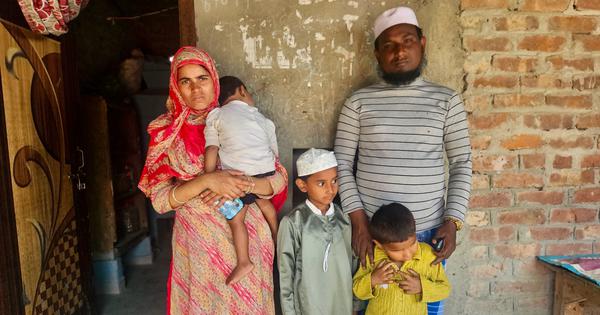
Every morning, when Pramila S.P., a government primary school teacher in Hassan, leaves for work, eight students from migrant families accompany her in an autorickshaw to Government Lower Primary School at Pirumanahalli, about eight kilometres away.For the past three years, Ms. Pramila has been doing much more than teaching. With 27 years of experience, she has helped children from Bihar overcome language barriers and enter the formal education system.The eight students — Sanam Kumari, Nidhi Kumari, Radhika Kumari and Preethi Kumari (class 4), and Ranjani Kumari, Shivani Kumari, Sonu Kumar and Prince Kumar (class 2) — could neither understand Kannada nor communicate with their teacher when they first joined the school.Teething troubles“It was extremely difficult in the beginning,” Ms. Pramila recalled. With no common language, she relied on gestures, demonstrations and repetition to teach basic concepts. For months, she used sign language to communicate and gradually built the children’s confidence and trust. She also paid attention to their personal hygiene, helping them maintain cleanliness and develop healthy habits. Today, the transformation is remarkable. The children can speak, read and write Kannada, sing Kannada songs and recite vachanas. Some of them conversed fluently in Kannada with The Hindu.The journey began three years ago when Ms. Pramila noticed a group of children in a ginger field on the outskirts of Hassan. Curious, she approached them, but could not communicate because of the language barrier. Determined to help, she and a colleague traced the families to an abandoned marriage hall near the BM Road bypass, where migrant workers from Bihar had rented rooms.How they cameThe families had travelled to Hassan in search of work and earned daily wages by working in ginger fields, fruit stalls and construction sites. Ms. Pramila visited them repeatedly and persuaded parents to enrol their children in school. “Many parents had never seriously considered sending their children to school. After sustained efforts, they finally agreed,” she said.As a result, eight children were admitted to her school, while teachers from nearby Anniganahalli and Sankalapura schools helped enrol about 10 more children from migrant families.However, challenges remain. According to Ms. Pramila, several migrant children are still out of school, while many discontinue education after high school. “I suspect that some girls are married off early and boys begin working to support their families,” she said.Parents said they migrated from Bihar because farming income in their native villages was insufficient. But in Hassan, they earn between ₹500 and ₹800 a day. Anil Kumar, one of the workers, said they trusted Pramila enough to send their children to school, adding that she also bears their daily travel expenses.Documentation hurdlesA major concern is the lack of identity documents. Some children do not possess Aadhaar cards, which are essential for admission to higher classes and appearing for SSLC examinations.“I have approached officials to help them obtain Aadhaar cards, but the process has not moved forward,” Ms. Pramila said.The problem is compounded by the absence of birth certificates, making it difficult for authorities to establish the children’s place of birth and issue Aadhaar cards. “I worry that these children may eventually drop out if their documents are not arranged in time,” she said. Published - June 07, 2026 06:01 am IST