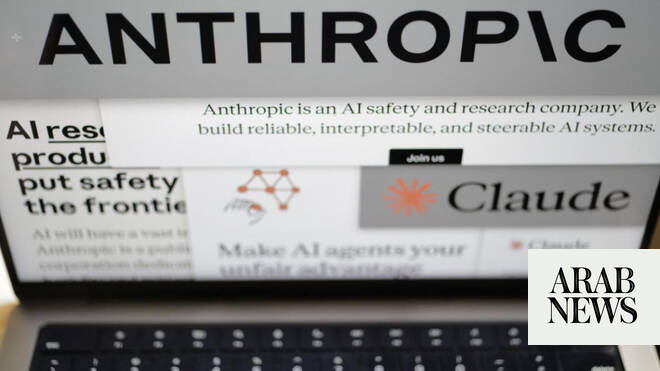
Recently, the artificial intelligence (AI) company Anthropic, which is behind the GenAI model Claude, decided to restrict the use of its own AI for military purposes and war by the Pentagon because of ethical concerns. From a moral perspective, it is positive that a company tries to live up to its corporate responsibility.Anthropic has enjoyed a lot of praise for this move internationally. The number of users of its AI products has grown significantly since then, new talent continues to apply to join the company, and Anthropic has been able to differentiate itself from OpenAI and other competitors as the “good AI company” in its current funding round.A similar approach was taken by OpenAI some years ago when it applied the same narrative – OpenAI being the “good guys” and all the other big tech companies the “bad guys” – when seeking new investors. From an ethical standpoint, the question arises whether a decision that AI be used in lethal automated weapon systems ought to be in the hands of an individual company at all? Should such a fundamental decision involving humanity and planet Earth really be made by a firm committed primarily to its own interests and the maximisation of its profits? Should humankind and the ecosystem have to rely on the call of a private firm?Or does the significance, as well as the nature of such an issue, require a decision by states and the international community, not least as the future of humanity and the world is at stake? Based on my research, I believe we need a global human rights-based regulation of AI in order to allow all humanity and the planet enjoy a humane and sustainable future.Human rights-based global regulation of artificial intelligence should ensure that human rights are respected, protected, implemented and realised within the entire life cycle of AI and the complete value-chain process of so-called artificial intelligence.This would include the design, development, production, distribution, the use or non-use of data-based systems (DS), because of human rights concerns. It should strive to protect the powerless from the powerful. At the same time, in the field of so-called AI – more accurately described as “data-based systems” as these machines are not intelligence – we should establish an international data-based systems agency (IDA) at the United Nations as a global platform for technical co-operation in the field of DS. This would foster human rights, sustainability, safety, security and peaceful uses of DS, as well as a global supervisory and monitoring institution and regulatory authority in the area of DS responsible for access to market approval.Given the areas of convergence between DS and nuclear technologies, the International Atomic Energy Agency model would seem the most appropriate one for responsible global artificial intelligence governance, as it represents a United Nations agency with “teeth”. The establishment of an IDA is feasible because humanity has already shown that we can avoid blindly pursuing and implementing things just because they are technically possible. We have exercised caution when the welfare of humanity and the planet are at stake. For example, humanity researched the field of nuclear technology but substantially limited development in the field to prevent serious consequences. This suppression was successful mainly due to an international regime, concrete enforcement mechanisms and thanks to the International Atomic Energy Agency at the UN.There is a growing international and interdisciplinary network of experts calling for the establishment of human rights-based DS (HRBDS) and IDA. In addition, the Elders, an independent group of world leaders founded by Nelson Mandela and of which Ireland’s former president Mary Robinson is a member, has endorsed recommendations for a human rights-based DS and for the establishment of a global agency to monitor them.UN Secretary General António Guterres supports the creation of an international data-based systems agency at the UN following the model of the International Atomic Energy Agency. The idea of a human rights-based and legally binding regulatory framework, as well as the establishment of an institution enforcing global regulation, has enjoyed the support of Pope Francis and now Pope Leo XIV, whose recent encyclical Magnificent Humanity dealt at length with this issue. His Holiness the Dalai Lama supports human rights-based global regulation of DS and the establishment of an IDA at the United Nations, as both foster human rights, peace, and sustainability in the sphere of data-based systems.Also, some voices from multinational technology companies – among others, Sam Altman (founder and chief executive of OpenAI) – have called for an international data-based systems agency.It is time to act before automated lethal weapons systems cause even more deaths and brutal crimes. It is time to act before the world’s climate is even more damaged due to the exploding ecological footprint of data-based systems. It is time to act before data-based systems act for, on, and against humanity. It is time to act before it is too late.Peter G Kirchschlaeger is Professor of Theological Ethics and Director of the Institute of Social Ethics of the University of Lucerne, Switzerland
Opinion: Should decisions about whether AI can be used in war be left to private companies?
Rite & Reason: Anthropic recently decided to restrict the use of its own AI for military purposes. But it shouldn’t be left up to individual companies
831 words~4 min read