Story audio is generated using AI
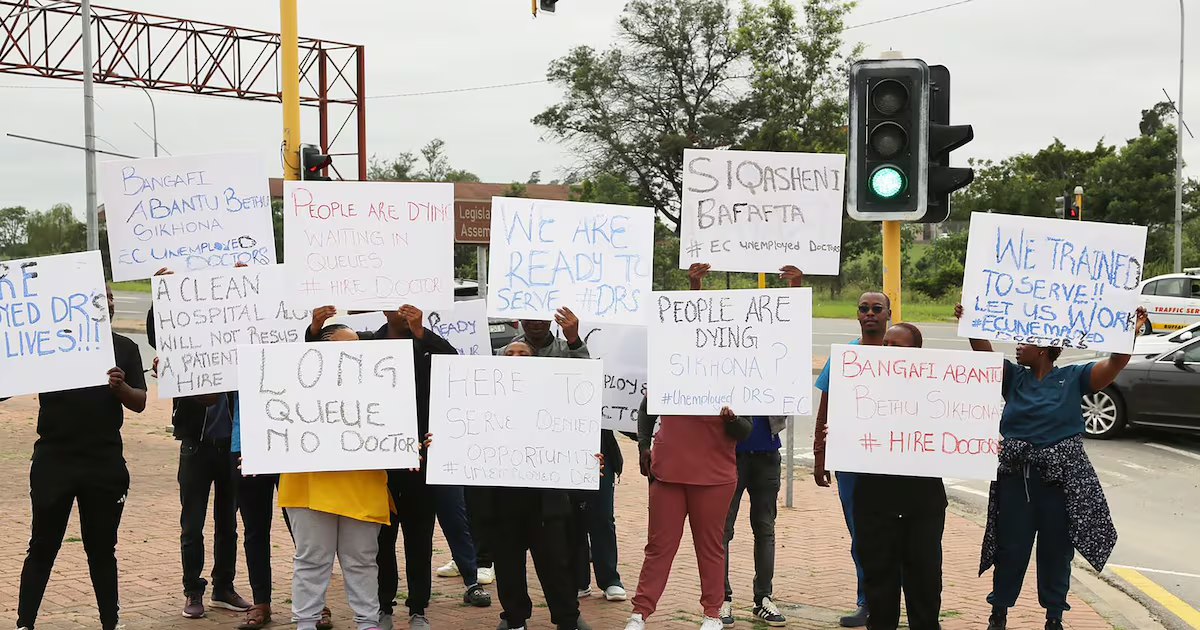
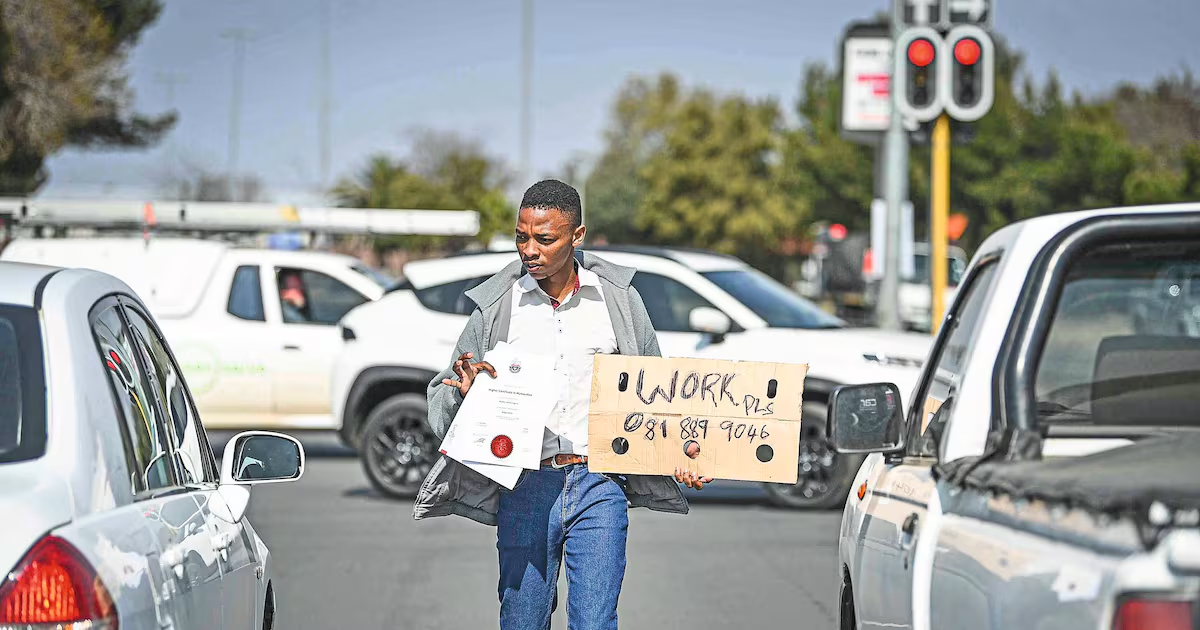
Annually, thousands of young South Africans complete school, college and university believing that their qualification is the key to securing their future. And for many, it is. But for many more, it is simply the beginning of unemployment.That is why South Africa’s youth cannot afford to wait for permission, perfect circumstances or the ideal opportunity to materialise. Qualifications remain valuable, but they are no longer a guaranteed pathway to employment. In today’s economy, waiting for a job offer, another qualification or someone else to create an opportunity is simply not enough. Young people need to think differently about how they build experience, develop skills and create momentum in their careers.This youth month, we once again find ourselves confronted by an unsettling reality. Youth unemployment remains one of the most pressing challenges our country faces. StatsSA recently reported that unemployment among those aged between 15 and 24 exceeds 60%, while millions remain outside both employment and education.Behind those numbers are young South Africans who have done what society asked of them. They studied, completed courses, earned qualifications and entered the job market expecting opportunity to follow. For many, it doesn’t.As someone who works in recruitment every day, I see this reality up close. One of the biggest misconceptions among young job seekers is that a qualification automatically leads to employment. About 98% of jobs still require at least matric, but beyond that, employers are increasingly looking at the whole person.They want to know how candidates think, communicate, solve problems, take initiative and adapt in an environment that is changing faster than ever before.It is the candidate who arrives prepared, understands the business, communicates well and demonstrates genuine interest who gets the jobIn many cases, it is not the most qualified candidate who gets the job. It is the candidate who arrives prepared, understands the business, communicates well and demonstrates genuine interest in contributing.Experience has become the currency many young people struggle to acquire. Employers want experience. Young people need a job to gain experience.The young people creating momentum in their careers are finding ways to build experience outside traditional employment. They are volunteering, freelancing, running side hustles, helping family businesses, learning digital skills online or building portfolios of work they can show prospective employers. They are not waiting for a title before they start creating value.I understand this mindset because it paved my pathway. I started my career without a degree, completed it later through Unisa and worked multiple jobs to make ends meet. Years later, Job Crystal itself started as a side hustle. That side hustle became a business and that business became an award-winning company. None of it happened because I waited until everything was perfectly in place. It happened because I started.This is where many conversations about youth employment miss the mark. We spend significant time discussing what the government, business and institutions should do. Those conversations are important. SMEs already employ a substantial portion of South Africa’s workforce and have an important role to play in creating opportunities, internships and pathways into employment.At the same time, young people have more tools available to them today than any previous generation.Qualities such as communication, customer service, emotional intelligence, creativity, adaptability and critical thinking are becoming increasingly valuable. AI has lowered the barriers to learning. A young person with a smartphone can practise interview questions, improve a CV, learn coding, build a website, create content, develop marketing skills or gain exposure to industries that were once difficult to access.The question is whether we are willing to use the tools available to create opportunities.The future of work will reward a different set of strengths. Technical knowledge remains important, but qualities such as communication, customer service, emotional intelligence, creativity, adaptability and critical thinking are becoming increasingly valuable. As technology handles more routine tasks, the ability to connect with people and solve problems will become even more important.Many of these qualities cannot be printed on a certificate. They are developed through experience, curiosity, and consistent effort.This youth month, perhaps the conversation we should be having is not whether young people have enough qualifications, but whether we are creating enough pathways for them to gain experience, build confidence and demonstrate their capabilities.That means encouraging side hustles, supporting entrepreneurship, creating internship opportunities and opening doors to practical work experience. Employability is about far more than academic achievement alone.South Africa needs a generation of problem-solvers, builders and entrepreneurs. The young people who excel in the years ahead will not necessarily be those with the most qualifications. They will be those who combine learning with action, ambition with effort and opportunity with initiative. The first step may feel small. We should take it anyway.Knott is CEO at Job Crystal