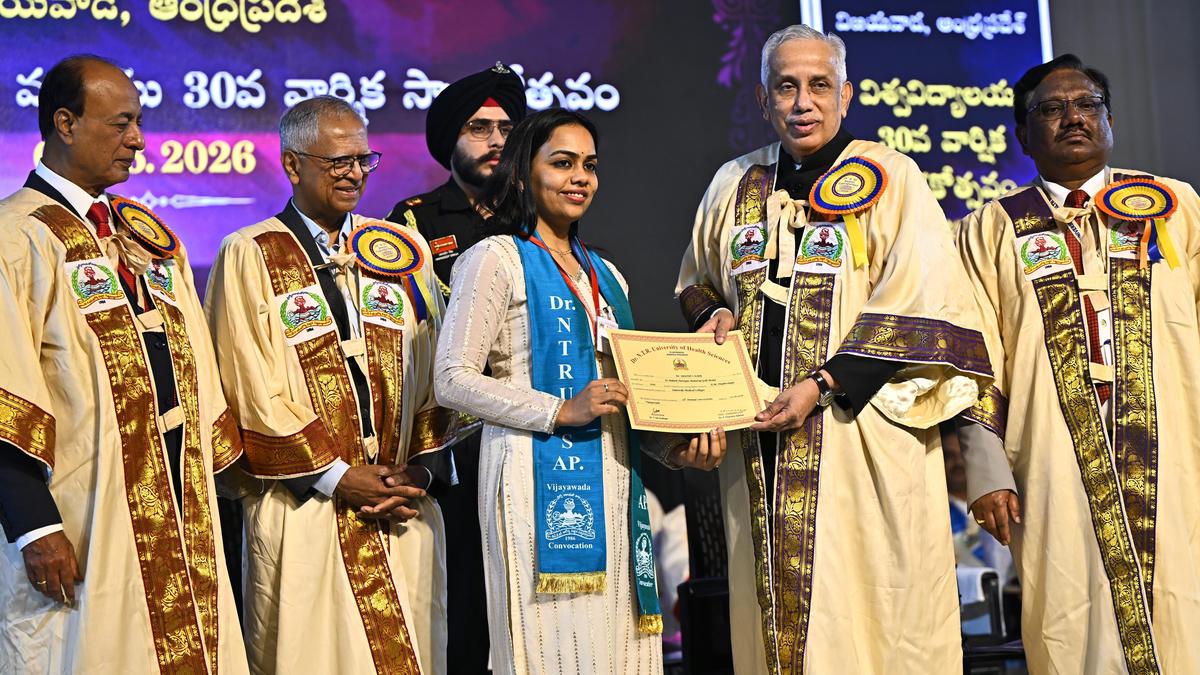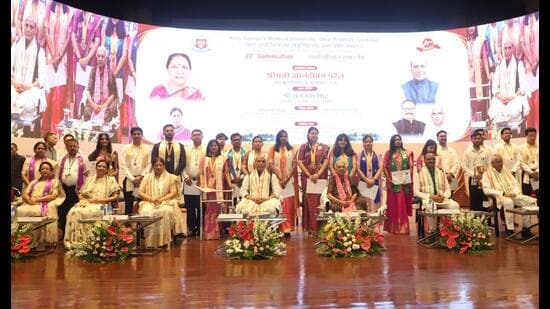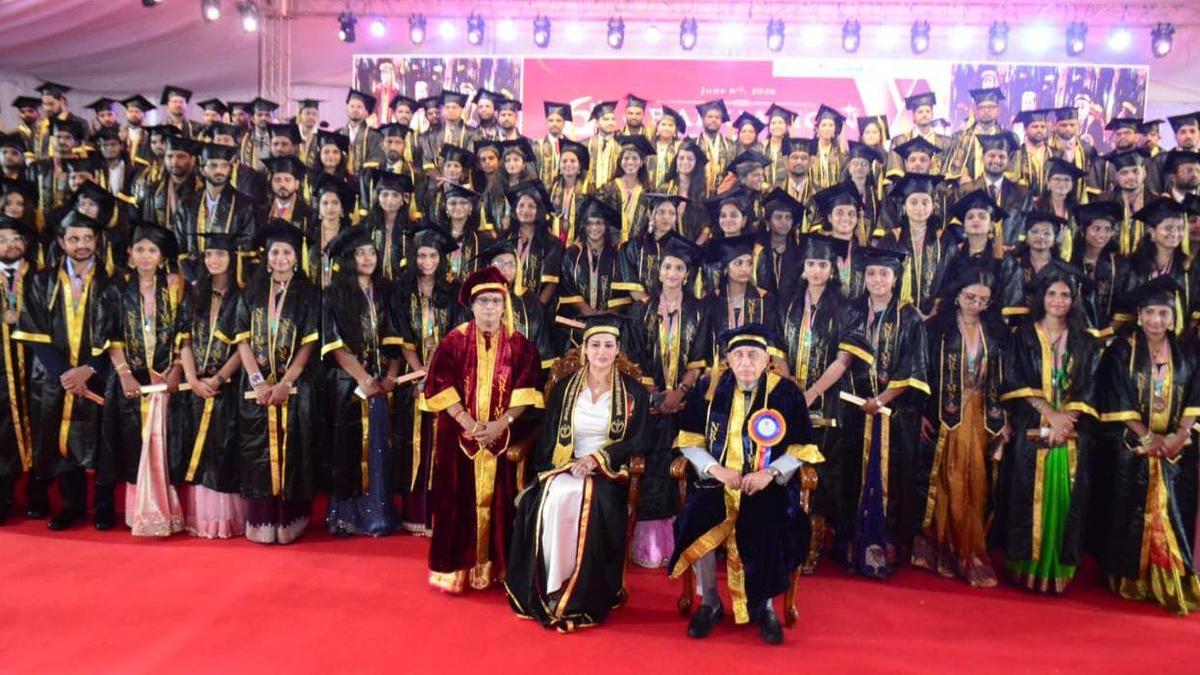
Governor S. Abdul Nazeer with the students and faculty members during the 6th Graduation Ceremony of NRI Institute of Medical Sciences in Visakhapatnam on Saturday.
Medical education is not only about imparting knowledge but also about fostering innovation, research, and a commitment to continuous learning, observes Governor S. Abdul Nazeer.“Medical education does not end with graduation. Healthcare professionals must constantly update their skills and knowledge to keep pace with evolving medical science,” Mr. Abdul Nazeer said while addressing the 6th Graduation Ceremony of NRI Institute of Medical Sciences (NRIIMS) here on Saturday.He congratulated the graduating medical students and urged them to embrace lifelong learning while serving society with compassion and dedication.Mr. Abdul Nazeer expressed concern over persistent healthcare inequalities in the country. Referring to the demographic trends, he said India’s fertility rate declined to 2.01, but remained higher than that of China and the United States. Consequently, population growth and the demand for healthcare services continue to increase, he said. At the same time, non-communicable and lifestyle-related diseases emerged as major causes of mortality.Lifestyle disordersThe Governor observed that conditions such as hypertension, heart disease, diabetes, obesity, and cancer were increasing rapidly across the country. He attributed it to physical inactivity, unhealthy food habits, increased consumption of processed foods and sugary beverages, and growing mental stress. While such diseases typically affect people above 55 years of age in many developing countries, in India they were increasingly appearing among individuals in their mid-40s.He stressed that many lifestyle diseases could be prevented through regular physical activity, healthy eating habits, routine medical check-ups, and greater attention to mental well-being.Mr. Abdul Nazeer also expressed concern over shortage of healthcare professionals in the country. He pointed out that the doctor-patient ratio remained below the standards recommended by the World Health Organisation (WHO). The shortage extend beyond doctors to trained nurses and other healthcare support staff, he said. To address these challenges, he called for greater investment and strategic allocation of resources in the healthcare sector. He noted that the government healthcare expenditure increased from ₹3.2 lakh crore in 2020–21 to ₹6.1 lakh crore in 2024–25.The Governor urged parents to provide a supportive and stress-free environment at home and encouraged teachers to offer constructive feedback that promotes learning and professional growth.Congratulating the graduates who received their degree, the Governor lauded the growth of NRI Institute of Medical Sciences, which had been functioning since the academic year 2012–13. He said Anil Neerukonda Hospital, established as a teaching hospital in 2011 with an initial capacity of 300 beds, grew into a major healthcare institution with 1,058 beds.The hospital now offers 20 specialties and eight super-specialties, along with advanced facilities, including a 24-hour blood bank, emergency medicine department, diagnostic laboratory, MRI, CT scan, ultrasound services, pharmacy, and intensive care units.Earlier, Chairperson of NRI Educational Institutions Sudha Reddy congratulated the graduating students and described the occasion as the culmination of years of hard work, sacrifice, and perseverance. She said the degree awarded to students represented not only academic qualification but also their commitment, resilience, and dedication to the medical profession. Published - June 06, 2026 11:29 pm IST