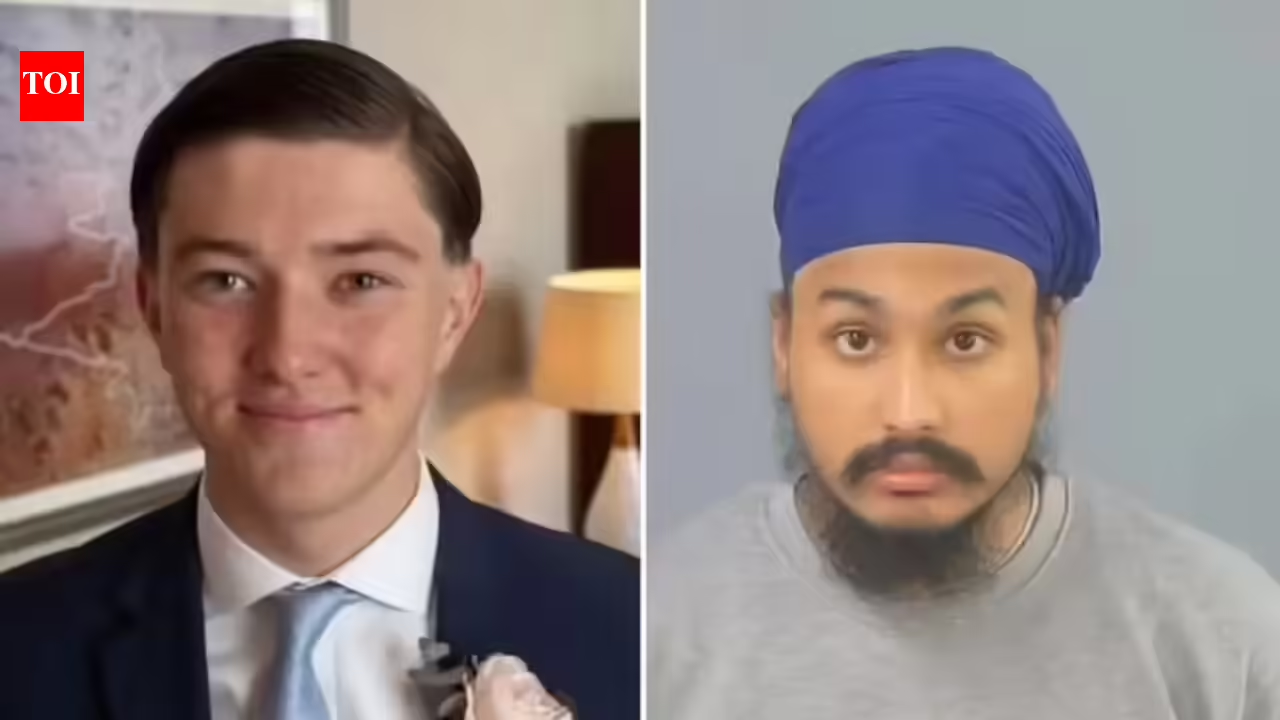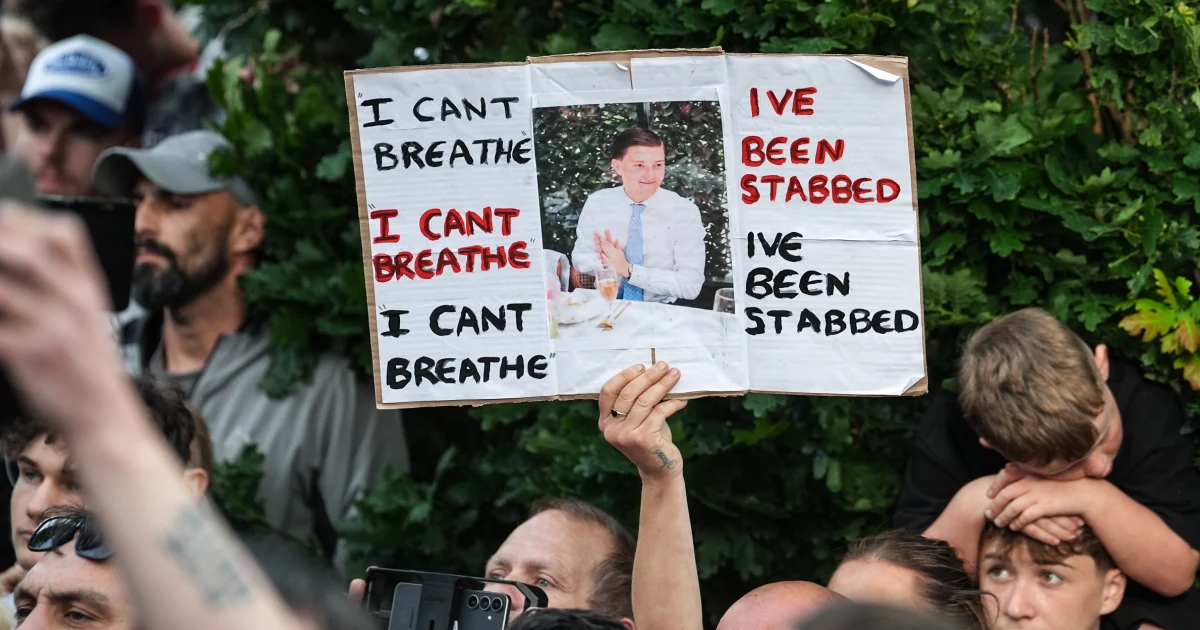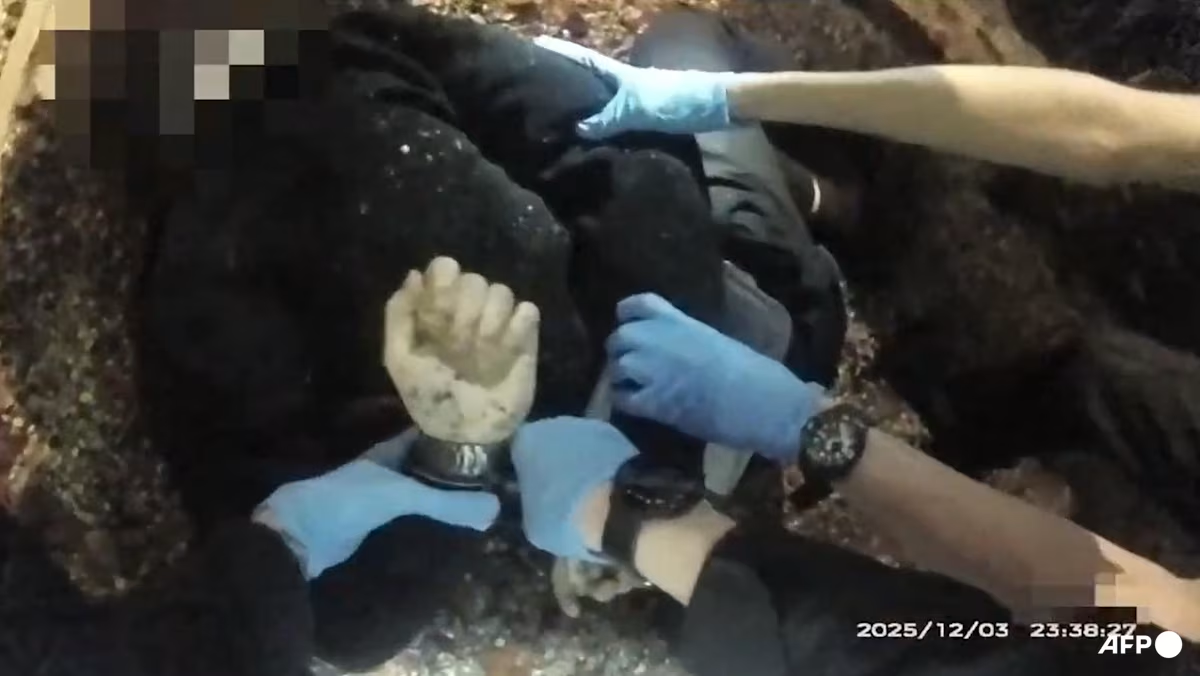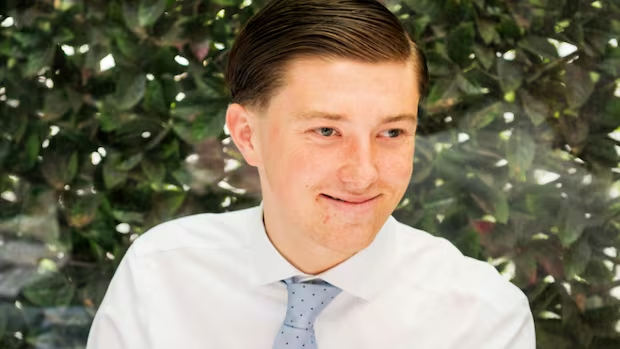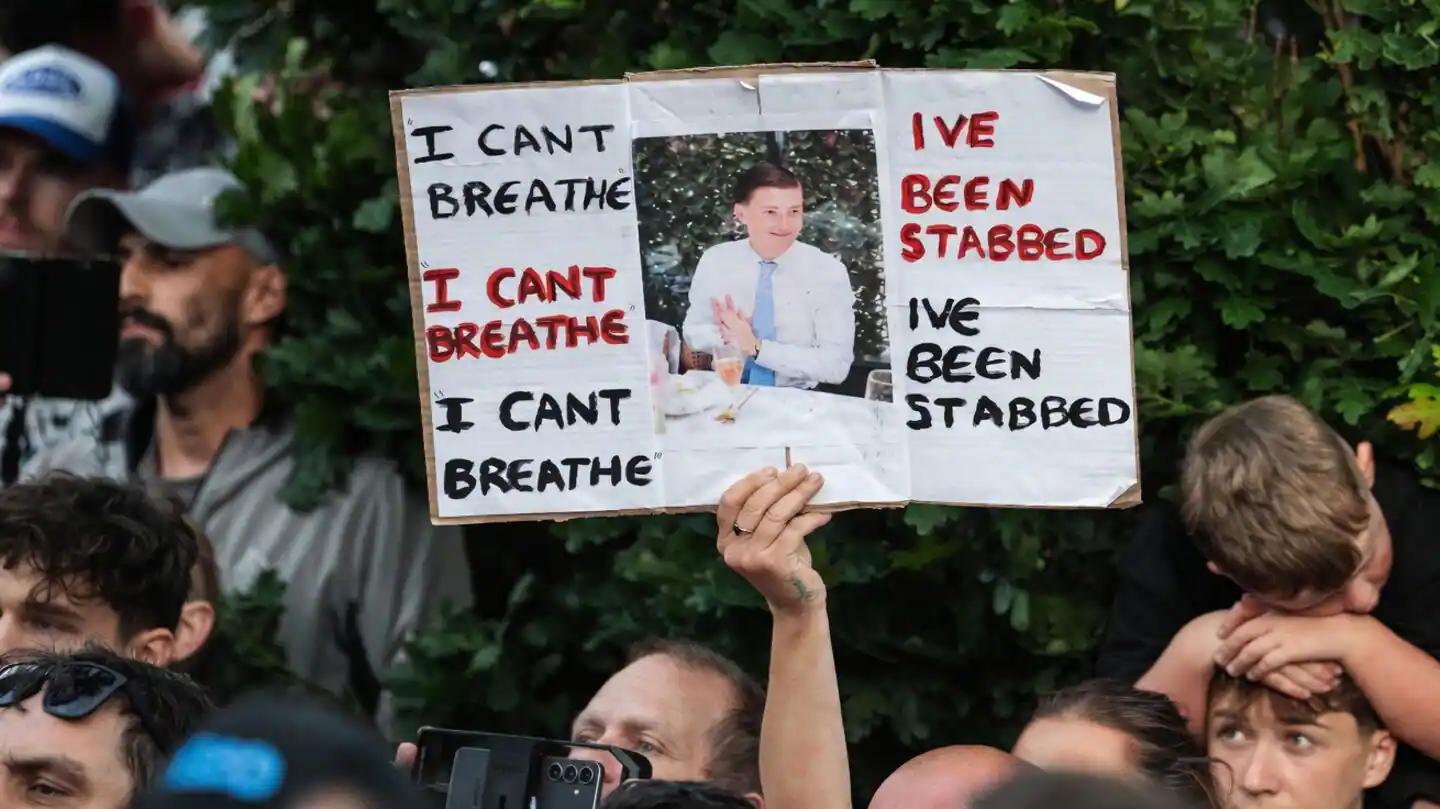
ByJONATHAN LIEBERMANJUNE 6, 2026 17:00Henry Nowak was 18 years old. He was a first-year student at the University of Southampton. In December last year, he was stabbed to death by Vickrum Digwa. Those bald facts are terrible enough. But what has caused outrage across Britain is what happened as Nowak lay dying.Digwa, who had fatally wounded him, falsely claimed that Nowak had assaulted him in a racist attack. Police officers arriving at the scene appear to have believed him. Nowak, bleeding and struggling to breathe, was handcuffed. In the bodycam footage subsequently released, he can be heard saying that he had been stabbed and repeating that he could not breathe. One officer responded: “Don’t think you have, mate.”Nowak died. Digwa has now been sentenced to life imprisonment, with a minimum term of 21 years. The police response is under investigation.Nowak’s father has asked that his son’s murder not be used to stir hatred or division. He is right. This must not become an excuse to attack Sikhs, immigrants, or minorities. A murderer is responsible for his crime, not an entire community.But neither can society simply look away from the question raised by the footage: Why did an accusation of racism carry more weight than the bleeding young man lying before the officers’ eyes?UK Prime Minister Keir Starmer delivers a statement at 10 Downing Street in 2025. (credit: Leon Neal/Reuters)Prime Minister Keir Starmer himself said there were questions to be answered about how accusations of racism informed the police decision-making. Others have called it evidence of “two-tier policing,” of a Britain so terrified of appearing prejudiced that, in some circumstances, it can no longer see who is actually the victim.Replacement of evidence by identityAs a British-born Jew, I find something hauntingly familiar in this story. Not because Nowak’s murder is identical to the experience of Jews or Israelis. It is not. But because it exposes a mentality that British Jews and Israelis increasingly recognize: the replacement of evidence by identity, of individual responsibility by political narrative, of the actual victim by the person that society has already decided must be the victim.We saw it when supporters of Maccabi Tel Aviv were banned from attending their team’s Europa League match against Aston Villa in Birmingham.We were assured that this was simply football policing. Israeli fans, we were told, presented a unique security risk. Yet a subsequent parliamentary inquiry found that West Midlands Police had relied on inaccurate information, had been influenced by confirmation bias, had focused heavily on the supposed threat posed by Israeli supporters while giving inadequate weight to threats against them from elements of the local community, and had failed properly to engage Birmingham’s Jewish community before the ban was imposed.The committee did not find proof that antisemitism motivated the decision. But it did find a process in which Israeli supporters were effectively treated as the problem before they had even arrived.Then, days ago, Paris Saint-Germain defeated Arsenal in the Champions League final in Budapest. The celebrations in Paris descended into serious disorder. Cars were set alight, shops damaged, a police station reportedly targeted, hundreds arrested, more than 200 people injured, and one person killed.Will French football supporters now be banned from attending matches in England? Will PSG supporters be treated as an inherently dangerous class? Will football authorities decide that French fans, because some of them rioted, can no longer be safely admitted to British stadiums?Of course not.Nor should they be. Those who riot should be prosecuted. Ordinary football supporters should not be collectively punished for violence committed by others.Yet when the supporters were Israeli, that elementary principle seemed suddenly to evaporate. Maccabi fans were not merely football fans. They were Israeli football fans. Their nationality had already made them suspect.And now the same attitude is taking an even darker turn.Green Party leader Zack Polanski has joined a campaign, launched by Declassified UK and the International Centre of Justice for Palestinians, which calls for British nationals who served in the IDF since October 2023 to have their movements tracked and for the government to support war-crimes investigations. The campaign warns that people who returned from committing war crimes in Gaza may now be working in British hospitals, schools, and police forces.Let me be unambiguous. If any British national has committed a war crime, whether while serving in the IDF, Hamas, the Russian army, or any other military force, he or she should be investigated. If there is credible evidence, that person should be prosecuted.But service in the IDF is not evidence of a war crime.Many British-Israelis who served after October 7 did so after 1,200 people were slaughtered in Israel and 251 people kidnapped. Some were reservists called away from their jobs and families. Some went to defend communities traumatized by the Hamas-led massacres. Some will have lost friends and relatives. To present these people collectively as potential criminals moving secretly among the British population – perhaps inside its hospitals, its schools, or its police forces – is not justice. It is demonization.There is an additional sadness in the fact that Polanski is Jewish. His Jewishness does not require him to support Israel, its government, or its military operations. Jews are entitled to criticize Israel as much as anyone else.But a Jewish political leader should understand the danger of language that encourages the public to imagine a suspect minority hidden in plain sight, working among them, needing to be monitored by the state.That language has echoes.It matters that British Jews have family in Israel. It matters that many British Jews have children, nieces, nephews, and grandchildren serving in the IDF – not because they are war criminals but because Israel is their home and was attacked.It matters that in post-October 7 Britain, Jews have repeatedly found themselves being asked to explain, condemn, or dissociate themselves from Israel simply to participate safely in public life.There is a pattern here.Nowak lay dying, yet an allegation made against him seemed to define him more powerfully than his wound.Maccabi Tel Aviv supporters were excluded, while the threats against them were not given the attention they deserved, because being Israeli rendered them suspect before they reached Birmingham.Now British-Israelis who served in the IDF are being spoken of as a class of people whose movements should be tracked, their presence in public institutions viewed with alarm.These are not identical cases. But they are connected by a deeply dangerous instinct: decide first who belongs to the approved category of victimhood and who belongs to the category of suspicion, and only afterward consider the individual facts.Britain must be better than this.It must be possible to condemn racism without allowing the allegation of racism to blind police to a dying boy. It must be possible to prosecute football hooligans without excluding Israeli supporters as a nationality. It must be possible to investigate actual war crimes without treating British-Israelis as presumptive criminals.Justice cannot be two-tiered. Not for Henry Nowak. Not for minorities. Not for Jews. Not for Israelis.A wound must matter more than a label. Evidence must matter more than identity. And a society that forgets this will eventually discover that no one is safe from becoming the wrong kind of victim.The writer is a rabbi and physician. He writes and teaches on Jewish ethics, leadership, and resilience. His work appears on rabbidrjonathanlieberman.substack.com and youtube.com. @rabbidrjonathanlieberman.Follow us on Google
Henry Nowak case exposes UK identity bias in policing, justice | The Jerusalem Post
A fatal stabbing in the UK sparks debate over policing, bias, and the danger of judging victims by labels.
1,220 words~6 min read