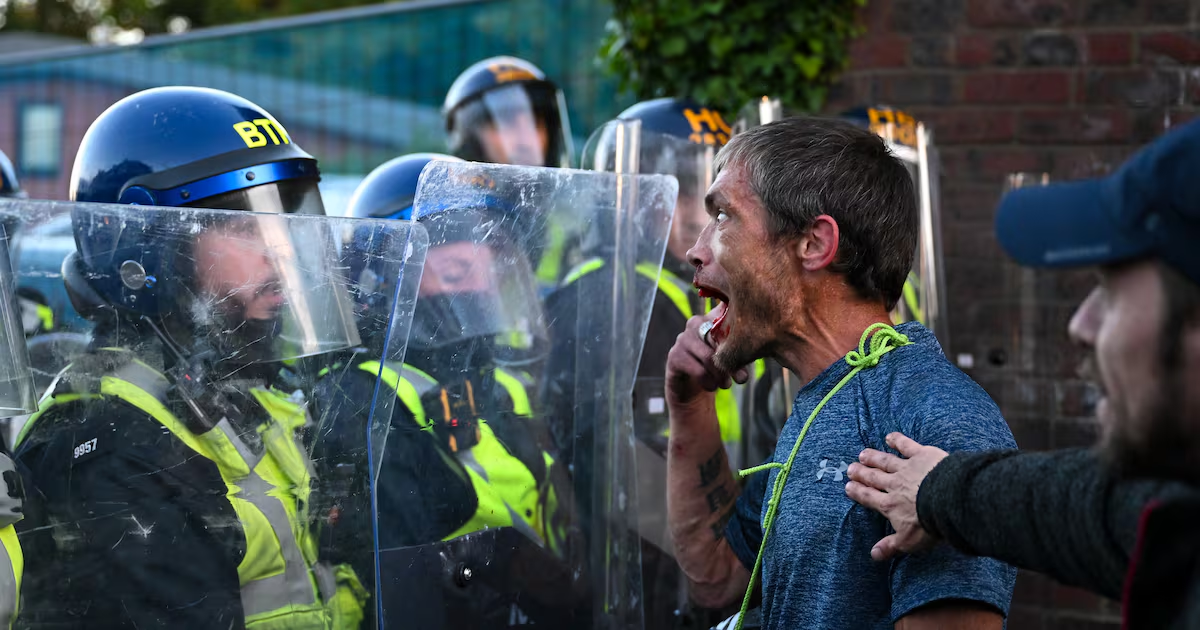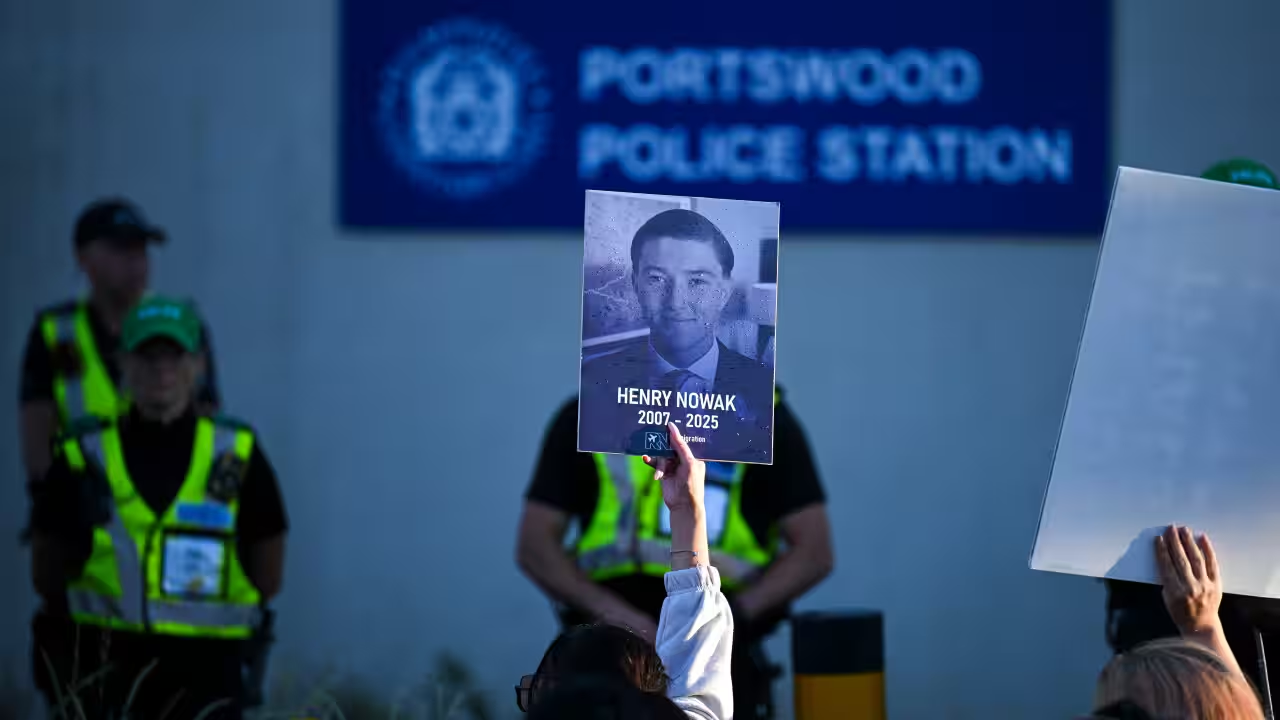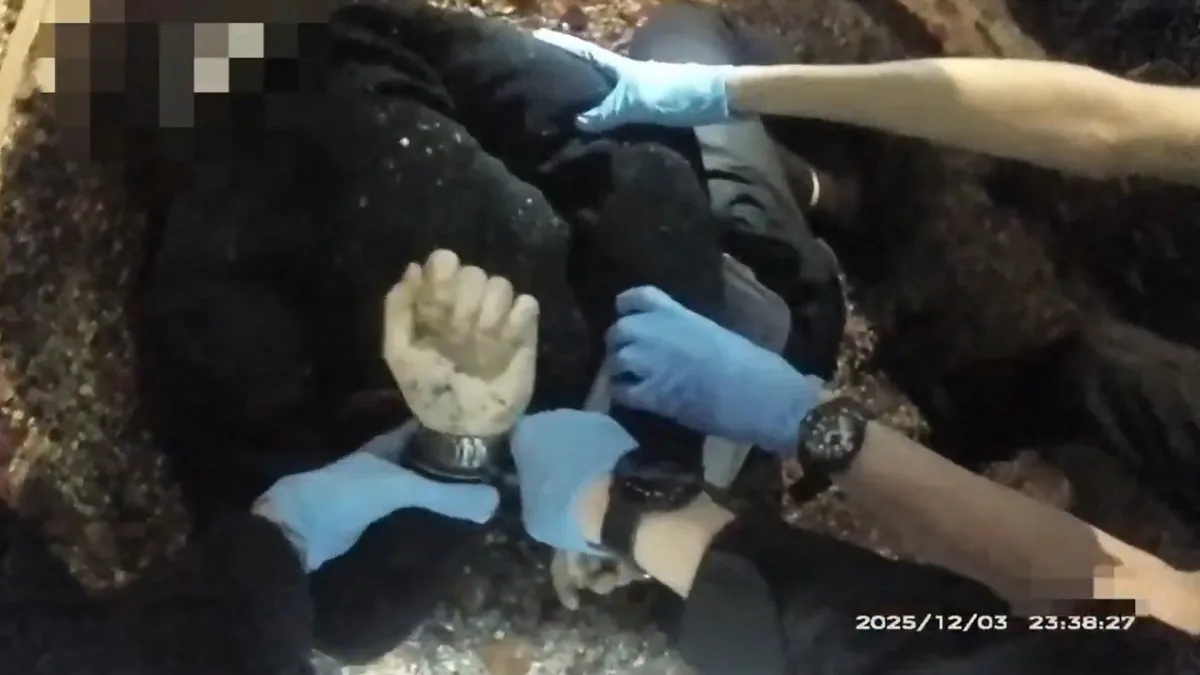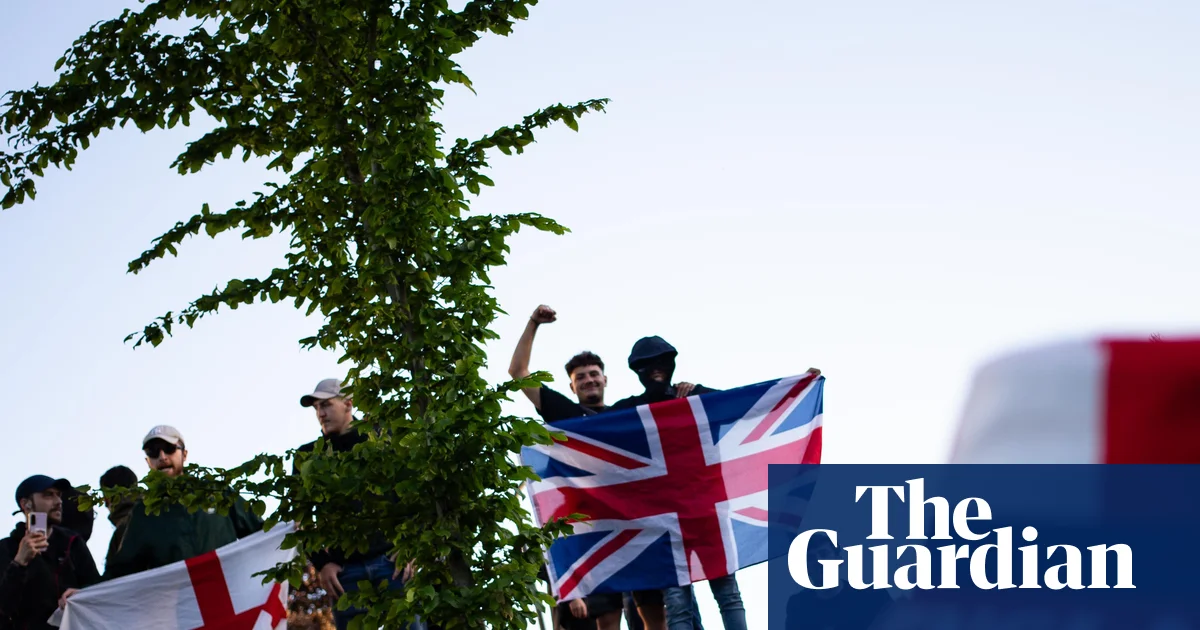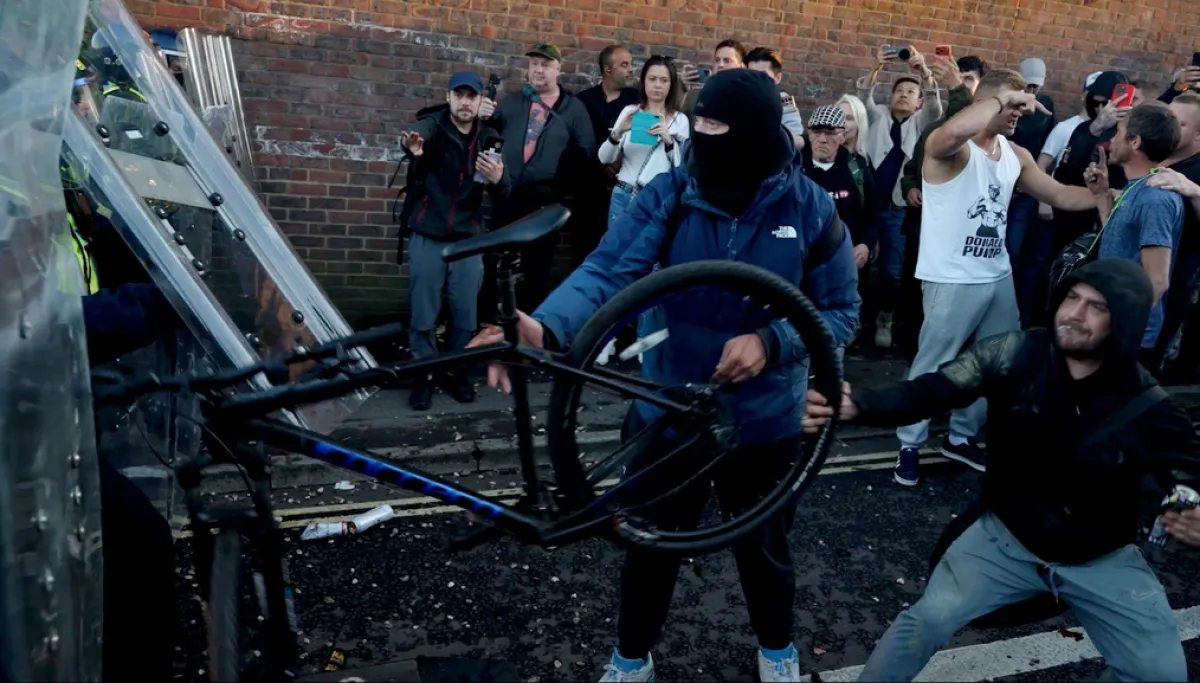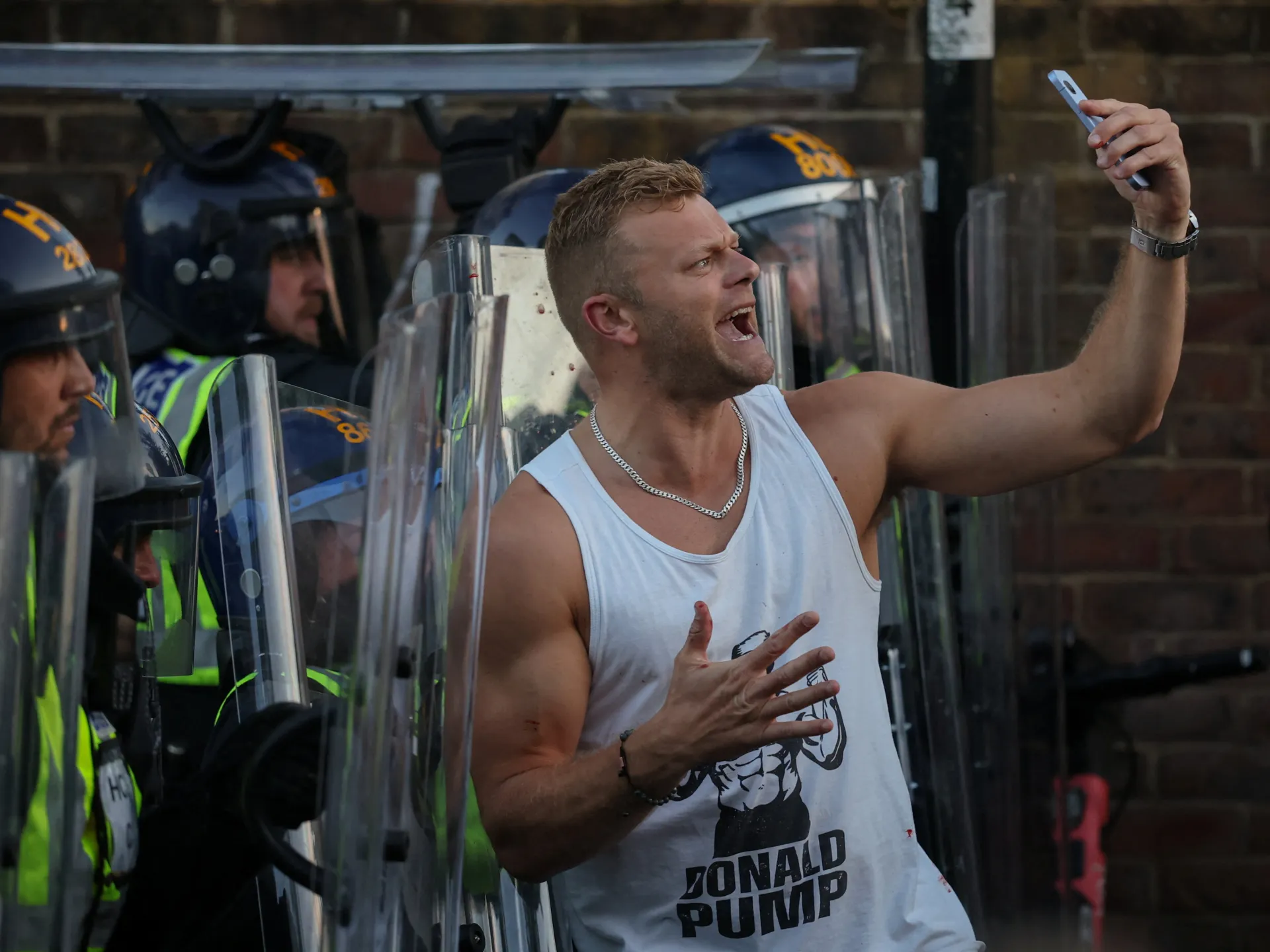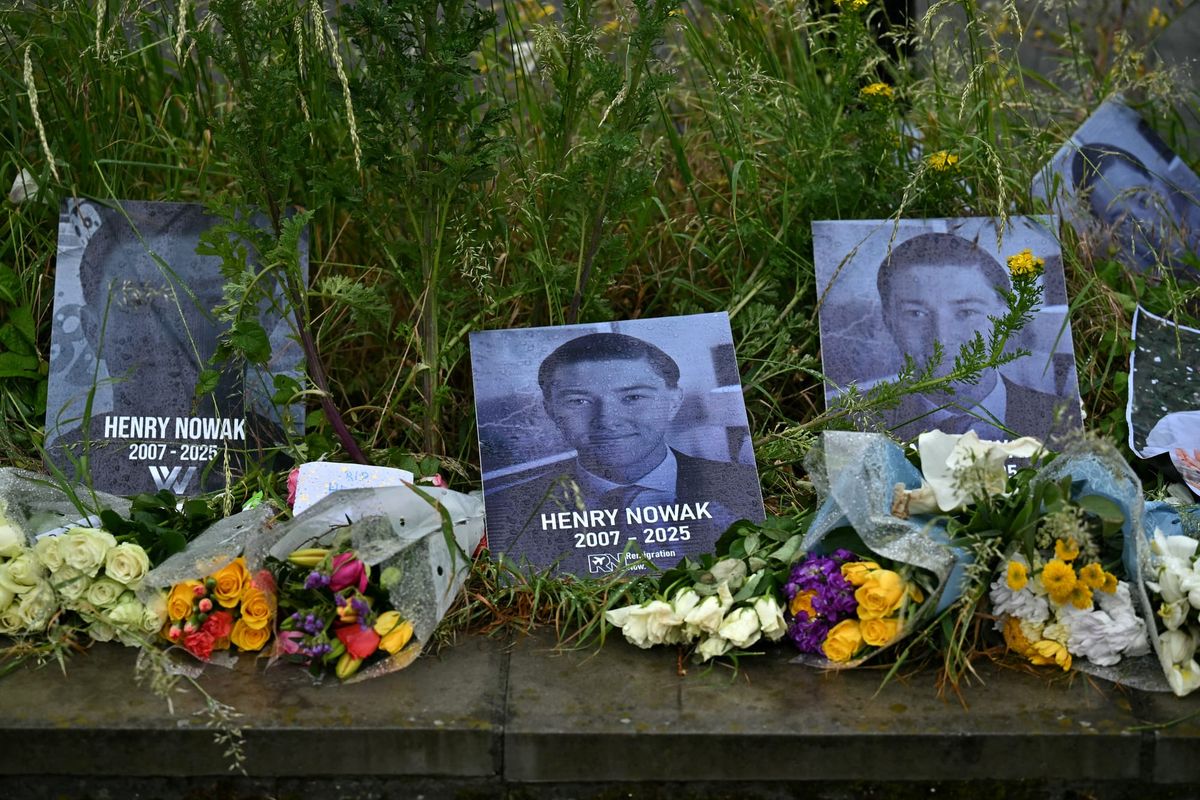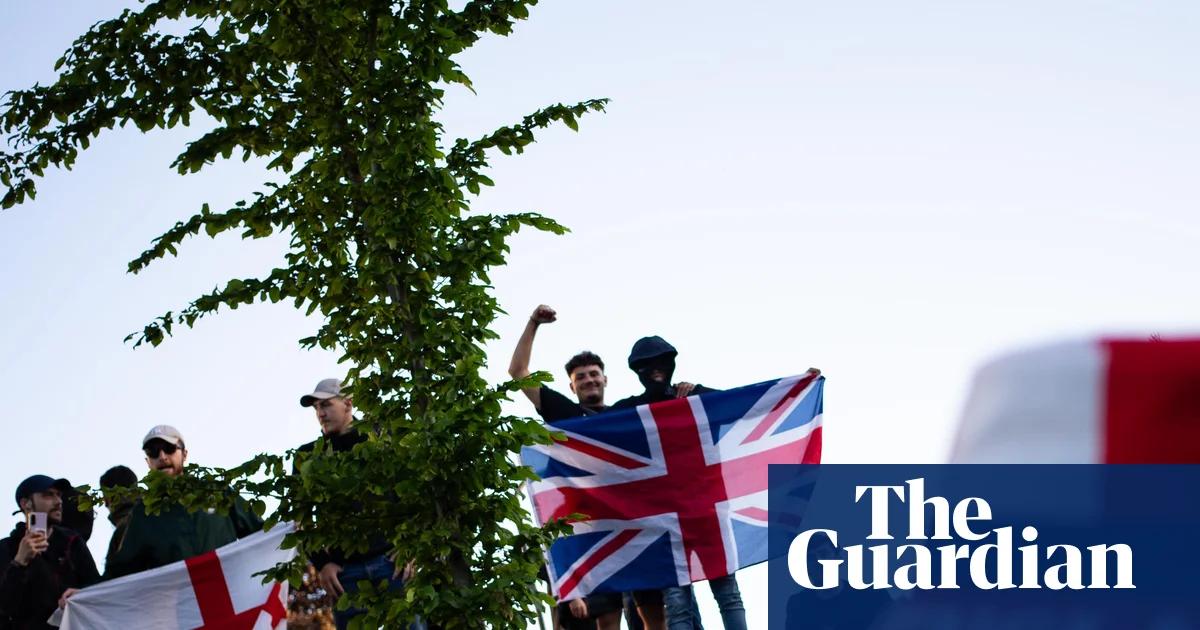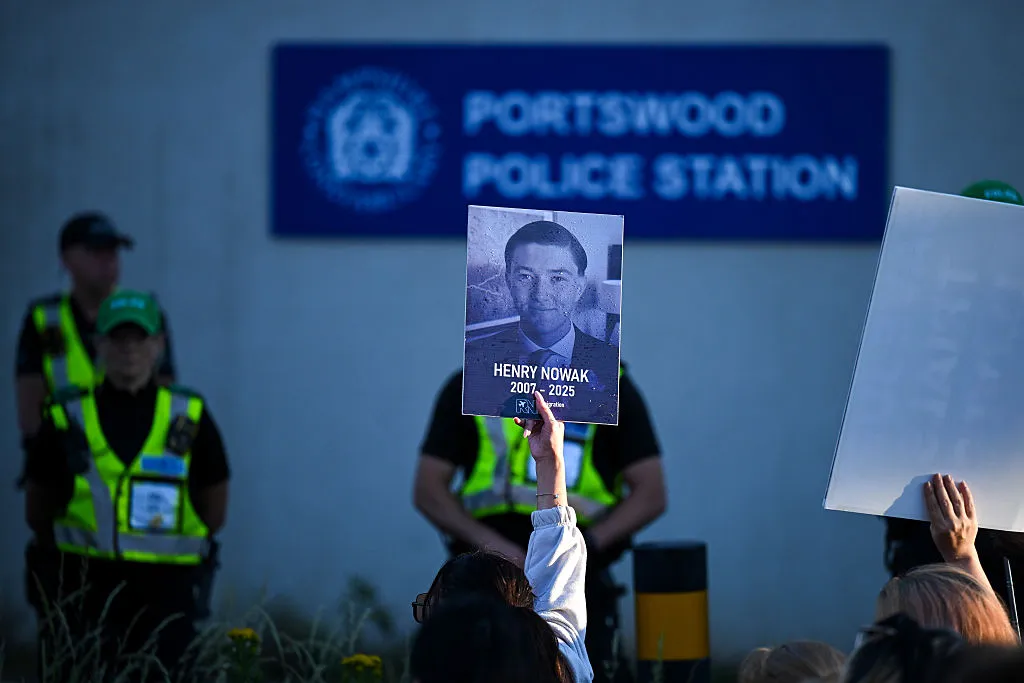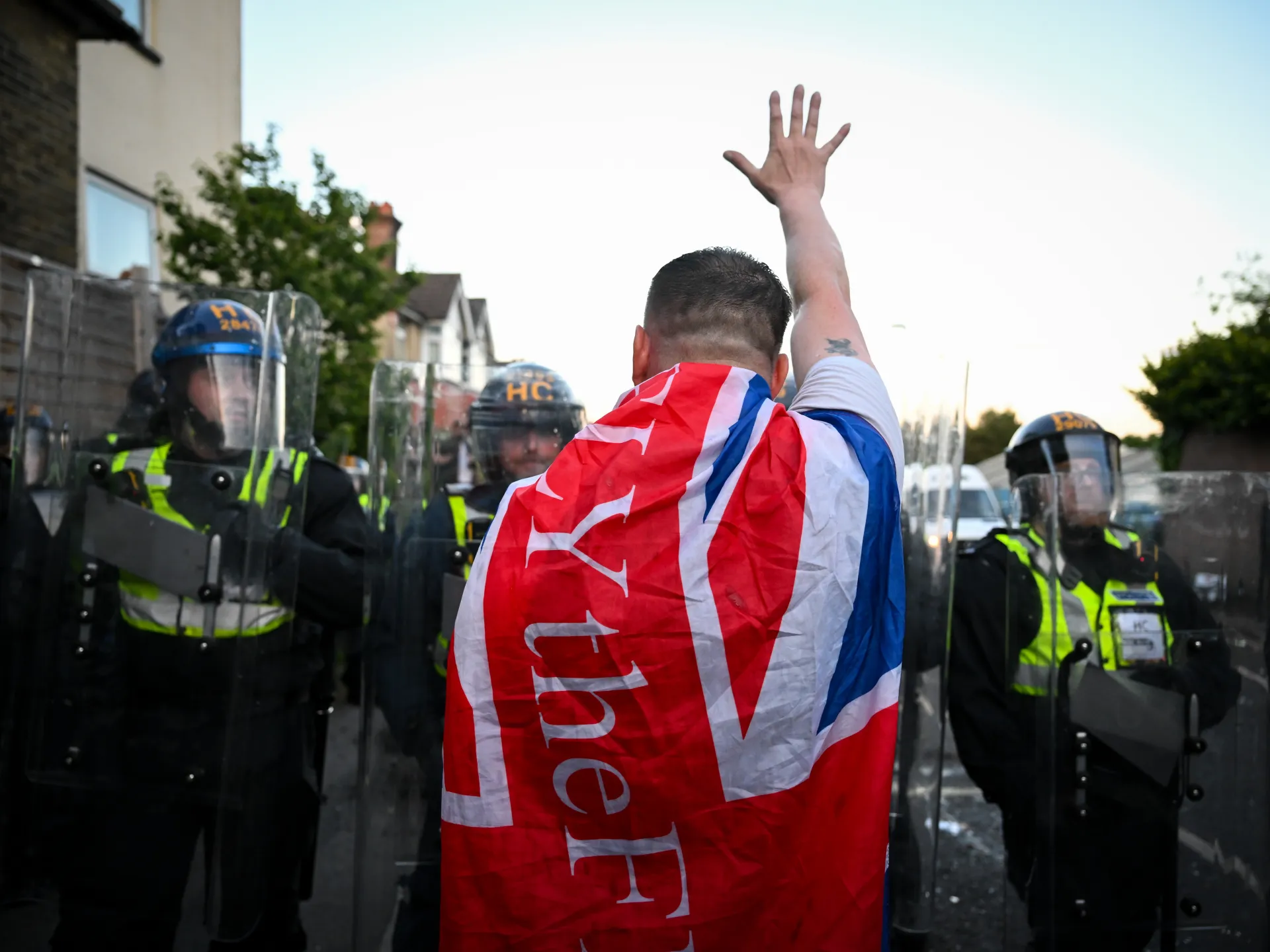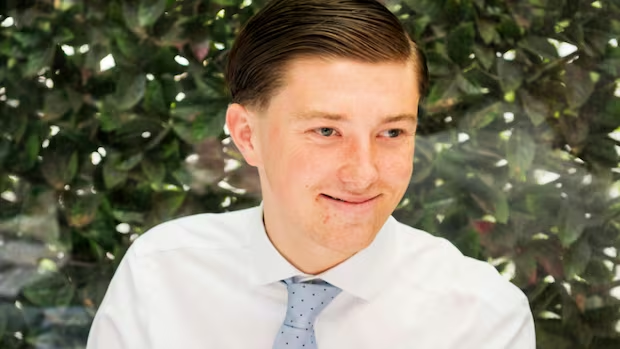
Henry Nowak's family pleaded that his murder not be used to stoke hatred in the United Kingdom.But key figures from Britain's far right appear determined to trigger another battle over race regardless.Nowak, an 18-year-old university student, was studying finance in the coastal city of Southampton when he was stabbed to death in December 2025.Following the life sentencing of his killer this week, Hampshire police released harrowing bodycam footage showing responding officers handcuffing the dying teenager while ignoring his pleas for help. Instead, they initially believed his attacker, 23-year-old Vickrum Digwa, a Sikh. He falsely claimed that Nowak had racially abused and assaulted him.WATCH | Protests erupt over bodycam footage of teen's death:Police, protesters clash in U.K. over bodycam footage of dying teen3 hours ago|Duration 1:18Violent protests erupted in Southampton, U.K., in response to released police body camera footage showing the death of 18-year-old Henry Nowak in December 2025. The video shows Nowak being handcuffed by police after the man who stabbed him falsely accused him of a racist attack.'White grievance'Prominent anti-immigrant figures and members of the U.K.'s political far right have pounced on the release of the video, claiming it shows British police discriminate against white people by having more lenient rules for racialized people. "It is now clear to growing millions in this country that we are living under two-tier policing," Reform UK Leader Nigel Farage said during a volatile exchange in the British House of Commons Wednesday. "The instructions that are given to police officers from police bosses are clear and written down in ink. It says you must treat different ethnic groups in different ways." The anger over the revelations about Nowak's death led to violence in the streets of the city where the young man lived, injuring 11 police officers overnight Tuesday in Southampton.Tommy Robinson, a prominent far-right activist, attends a demonstration in Southhampton Tuesday following Vickrum Digwa's conviction for Nowak's murder. (Isabel Infantes/Reuters)Speaking to the crowd in the city, Tommy Robinson, one of Britain's most prominent far-right activists, whose real name is Stephen Yaxley-Lennon, focused his rhetoric on white grievance."This is about race," he said. "As white people, we are treated as second-rate citizens by our own police force."After his remarks, hundreds of demonstrators approached the Digwa family home and attempted to breach police lines, pelting officers and their vehicles with flares, glass, bottles and other objects.Goldie Ghamari ousted from PC caucus after meeting with Tommy Robinson"What you've seen ... is a long-term 'white grievance' narrative that has really penetrated politics here," said Aaron Winter, a Canadian-born academic and sociologist at Lancaster University who researches the far right and racism. Winter said the narratives of white people being disadvantaged or being "taken over" by migrants or people of different ethnicities continue to fuel many key debates in contemporary Britain. Reform UK Leader Nigel Farage, centre, reacts next to newly elected councillors and member of Parliament Andrew Rosindell at the Havering town hall following the results of the local elections in the London borough of Havering on May 8. (Jack Taylor/Reuters)"It's been central to Brexit, to anti-migrant politics, to the so-called 'white working class left behind' politics," he told CBC News.Winter said the right-wing Reform UK political party seizes on such perceived injustice as a mobilizing opportunity and rallying point to grow its base and expand its influence."It's not because they care about the victims."Reform UK surgingA survey earlier this week for the Times newspaper by the YouGov polling firm showed Reform UK leading in popular support with 27 per cent, up three per cent in a week, and leading both Labour and the Conservatives, who were tied at 18 per cent.Farage's "two tier" comments in the House of Commons may have been a reference to the Police Anti-Racism Commitment. It was introduced by the U.K. government in 2022 as part of a broader initiative aimed at addressing what a public inquiry 26 years ago called "institutional racism" in British policing.The murder of black teenager Stephen Lawrence in 1993 and the subsequent mishandling of the investigation triggered widespread changes meant to address police racism.The stated goal of the policy is to produce an "equality of policing outcomes for people from different ethnic groups," thereby compelling police to tailor their actions to individuals and communities "according to their specific needs, circumstances and experiences, with understanding."Britain's Starmer weakened and Labour exposed in local electionsPolice clash with far-right protesters, make arrests after more than 100,000 rally in LondonPrecisely what the policy means in practice, however, has been fiercely debated in the aftermath of the Nowak case. Prominent human rights lawyer Matthew Ryder, who represented the Lawrence family, told BBC Radio 4 Wednesday that Farage's suggestion the guidance issued to police amounts to a "two-tiered system" is absolutely untrue."It's saying, 'Don't be so clumsy as to take a universal approach to every situation you come across,'" said Ryder. Protesters clash with police officers during a demonstration Tuesday following Digwa's conviction in Southampton. (Isabel Infantes/Reuters)"Understand that there's nuances, there may be cultural differences, there may be background, that in order to treat people the same, you sometimes have to take into account their different circumstances."Fatal attackAccording to British prosecutors, Nowak, who was unarmed, was walking back to his university residence around 11 p.m. on Dec. 3 last year, when by chance, he came upon Digwa.According to a sentencing statement, Digwa was carrying a large Sikh dagger in a sheath. While many Sikhs wear a kirpan, Digwa was part of an order of Sikhs that also traditionally carries a second knife. An undated handout photo of Digwa, who was sentenced to life in prison on Monday over the killing of Nowak. (Hampshire and Isle of Wight Constabulary/Reuters)The judge noted some sort of altercation ensued, perhaps after Nowak started filming the large knife Digwa was carrying, which prompted Digwa to grab Nowak's phone. That led to a struggle during which Digwa stabbed Nowak multiple times, and fatally in the chest.When police arrived, Digwa and his brother, who by then was also on the scene, told officers Nowak had attacked him and called him a "Paki," which the judge concluded was one of many "wicked lies" Digwa told the officers.They handcuffed the dying teenager for roughly a minute, even as he told them repeatedly he had been stabbed and couldn't breathe, before finally realizing their mistake and administering CPR.Police footage shows the arrest of Nowak after he was stabbed by Digwa in Southampton on Dec. 3, in this still image from a video obtained by Reuters on June 3. (Hampshire and Isle of Wight Constabulary/Reuters)But by then, it was too late and Novak bled to death.A pathologist who examined Nowak's body said that the teen would not have survived his injury, no matter how quickly he was treated on scene. Still, after Digwa's sentencing on Monday, Nowak's father said this treatment by officers stripped his son of dignity in his dying moments.Trying to urge calmAll day Tuesday, senior British politicians — from the Labour government and the opposition — tried to urge calm and time for the agency that investigates police conduct to do its job."Exploiting this tragedy to create grievance and division would be wrong in any circumstances," Prime Minister Keir Starmer said in response to Farage's two-tier policing accusations. "But to do it when the family are expressly saying, 'Please don't,' is unforgivable. It shows exactly who [Farage] is." British Prime Minister Keir Starmer speaks in the House of Commons in London on Wednesday. (House of Commons/Reuters)Likewise, Home Secretary Shabana Mahmood said Farage and his political allies shouldn't be allowed to make this case about racism, when a teenager is dead and his family will suffer lifelong pain."This is not a case about racism. This is a case about murder," she said."We cannot allow this murder to turn communities against one another. We must condemn those who seek personal political profit from tragedy."Despite the appeals for unity, mainstream party leaders have so far been unable to successfully counter the far right's narrative on race and ethnicity, said Winter, the Canadian sociologist, leaving no question about who is dictating the debate in modern Britain. "Our system right now is lined up where the agenda is set on the far right terms and conditions."
ANALYSIS | How Britain’s far right hijacked the murder of Henry Nowak | CBC News
The brutal murder of 18-year-old student Henry Nowak in southern England has ignited another volatile debate in the U.K. over race and what’s been described as “white grievance.” Despite pleas from Nowak's grieving family to prevent his death from sparking racial division, prominent far-right and populist figures have tried to exploit the tragedy.
1,370 words~6 min read