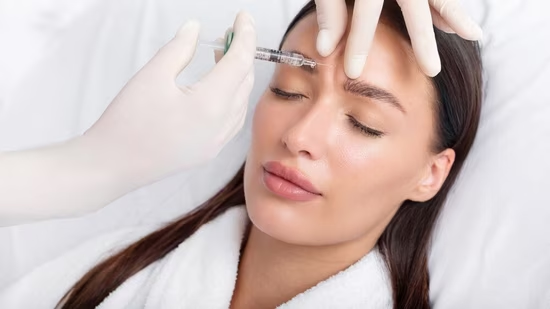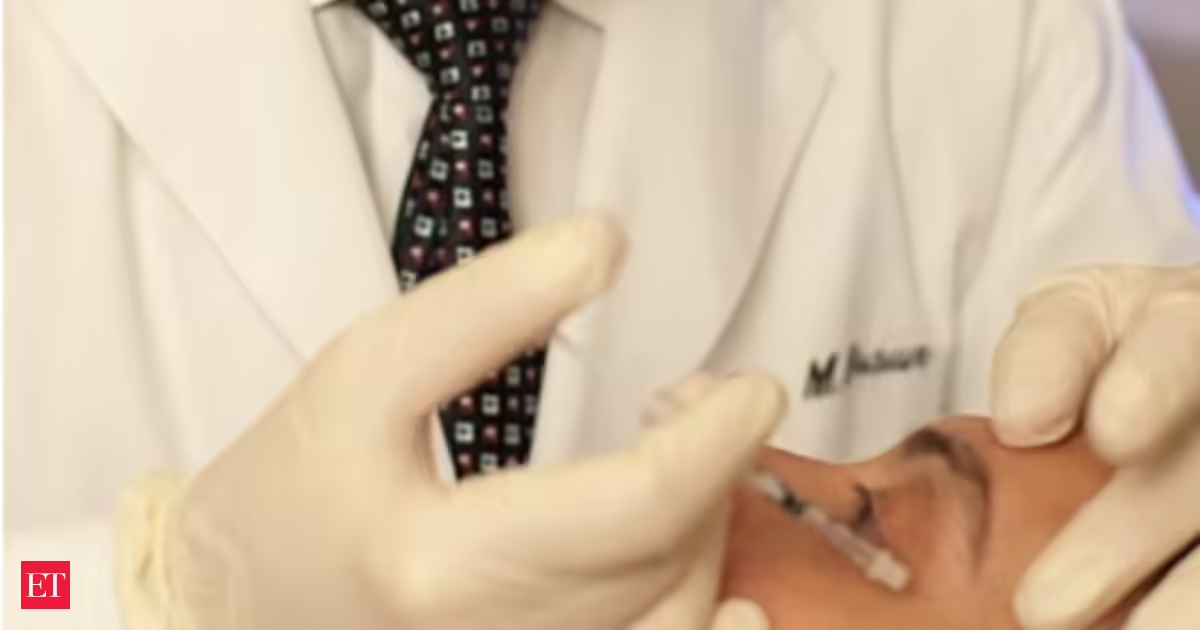
Although Botox is now mostly known as a cosmetic treatment, its entry into this field began under very different circumstances. In the 1980s, doctors used botulinum toxin type A to treat eye diseases such as blepharospasm and strabismus; there was no question of aesthetics here. Medical professionals sought means of muscle relaxation to alleviate conditions affecting patients’ vision and eyelid movements. However, after some time, another surprising discovery was made by both patients and doctors. It turned out that in areas where Botox was applied, the skin smoothed, and the forehead wrinkles disappeared.The effect of smoothing became the basis for another sphere of medicine and even for one of its most important discoveries. This side effect of the treatment was not significant at first but later became a key element in a wide field of aesthetic studies.Botulinum toxin being injected in the human face | Wikimedia CommonsThe discovery began in eye clinics, not beauty clinicsThe groundwork for the tale was laid by the efforts of ophthalmologist Dr. Alan Scott, who established botulinum toxin type A as an effective treatment for disorders of the eye muscles. As reported in the Ophthalmology review, more than 13,000 individuals had been treated with this therapy in international trials by 1986. Such a large number of patients gave doctors frequent opportunities to observe side effects.As it turned out, the placement of the injections was vital, since many were performed in the area near the facial muscles that form the expression lines around the eyes and between the eyebrows. According to a clinical review in the Journal of Clinical, Cosmetic and Investigational Dermatology, the muscles responsible for these phenomena are the corrugator supercilii and the procerus, and their relaxation leads to a smoother appearance of the surrounding skin.The 1987 observation changed everythingThe breakthrough arrived in 1987, when Jean Carruthers, a Canadian ophthalmologist, observed that her patients with blepharospasm showed improvements in the appearance of glabellar frown lines after receiving botulinum toxin. Clinical Interventions in Aging has written about these events in several reviews, citing this as one of the earliest documented observations showing improvements with botulinum toxin in cosmetic settings. These patients not only showed improvements in their medical conditions but also visibly reduced wrinkles in the area where botulinum toxin was administered.The importance of this observation lay in its repeatability, since the effect was observed frequently enough to raise the hypothesis that it might not be coincidental. Rather than leaving it as a curiosity, it had to become something to be studied. Several historical reviews have noted that Jean Carruthers and her dermatologist husband, Alastair Carruthers, were among the first to begin research into the cosmetic applications of botulinum toxin.Ribbon diagram of tertiary structure of BotA | Wikimedia CommonsFrom medical therapy to cosmetic medicineHistorical reviews in Plastic and Reconstructive Surgery indicate that one of the earliest scientific papers addressing the cosmetic use of botulinum toxin was published in 1988, following the initial discovery of the wrinkle-reducing effect. The subsequent research continued to demonstrate positive effects on glabellar lines and overall facial aesthetics. There were further regulatory developments much later, as indicated by safety reviews in Dermatologic Surgery, which revealed that the botulinum toxin type A was approved by the FDA for strabismus and blepharospasm in 1989, with cosmetic approval coming only in 2002 for treatment of glabellar lines. This is significant in that it demonstrates that Botox had been used for medical purposes for over ten years prior to being widely recognized as a cosmetic solution.Physicians treating eye conditions observed that their patients' wrinkles appeared different from those of other patients; however, the breakthrough came when they paid attention to an unintended observation and investigated it properly. The appearance of the patients' wrinkles may not have been what they wanted, but it was a clear observation and one that proved reliable and medically significant. While today it is estimated that millions of patients around the globe are under the effects of Botox injections, the medical history of the cosmetic use of this therapy can be traced to small-scale facilities such as clinics offering treatments for eye muscle problems of the 1980s. In observing an unintended outcome of their treatments, these physicians contributed immensely towards a shift in medical therapies.
In 1987, ophthalmologist Dr. Jean Carruthers noticed her crossed-eye patients' frown lines were vanishing, and Botox accidentally became cosmetic history's biggest hit
Originally developed to address eye disorders such as blepharospasm, Botox has evolved into a key player in the cosmetic industry since its inception in the 1980s. Pioneering ophthalmologists like Jean Carruthers noted the irony when patients seeking treatment for their eyes left with smoother skin instead.
704 words~3 min read