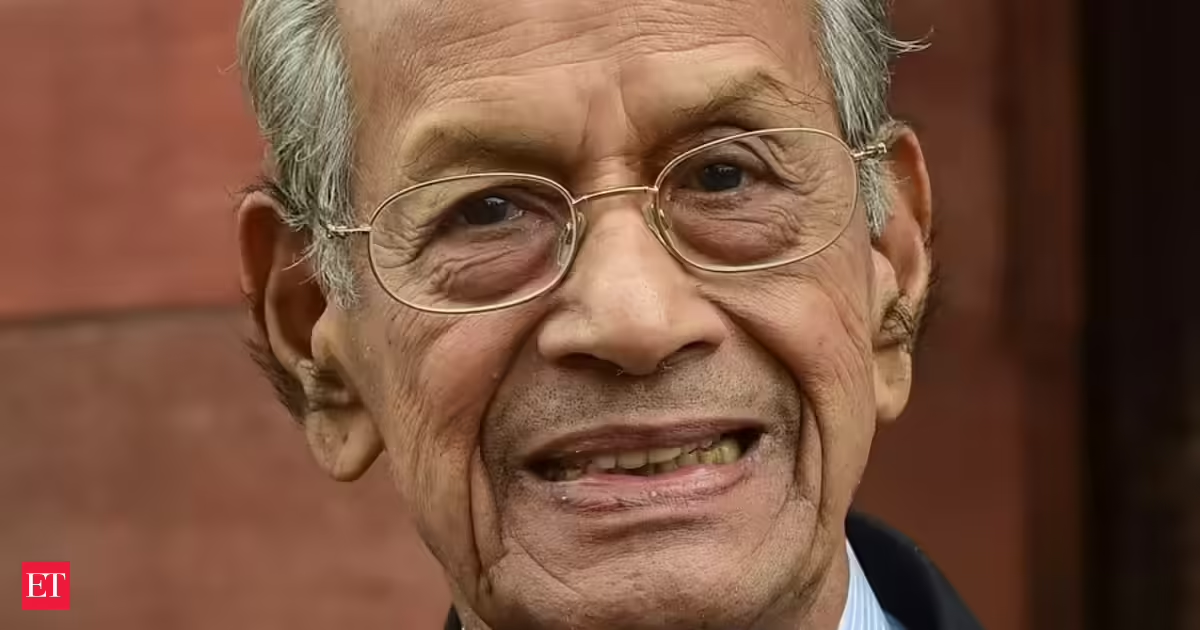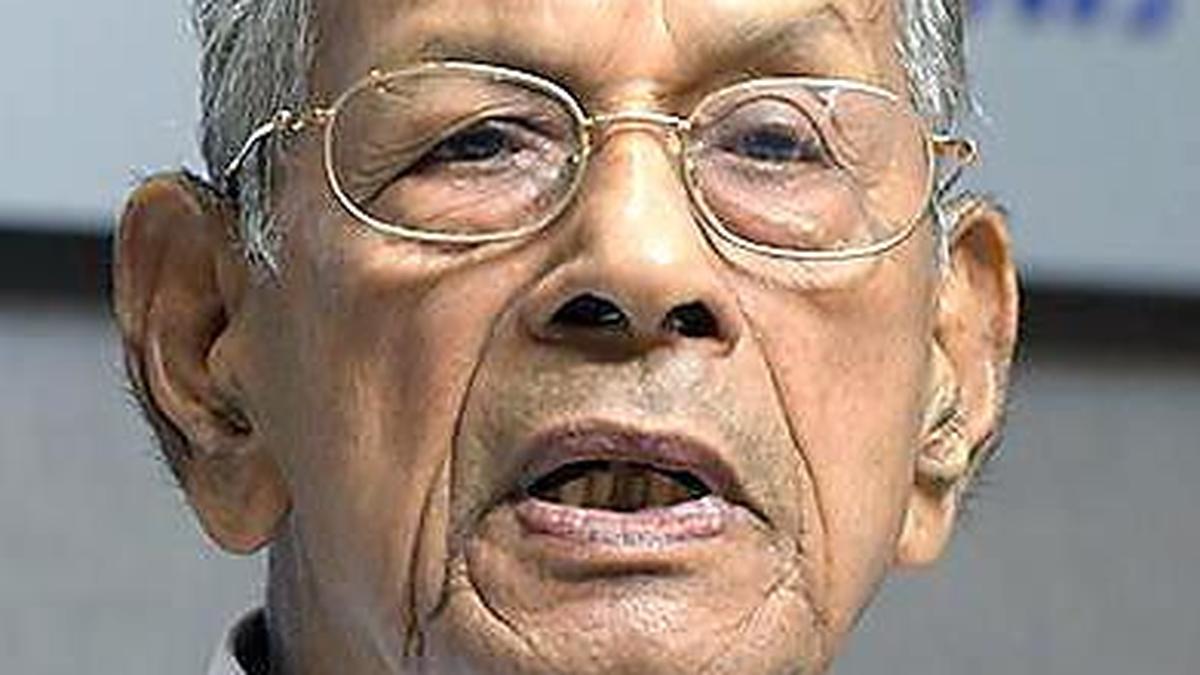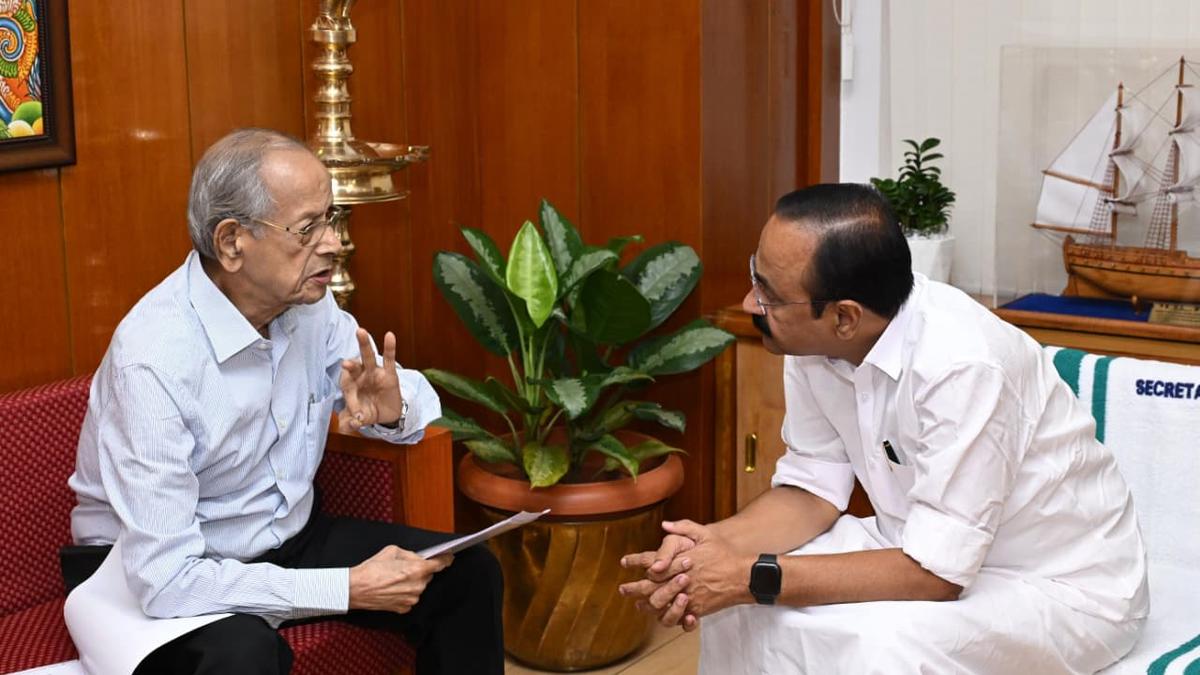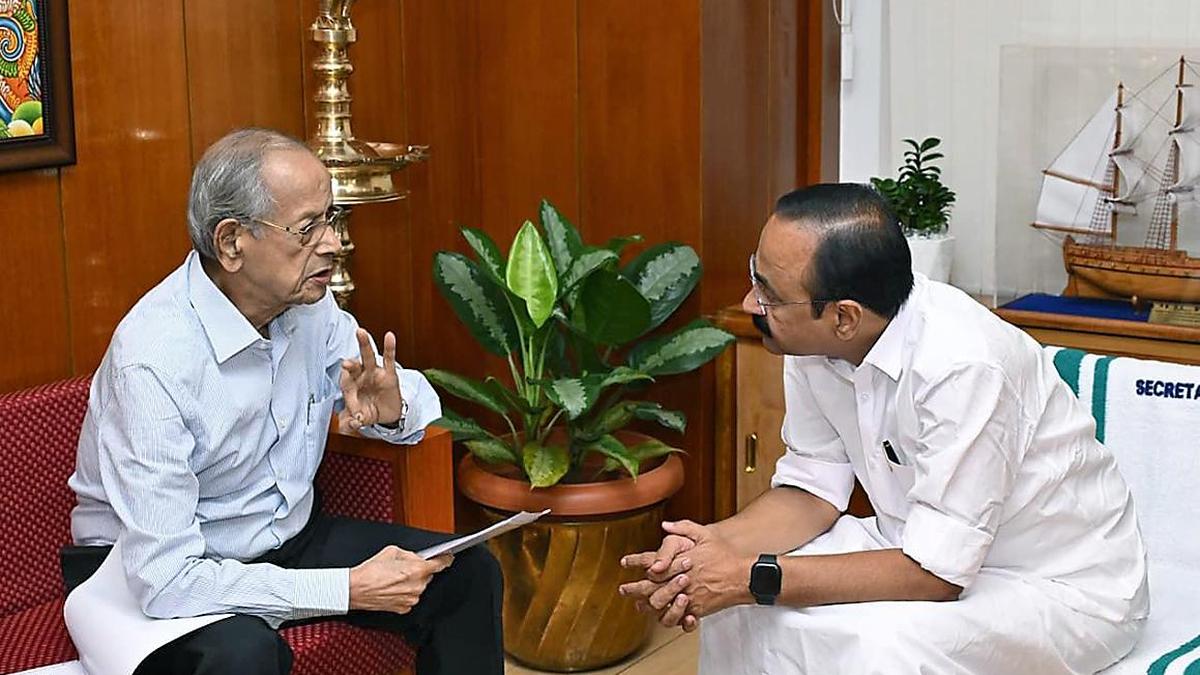
Technocrat E. Sreedharan submitted an interim report prepared by the DMRC to Kerala Chief Minister V. Satheesan for the implementation of Kerala high-speed rail project.
| Photo Credit: FILE
Hardly a week after technocrat E. Sreedharan met Chief Minister V.D. Satheeshan, the State government has constituted an expert committee headed by Secretary, Transport (Railways), as the convener to study the interim report submitted by the Delhi Metro Rail Corporation (DMRC) on the proposed Kerala high-speed rail project in Kerala.The committee, comprising J. Vinayan, (Railways), C. Veeramani (finance) and Sridhar Radhakrishnan (environment) as expert members, will undertake a comprehensive examination of the proposal, including technical feasibility, financial viability, environmental implications, implementation challenges and potential socio-economic benefits to the State. The committee will also submit its remarks and recommendations within three weeks from the date of the order constituting the committee.N.S.K. Umesh, Officer on Special Duty (OSD) to the Chief Minister, will assist the Transport Secretary (Railways) and facilitate the functioning of the committee. Mr. Sreedharan submitted an interim report prepared by the DMRC to the State government a week ago for the implementation of Kerala High-Speed Rail, a standard gauge corridor of 473.20 km from Thiruvananthapuram to Kannur.The proposed project envisions connecting Thiruvananthapuram with Kannur in just three hours and 30 minutes, envisaging the project as the world’s first green rail corridor. The line will start from Poojappura in the capital city and terminate at Mundayad in Kannur. The 473.20-km double line from will have 23 stations. The line will be fully elevated except for a 6.5-km tunnel in Thiruvananthapuram city.The maximum design speed of the trains will be 200 kmph, while the maximum operational speed will be 180 kmph and the average commercial speed, 140 kmph. The total project cost is estimated at ₹60,000 crore, of which ₹36,000 crore will be contributed as equity by the Central and State governments in a 51:49 ratio. The remaining ₹24,000 crore is proposed to be raised through crowdfunding. Published - June 06, 2026 04:49 pm IST