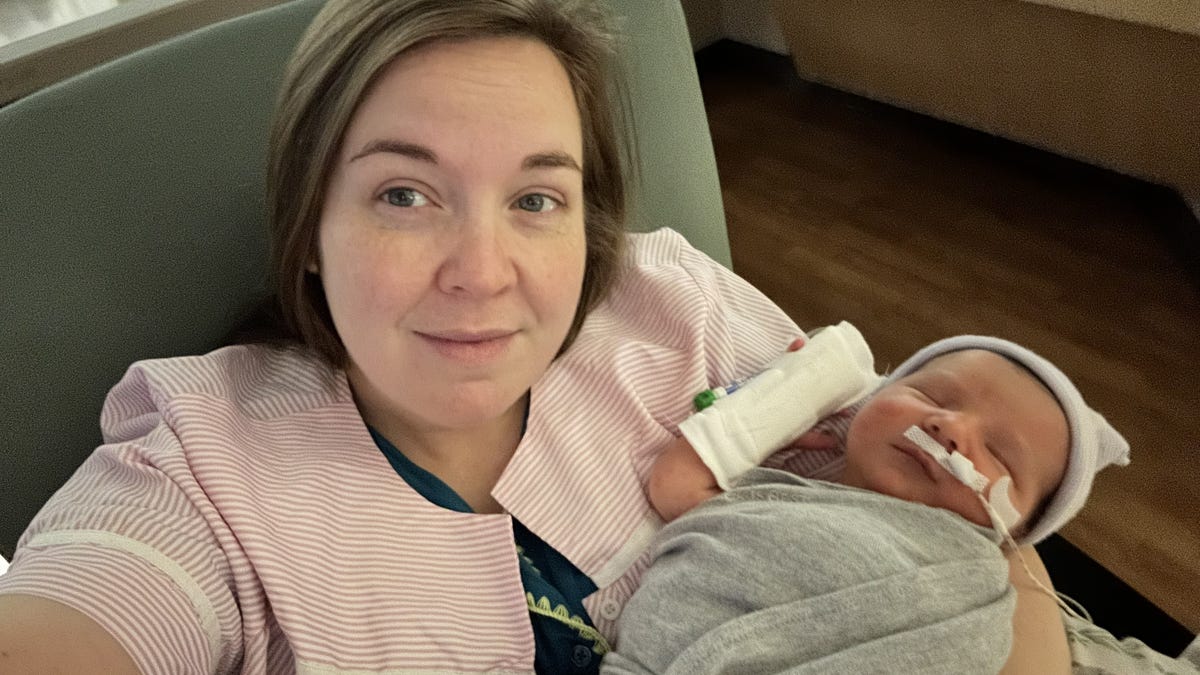
The author holding her third baby.
Courtesy of Alexandra Frost
I was 38 weeks pregnant when I stopped being able to walk, at age 28, with my first child of five. I remember the exact moment, standing in a long hallway, where I couldn't race back to my class where 30 high school kids sat waiting for instruction. I grabbed a rolling chair from a nearby classroom and inched my way back from the bathroom, sitting.I'd developed a painful pelvic bone condition, and I thought for sure I'd be sent home to bed for the rest of my pregnancy.But that's not what happened next. Instead, I got a call from HR, detailing my options. I could stop working now — since I couldn't walk and all — but that would count as starting maternity leave early. And that would mean two fewer weeks I'd get to spend with my baby.So I rolled from student to student in that same chair for the next three weeks, until I delivered my baby overdue.This was the beginning of my abrupt education into the world of maternity leave, and how policies, procedures, and the workplace dictate what's best for you — not your body, your mind, or even your doctor.Over the decade that followed, I'd go on to have four more babies, work for multiple employers, and experience multiple parental leave policies. Each one shaped the story of my pregnancy, birth, and motherhood in different ways — some that I valued, and some I'd like to forget.