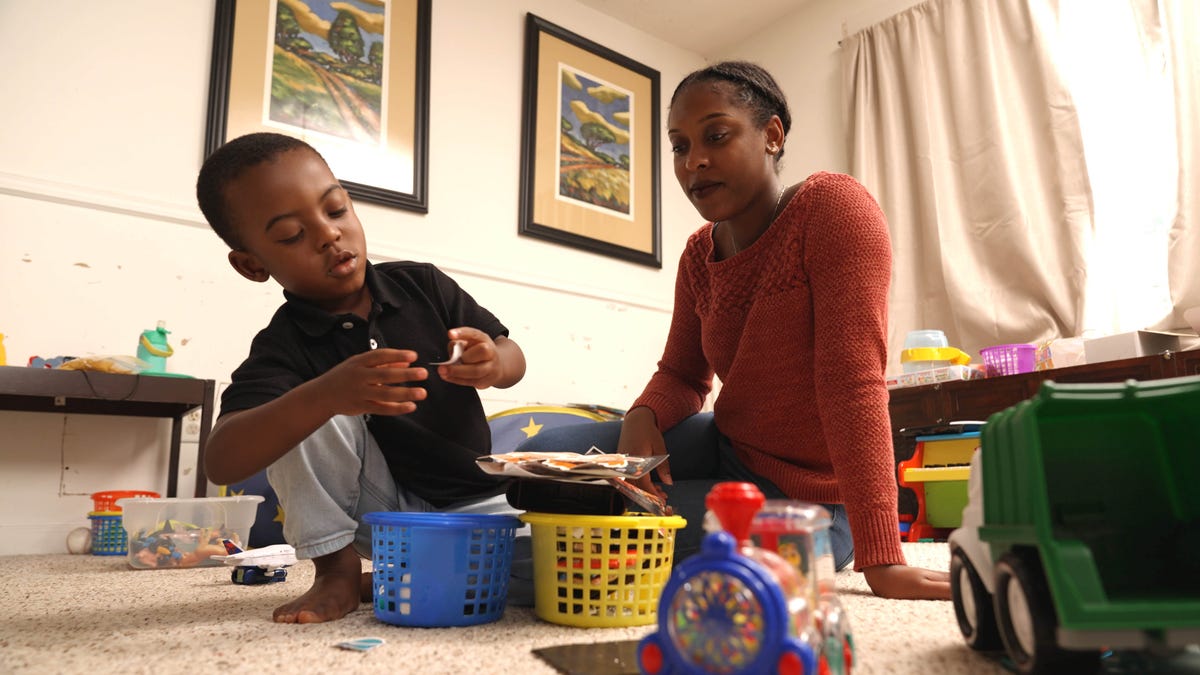
Miya Walker, 25, wasn't worried about child care costs when she was pregnant with her son in 2021. Her data analyst role was remote, and her mom was around when she needed help.
But after her son was born in April 2022, her employer pushed going back to the office, an hourlong drive from her home in Snellville, Georgia. Then, her mom's arthritis flared up.
Walker said she worked in a hybrid model for a few months after her maternity leave, but soon realized "it just didn't make sense, financially." The day care she wanted to send her son to cost $1,500 per month. Plus, hearing his cries when she left for work was unbearable. She quit.
“I feel like, a lot of women, we’re educated, and we have the ability to work, and we want to contribute to the workforce," Walker said. "It's just, you know, circumstances. It doesn’t make it sustainable. It doesn’t allow us to navigate working and being a mom.”
Federal data shows a growing share of mothers with young children in America are exiting the workforce, chipping away at gains made during the COVID-19 pandemic. Economists warn the decision to step away, even temporarily, could have lasting damage on their earnings and careers.