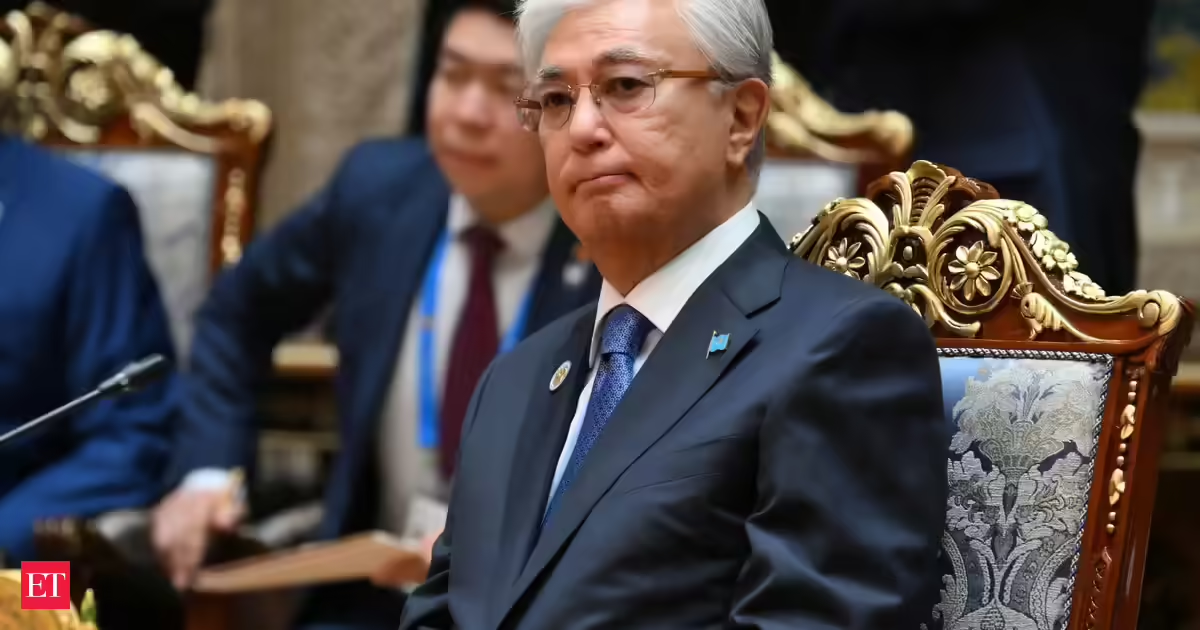
President of Kazakhstan (Central Asia’s biggest state) Kassym-Jomart Tokayev has signed a package of constitutional laws to implement the provisions of the Constitution adopted on March 15 to usher in political reforms.The constitutional laws signed on June 5 define the status and powers of the President and introduces the office of Vice President, who will represent the Head of State before government bodies and perform duties assigned by the President, according a report in the Astana Times.The law on the Kurultai (Congress) of Kazakhstan and the Status of Its Deputies establishes the Kurultai as the country’s supreme legislative body. It will consist of 145 deputies elected through party lists for five-year terms and will hold broad powers, including approving key state appointments, calling presidential elections and approving reports on the execution of the national budget, the Astana Times reported.The law on the Kazakhstan People’s Council establishes the Council as the supreme consultative body tasked with promoting national dialogue and civil society participation in policymaking. It is granted legislative initiative and the right to propose nationwide referendums, according to Astana Times.The law on the Status of the Capital of Kazakhstan sets out the legal, economic and organizational framework for the capital’s development, clarifies the powers of local authorities and introduces requirements for a unified architectural and urban design code. The law on the Administrative-Territorial Structure regulates the creation, abolition, registration and renaming of administrative-territorial units and aims to ensure effective territorial governance, according to the Astana Times.
Kazakhstan enacts measures to usher in political reforms
Kazakhstan's President Tokayev has enacted constitutional reforms, introducing a Vice President and establishing the Kurultai as the supreme legislative body with 145 elected deputies. A new People's Council will serve as a supreme consultative body, promoting national dialogue and civil society involvement in policymaking.
246 words~1 min read