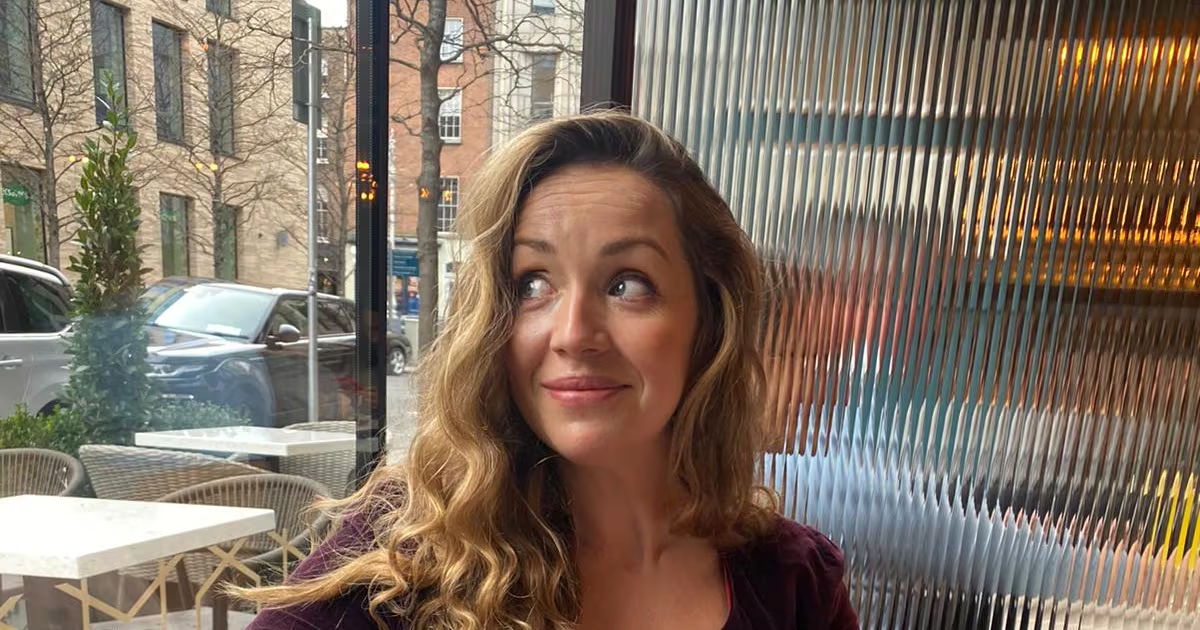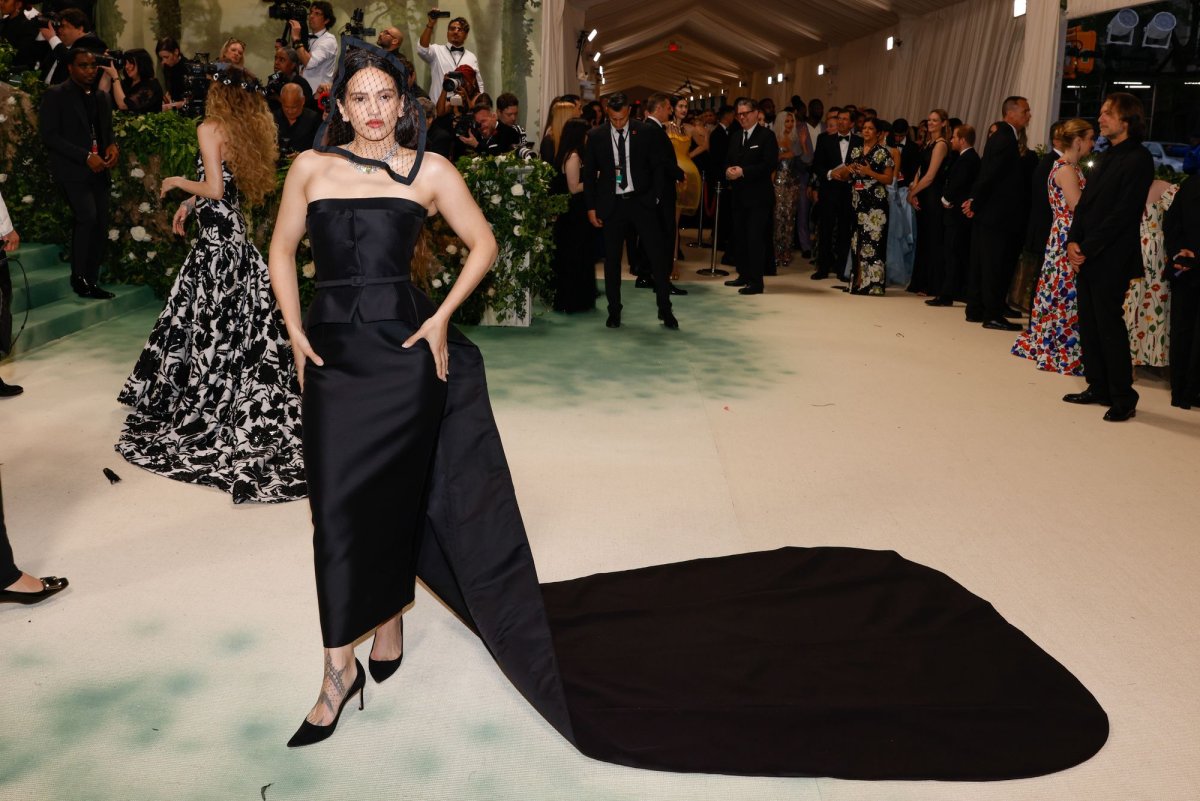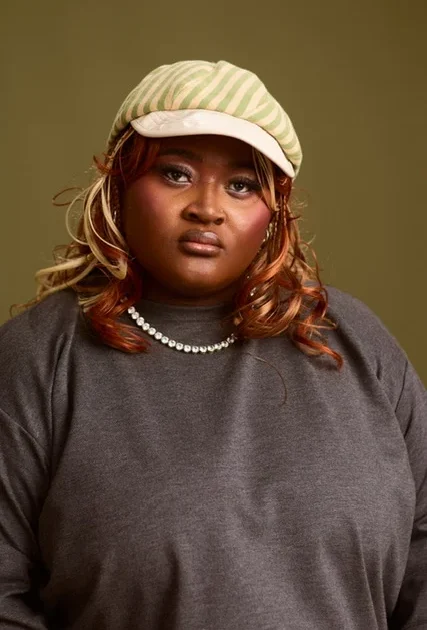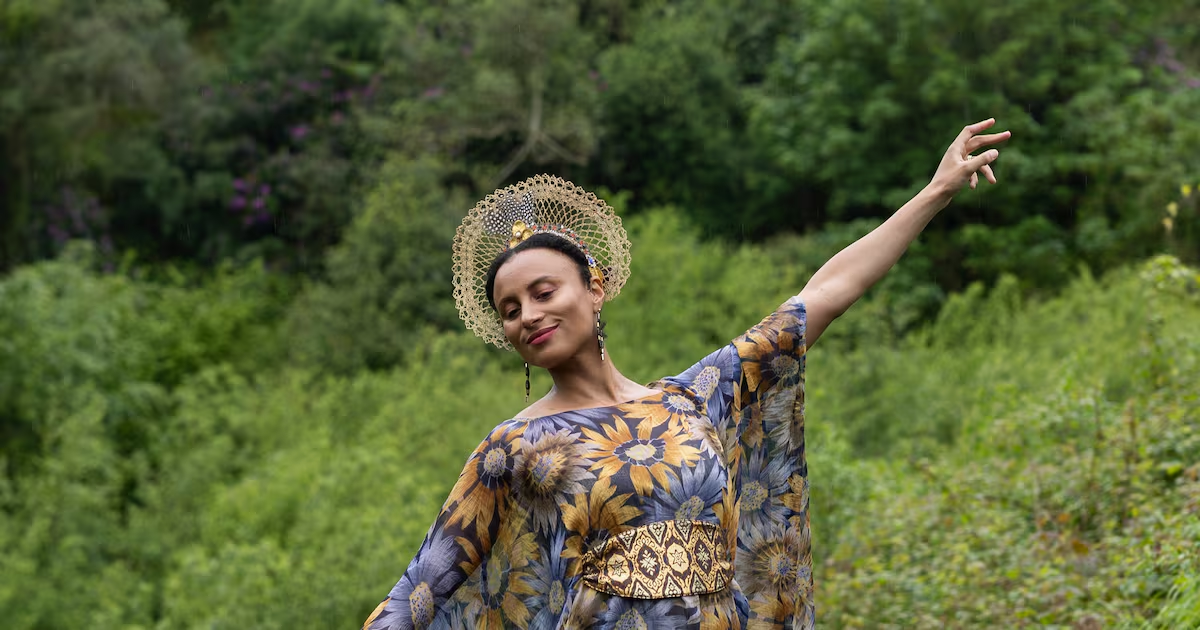
Choices define a life. That’s something singer-songwriter, presenter, actor and part-time pharmacist Loah thinks about a lot, because her career could go in so many different directions. “With this life and this job, anything can happen,” she says. “I often feel I’m in the bubble of the ether, waiting for the next thing to appear, and I’m just trying to follow what feels aligned in the moment, and trust that things work out, and it’s not always easy. You have periods of, like, ‘agh, what’s going to happen?’”Rain spatters the windowpane as she speaks. It’s a cold summer’s day. We’re huddled by the fire in the front room bar of Connolly’s of Leap in west Cork, close to the rented home where Loah has lived with her husband Peter for the last year and a half. On stage Loah has an ethereal persona – calm, assured and stately, as fans will have seen from her hosting of The Heart of Saturday Night on RTÉ television, or her recent performances at London’s National Theatre in The Playboy of the Western World. In person she’s gregarious and lively, snacking on an energy bar as we chat, with a ready laugh and an easy manner, gracefully willing to talk about the hard times as well as the good. She is excited to be here, because of what the interview signifies. This month, she is finally achieving her dream: releasing her debut album, a record delayed for reasons that have a lot to do with the not-so-small problem of trying to figure out who on earth you are in this life. And what it is you really want. Born in Kenya as Sallay-Matu Garnett (Loah is her stage name), where her parents were working as teachers, Loah spent her early childhood in Maynooth before moving with her family to west Africa when she was 12. “They said, ‘you need to know where you’re from, you can’t grow up entirely in the West and just be oblivious’.” So she and her siblings – two brothers and a younger sister – abandoned one kind of life, where she remembers enjoying long summer days playing with the neighbours’ kids in an estate in Maynooth and practising the traditional music the family loved – “I got my first violin at three” – to board a flight first to Gambia for two years, and then to Sierra Leone, her father’s home country. Attending a school in Gambia with students who were wealthier than her, she was teased about her accent and her skinniness, and took a long time to settle. Her parents were separating, but the family remained strong. She admires them. [ Watch Loah reading One Art, by Elizabeth Bishop: ‘The art of losing isn’t hard to master’Opens in new window ]“My parents are such mentally tough people. My mom grew up in Crumlin in the ’60s and ’70s. She’s a tough bird, and gentle and forgiving and fun. And my dad grew up in pre-war Sierra Leone, then lived through war, and he’s a conservationist. He protects trees for a living, and he spends all his time with trees,” she says. Loah studied pharmacy in Trinity College Dublin. Photograph: Clare Keogh Loah says she felt lucky as she was academic and got the points to study pharmacy at Trinity College Dublin. She was also accepted to study jazz at the Berklee College of Music in Boston, but says: “I didn’t take it because I didn’t have the money to go.” When she began working as a pharmacist in Dublin, her love of music kept bubbling to the foreground. She started drip-feeding out singles and EPs as Loah, consumed with a newfound understanding that although pharmacy was part of her working life – “I didn’t want to throw it down the tube” – a career in music and the arts mattered to her. A song she had co-written, Someone New, with a pre-fame Hozier, who was her boyfriend in college, became a hit on his 2014 debut album. She was picked to play Mary Magdalene in the Barbican’s 2019 production of Jesus Christ Superstar. In 2020, she became part of the Women in Harmony collective, releasing a cover of Dreams, The Cranberries classic, with proceeds going to victims of domestic violence. She played the role of Evelyn in Lenny Abrahamson’s take on Sally Rooney’s Conversations with Friends in 2022. Things in music happened slower than she would like. “I’m not the fastest musician. I need a lot of time and encouragement,” she says. She also didn’t have management for a long time. “I was on my own for many years. I didn’t tour. I didn’t feel like I could organise it. Sometimes, you think, ‘oh that’s when I should have schlepped around Europe in someone’s van’.”This month her debut album – full of soft vocals, delicate melodies and drowsily languorous, enveloping music – will be released more than a decade after she first became known as a solo artist to the Irish public, and after a five-year creative process. “This is hugely vulnerable,” she says. “It’s my first go.”Loah's album looks at the issues facing 'frozen generation'. Photograph: Clare Keogh Materia Medica – the album title comes from an ancient pharmacology textbook about healing plants – catalogues the experiences of Isobel, who is a girl a lot like Loah was. “Partying with her friends and they all look great, but inside they’re kind of [she mimics someone weeping]. There’s this underlying nudging of like: ‘Where’s it going to land?’ ‘Where’s our safety going to come from?’ She’s sort of me, there’s elements, and then there’s also this hyper-fantastical element.” The album reflects, Loah says, how she feels about being part of a “frozen generation”. What’s that? “We have so much fun now – people do J1s, travel to Asia, we have the freedom to choose different paths, but some of our basics, the weighty stuff isn’t always in place.”She means, she says, things like home-ownership, or taking big leaps in life, like getting married or having children. We’re meeting in the dark, storied bar of Connolly’s for a reason: It’s an auspicious location for Loah. It’s where she had her first date with her husband Peter, who is from west Cork. It’s also where they celebrated their wedding on a warm autumn day in 2024, with more than 200 friends, family and musicians, having walked over from the nearby St Mary’s Church. “Lisa Hannigan sang me up the aisle,” she says. “Ave Maria. With Colm Mac Con Iomaire on violin. It was really beautiful. The church is quite big so everyone had space, and the choir were able to sing. It was the Discovery Gospel Choir, which I used to be part of. “Then we all tumbled into Connolly’s – it was rammed – and it was just like crazy dancing. One of my friends, Stephanie Dufresne, who was one of my bridesmaids, is a choreographer, so she choreographed a flash-mob dance routine. It was a proper hooley.”‘I never needed convincing about whether or not I believe in God’— LoahThe bar is technically closed this early in the afternoon, but owner Sam McNicholl has the fire roaring in the grate and hot tea at the ready for us. Loah is part of the community here now, although she often heads up to Dublin for part-time work as a pharmacist, or to visit her mother in Kildare.[ Loss of manual jobs could be driving toxic masculinity, says StingOpens in new window ]She looks casual and striking in a pale pink fleece and cosy, wide-legged trousers, with her hair scraped back into a red scrunchie. She never refuses a question, although she sometimes sidesteps details deftly. (On the subject of her age, she is in her late 30s, but her agent has warned her not to be specific, as her playing age is younger than her actual age. As for her husband Peter, she laughs when I ask about him. “He’s like: ‘Do not involve me in your madness’.”)We walk around the famous venue, as McNicholl points to gig photographs sellotaped to the top of the bar and peeling posters of artists stuck over one another on the walls in a fascinating, higgledy piggledy collage; everyone from David Gray to turbo-folk group Big Bag of Sticks to The Handsome Family and The Shanks. Loah will launch her album in the pub on June 13th. It’s also where they held a funeral ceremony for the musician Eoin French of Talos, who worked with Loah on the album – featuring on the song Intimacy – and who died aged 36 of cancer in the summer of 2024. “Our beautiful, beloved Eoin, whose picture is everywhere,” she says. “We waked him on the stage and had loads of songs. He was an incredible person. So gifted.”Connolly’s holds a kind of energy that you can feel as soon as you walk in the door. There’s a charge to the place. For Loah, the venue represents an important blending of cultures. “When God Knows played here,” Loah says, referencing her friend, the Zimbabwe-born, Shannon-raised, Limerick-based rapper, “he saw a poster of a band his dad knew in Zimbabwe. Like, how amazing is that? He was freaking out, taking pictures of it.”Loah says Connolly's of Leap is a special place. Photograph: Clare Keogh Growing up in Ireland and Sierra Leone as a person of mixed heritage, Loah learned to think “from an Irish perspective and an external perspective”. “We have this phrase in Sierra Leone called ‘Two Sims’. There are certain phones that can fit two sim cards, right? People who have parents who are from different backgrounds, they’re nicknamed ‘Two Sims’ because it’s like you’ve got two sim cards, which is so cute. So you have 353 and 232.”Loah has had direct experiences of racism in her life. “Oh yeah, without a doubt. People on the streets and stuff. Not for a long time thankfully,” she says. “Colourism is also a real thing: the darker or more visibly foreign you are, the harder it can be.”She finds life in a rural setting easier than an urban one, because people know one another, and bonds are more easily fostered. “In rural communities, where people need each other, you have to really be part of the community, and that’s a very different mental space to be in than in an urban community.”Recently, former taoiseach Bertie Ahern was recorded in a video shared on social media telling a potential voter that “the ones I worry about are the Africans”, and saying he has concerns about the level of immigration. Loah found the comments “shocking but not surprising”. “It’s really sad, because you think about our history as Irish people and how we have been the subject of those conversations had by other powerful people who nonchalantly called us all kinds of things,” she says. “You wish that people could open their aura of understanding and see it from other sides. Reality: we construct it ourselves.”Her interpretation of the bigger picture right now in Ireland is generous. “Fundamentally, in some ways, it’s bigger than the idea of ethnic groups. It’s more about economics. People are really struggling right now in different parts of the country. The housing crisis: when people are feeling pressured like that, and feel a direct threat to their survival, it can bypass the more generous aspect of any group, and we can become as humans vulnerable to populism.”Loah has made a home in west Cork and will launch her debut album there in Connolly's of Leap. Photograph: Clare Keogh She’s less vocal on the subject of ethnicity than she used to be. “I used to talk a lot about this,” she says. “I used to feel like I was responsible for explaining it, or myself and my background, to help people understand why people like me exist. It’s really not that complicated. And then I got to the point a few years ago where I was like, I just don’t know if the kind of talking that I’ve been doing has helped. People learn from conversation but if people aren’t willing to listen, that’s a difficult place to be. “So I thought, okay, I make art, I make music, I operate in film and television. Sometimes just being present and doing the thing you do is the statement.”Loah has floated easily in recent years into presenting work for RTÉ, hosting The Heart of Saturday Night, a six-part TV music series with singer Una Healy in 2021. A television presenter rookie, she was a notably assured presence on screen, interviewing bands with a low-key ease that counterbalanced the more ebullient Healy. She subsequently took on occasional presenting duties on RTÉ Radio 1, plucking gems from Ireland and beyond for the three-hour playlist on Late Date, operating the desk and reading out texts from listeners into the wee hours. “With a gig you’re getting real-time feedback about how things are going down, and you can swerve if you need to, but when you’re on your own in the studio, it’s all you, baby girl,” she says with a laugh. She and Hozier aren’t in contact any more – “I’ve no idea what he’s up to,” she says – but she has given his latest record a spin on the radio. “I played Unreal Unearth because it’s wonderful.”Many of the roles she has inhabited have been enjoyable, but it’s obvious from talking to her over a couple of hours that they’ve brought some frustration, too: she’s frequently been close to music, but not the one releasing it. “I craved the creative process for myself,” she says. “Music is really my first love.”‘I like praying. It puts you in a humble state, open to the goodness of things and the goodness of people’— LoahDuring Covid, she got a €20,000 Arts Council bursary, which helped massively in the making of the album. “It was life-changing, it actually made the album happen. I had 12 people involved. I could bring people in and pay them properly. And not ask for favours. After a while it becomes disrespectful even if they’re your friends. In the application, I remember imploring: ‘Please.’ I got it and I remember just crying, ‘oh my God, it’s going to happen now’. I was able to work on it and be as ambitious as I wanted to be.”Trad influences, samples from 16th century lute music, Afrobeats and swishy rhythms all mingle on the record. The kora, the ancient African harp, features prominently, played by a Gambian musician Suntou Susso. “The first time I heard him play, I burst into tears,” she says. “He’s become a friend. And Alannah Thornburgh is on it as well. She’s an amazing harpist and really creative in terms of how she treats the tradition.”She’s happy with the album, but her perfectionist tendencies emerge as she talks about it. “There’s such a funny process with creativity. You love it, you hate it, you love it, you hate it.” She’s deeply aware the industry is a challenging place. No matter how much attention an album gets, the music model is broken. She knows if she tours, she is likely to lose money. When she has down days, as she sometimes has, she finds a kind of peace in the “weights” she has located for herself, from the quotidian to the mystical. Loah has hosted The Heart of Saturday Night on RTÉ. Photograph:
Singer-songwriter Loah: ‘I like praying. It puts you in a humble state, open to the goodness of people’
As Loah releases her debut album, the singer-songwriter talks about her multifaceted career, making rural west Cork her home and embracing her faith
2,884 words~13 min read