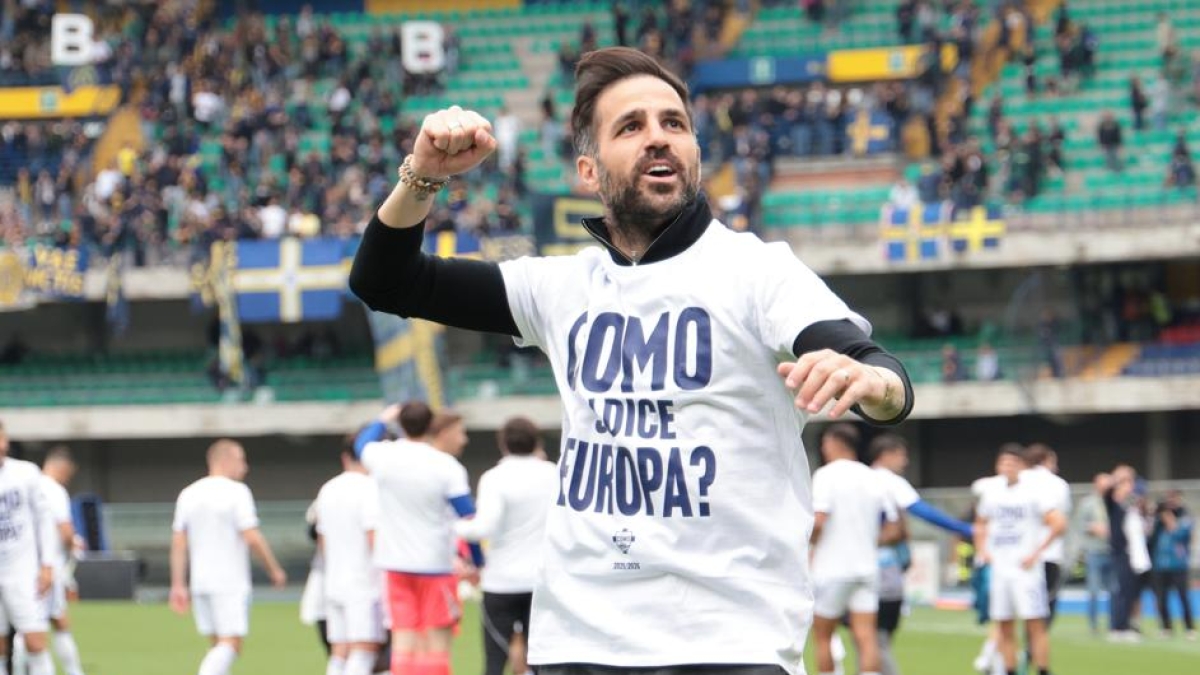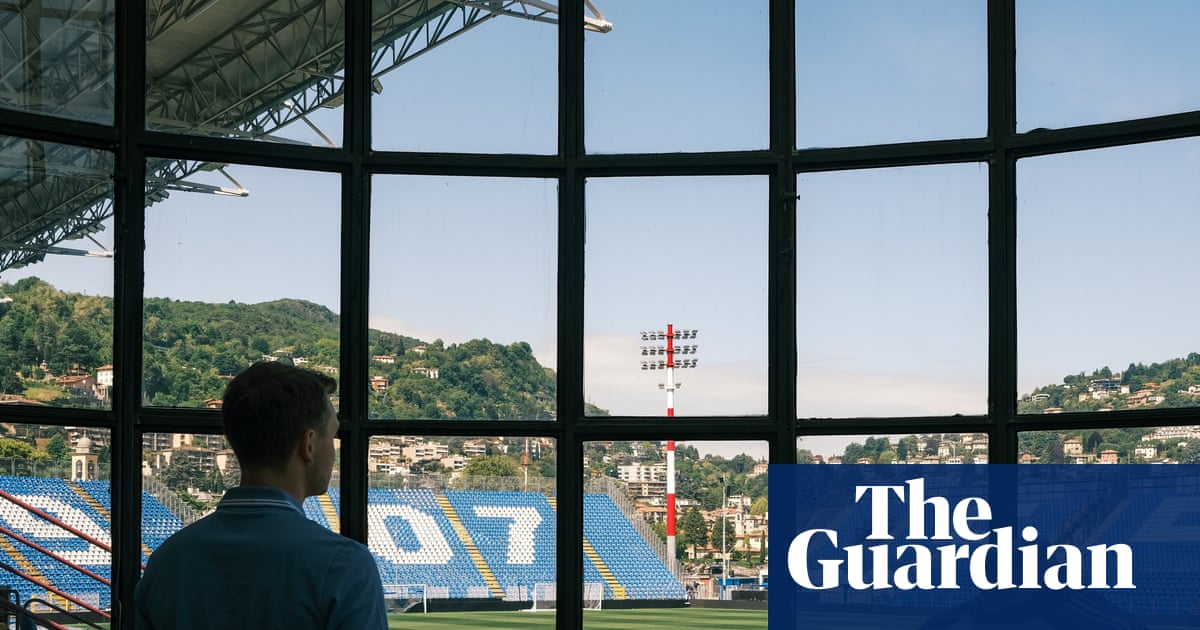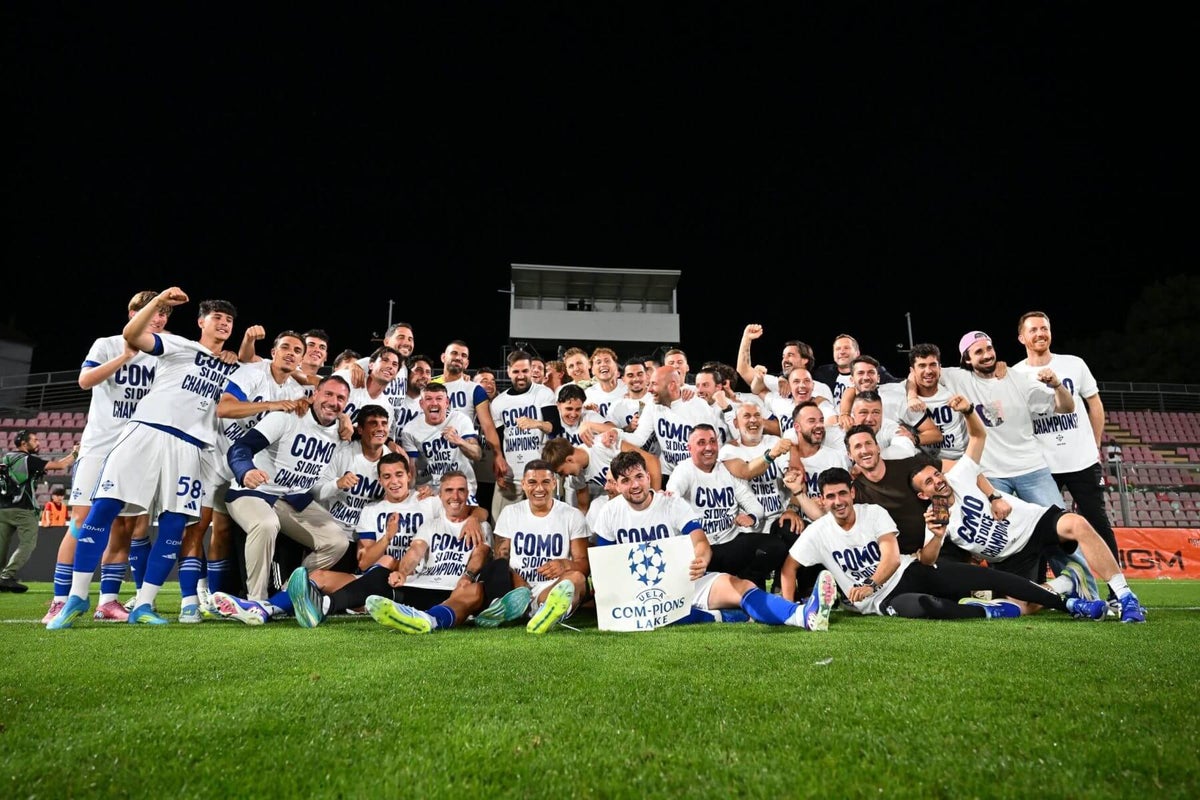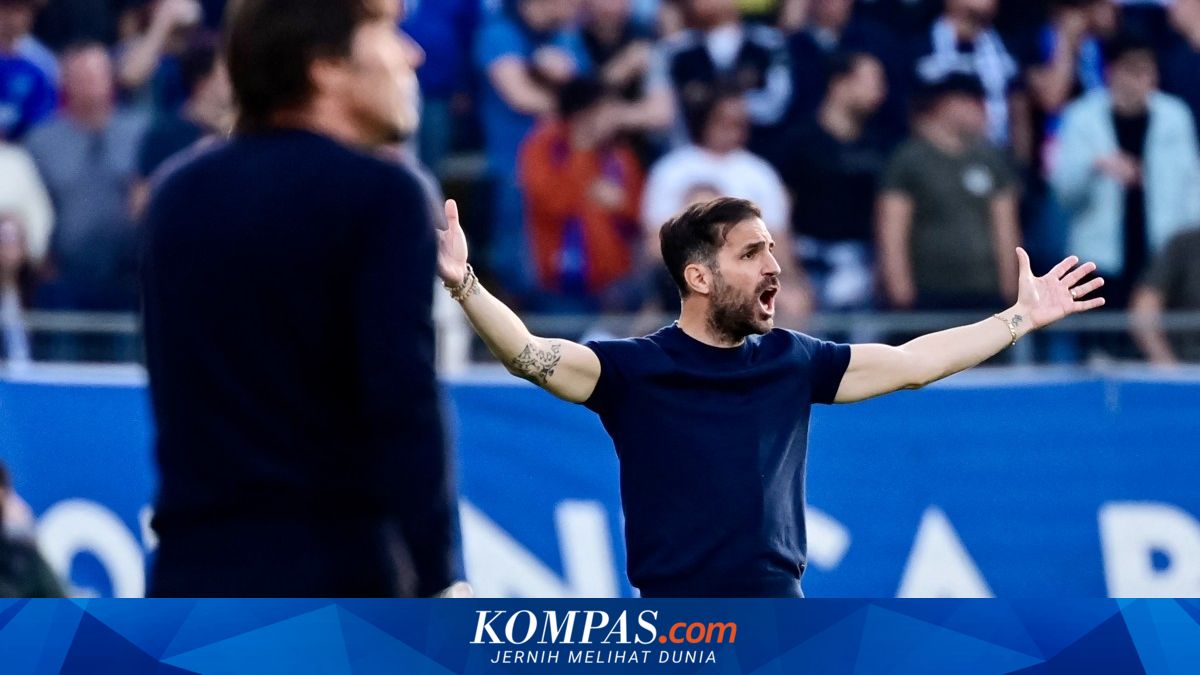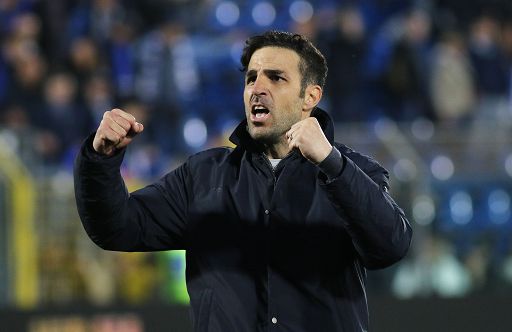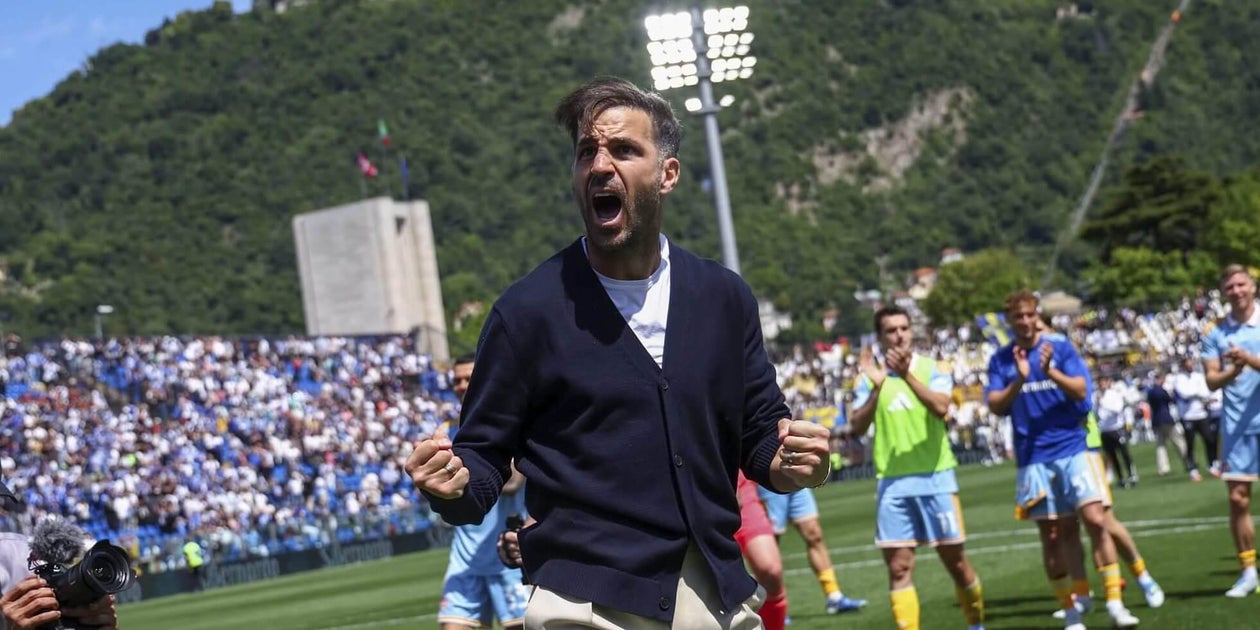
Mozzate is not nearly as glamorous as Como. It isn’t on the shores of the lake. It is one of those sleepy little rural towns in the Lombardy countryside that you drive in and out of on the way to somewhere else like Malpensa airport or Milan.This is where Cesc Fabregas comes to work. It used to be a strip of land. A field off a dirt track where Como have been building and building. “There was no training ground,” Fabregas recalls. “They were telling you Tuesday we train here, Wednesday we train there. There was no gym, no restaurant, no nutrition, zero.” Amid all the mud and the temporary men-at-work fencing in orange plastic, you needed genuine depths of imagination to envision what the club might become.Como were in Serie B when Fabregas joined in 2022. “It was not a second division club,” he says. “It was not a professional club.” Now, barely four years later, Como are a Champions League club. After the final home game at the Sinigaglia, a 1-0 win against Parma that clinched European football for Como on the penultimate weekend of the season, the players and staff pulled on commemorative T-Shirts with the slogan “Como si dice Europa?” How do you say European football?Just a week later the T-Shirts were reissued with an update, as Como closed out the season in nearby Cremona, a Lombardy derby, with another victory to finish fourth. “Como si dice Champions?” The design was too primitive to be a Rhuigi Villasenor creation, the founder of fashion label Rhude, and Como’s chief brand officer. But the speed with which Como needed a new fit neatly summarised the rapid and irrepressible rise of this club.The Como squad celebrate reaching the Champions League (Marco M. Mantovani/Getty Images)“It was beautiful. Great vibes,” Fabregas smiles, the morning after an open-top bus parade through Como. He is sat in the same room in the Sinigaglia where he signed his first contract with the club. Nearly 100 years old, the Sinigaglia was built in the rationalist style of the Fascist era. Marble and austere, it too has changed these last few years with Como’s president Mirwan Suwarso scouring flea markets and antiques fairs for period pieces that give it a five-star feel. Next season dignitaries from UEFA and execs from Champions League opponents will feel like they are walking into one of the lake’s grand hotels rather than a football ground. A villa has been bought and turned into a private members’ club for entertaining.Europe has always been an ambition, however qualification wasn’t expected this soon. Como were bust and at the bottom of the football pyramid less than a decade ago. They were only promoted to Serie A in 2024 for the first time in 21 years and, upon coming up, set the target of playing in Europe in five years’ time.Fabregas had never coached until he began taking sessions with Como’s hastily thrown together Primavera, the Under-19s. “They gave me a group of lads. I couldn’t sign anyone,” he remembers. “We had three defenders, seven midfielders and 11 strikers or something like this. I had to invent. I was playing with two No 10s as full-backs.”Lauded this season and rightly so after recording their highest-ever finish, not to mention an appearance in the Coppa Italia semi-finals for the first time in 40 years, Como have been criticised, in the context of Italy’s failure to qualify for a third straight World Cup, for placing little faith in Italian players. Edoardo Goldaniga was the only Italian to play any minutes in the league for them this season; just a quarter of an hour in total.Maybe the local media has amnesia. This project was largely built on Italians. When Fabregas took interim charge of the first team in the winter of 2023, Como still had a core of players from the third tier, like Alessandro Gabrielloni and Alessio Iovine. Top-flight experience then arrived in the form of Simone Verdi, Daniele Baselli, Alberto Cerri, Marco Sala, Alberto Dossena, Federico Barba and the cumasch Patrick Cutrone. “All these players nobody mentions,” Fabregas says. “I can tell you 15 players.” A statue of Gabrielloni was even unveiled at the entrance to the Sinigaglia in recognition of his role in the club’s rise through the divisions.Fabregas signs a Como supporter’s arm after joining the club as a player in 2022 (Emilio Andreoli/Getty Images)Fabregas’ story at Como is, like that of the club itself, one of constant evolution. In 2023 he did not have the players to play the football Como play in 2026. He did not have a pre-season. He had to adapt to Serie B and work with what he inherited from his predecessor Moreno Longo. “The team played 5-4-1, a lot of counter-attacks and defended very deep,” he says. “I couldn’t change everything straight away in the middle of the season. So I preferred to change the defensive phase more than the offensive side. We went to a back four instead of a back five, zonal, not so much man-to-man and a little bit higher.” These might seem small details but in the context of Italian football they are significant counter-cultural adjustments.“My first exercise as a coach was a rondo,” Fabregas recalls. “Pum, pum, pum, pum, pum. Then when you lose the ball, animals to press, to break the lines of passing.”With each transfer window, Como moved the team closer to what Suwarso defines as Fabregas’ “clear and uncompromising vision”. “When we could bring in (Gabriel) Strefezza and Goldaniga in January (2024), they were two important players who gave us a little bit more stability and more solutions for how we wanted to play. We started playing 4-2-2-2 with two strikers, two 10s and two sixes without wingers.“And I’m a big fan of wingers! But we had no wingers in our squad so we had to change the way we played and it was really good. I found another system I loved. The dynamics were really good with the ball and we started growing, growing, growing, winning, winning, winning.”Upon making it to Serie A, Como initially blended experience with youth. They signed Pepe Reina, Sergi Roberto, Alberto Moreno and Raphael Varane, who retired and took up an executive role after sustaining an injury on his debut in the Coppa Italia against Sampdoria. What stood out, however, was the combination of kids and no-names Como bought.Much has been made of a data-led approach at Como and their relationship with Jamestown Analytics. Little has been made of the role of Fabregas’ assistant Dani Guindos. Como have racked up the largest net spend in Italy since their return to Serie A because of their willingness to pay for potential early. This potential shows up in the data but the sample sizes are small as some of these youngsters have next to no experience in the men’s game.As such whenever you see Como sign a teenager from Real Madrid or Real Betis be sure of one thing. “This is me and Dani,” Fabregas says. “He coached Jacobo Ramon and Nico Paz when he was in the academy of Real Madrid. So he knows them very well, he knows their personalities. The first thing we look at is the person. In my first meeting with a player I don’t speak about football. I only speak about their personal life. I want to identify their mentality, explain who we are, how we do things, how we work. The players and the families are more important than anyone. You mark some clear things about the culture of the team and the club and then after that we start talking football.”Nico Paz, No 10, has been Como’s star player this season (Image Photo Agency/Getty Images)Fabregas goes on to make a gesture that, again, shows how different he is from many of the other coaches working in Italy where youth is distrusted and too often disregarded. “I know these boys,” he says. “And talent aside, I believe in them.” Fabregas brings his hands to his eyes and covers them. “I believe in them blindly and when a coach believes blindly in his players — look, there are always things you cannot control — but you will always get the best out of the player or do better than someone who brings them in because they have good data but the coach doesn’t trust or know the player.“It requires more time to get to know them. What I don’t understand is sometimes clubs sign players without speaking to the coach or without the coach studying and speaking to the player.” This makes Fabregas laugh, incredulously. “It’s the coach who needs to make these players play and make them better.”Suwarso credits Fabregas with “transforming the club into a University of Football”. Paz won Serie A’s Rising Star award last year and was named Midfielder of the Year this year. Only Federico Dimarco, the league’s MVP, laid on more assists than young winger Jesus Rodriguez. Players like Ramon and Maximo Perrone kicked on. Lucas Da Cunha was named in Opta’s Serie A Team of the Year. He scored twice in the final-day win over Cremonese and has been reinvented by Fabregas.“I love developing players,” he says. “You tell me a part of my job that I love, it is spending time with the players, especially the younger ones and making them better or trying to make them better. I analyse situations with them. I analyse the idols that they have. I give them my opinion. They give me their opinion, and then we go out on the pitch and work on it individually. Then you’re trying to do a little bit more collectively. Then, on the pitch you see if they can apply it as fast as possible, the things that you are working on. That’s why I feel they are my boys. I treat them like they are my kids. This relationship is very important.”There are unsung heroes in this Como story. The lower profile, bargain signings like Ivan Smolcic and Mergim Vojvoda. One in particular deserves a mention; the 30-year-old goalkeeper Jean Butez, who Como signed from Antwerp for a little over €2million (about £1.7m or $2.3m) 18 months ago. “I looked at the data. It was good data from Jean but not top, top data,” Fabregas says. “We were looking for a player who can play with the feet in a good way for our style of play. But when you watch his videos, his games, his performances, most of the time they didn’t press him or in Belgium maybe they don’t press so high in that league or he was playing long balls all the time.“So it was very difficult for me to find clips, performances and games where he was applying what I’d be asking of him or doing what he’d be doing here. So we took the risk and he’s been outstanding. I’d love to tell you and pretend I saw it and that I identified it. No, no, no. He’s been such an amazing surprise. He gets the football that we want to play very, very, very fast. We always try to give three, four solutions. He always finds you a fifth one that is better than the ones you (gave). He’s been a really fantastic, fantastic signing for us. He changed our style of play for the better, and changed our mentality.”Jean Butez has starred in Serie A (Francesco Pecoraro/Getty Images)After levelling up every summer and each winter adding new layers to the game model, Como decided to stick rather than twist last January. “It’s the first time that, as a coach, I had for one full year without having to change and it helped us,” Fabregas says. “It helped us to have this continuity, to keep growing.”Como beat Juventus home and away for the first time since the 1950s. They went undefeated against holders Napoli and knocked them out the cup. They outplayed Roma at the Sinigaglia and finished the season with the best defence in the league, becoming only one of four teams to concede less than 30 goals this decade in Serie A.Throughout this time teams have adapted to Como. Opponents used to play man-to-man against them and seek to force a mistake by pressing high. They then realised how good Butez and his team-mates were at playing through pressure and began to sit deep in a low block instead. What worked for Como in the first half of the season would not necessarily deliver the same results in the spring. Teams played them differently in return fixtures.“Here a lot of teams think about how to eliminate you by pressing and defending, not by attacking,” Fabregas says. “That means a team that wants to win needs to be ready to break down a defence that has been created to cause you pain, to kill you. This requires more attention to detail.“How do you get away from all these duals in man-to-man with a team that physically isn’t the strongest team? We are a team with talent and technical ability. Physically we’re not animals. Let’s put it this way. They want to bring you into the context of the duals. They know you’re going to play. So you need to take them into positions where they’re not comfortable and try to attack their weaknesses.Assane Diao signed for Como from Real Betis (Piero CRUCIATTI / AFP via Getty Images)“Winning in Italy, believe me, people say there are a lot of 0-0s and 1-0s, it’s difficult. Trust me, I analyse a lot of football. I watch the Bundesliga, La Liga and the Premier League. Teams defend very, very differently to how they defend in Italy. You watch Premier League teams, you see a structure. You see what they’re trying to do. You see the style they want to apply. Here a lot of the times it’s impossible. It’s impossible to understand what’s happening. That’s why you need to pay great attention to detail.”Even more so in the Champions League next season. Como expect to be compliant with UEFA regulations when it comes to their stadium, squad and finances. After the last home game of the season, the Curva Ovest was knocked down to be replaced with a new permanent stand. After hosting Ajax, Celtic and Al Ahli for the Como Cup last pre-season, Football On The Lake will return this summer as almost a test event for the Champions League.In the meantime, Como have been quietly signing players from Atalanta and AC Milan’s academies such as Lorenzo Bonsignori and Samuele Pisati in order to meet the locally trained requirements for UEFA’s squad lists. Prepare to hear the Champions League anthem reverberating from bank to bank of lake Como and see the floodlights glittering on the water.“We are not a little club anymore,” Suwarso wrote in an open letter to the fans. “Actually we never were.”
Cesc Fabregas exclusive: ‘In my first meeting with a player I don’t speak about football’
Cesc Fabregas joined Como four years ago as a player when they were in Serie B. Now their coach, he has led them to the Champions League
2,482 words~11 min read