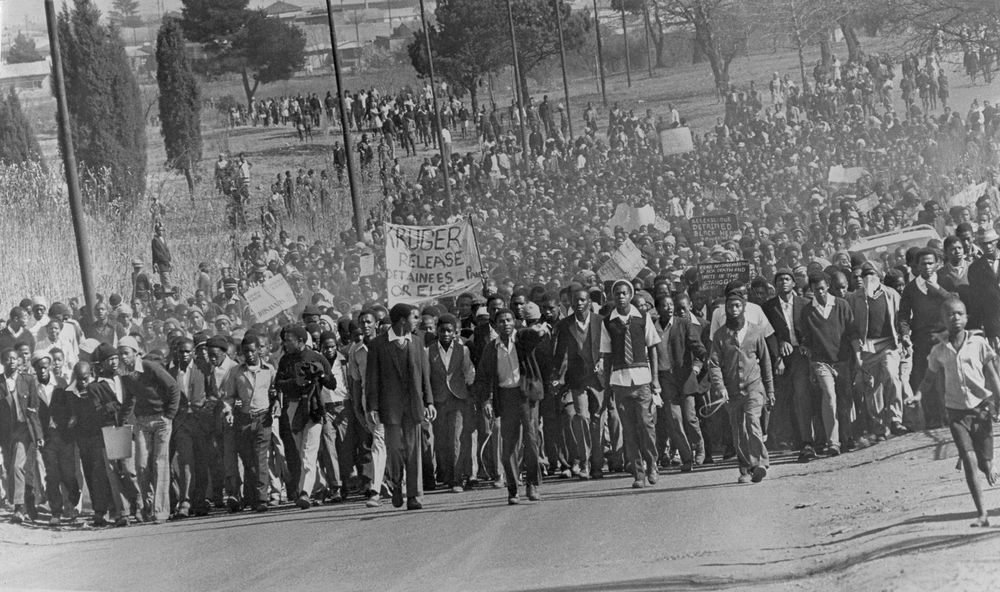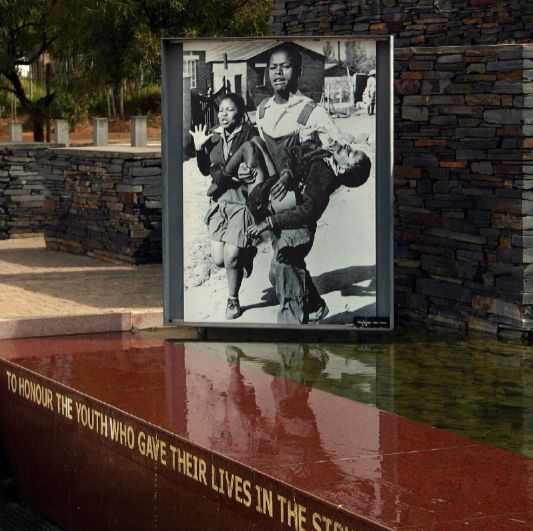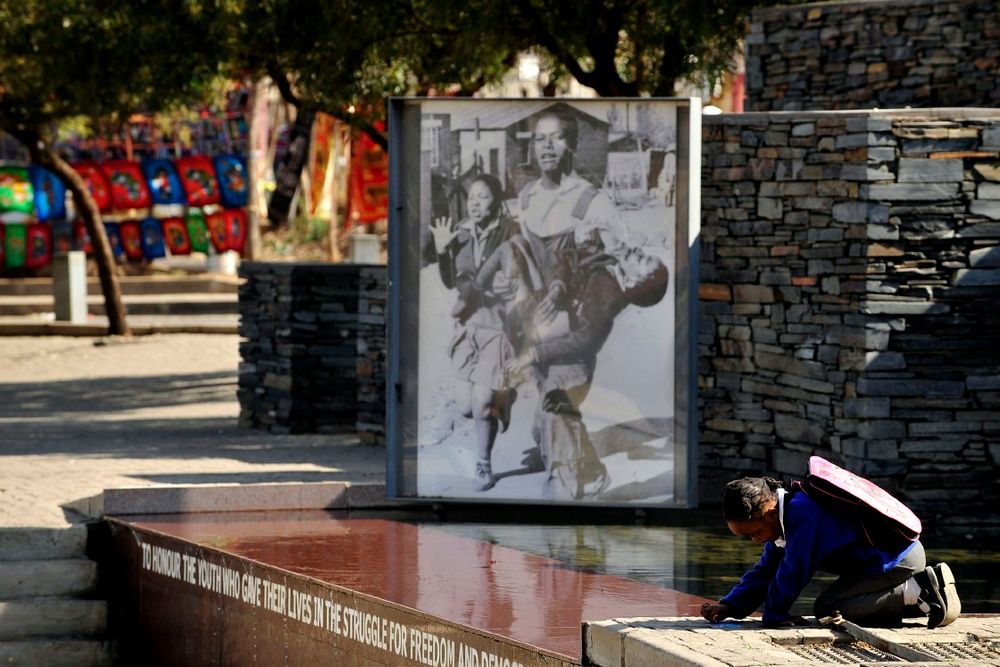
A child plays next to the 1976 picture at the Hector Pieterson Memorial in Soweto. Fifty years since the uprising, learners continue to face challenges, including water shortages and load shedding.
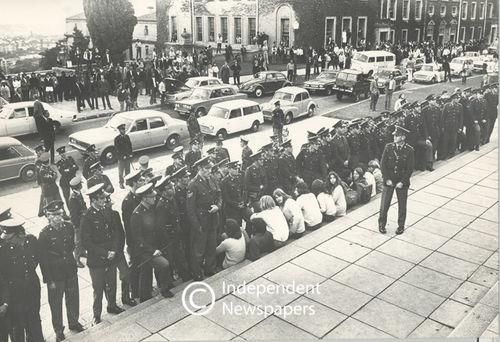
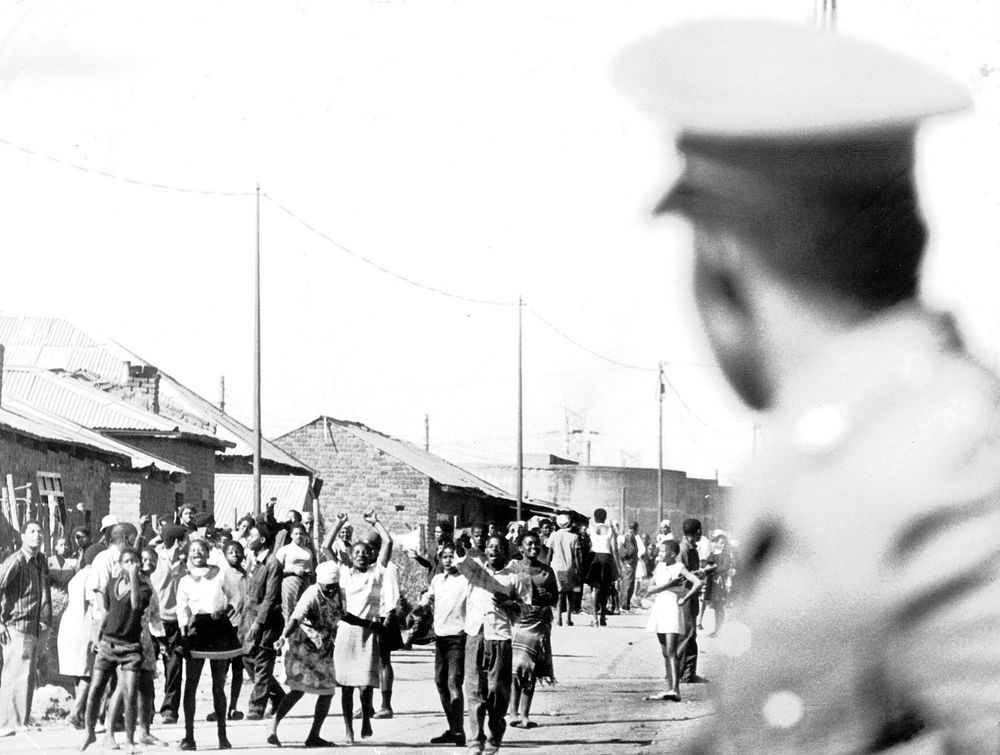
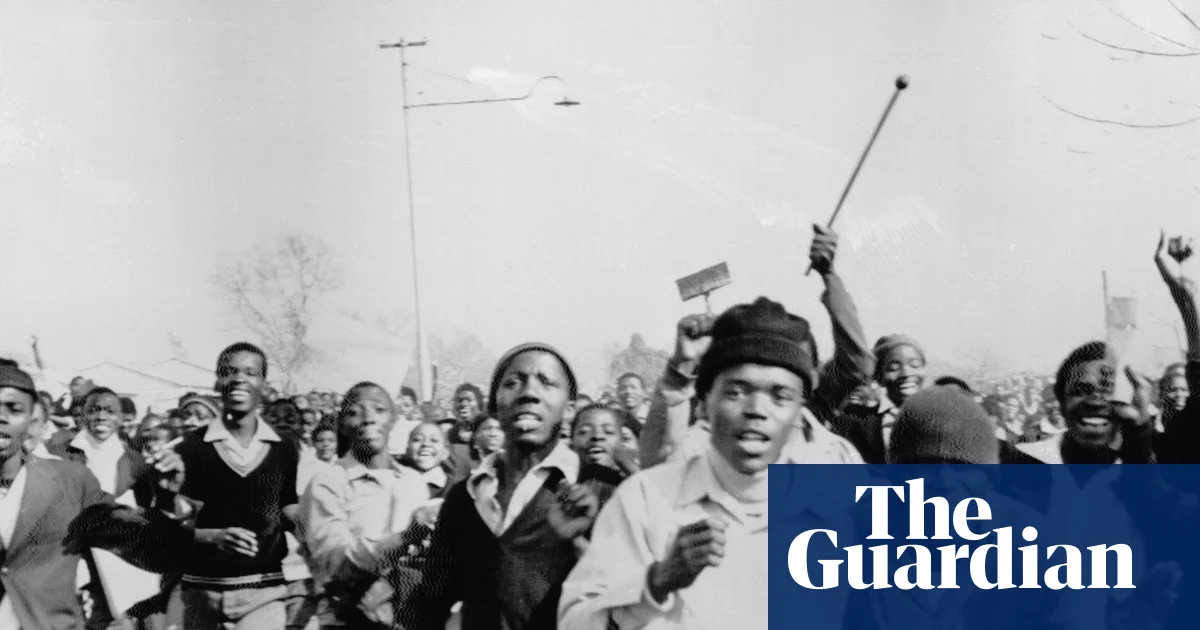
The legacy of the June 16, 1976, Soweto uprising was that not only did the student revolt cause a ripple effect across South Africa, but it also left an indelible mark across the world, forcing it to sit up and recognise the injustices of apartheid.
June is observed annually as Youth Month, with June 16 commemorated as National Youth Day in honour of the role young people played in the liberation struggle. This year marks the Golden Jubilee of the Soweto uprising under the theme: “Reset@50 – The Future Calls”.
The uprising was rooted in the Bantu Education Act of 1953, which enforced an inferior education system for black South Africans, designed to prepare them only for labour and service roles in apartheid society.
In 1974, the government issued the Afrikaans Medium Decree, mandating that subjects like mathematics and social studies be taught in Afrikaans alongside English, a language largely unfamiliar to black students and associated with the apartheid regime. This policy was seen as a tool of oppression and sparked widespread resentment among students.