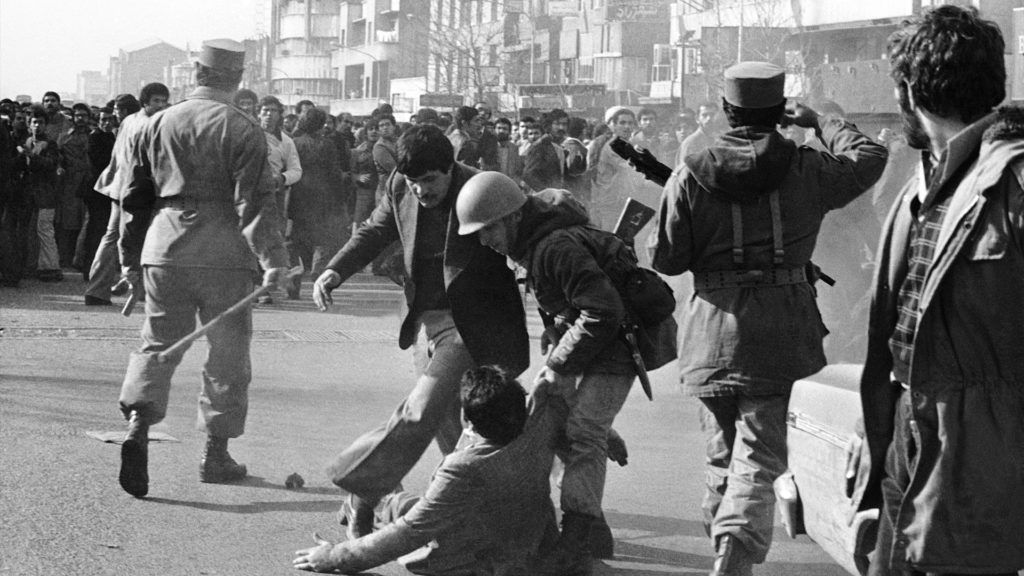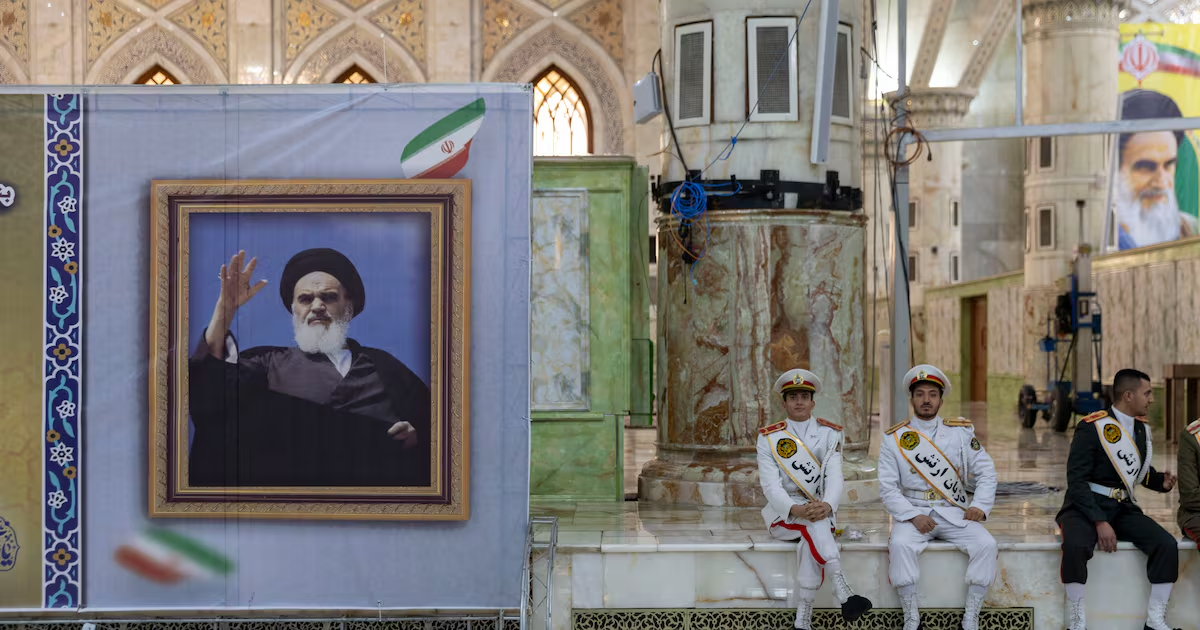
Iran and the Revolution: A History Author: Homa Katouzian ISBN-13: 978-0300282887Publisher: Yale University PressGuideline Price: £30When the shah was toppled in 1979, Iran’s descent into an Islamic fundamentalist theocratic regime surprised many observers. Homa Katouzian, a British-based Iranian author of considerable eclecticism, seeks to explain Iran’s singularity in this uneven book through his concept of Iran as a “short-term society”. He argues that rule rests on force rather than durable institutions. In this view, there are no secure rights, only privileges granted and withdrawn by rulers, often in an arbitrary and lawless manner, producing short-term societal behaviours. Such conditions, he argues, produced recurrent instability. Revolutions involving most sections of society were followed by periods of chaos, before new regimes restored order only to become arbitrary and lawless in turn. The upheavals of 1906, 1941, and 1979 broadly fit this concept. This is too teleological and generalised for me. It is nonetheless the most novel aspect of a book that otherwise reads as a breezy political survey of post-1945 Iran, offering little that will be new to informed readers.The revolution itself is treated conventionally. In response to the human rights agenda of Jimmy Carter, the shah opened the political space in 1977–78 just as the post-1973 oil boom turned sour. Economic crisis fuelled violent opposition from Islamists, the middle classes and the Marxist Tudeh Party, which coalesced around Ayatollah Ruhollah Khomeini. His unbending denunciation of the shah resonated widely, enabling him to emerge as the leader, despite warning signs to non-Islamists of his true intentions. A vacillating shah proved unable either to reform and broaden the regime or use his lavishly equipped army to crack down in the manner of the mullahs in January 2026. After the shah left in January 1979, Khomeini returned and, within 18 months, established a hardline theocratic regime with himself as supreme leader, aided by the hostage crisis (1979–1981) and the Iran–Iraq War (1980–1988).Repetition deepens these problems, as does the author’s writing styleThe book’s main value is its coverage of post-2000 politics right up to the Twelve-Day War of June 2025, though the recent renewal of conflict means it is, through no fault of the author, showing its age even before it is published. More significant are structural weaknesses: the revolution of 1978–1979 receives surprisingly brief attention, and the treatment of Khomeini’s ideology, Shia Islam, and American–Iranian relations lacks detail. By contrast, disproportionate space is devoted to marginal political movements, reflecting the author’s own work, which is heavily cited throughout. Repetition deepens these problems, as does the author’s writing style, notably an excessive and distracting use of more than 160 exclamation marks. For all its topical relevance, the book is a missed opportunity. The late Michael Axworthy’s Revolutionary Iran, though now a decade old and surprisingly not cited here, is a superior account.Robert McNamara teaches history at Ulster University
Iran and the Revolution by Homa Katouzian: A missed opportunity
Structural weaknesses undermine a book that was unfortunately outdated before it was even published
473 words~2 min read