Imagine your smartwatch detects an irregular heart rhythm at 3 AM. Instead of just waking you up with a frantic "beep," an AI agent immediately analyzes your historical health data, searches for the best cardiologist nearby, and prepares a calendar invite for a consultation. This isn't science fiction—it's the power of Healthcare Automation driven by AI Agents.
In this tutorial, we are diving deep into LangGraph, the cutting-edge framework for building stateful, multi-agent applications. We’ll explore how to use State Machines to orchestrate a complex medical workflow, moving from an "Abnormal Heart Rate Alert" to a "Specialist Appointment" using the Tavily API for research and Twilio for urgent notifications. By the end of this guide, you’ll understand how to manage non-linear LLM workflows that require reliability and precision.
The Architecture: Why LangGraph?
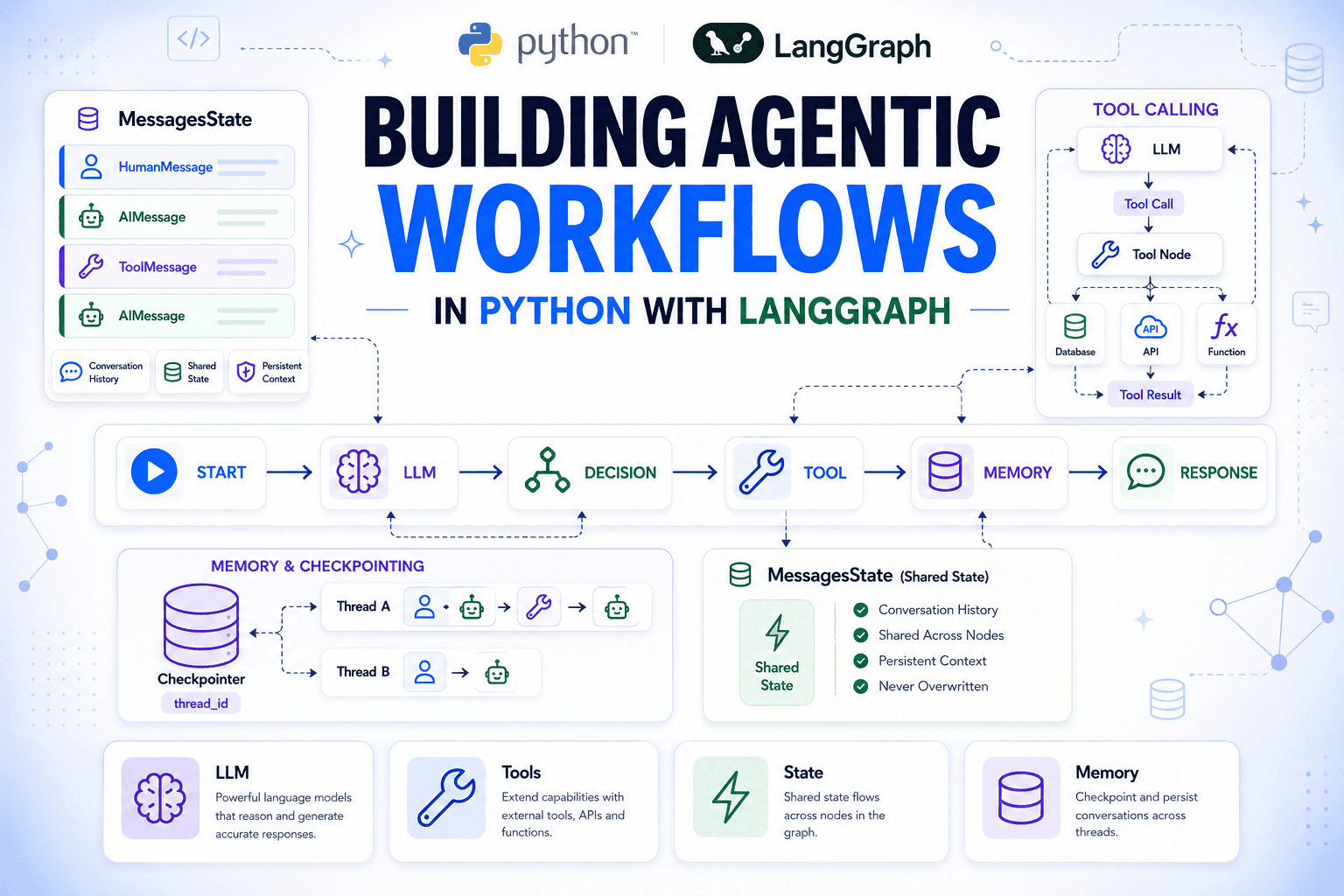
Traditional LLM chains are linear. But medical emergencies are not. They require loops, conditional branching (e.g., "Is this an emergency or a routine check-up?"), and state persistence. LangGraph allows us to define a graph where each node is a function and edges define the transition logic.
Data Flow Overview