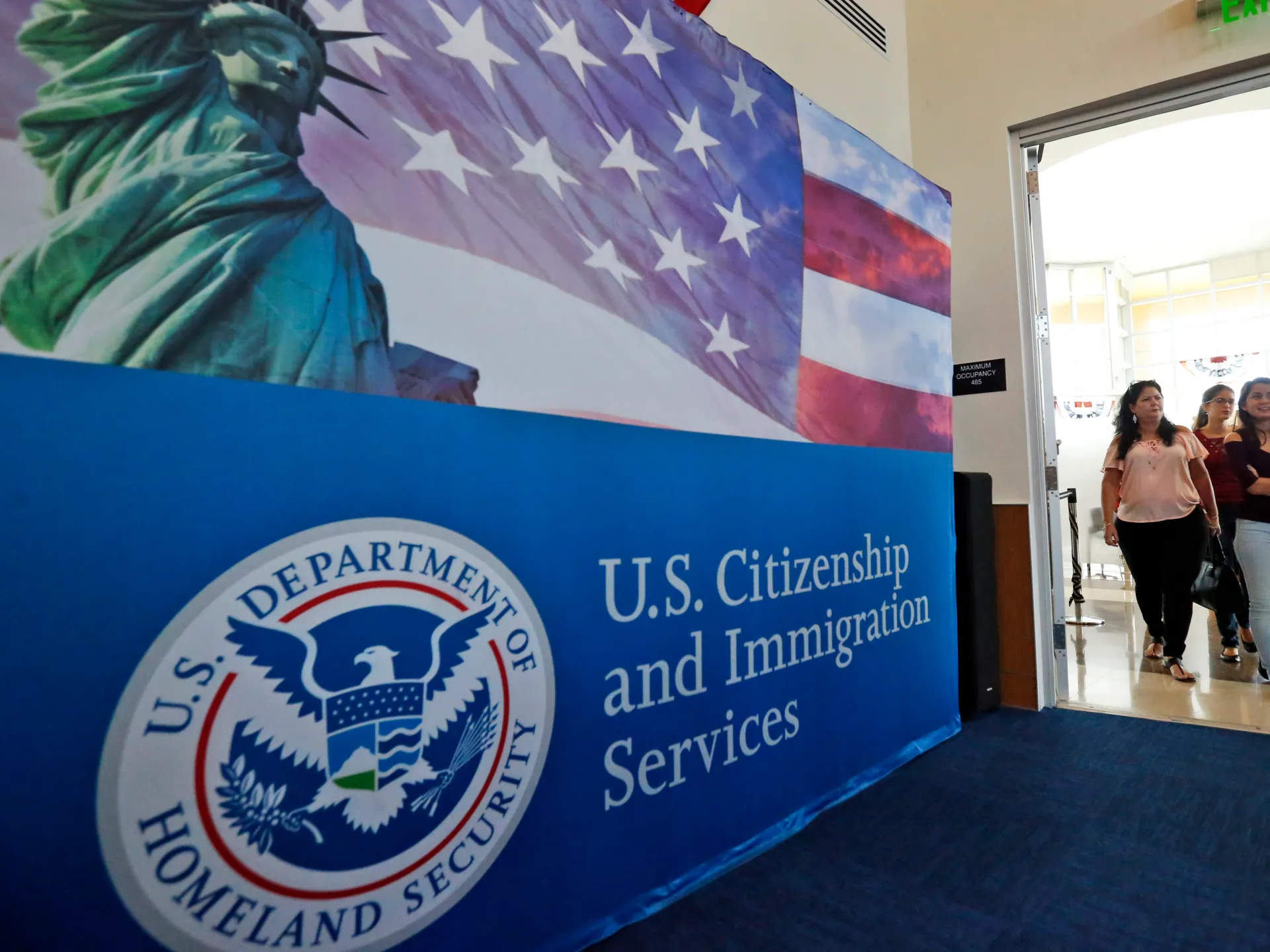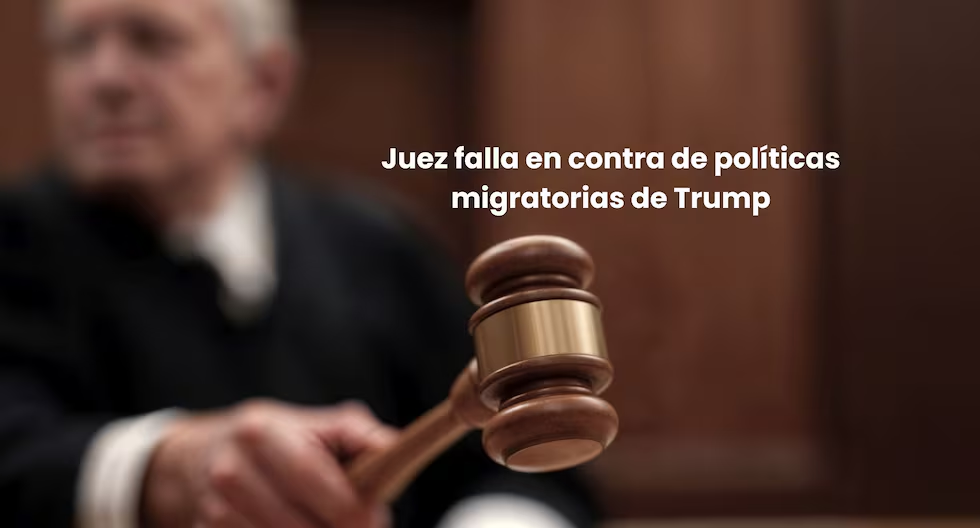
The Donald Trump administration unlawfully blocked immigration benefit decisions for applicants from 39 travel-ban countries, a US federal judge has ruled. This includes asylum, work permits, green cards and citizenship applications. India was not part of the travel ban list.The judge said the government lacked legal authority for such sweeping delays and noted that applicants had complied fully with established immigration procedures. (Bloomberg)The decision was delivered by John McConnell in Providence, Rhode Island, who found that the US Citizenship and Immigration Services (USCIS) implemented a series of unlawful policies affecting applicants from across Africa, Asia, Latin America and the Gulf region. The ruling coincided with the US Senate passing legislation tied to Donald Trump’s immigration enforcement agenda.BackgroundThe case was filed in March by a coalition of immigrant service organisations and labour unions, challenging measures introduced from November onward by US Citizenship and Immigration Services, part of the US Department of Homeland Security.Those policies imposed a sweeping pause on immigration benefit processing for individuals from 39 countries already under full or partial travel bans, justified by the administration on national security and vetting concerns. The affected applications included asylum requests, work permits, permanent residency (green cards), and citizenship pathways.What the judge saidIn his ruling, McConnell said the measures had placed applicants in prolonged legal uncertainty.“USCIS’s hold on adjudications cannot be attributed to anything that these individuals did wrong; rather, it arises solely by the happenstance of their birth,” he wrote, as per Reuters.“The rule of law has to apply to everyone equally and, as evident here, USCIS has neither ‘followed the law’ nor ‘done things the right way’,” McConnell added.“Indeed, the agency has violated the very immigration laws that Congress has charged it with administering, as well as the administrative laws that govern the agency’s actions.”The judge said the government lacked statutory authority for the blanket delays and said that applicants had complied fully with US immigration procedures.Will India be impacted?India is not part of the 39-country travel-ban list. It has an indirect relevance since Indians make up a large share of US visa applicants, including for work (H-1B), study, and green cards.The judgment could influence how strictly US authorities are allowed to delay or pause immigration applications, which may affect processing practices that also impact Indian applicants.Immigration group reacts to court rulingReacting to the ruling, the New York Immigration Coalition said the decision reaffirmed long-standing concerns about discriminatory enforcement in immigration processing.“Every person seeking safety, stability, and opportunity deserves a fair chance to have their case heard under the law,” Murad Awawdeh, president and CEO of New York Immigration Coalition, told The Guardian.“Today, a federal judge reaffirmed what we already knew: that the Trump administration violated the law, and did so with anti-immigrant malice. By shutting down access to asylum and preventing thousands of immigrants from receiving a decision on their immigration applications solely on the basis of which country they come from, the Trump administration acted against statute and against the rule of law.” He added that the policies left families in limbo and undermined the legal immigration system established by Congress.The plaintiffs, represented by Democracy Forward, also welcomed the ruling, saying it reaffirmed that the federal government cannot deny lawful immigration pathways based on nationality.The policies were introduced amid a tightening of immigration enforcement following a shooting involving National Guard members in Washington, DC, after which Trump called for expanded migration restrictions and travel bans covering 39 countries, including Afghanistan, Iran, Haiti, Somalia, Venezuela and Syria.The countries in Trump’s travel ban listFully banned countriesAfghanistan, Burkina Faso, Burma (Myanmar), Chad, Equatorial Guinea, Eritrea, Haiti, Iran, Laos, Libya, Mali, Niger, Republic of the Congo, Sierra Leone, Somalia, South Sudan, Sudan, Syria, Yemen, and travelers using travel documents issued by the Palestinian Authority.Partially banned countriesAngola, Antigua and Barbuda, Benin, Burundi, Côte d'Ivoire (Ivory Coast), Cuba, Dominica, Gabon, The Gambia, Malawi, Mauritania, Nigeria, Senegal, Tanzania, Togo, Tonga, Venezuela, Zambia, and Zimbabwe.
US court strikes down Trump's immigration freeze affecting 39 countries: Will India be impacted?
The measures placed a blanket pause on immigration benefits for affected applicants, affecting asylum claims, work authorisations, green cards, etc. | India News
649 words~3 min read