Several weeks ago, I met a young woman named Nastya at a playground in Kharkiv, Ukraine. She was playing with her little brother Hlib, tending to their aging Labrador, and enjoying a peaceful morning near the ruins of Specialized School No. 134.
A little more than four years ago, Nastya and Hlib’s playground was anything but peaceful. On Feb. 27, 2022, the school became a battlefield where Ukrainian soldiers, police, and civilian volunteers fought a detachment of Russian Spetsnaz, special forces that had entered Ukraine a few days earlier along with Moscow’s invasion force. By the end of the fierce, 13-hour battle, most of the Russian troops inside the school were dead, the building was in ruins, and Russian President Vladimir Putin’s attempt to quickly seize Ukraine’s second-largest city had been repulsed.
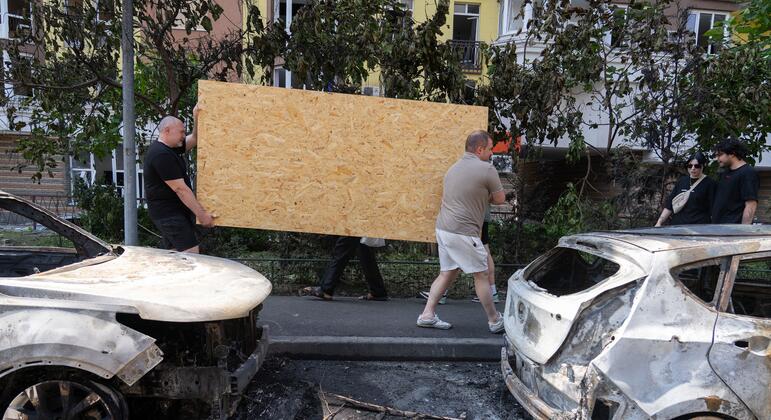
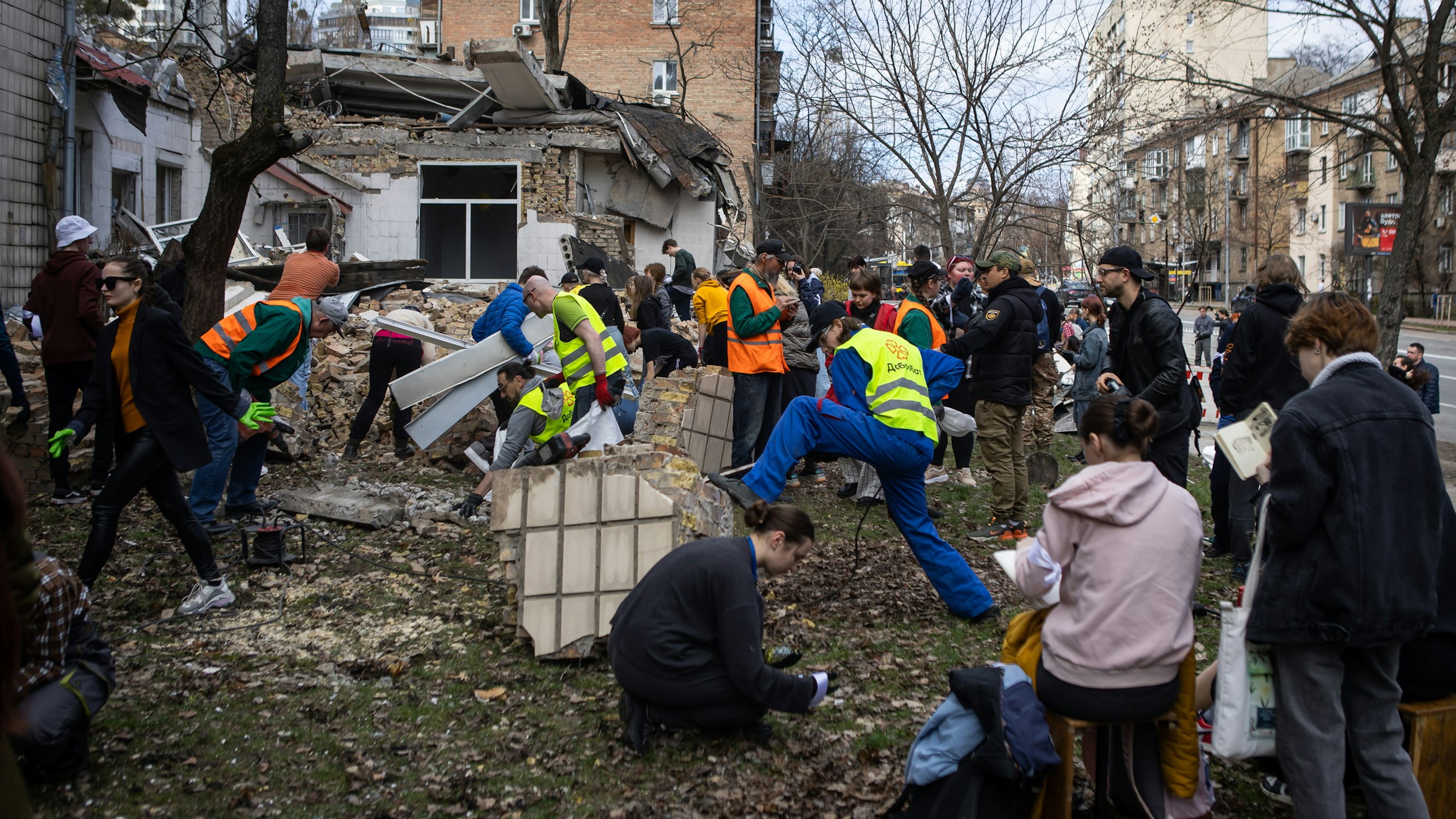
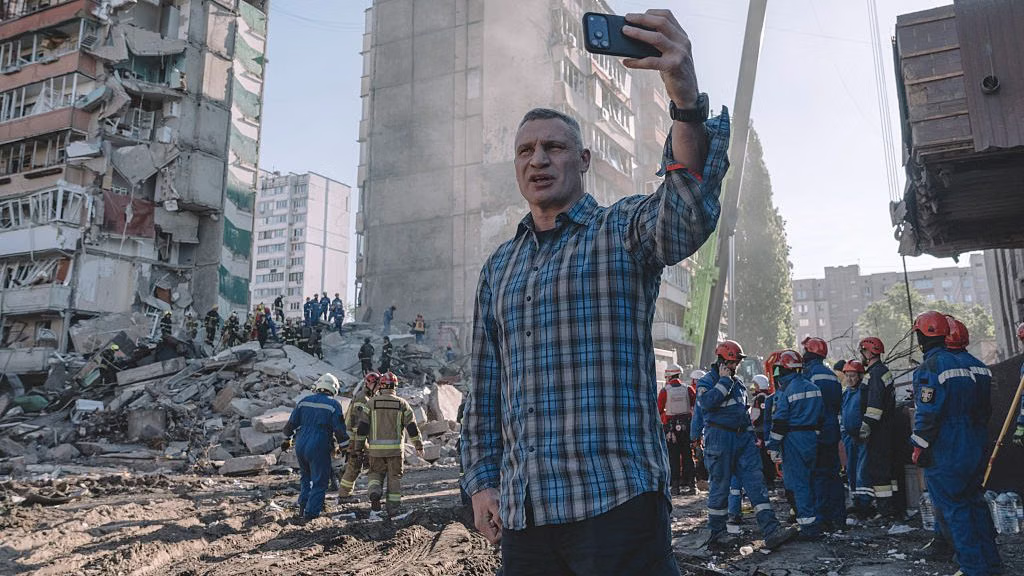
Nastya, who was 16 years old and living around the corner at the time, described the shock of hearing explosions and seeing smoke. She ran outside to see what was happening before her frightened parents pulled her back inside. Since that day, Nastya’s family has stoically endured the constant Russian bombardment that has claimed the lives of several thousand civilians in Kharkiv and its surrounding region since 2022. As have so many others—such as the families living in another Kharkiv neighborhood I visited, where a Russian cruise missile slammed into an apartment building and killed 11 people in March.