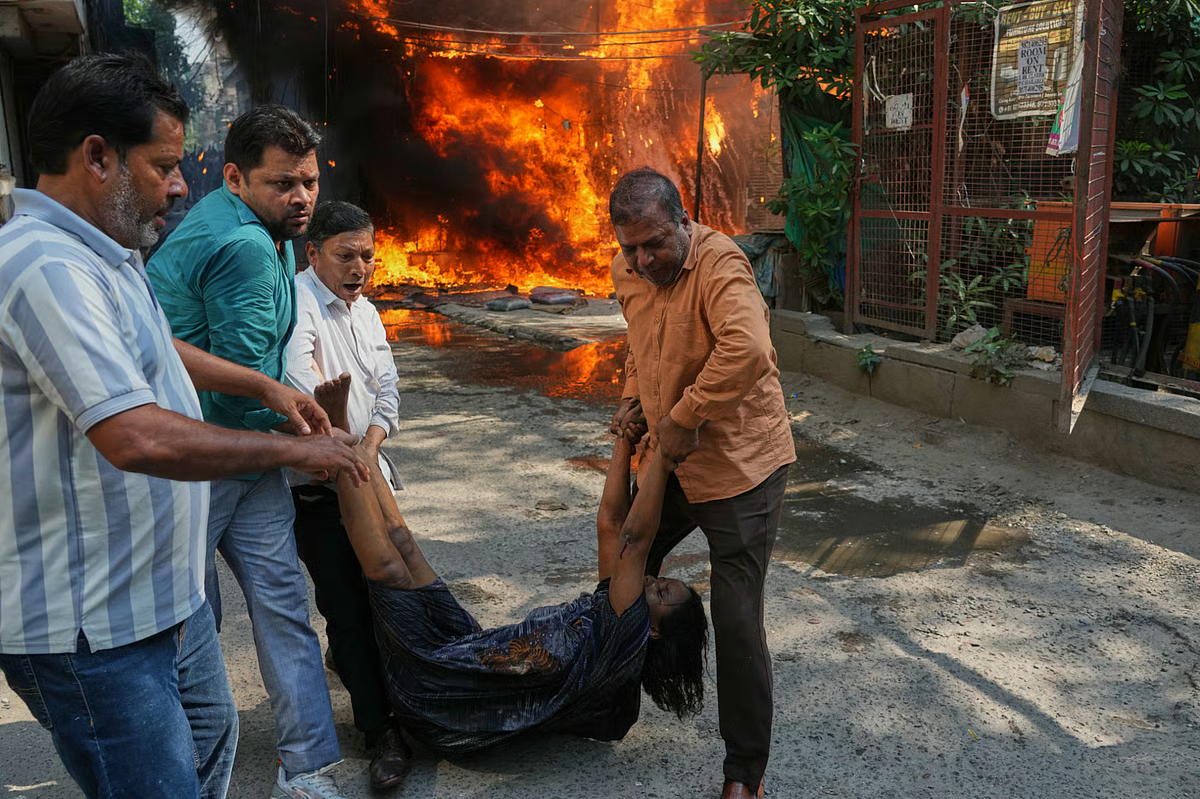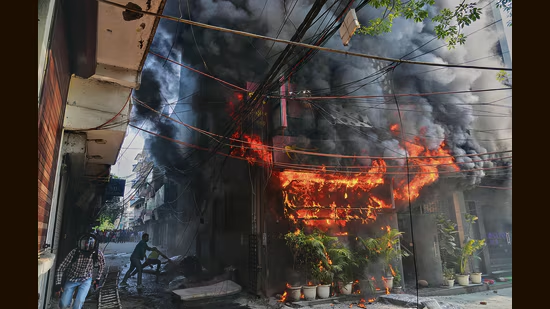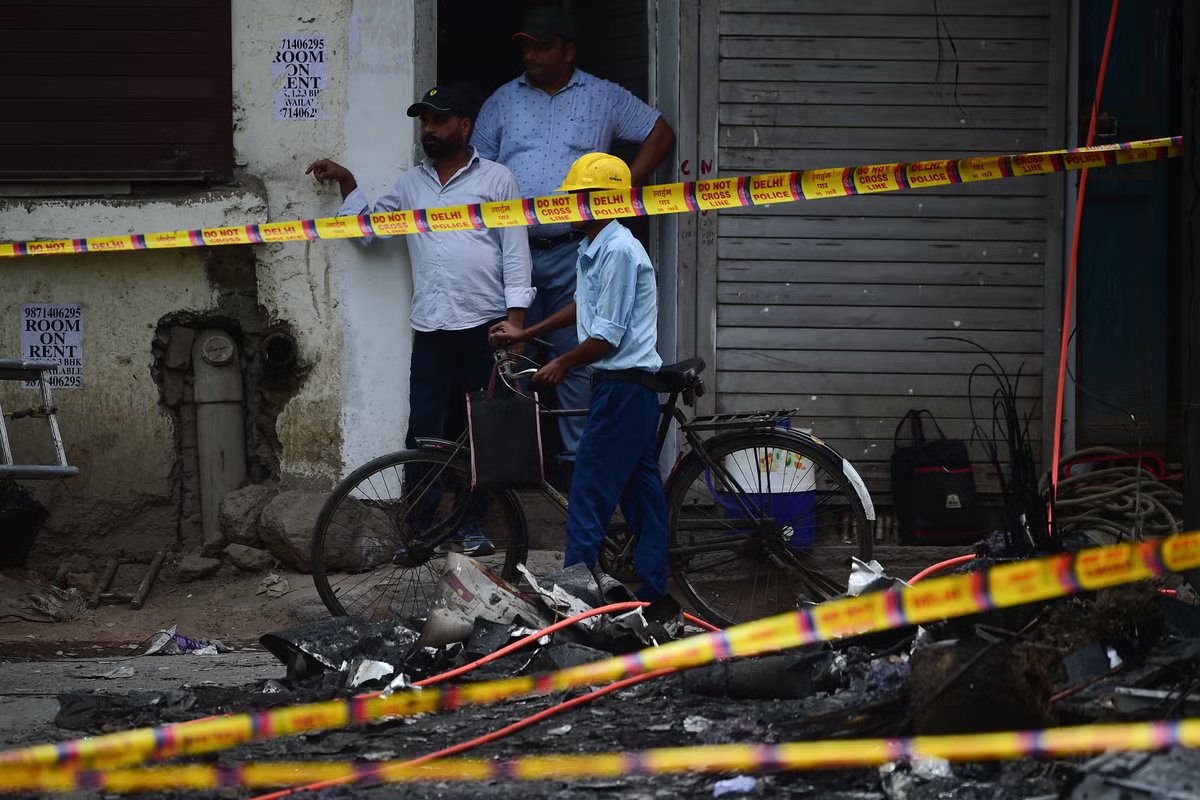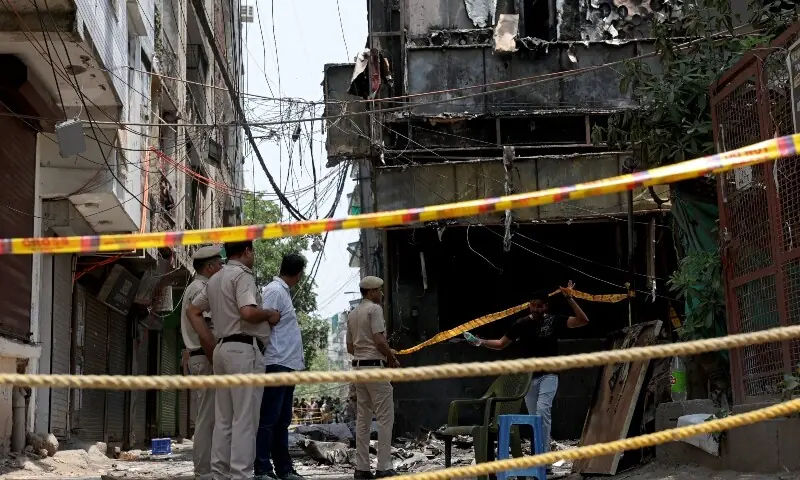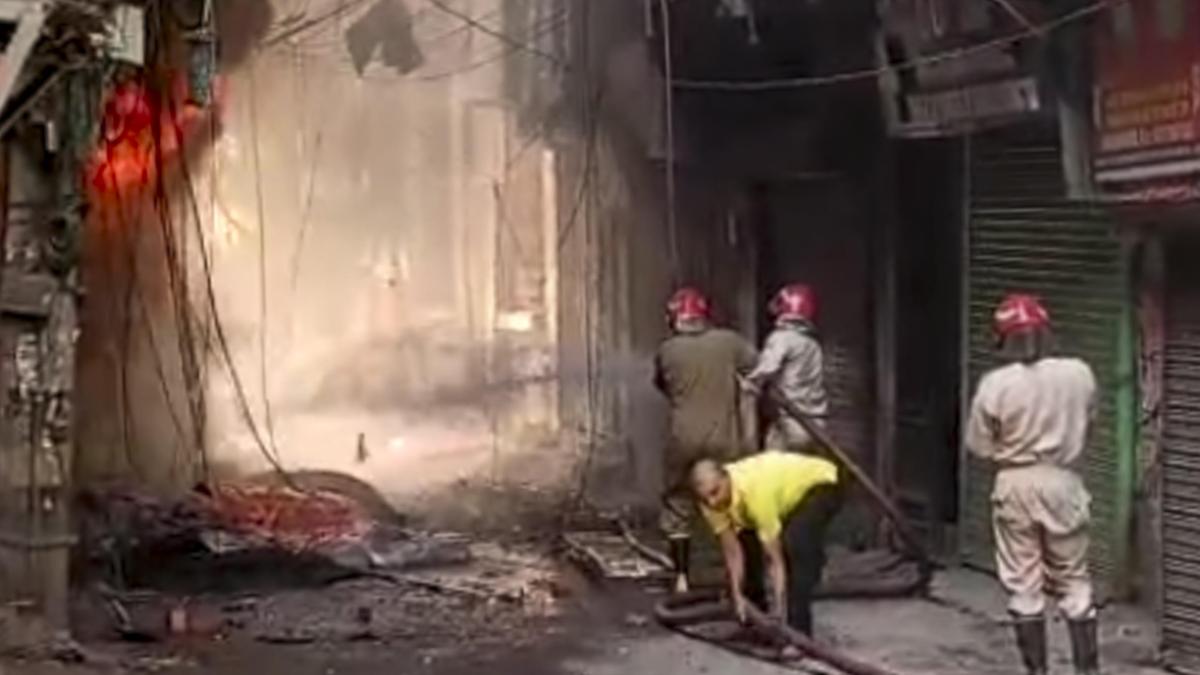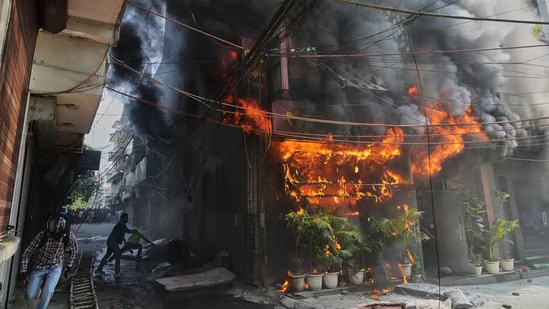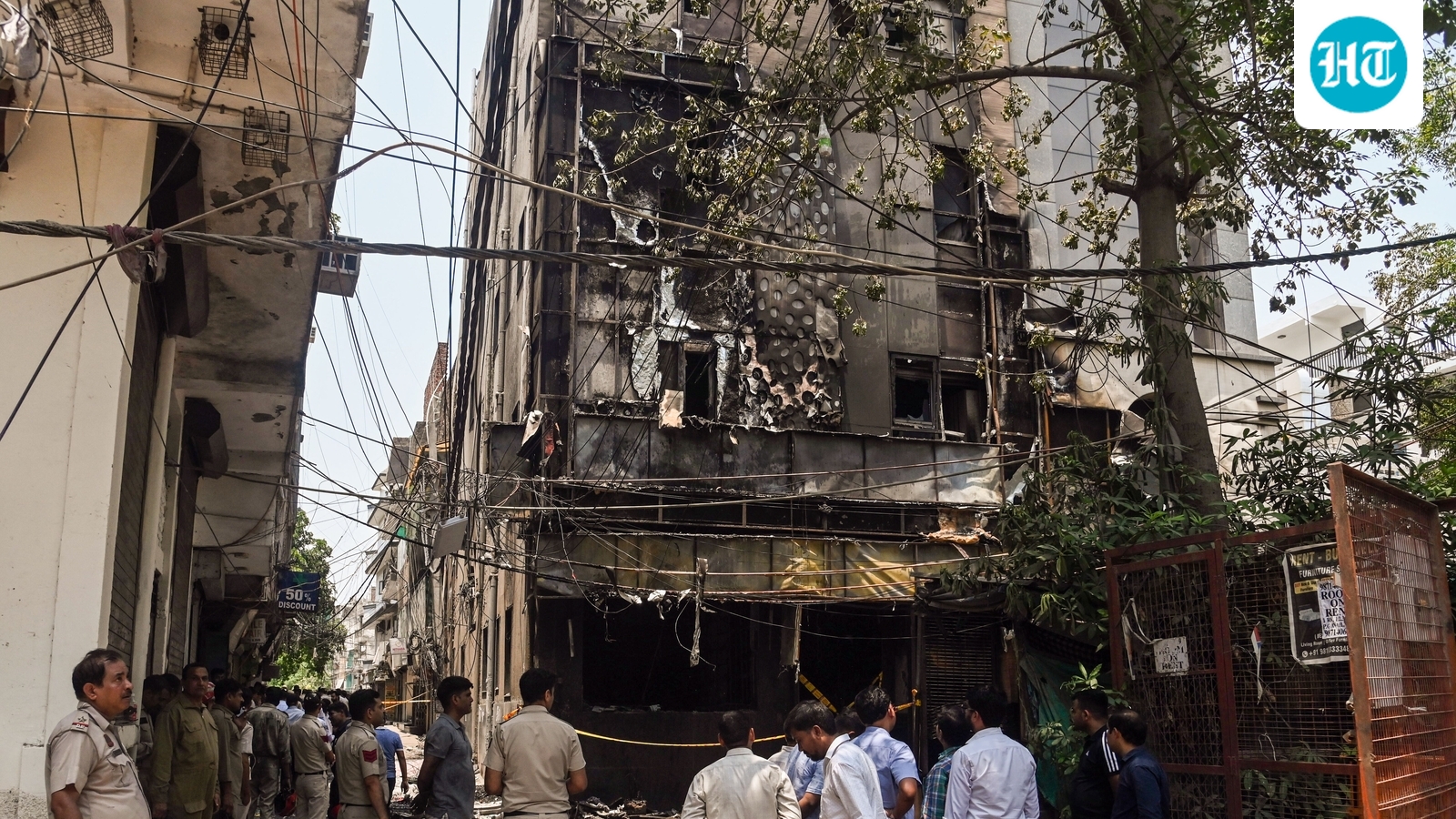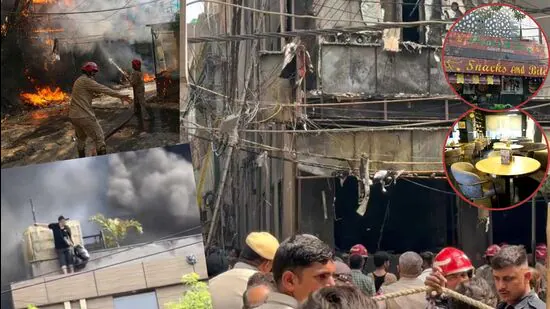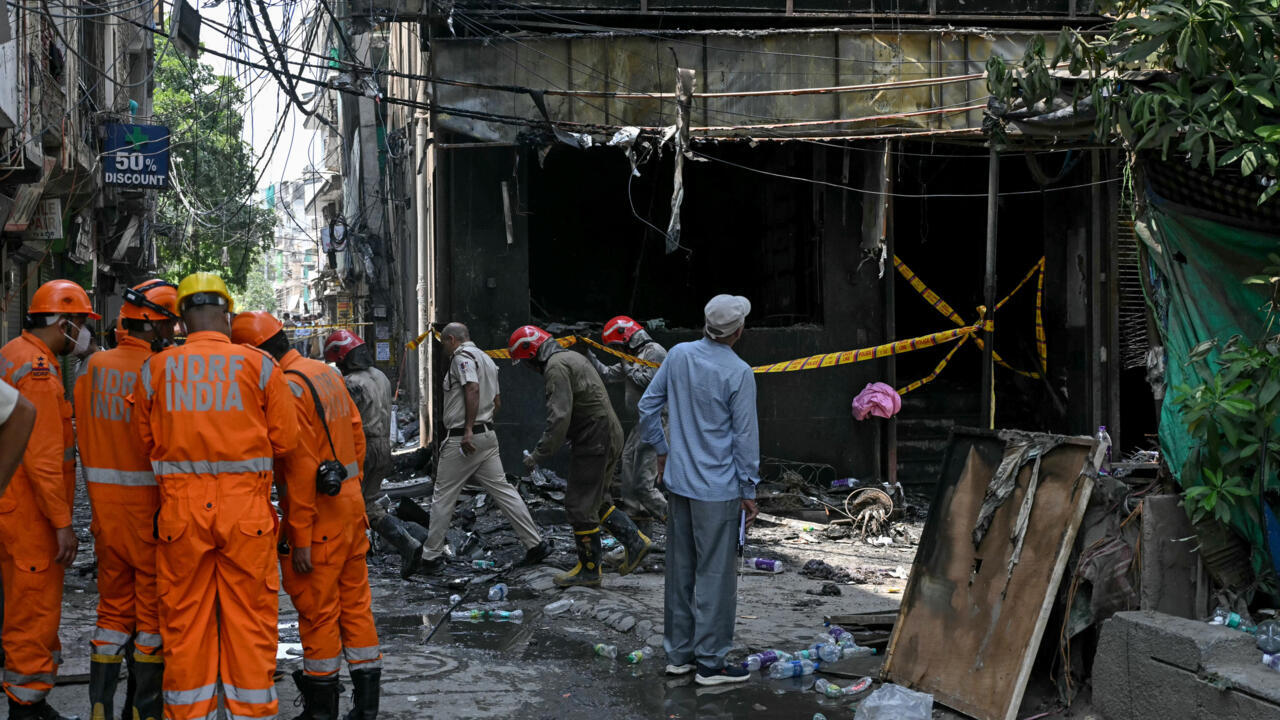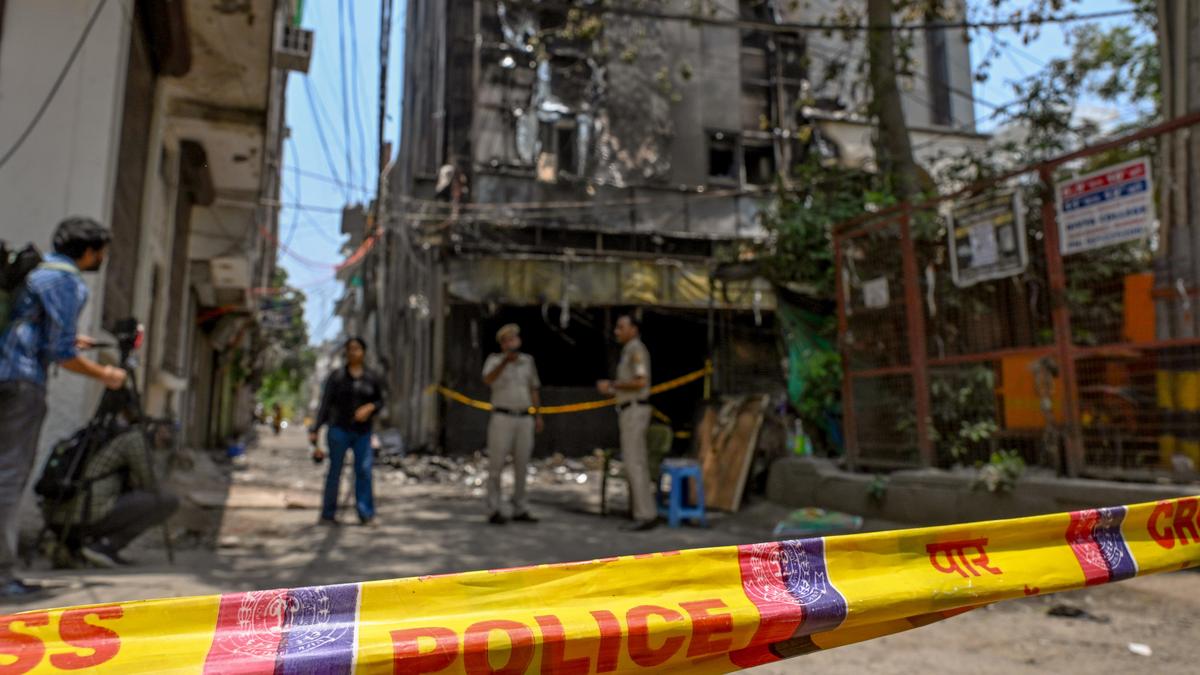
It is 12 noon on June 3, a day surprisingly not as hot as Delhi can get at this time, but the water from the fire extinguishers has dried up. About 200 people are gathered in a narrow lane in South Delhi’s Hauz Rani, breathlessly recalling what had happened. This is the scene of a disaster. The smoke has now cleared up over the six-storeyed Flourish Stay, a bed-and-breakfast, but the building is charred. The structures flanking it are also blackened.Members of the fire brigade say that at least 49 people were pulled out of the building. “There was no emergency exit, the doors on the terrace were locked, and the glass façade made rescue difficult. It left the trapped choking,” says one officer. In addition, the doors were powered by electricity, so could not be opened once the fire broke out.Hauz Rani is a pre-independence urban village that has seen unregulated growth over the years. Homestays illegally converted into multi-storey hotels run cheek by jowl with homes and real-estate brokers’ offices. The lanes are so narrow only a single car can fit. High-tension electricity wires hang dangerously close to the traffic below. Tall and small buildings are packed into the lal dora area, a historic land classification demarcating a village habitation zone. Here, construction on an existing structure does not require approved building layout plans.The uniformed forces are swarming around, as the traffic police barricades the area, up to 1 kilometre around Flourish that had caught fire at 8:30 that morning. The residents of Hauz Rani are on the street. Some guests from the homestays around are also out, now worried about their safety.Editorial | Fire and furore: On fire accidents in IndiaThe police does not allow those from Micasa, the lodges next door, to enter the building. One couple from Congo is panicked because they need their medicines from the room. Another asks about what will happen to their passports and money. Across the next few hours, foreign nationals begin leaving with their luggage.By the evening, the boards of all the surrounding bed-and-breakfast places have been taken down, fearing a government crackdown.Outside this mess, within a kilometre, are two of Delhi’s newer areas Malviya Nagar, from where the police and fire brigade arrived; and Saket, with a steel-and-glass strip of malls and a hospital. The lodges serviced those coming into Delhi for treatment to this hospital. Twelve of the 21 people who died were foreign nationals from Congo, Liberia, Nigeria, Mozambique, and Bangladesh.Also Read | Licence renewal plea was filed as fire ragedLast month, an under-construction 5-storey building collapsed in Saidulajab, killing six. Earlier in the month, a fire in a Vivek Vihar residential building killed nine. In March, another fire in Palam also killed nine, all from the same family. Over two-and-a-half months ago, the Delhi government promised a fire audit across the city.The first hourAmbulances began to arrive at 8:40 a.m. when locals had begun the rescue operation. “It did not take the fire more than a few minutes to blow out of the ground floor. There were sparks in the dangling web of wires which people would later step on to jump,” says Riyazuddin Mansuri. Mansuri and his son Armaan, who had a mattress shop under a tin shed right opposite the B&B, used up their stock of over 20 mattresses to lay them down for the guests who began jumping. At the time, he says, he did this by instinct. “It felt like the thick, black smoke would swallow the whole neighbourhood.”He recalls feeling breathless, hours after. “People gathered and the narrow streets were already jammed by the time ambulances and fire services came. We were looking at people hanging from the windows, glass shreds falling on the road,” he remembers.The fire brigade arrived 45 minutes after the fire broke out, though officials say the call came to them only 20 minutes into the fire. The police reached within 20 minutes, says the station house officer of Malviya Nagar Police Station, Vinay Yadav. “They were late,” the officer says. “There were ladders, mattresses, but no water,” SHO Yadav says.Seven fire tenders and 39 Delhi Fire Service personnel reached the spot and doused the fire within 20 minutes, they say. Deputy Chief Fire Officer A.K. Malik says that the nearest fire station at Geetanjali Enclave did not have water tenders and firefighting units had to be called from over 7 km away. “We received the fire units that were called from Nehru Place and Bikaji Cama Palace. With Delhi traffic, it took them 19 minutes to reach the spot,” he said.
Delhi hotel fire: Punished for a guilty system
A deadly hotel fire in Delhi exposes systemic negligence and regulatory failures, resulting in 21 tragic fatalities, including foreign nationals.
2,090 words~10 min read