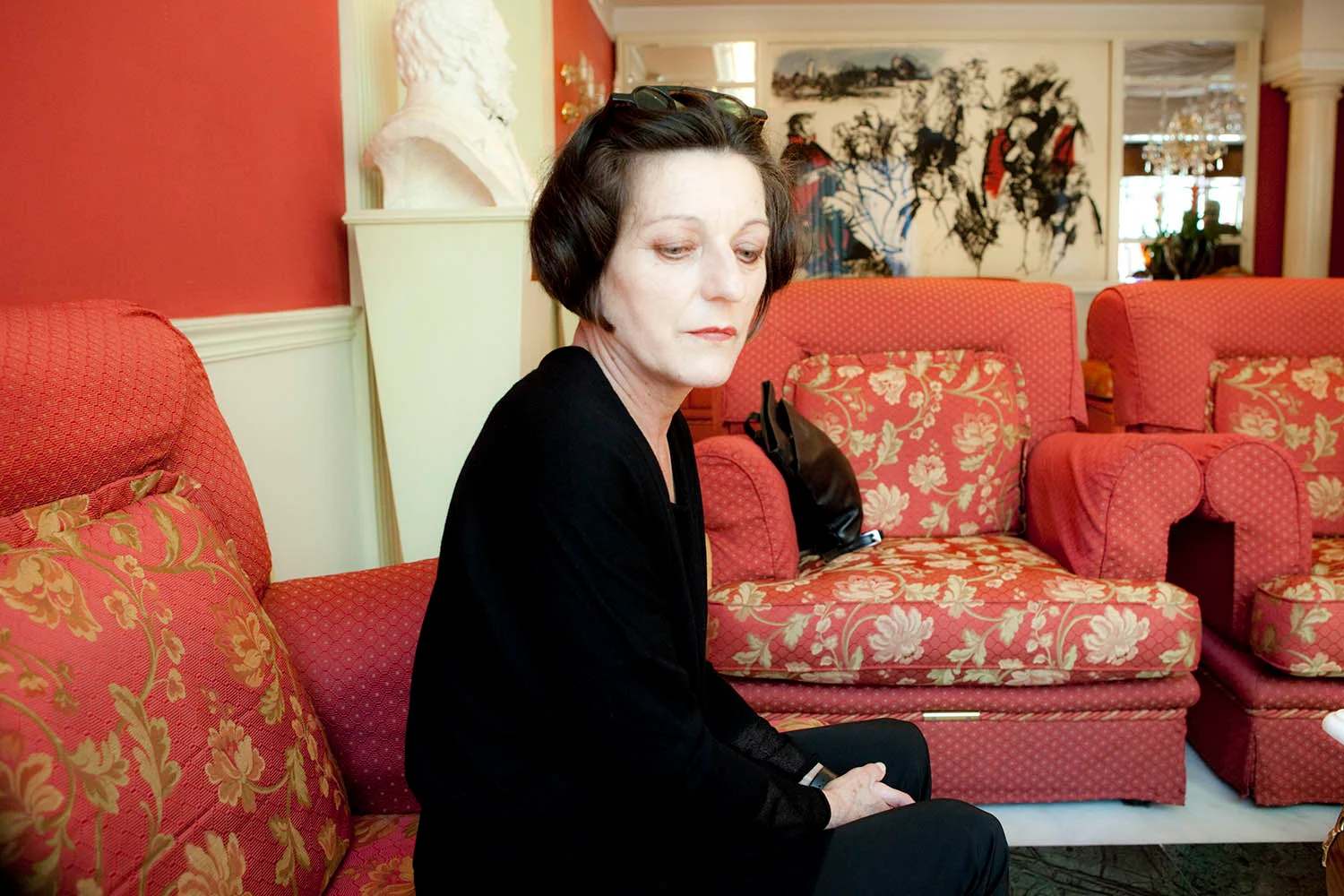
“Do you have a handkerchief?” was the question Herta Müller’s mother asked her every day before she left the house. Hardened by five years in a Soviet labor camp, her mother rarely showed affection. “Love disguised itself as a question. That was the only way it could be spoken: matter-of-factly, in the tone of a command, or the deft maneuvers used for work,” Müller said in her speech after winning the Nobel Prize for literature in 2009.
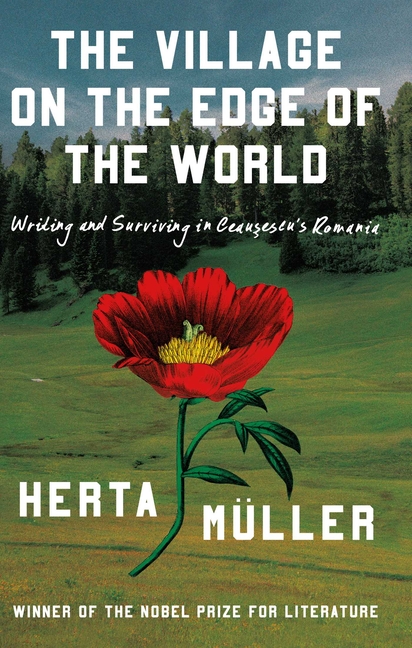
Book cover featuring a background photo of a lush green rolling hillside under a cloudy sky, bordered by a dense pine forest at the top. A large, stylized red poppy flower is centered in the foreground. The title "THE VILLAGE ON THE EDGE OF THE WORLD" is printed in large, white, blocky capital letters across the top, with a subtitle in white cursive script below it. The author's name, "HERTA MÜLLER," is split on either side of the flower stem in large white text.
The Village on the Edge of the World: Writing and Surviving in Ceauşescu’s Romania, Herta Müller, trans. Kate McNaughton, Pegasus Books, 256 pp., $29.95, May 2026
For Müller, a novelist who lived under Romania’s brutal communist dictatorship, a handkerchief is never just a handkerchief. When a man drops dead in a city street, a handkerchief is the “wordless condolence” of passersby used to cover up his face. A handkerchief is a “piece of private property” she places on the office stairs to mark her new workstation after being forced out of her desk for political reasons. It is a flickering symbol of dignity and care amid decades of darkness.