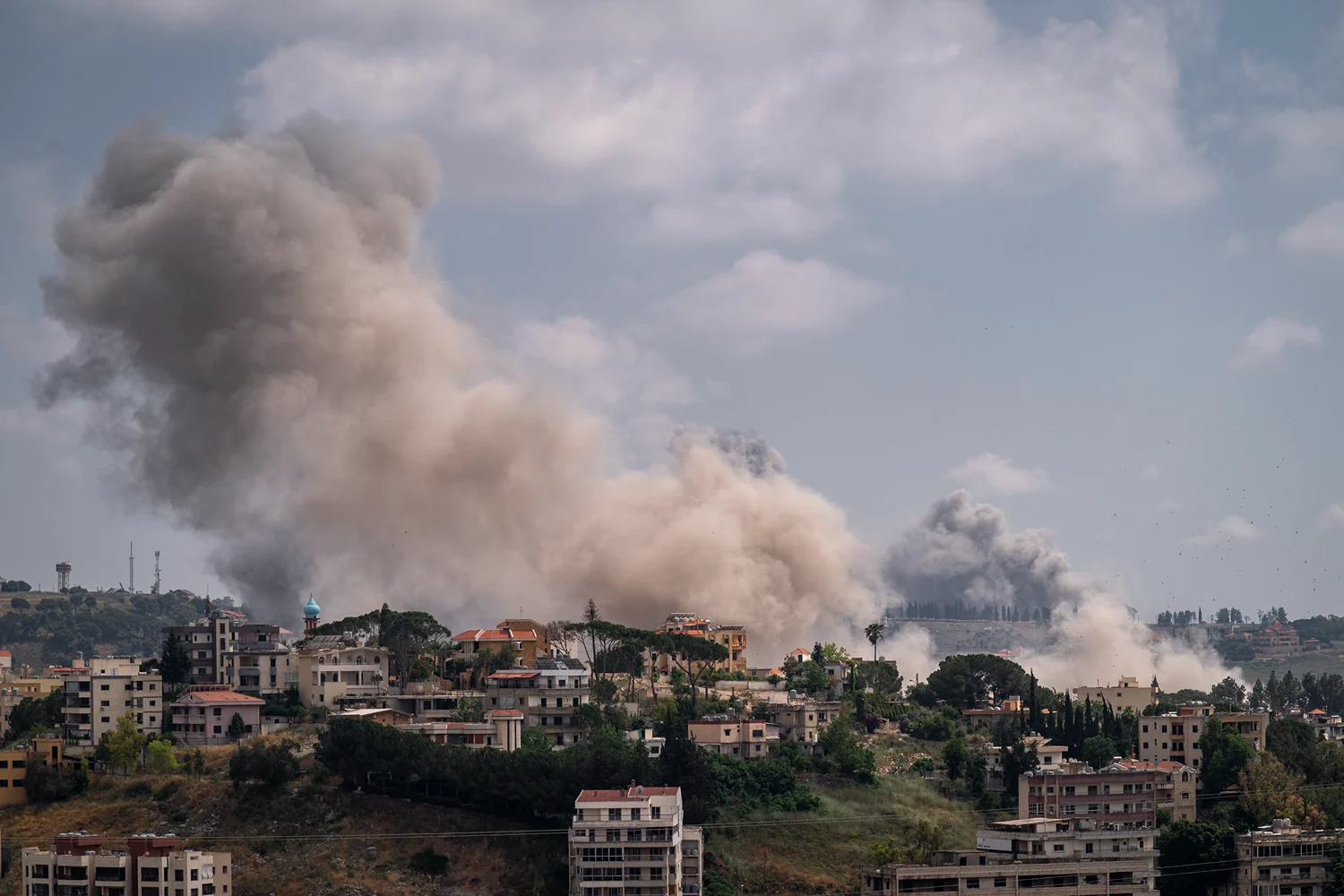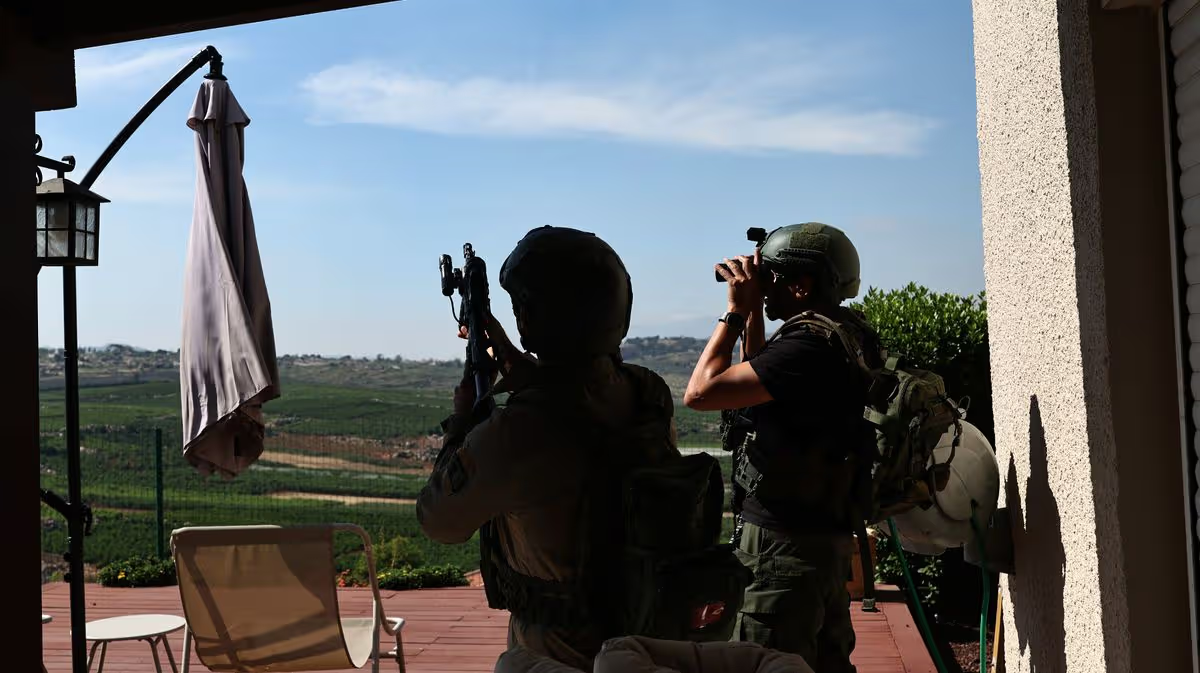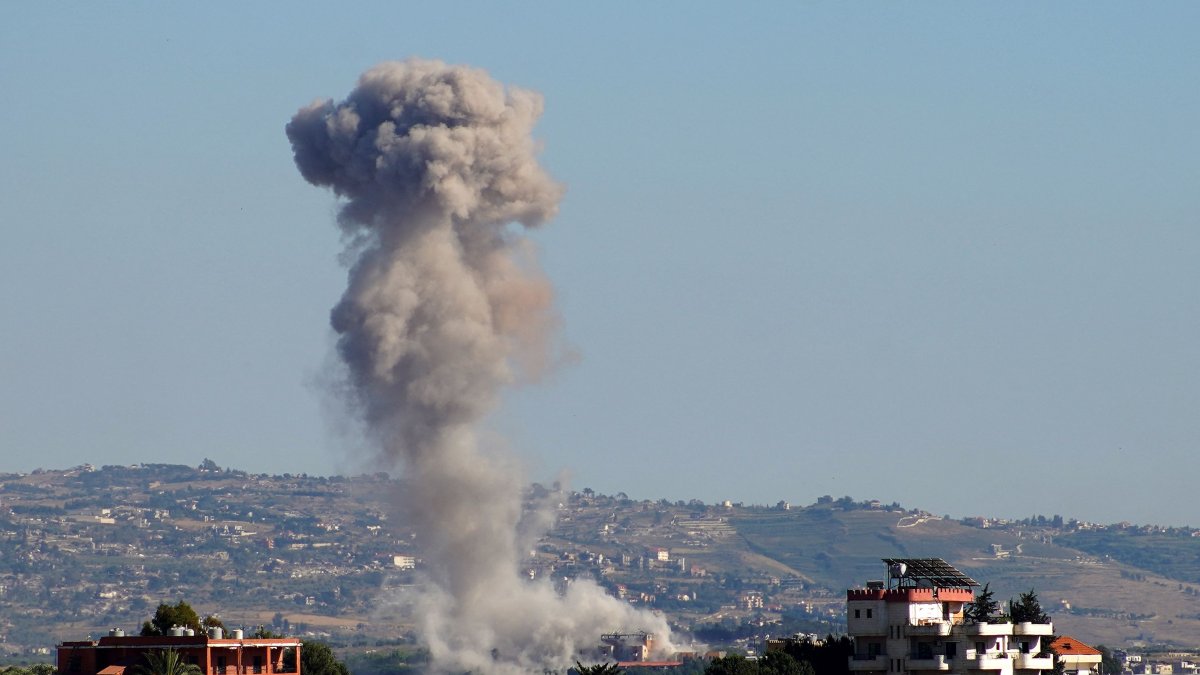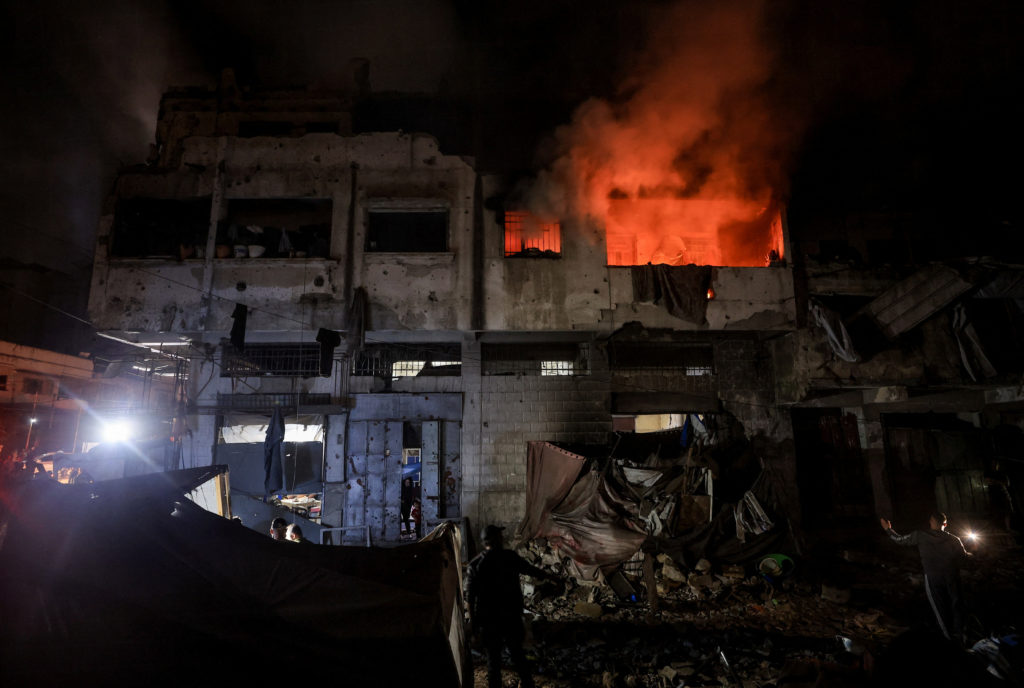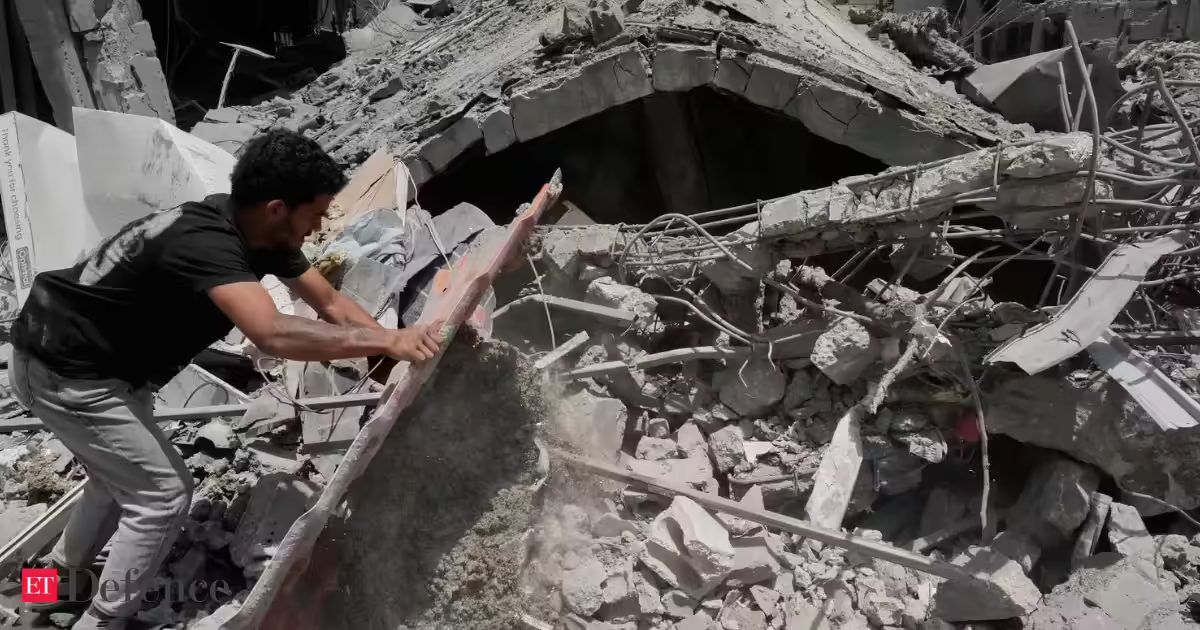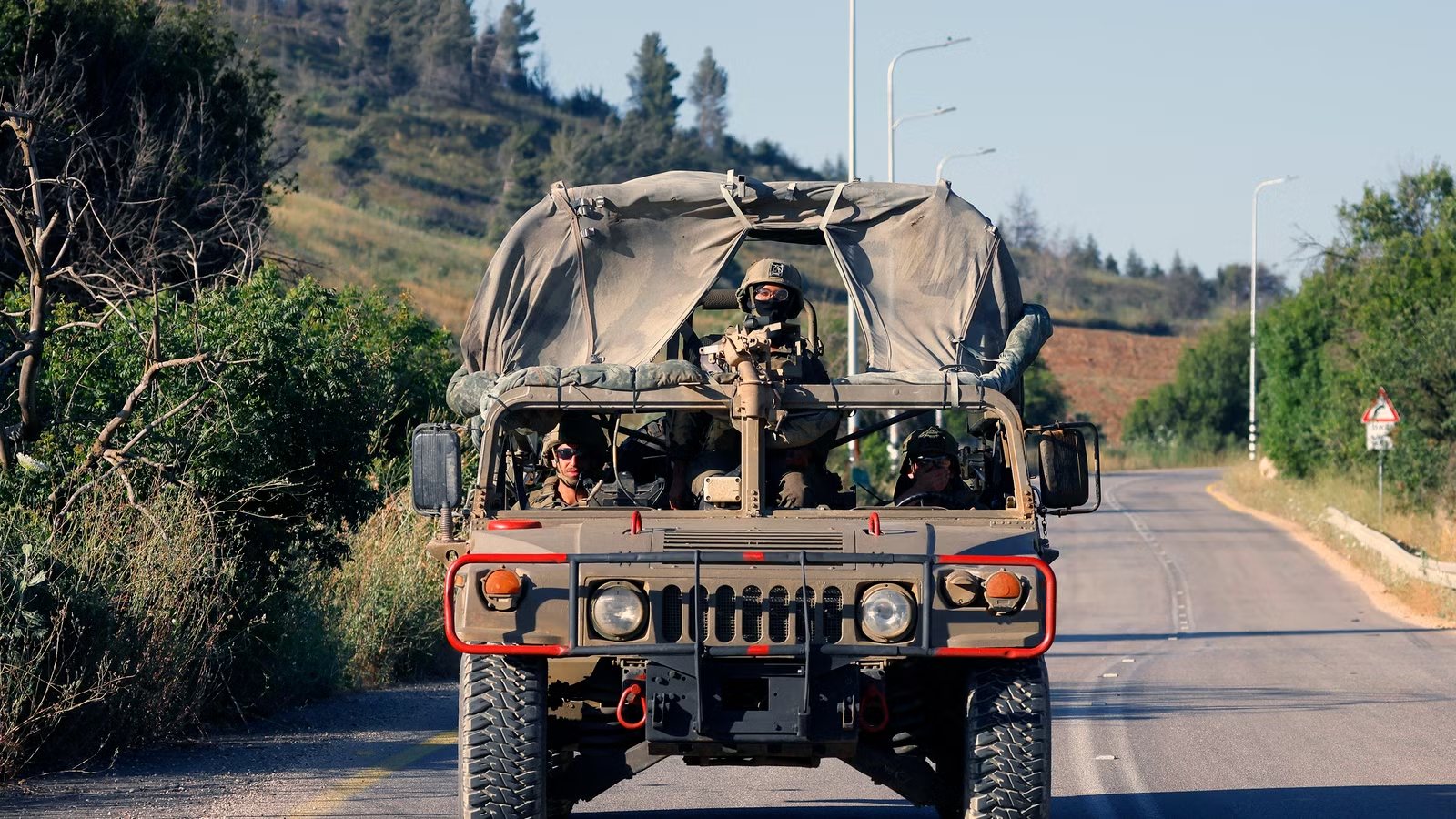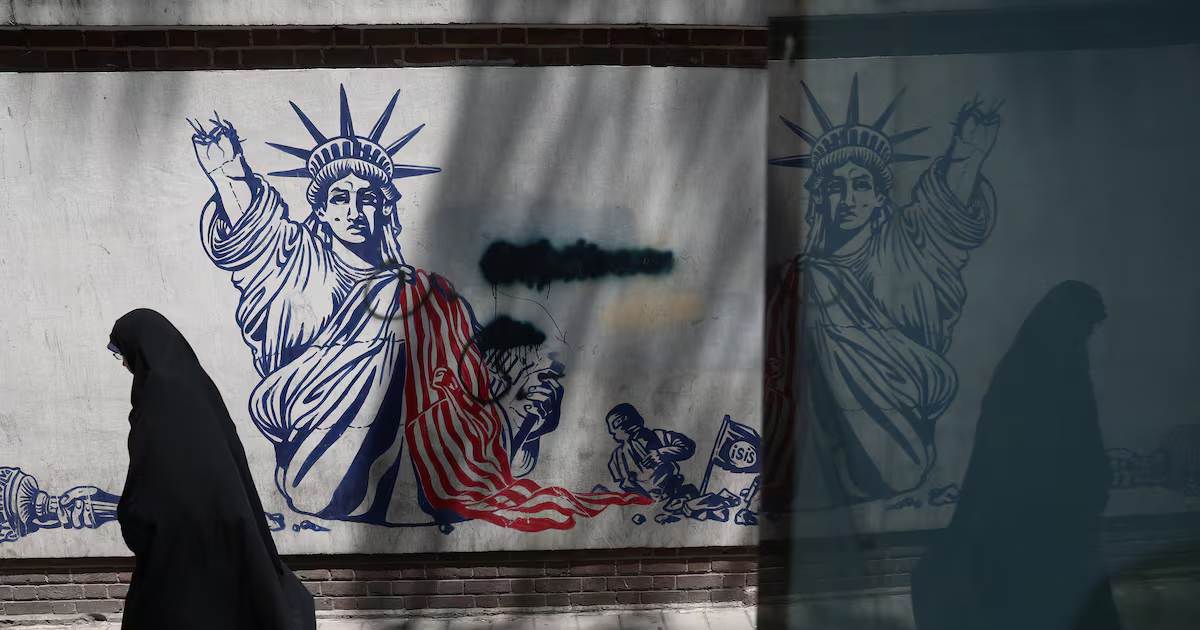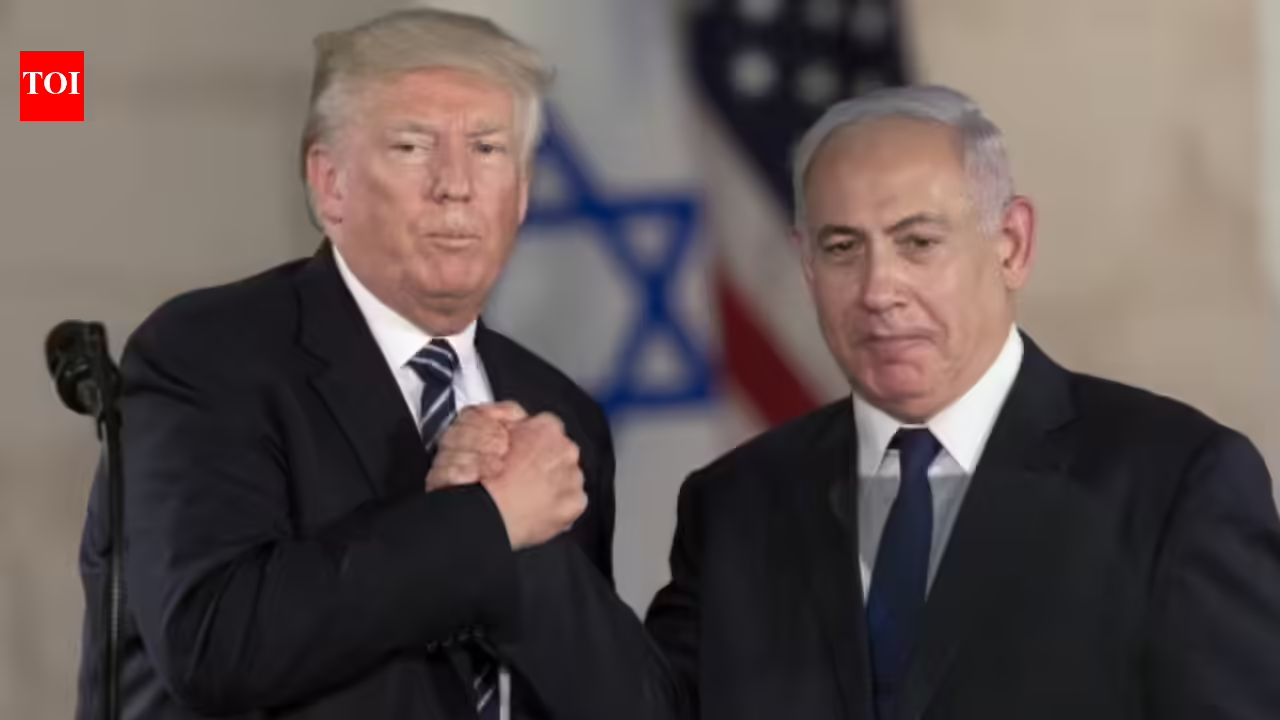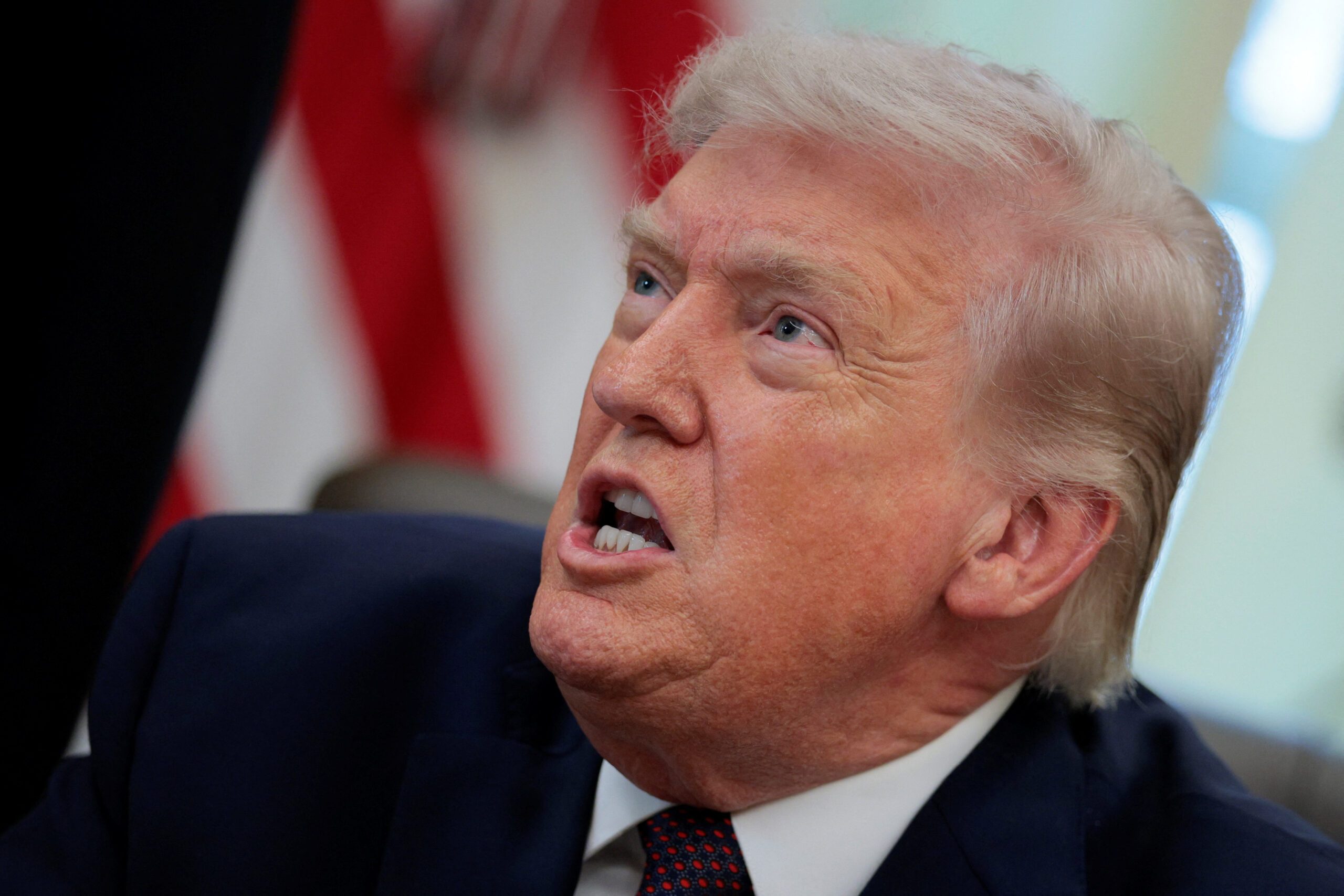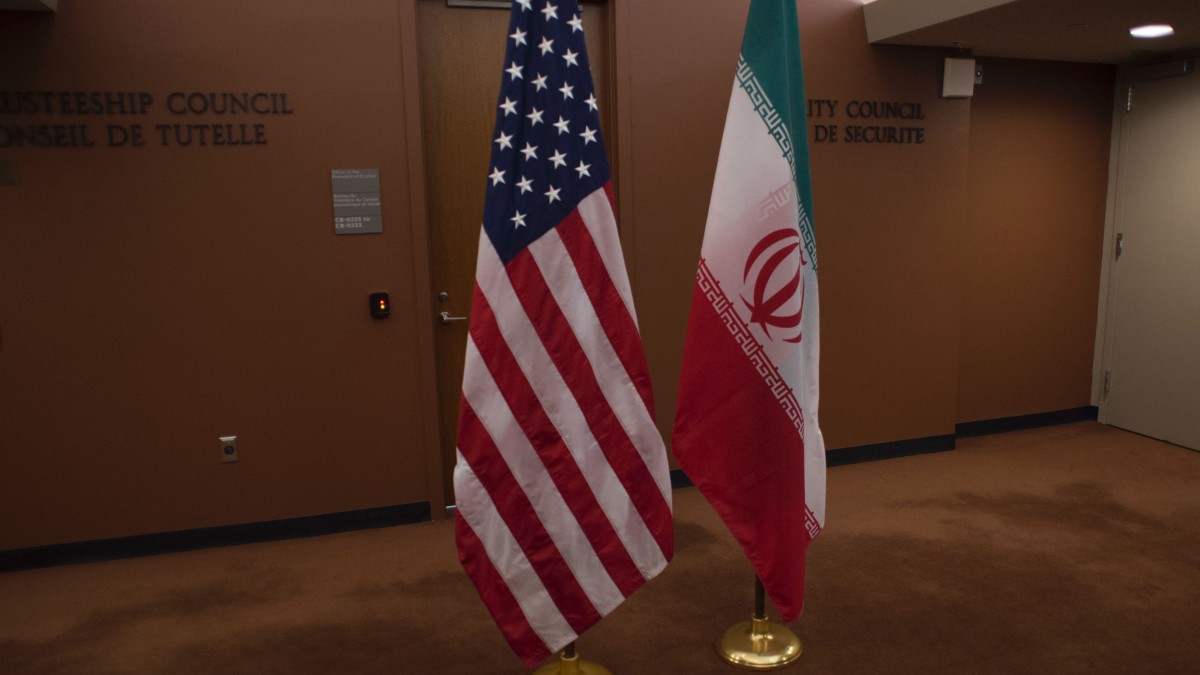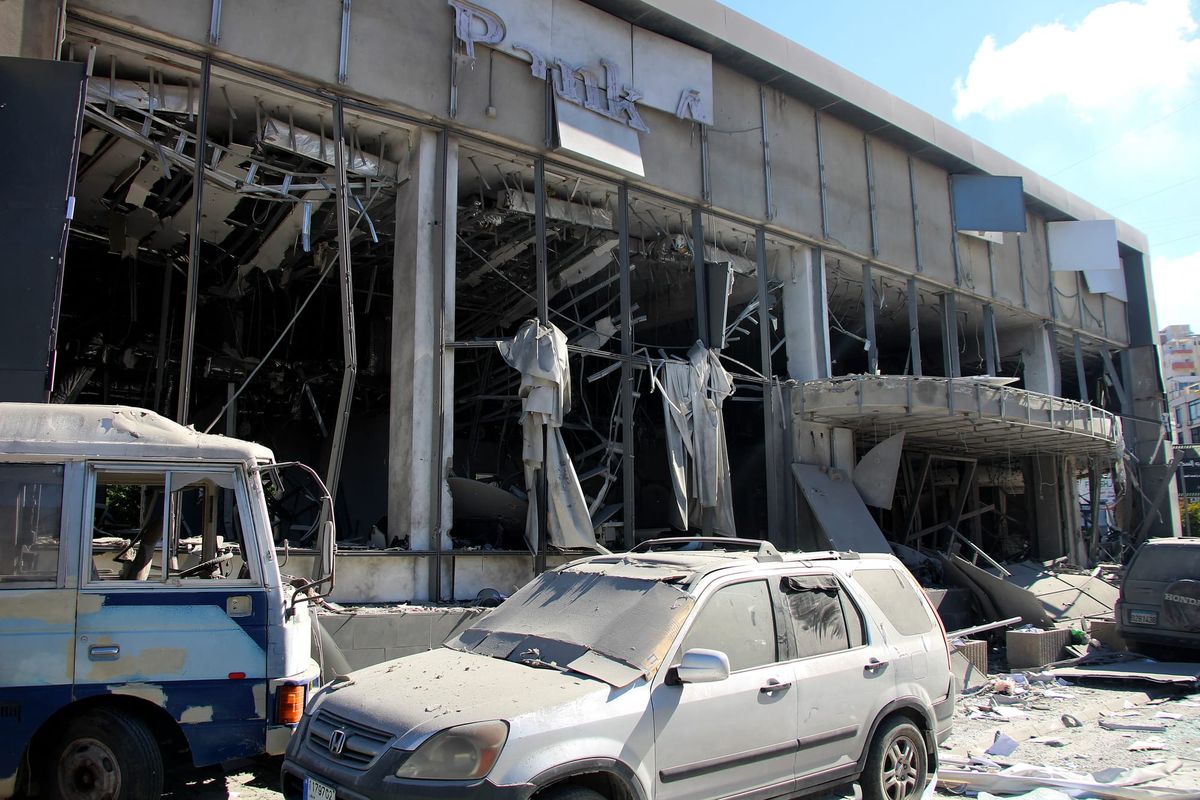
There are supposedly two ceasefires in force in the Middle East. One is between Israel and Hezbollah in Lebanon; the other, between the United States and Iran. Both are fragile. Neither is bringing peace much closer.The difficulty is that these conflicts are not separate. Hezbollah is an Iranian ally; Israel’s war in Lebanon is tied to its wider regional confrontation with Tehran; and Donald Trump’s effort to end the US-Iran war is constrained by Benjamin Netanyahu’s political needs at home. What looks, at first glance, like two ceasefires is better understood as one unstable regional pause in fighting.Finding a way forward is difficult. But the dynamics of the two conflicts can be analysed – and that may at least help explain why the present moment remains so dangerous.First, Lebanon. The Israel-Hezbollah conflict has its roots going back more than 40 years to Israeli attempts to stop Palestinian paramilitary groups exiled to Lebanon from firing rockets into northern Israel. In June 1982, this developed into an operation by the Israel Defence Forces (IDF) to occupy part of southern Lebanon.In practice, ‘Operation Peace for Galilee’ became a full-scale invasion reaching as far north as Beirut, where it led to a protracted siege of the western part of the city and the Palestinian leadership. The loss of life was reportedly over 10,000 people, many of them Palestinian civilians, with thousands more wounded. Furthermore, and relevant for the current conflict, is that after the IDF withdrew from the capital in September 1982, it occupied a large part of southern Lebanon for the best part of a decade.Those years of occupation involved tough treatment of the local population, mostly Shi’a Muslims, and from within that community lay the origins of a paramilitary resistance that was vigorously suppressed by the IDF but also killed scores of Israeli soldiers. That led to Israel withdrawing from almost all of Lebanon by 1990. The resistance movement became known as Hezbollah, and it also showed Israeli strategists that counterinsurgency warfare against an entrenched and angry opponent was costly. Air power became the main method of control, both there and more recently in Gaza. This strategy includes the Dahiya doctrine, where Israel uses civilian support for its opponents to justify the destruction of public infrastructure, including bridges, water supplies, schools, universities and even health centres and hospitals.Variants of this in Lebanon in recent weeks have been on a smaller scale but have already seen well over 3,000 people killed since 2 March, according to Lebanon’s health ministry, and many more thousands wounded. Recent targets include three hospitals in southern Lebanon – attacks that reportedly killed nine people and wounded more than 150, many of them health workers. Overall, since 2 March, 130 medical workers have been killed, and 162 ambulances and healthcare facilities targeted.From Netanyahu’s perspective, Hezbollah’s continued ability to threaten northern Israel with rocket and drone attacks is a major political issue in the run-up to the general election due in October. Indeed, it is made worse by Hezbollah’s recent introduction of accurate fibre optic-guided armed drones that pose a substantial threat to IDF ground troops. While the IDF does not view the conflict as part of the US/Iran ceasefire, even though Hezbollah is allied to Iran, Trump’s people see it as a headache in their desire to bring the war with Iran to an end. Talks between the Lebanese and Israeli governments in Washington have this week resulted in yet another ceasefire, but that has little meaning as Hezbollah – which has long operated as a state-within-a-state, outside the control of the Lebanese government – has said it rejects the deal. Meanwhile, in the US/Iran conflict, the shaky ceasefire that started on 28 February barely survives. Just this week, the US Navy damaged a tanker reportedly trying to breach its blockade of Iranian ports, and blamed Iran for an attack on Kuwait International Airport. The Iranian Revolutionary Guard Corps (IRGC) denied responsibility for that attack, which killed one person and wounded 60 others. Meanwhile, Iranian media reported that the IRGC had attacked the HQ of the US Fifth Fleet in Bahrain, though US sources denied that any of the missiles had hit their targets. Despite the continuing violence and loss of life, neither the Iranian nor the US leadership wants to see the war continue, and both have a motive for avoiding any post-war peace that involves even a hint of failure. The Iranian leadership in Tehran, which is intent on regime survival, is dominated by hardline members of the IGRC, suppresses opposition with force when necessary and will only settle for a lasting agreement that seriously curtails any future threat from Israel. It even seems to believe that it could survive a further bout of devastating warfare.Trump, meanwhile, badly needs the war to end as soon as possible, whatever his bluster and his often contradictory media posts may suggest. Domestic anger over the conflict is growing, including in both houses of Congress, where his Republican Representatives and Senators are even starting to break ranks. In short, there is little trust on either side; Iran wants relief from sanctions, release of frozen assets and guarantees of durability of agreements, whereas Trump wants a loose memorandum that can be sold as victory. Furthermore, beyond that, Netanyahu needs the wars to continue for as long as possible, and certainly until the next election.None of the three will get what they want, but the first to move may come from Trump, especially as his domestic support declines further. Even so, that may still take many weeks or even months, and even then, it is far from certain.
Two ceasefires, no peace: the Middle East’s dangerous pause
The US, Iran, Israel and Hezbollah all have reasons to avoid full-scale war. But none yet has a serious route to peace.
935 words~4 min read