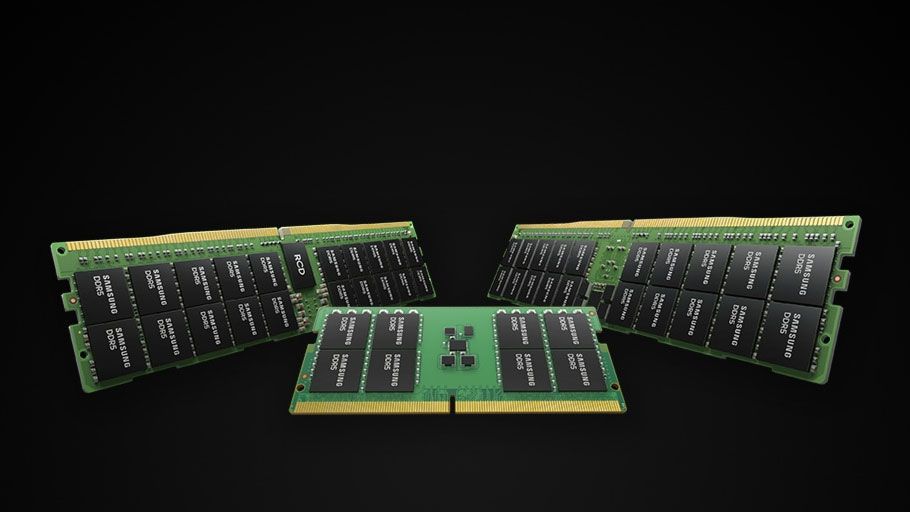
(Image credit: Samsung)
A coalition of nine US trade associations has urged the Trump administration to take immediate action on what it describes as an emerging memory chip shortage driven by the explosive growth of AI data centers. In a June 3 letter sent to US Commerce Secretary Howard Lutnick and Treasury Secretary Scott Bessent shared with Tom's Hardware, the organizations — representing telecommunications providers, automakers, medical device manufacturers, and major retailers — warned that AI infrastructure deployments are consuming an outsized share of global memory production, creating supply constraints and price increases that could ripple across large segments of the US economy.The coalition warned that the AI data center expansion, which has consumed an unprecedented share of global memory capacity, has led to a memory chip shortage that could lead to higher prices for consumer electronics, increased costs for broadband and telecommunications infrastructure, disruptions to automobile and medical device production, and delays affecting federal contractors attempting to fulfill government procurement obligations. The letter argues that these risks are emerging despite billions of dollars of US investment intended to strengthen domestic semiconductor supply chains.The signatories acknowledged AI's importance but argue it shouldn't come at the expense of the rest of the economy. "While recent developments in AI offer the promise of generational technological advances and are important for US tech leadership, we must also ensure other key industries are not negatively impacted by this disruption in the marketplace," the coalition said.The organizations are asking the administration to work directly with memory suppliers and major chip buyers to address the imbalance. Their recommendations include accelerating expansion of memory manufacturing capacity in the United States and allied nations, using trade agreements to strengthen supply-chain resilience, ensuring adequate memory supply for non-AI industries, leveraging CHIPS Act programs where possible, and reducing regulatory barriers that may slow capacity growth."We urge the Administration to work with memory chipmakers and chip buyers to assess steps that can be taken to address this imbalance in the memory market and protect against harm to consumers, workers, and businesses of all sizes," the letter states.The warning arrives as memory manufacturers increasingly prioritize high-bandwidth memory (HBM), the specialized memory used in AI accelerators from companies such as Nvidia and AMD. Demand for HBM has surged over the past two years as hyperscalers race to deploy larger AI clusters, prompting memory suppliers to devote an increasing share of their production capacity to AI-oriented products.Samsung and SK Hynix — which together with Micron control over 95% of global DRAM production — have been diverting wafer capacity toward high-margin HBM for AI accelerators, starving the commodity DRAM and NAND markets in the process. Both companies warned in April that significant shortages will continue through at least 2027. IDC, meanwhile, has already revised its 2026 PC market forecast downward by up to 9% as a direct consequence of memory scarcity and rising prices.Get Tom's Hardware's best news and in-depth reviews, straight to your inbox.Industry analysts have repeatedly warned for months that AI demand is reshaping the economics of the memory market. While memory shortages have historically been cyclical, the coalition argues that AI infrastructure spending is creating a structural shift large enough to affect industries far removed from data centers. The letter marks the first coordinated, multi-industry push for federal intervention. Whether the administration will respond — and how — remains to be seen.