The organization urged Indonesia to improve the efficiency of public spending by better targeting energy subsidies toward vulnerable households rather than relying on broad-based price controls.
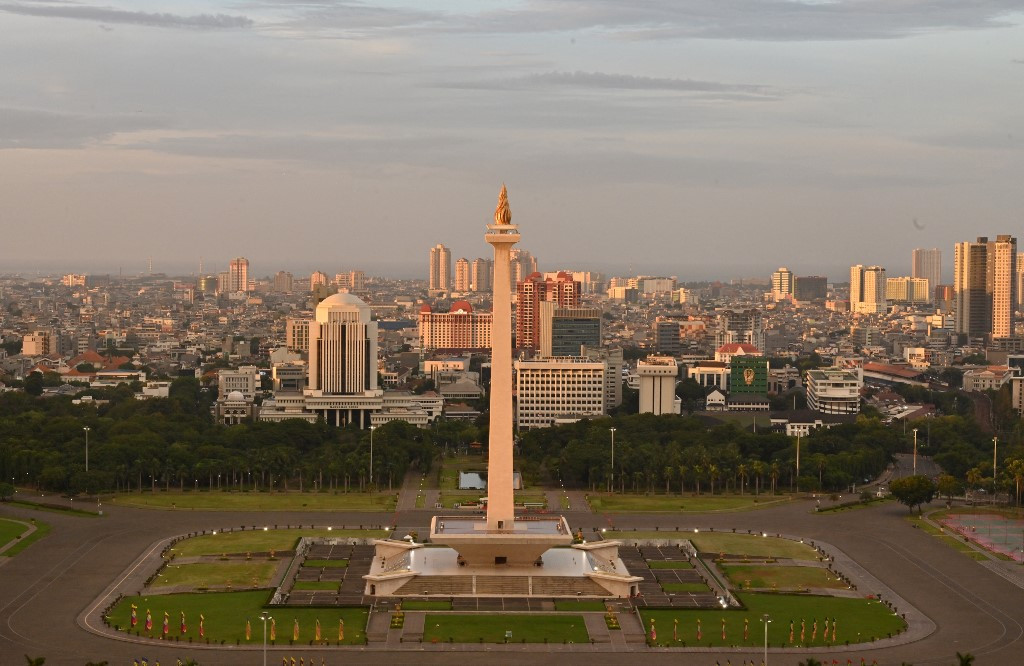
The iconic National Monument, with its gold flame, towers over the Central Jakarta skyline on Feb. 10, 2020. (AFP/Adek Berry)
Indonesia’s economic growth is projected to slow to 4.7 percent this year before picking up to 5 percent in 2027, according to the latest outlook from the Organisation for Economic Co-operation and Development (OECD), which cited higher energy costs, policy uncertainty and a weakening labor market as factors weighing on household spending and business investment.In its June Economic Outlook, the OECD said domestic demand would remain the main driver of growth, while net exports are expected to make no overall contribution, as softer demand for Indonesian commodities is broadly offset by weaker imports amid moderating domestic activity.
The 4.7 percent projection is lower than the OECD’s earlier forecast of 4.8 percent in its March report.
“The economy started 2026 on a firm footing but appears to be losing momentum,” wrote the report released on Wednesday.