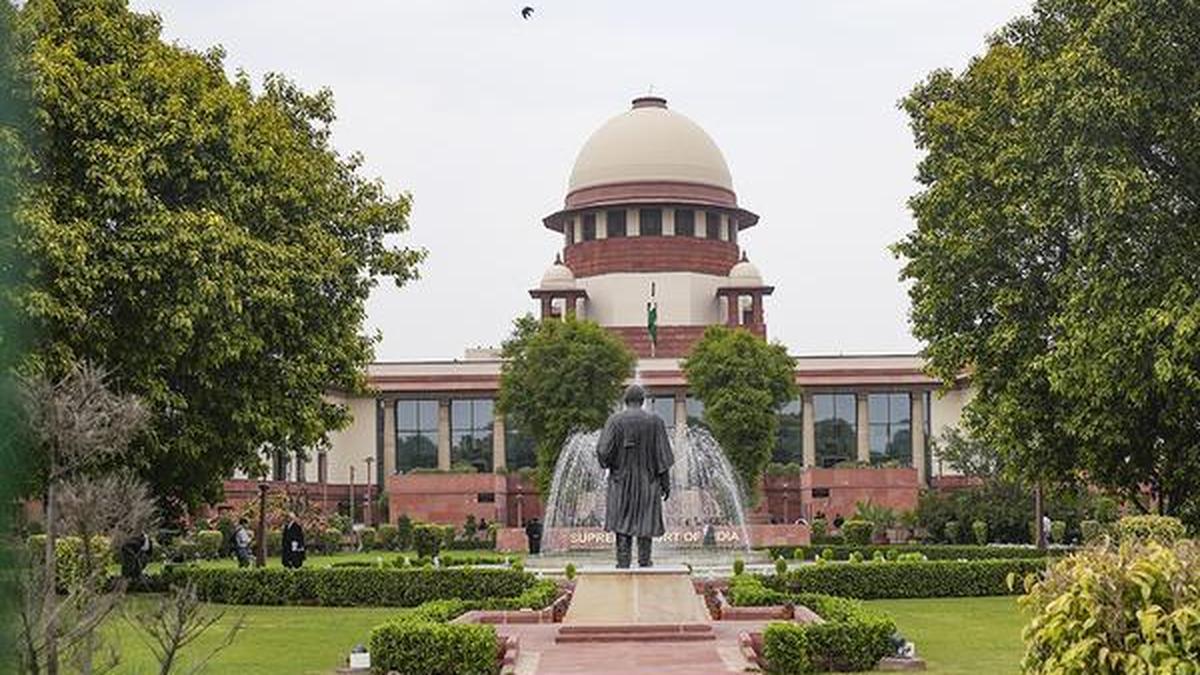
A 13-day silence between a married couple ultimately became the basis of a husband's conviction and three-year jail sentence. But the Supreme Court has now set aside that ruling, saying that merely not speaking to a spouse for a few days cannot, on its own, be treated as marital cruelty, TOI reports.A bench of Justices J K Maheshwari and Atul S Chand acquitted a man who had been convicted under Section 498A of the Indian Penal Code and sentenced to three years in prison. The conviction had been upheld by the Madras High Court.The case involved a woman who died by suicide after the couple had reportedly not spoken to each other for 13 days.The Supreme Court said there was insufficient evidence to establish cruelty and that the High Court failed to adequately consider this aspect while upholding the conviction.Can not speaking to a spouse be considered cruelty?According to the Supreme Court, mere non-communication for 13 days cannot automatically be treated as cruelty in the absence of supporting evidence.The bench observed: "Therefore, in absence of any material, mere non-communication with the deceased for thirteen days, without substantiating the same with cogent evidence, cannot, in any stretch of the imagination, fall within the ambit of cruelty in the facts of this case."The court noted that the case did not even involve evidence of a quarrel that could have supported the allegation of cruelty.What did the Supreme Court say about marital disputes?The court observed that differences between spouses are a normal part of married life and may sometimes lead to temporary periods of silence or non-communication.It stressed that courts must examine the nature, seriousness and impact of the accused person's conduct before concluding that cruelty has taken place.According to the bench, not every disagreement within a marriage can attract criminal liability.What is required to prove cruelty under Section 498A?The Supreme Court said the key question is whether the conduct was serious enough to drive a woman to suicide, cause injury, or endanger her mental health.The judgment stated that the conduct must be wilful and of a compelling nature.The bench also observed that persistent harassment close to the time when a complaint is lodged may be a relevant factor while assessing allegations of cruelty.Can petty quarrels attract charges of cruelty?The court clarified that petty quarrels by themselves cannot be treated as cruelty under Section 498A."It is, further, clarified that a petty quarrel cannot be termed as cruelty to attract charge under Sec 498A," the bench said.The judges added that courts must carefully analyse the facts, circumstances and impact of the alleged conduct before deciding whether it amounts to cruelty.
'Not speaking not marital cruelty': SC frees husband sentenced to jail over wife's suicide after 13 days of silence between them
Supreme Court has acquitted a man convicted of cruelty after his wife died by suicide, ruling that 13 days of non-communication between spouses cannot, by itself, amount to marital cruelty. Setting aside the conviction upheld by the Madras High Court, the court said ordinary marital differences and temporary silence do not automatically meet the legal threshold required under Section 498A.
436 words~2 min read