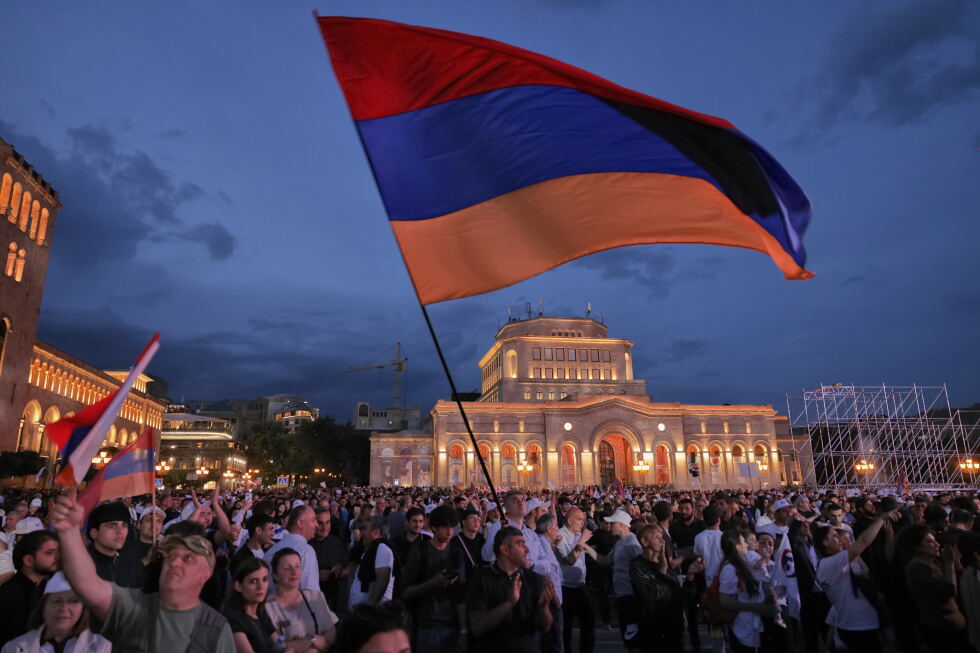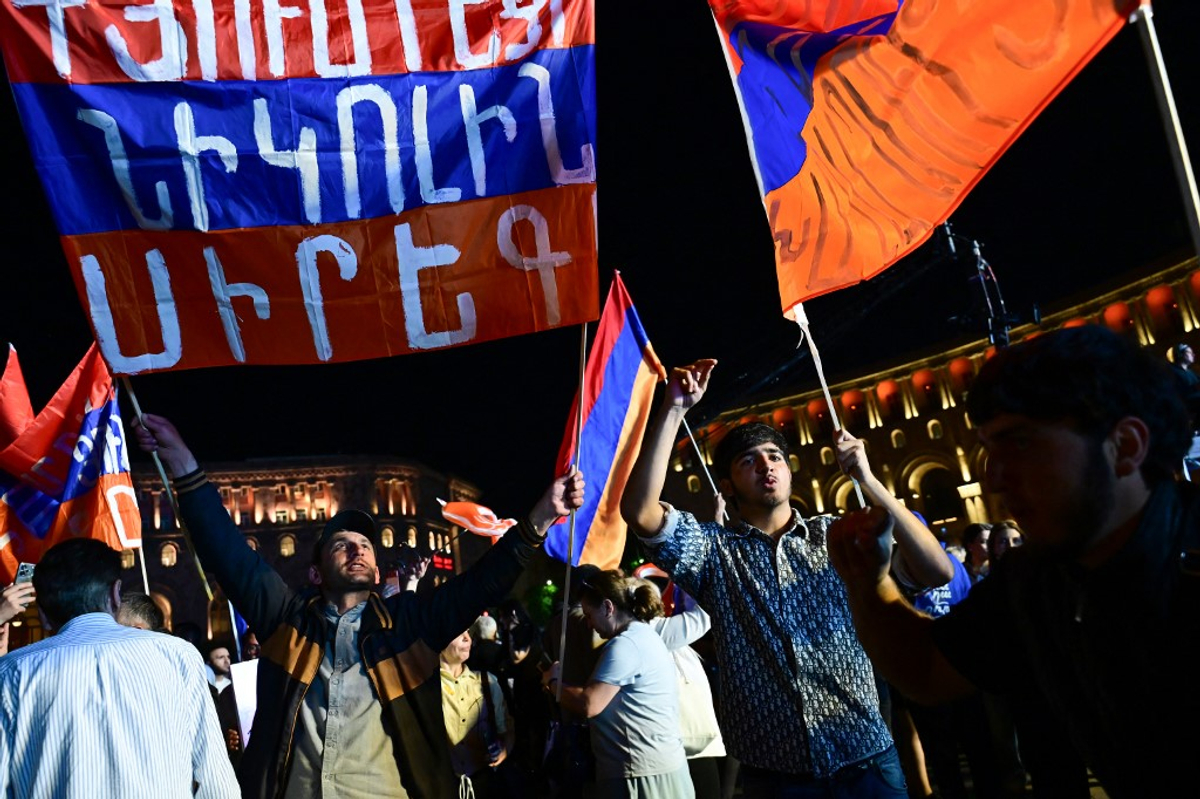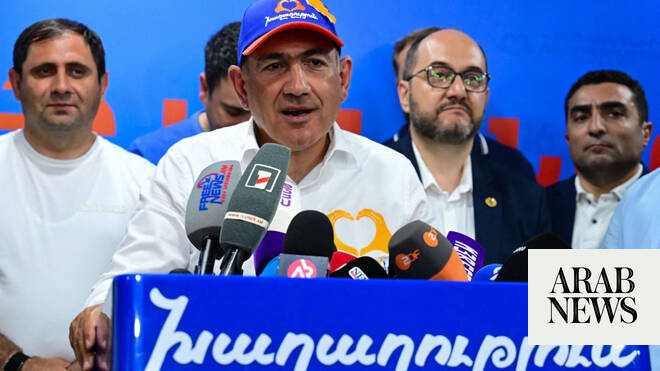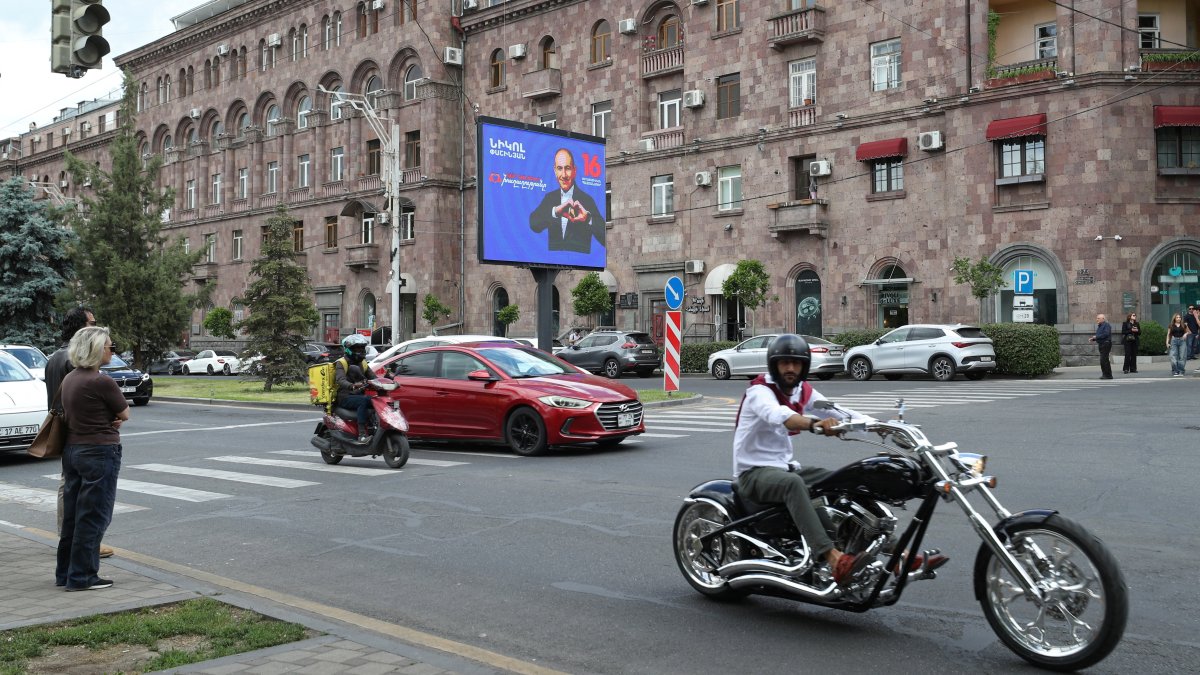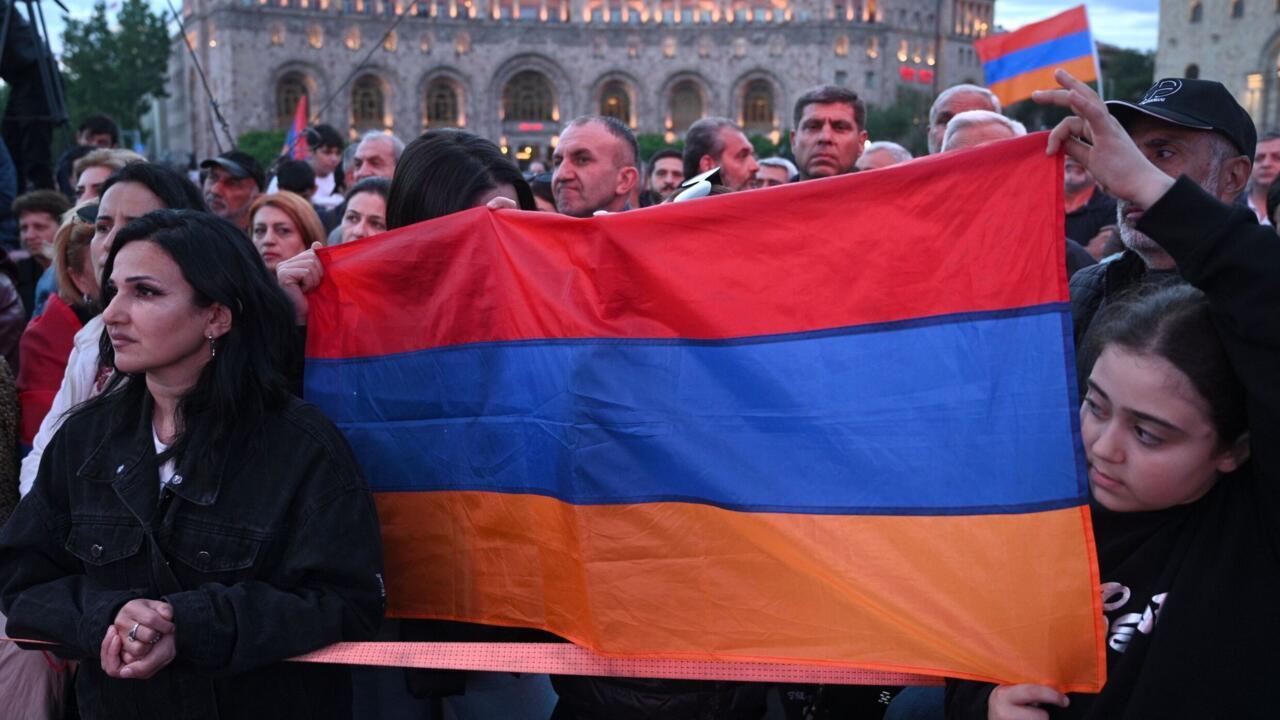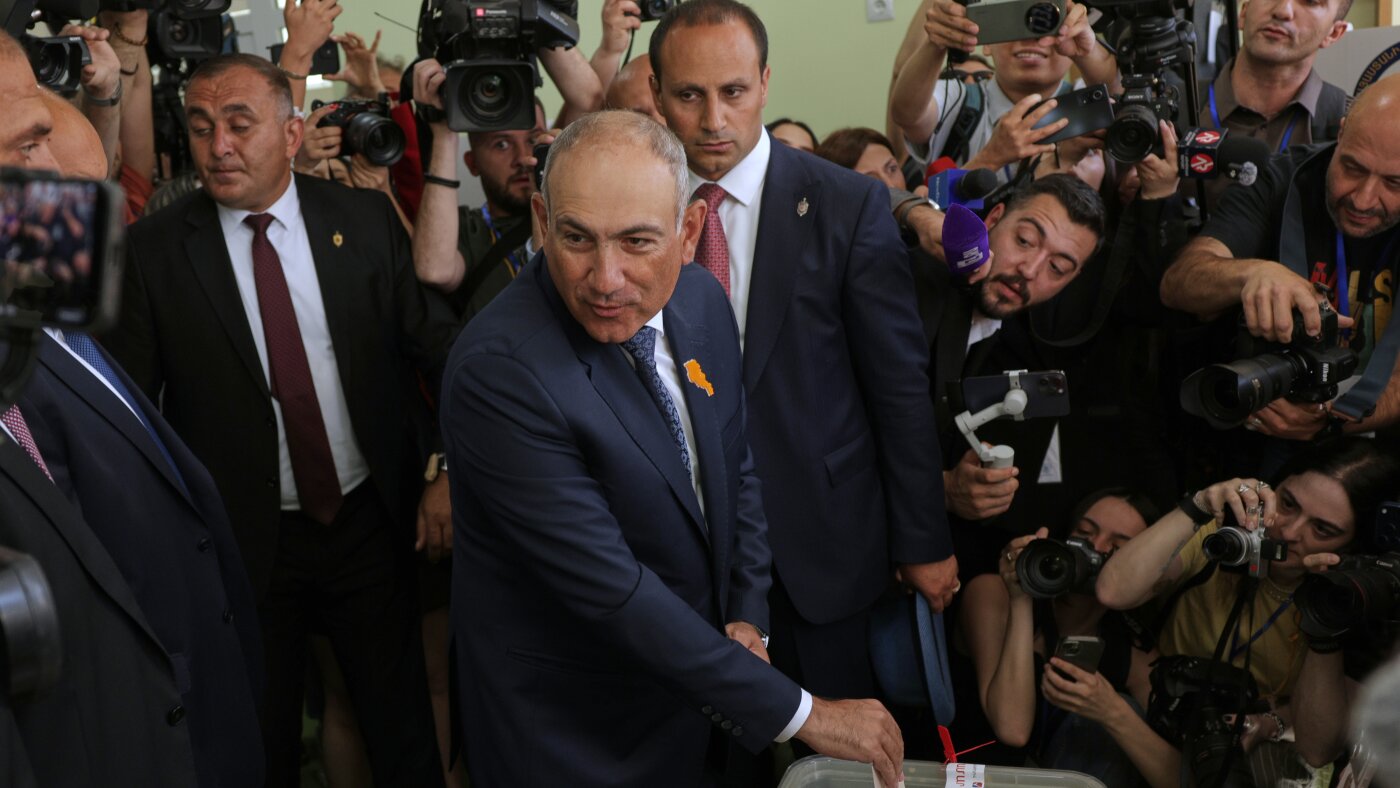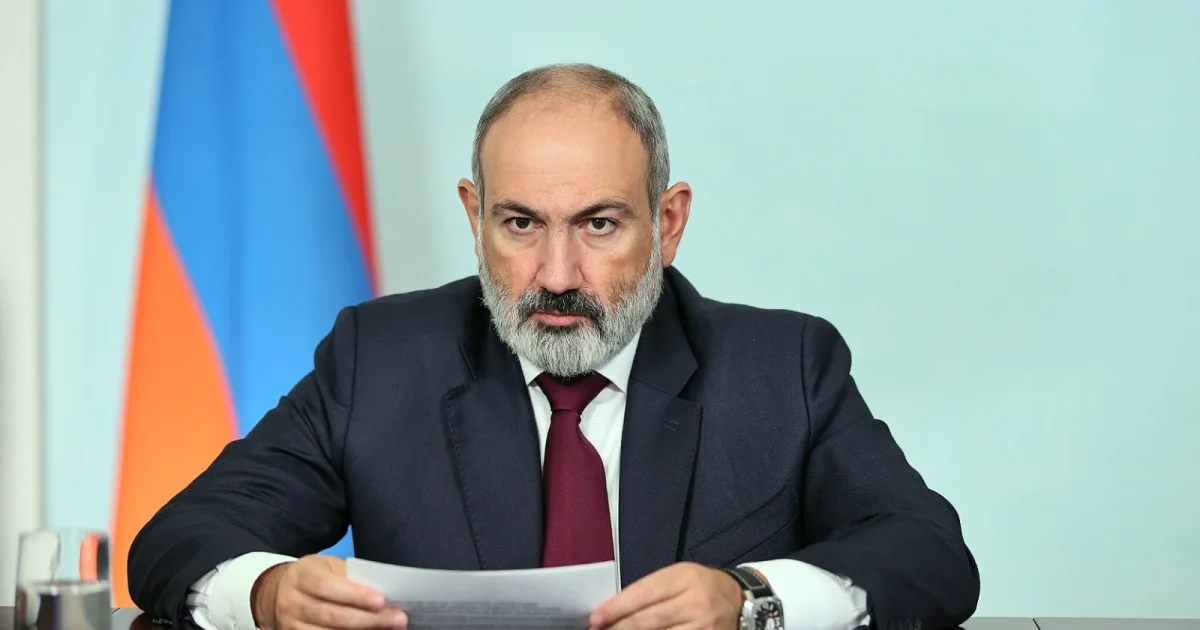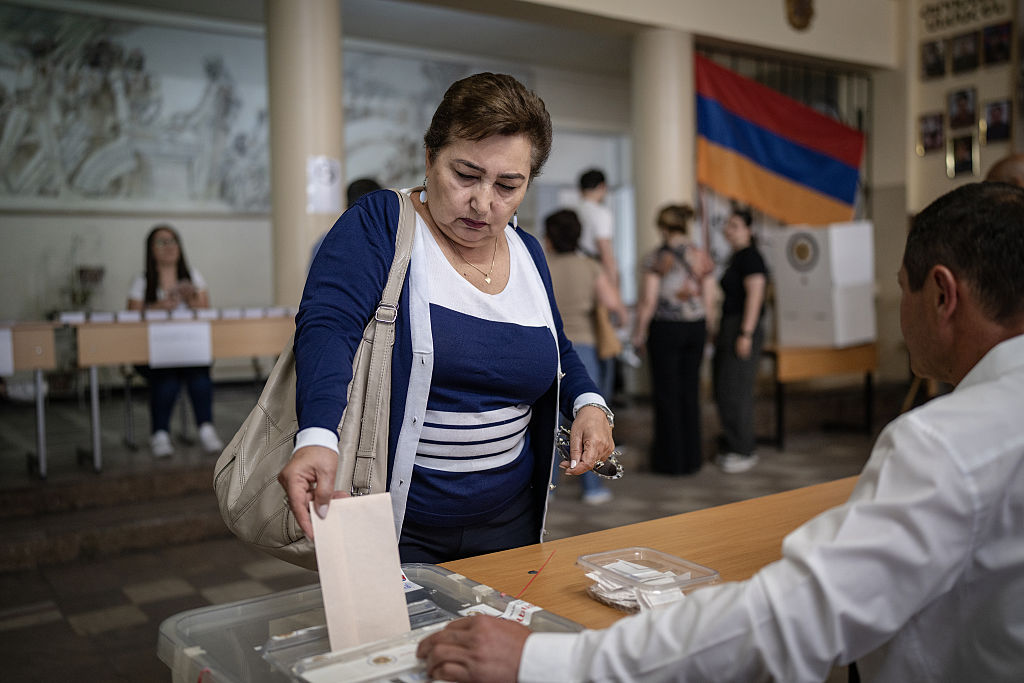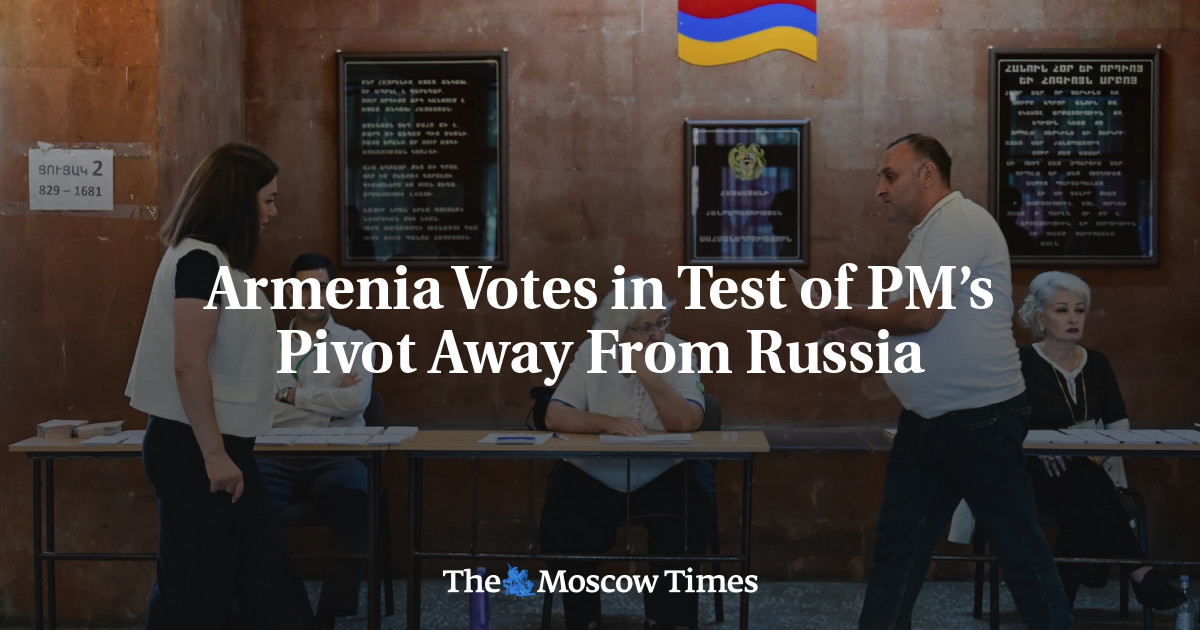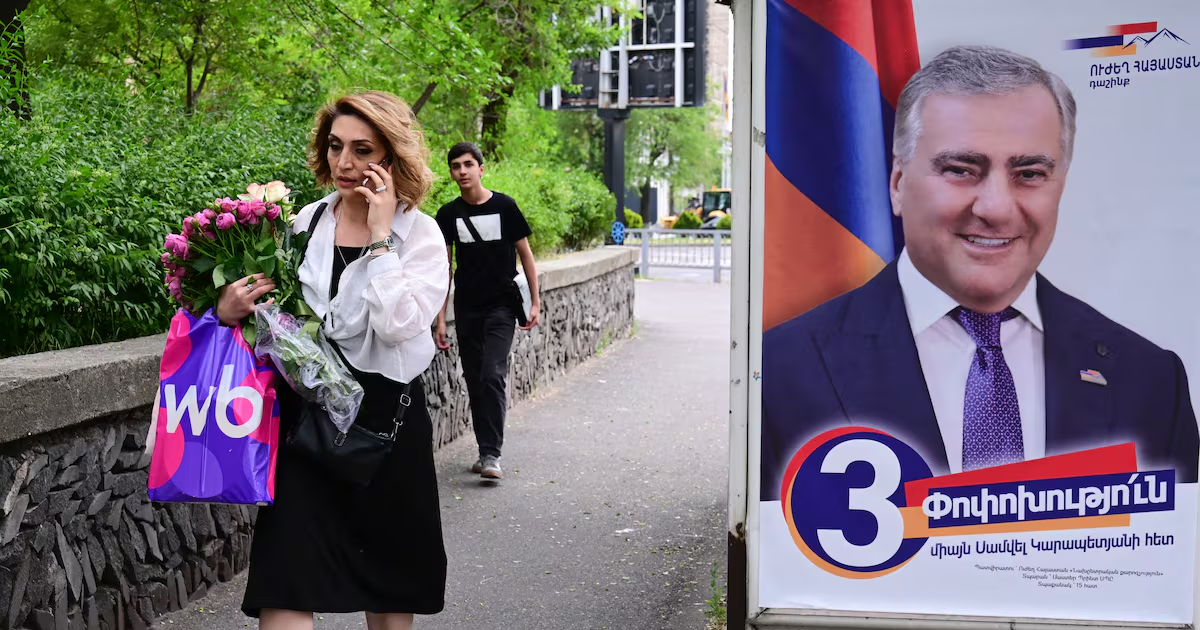
In Armenia’s capital of Yerevan, sleek and often unfinished high-rises appear at random – glossy anomalies in a city dominated by imposing Soviet architecture. The incongruous streetscape mirrors the country’s rapid transformation from a post-Soviet satellite state to one of the South Caucasus’ fastest growing economies. As Yerevan braces itself for the unflinching summer temperatures, a hotly contested election campaign has engulfed the city. The incumbent, prime minister Nikol Pashinyan, faces a challenge from the largely pro-Russian opposition, following two tumultuous terms of office.The election unfolds against the backdrop of Armenia’s strategic westernisation effort. Under Pashinyan, Armenia has diversified its foreign policy away from a historic dependence on Russia and towards a greater alignment with the West. Armenia, wedged between powerful neighbours, faces an uncertain geopolitical future. With traditional adversaries, Azerbaijan and Turkey, to the east and west, Armenia has had to walk a diplomatic tightrope to guarantee its regional security. Iran, a historic ally, lies directly south with Georgia. Russia lies north.Following the collapse of the Soviet Union in 1991, Armenia adopted a repressive oligarchic regime that relied heavily on Russian energy and security. Pashinyan came to power during the 2018 Velvet Revolution – a mass protest movement that deposed the pro-Russian elites.This paved the way for a democratisation, only for regional rivals, Azerbaijan, to inflict a devastating military defeat less than two years later. In 2020 Armenia lost control of Nagorno-Karabakh, a semi-autonomous region that has been the subject of a lasting territorial dispute with Azerbaijan. Azerbaijan’s subsequent campaign led to the displacement of more than 100,000 ethnic Armenian refugees from the region. Though the conflict has since stabilised, the threat of another invasion remains.The election follows recent normalisation talks with Azerbaijan in Washington, which formalised plans for a proposed transport corridor – the Trump Route for International Peace and Prosperity – that would run through Armenia, connecting Azerbaijan to Turkey.The US has agreed to fund the initiative in an apparent effort to counter Russian and Chinese influence in the region. However, with much of the proposed route extending along Armenia’s southern border with Iran, the outbreak of war in February has severely jeopardised its future.Last week US secretary of state Marco Rubio became the latest official to visit the country after vice-president JD Vance in February – an indicator of the region’s growing strategic importance.After Russia failed to protect Armenia in the conflict with Azerbaijan, Pashinyan looked to build closer ties with the West. Last month the European Union hosted its first summit in Armenia in what represents a first step on the long road towards accession.Meanwhile, Armenia has slowly distanced itself from Russia. In 2024 it suspended its participation in the Collective Security Treaty Organisation – the Russian-led equivalent of Nato. Nonetheless, Moscow still represents Armenia’s largest trading partner.Despite allegations of an extensive Russian disinformation campaign, the latest polls give Pashinyan’s Civil Contract party a comfortable lead in the polls. If he secures a two-thirds majority he would be able to initiate constitutional change. However, he lacks support in Yerevan where a large portion of voters are undecided.
Wedged between powerful neighbours, Armenia faces an uncertain geopolitical future
Prime minister Nikol Pashinyan, who has sought greater alignment with the West, faces a challenge from the largely pro-Russian opposition in this weekend’s elections
512 words~2 min read