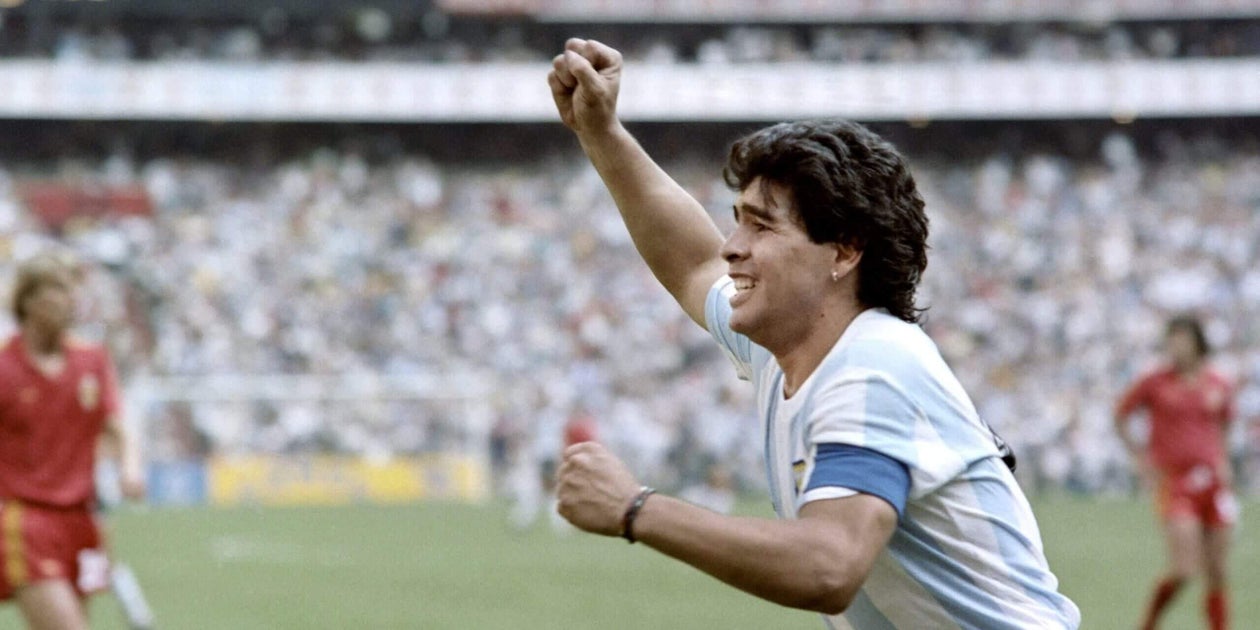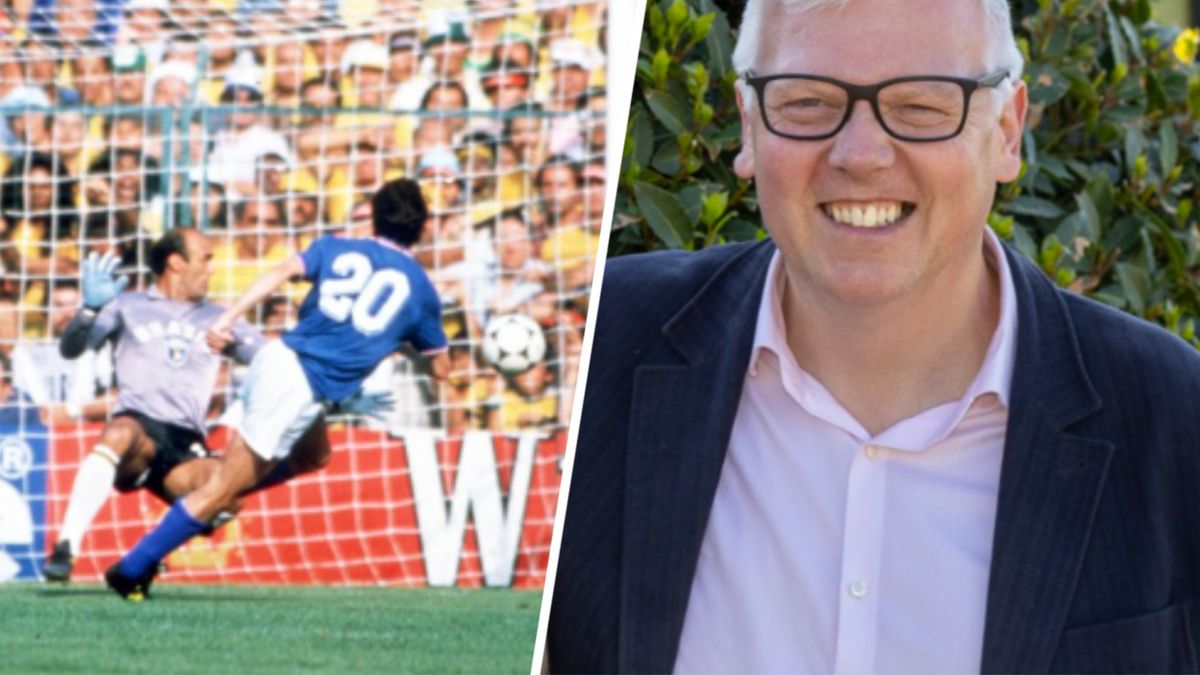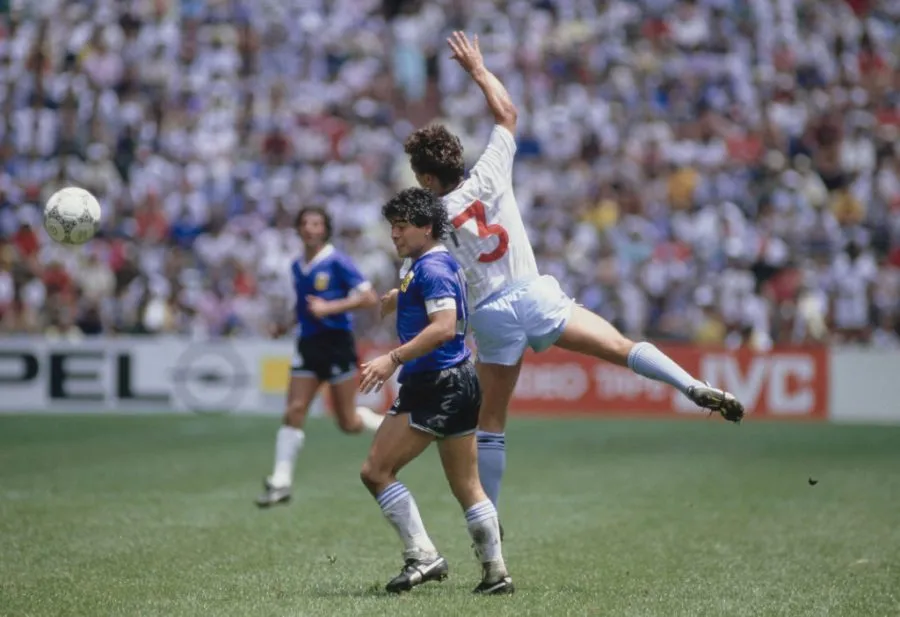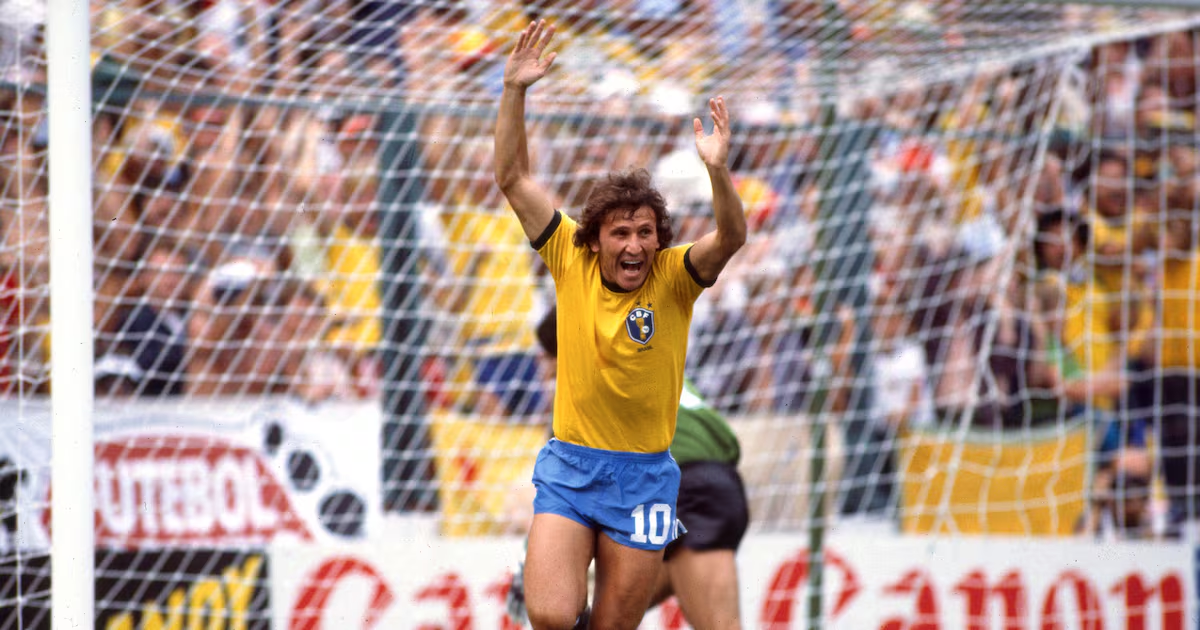
Someone told me once that the best World Cup you ever saw was the one you watched when you were 11 years old. Give or take a year or two either side, of course. The appreciation sweet spot is right at the beginning of adolescence, when you’re old enough to appreciate the magic of it, but young enough not to understand cynicism. For me, it was Espana 82. People have assured me that there were better World Cups before and since. But there weren’t. I’m as sure of that as I was once sure that the Italia 90 milk bottle on top of our kitchen cupboard would be worth a lot of money one day, since only two-and-a-half million of them were made.Like everyone else’s Best World Cup Ever, I have vague memories of the one that went before. It was in Argentina, a country so far away that the match commentators sounded like they were relaying events to Mission Control from the far side of the Moon. What little I saw of it, I watched through tired eyes. My older brother Mark, who didn’t have to be carried off to bed every night, would recreate goals by kicking a tattered leather football against the garage door of our house in Luton. He would shout the name of a player every time the ball rattled the metal behind me. Krankl! Bettega! Cubillas! Rensenbrink! Kempes! Life is like one of those rolls of ticker tape that rained down on the pitch before the final: the nearer you get to the end, the quicker it disappears. But when you’re a child, four years feels like an eternity. You become a completely different person from one World Cup to the next. In 1982, I was a young boy with Buddy Holly glasses and a silver cap on my broken front tooth, trying my hardest to hide my Grange Hill accent in the playground of Archbishop McQuaid National School in Loughlinstown, Dublin, which for obvious reasons isn’t called Archbishop McQuaid National School any more.The excitement began, as it did for many, with the Panini sticker album that came with Shoot! magazine. I placed the stickers from the two free starter packs onto the pages. I hadn’t heard of any of the players, but I would soon know all about Paolo Rossi. We couldn’t afford the estimated £774 cost of buying enough packs to complete the album, so I filled most of the empty spaces with photographs of players clipped from Shoot! and the Daily Mirror. The excitement began, as it did for many, with the Panini sticker album that came with Shoot! magazine. My World Cup wallchart, with boxes to fill in the scores, was already tacked to my bedroom wall when faraway Argentina decided to invade the equally faraway Falkland Islands. The World Cup, just 10 weeks away, was suddenly in peril. Spain, the hosts, sided with Argentina. It was reported that England, Scotland and Northern Ireland would pull out unless General Leopoldo Galtieri withdrew his forces. I tracked the progress of the British Task Force sailing to the South Atlantic, then the Paras yomping their way over the hills to Stanley, hoping that good sense would prevail before too many people got killed. Good sense did prevail – but only after too many people got killed.A week before the tournament started, my father arrived home with our first top-loading VHS video recorder. It was the stuff of science fiction. Not only could you watch movies in the comfort of your own home less than seven years after you saw them in the cinema, you could record football matches while they were happening, then – and this was the miracle of it – watch them again while you were waiting for the following day’s matches to start.At 15, I had made up my mind that I wanted to be a football reporter when I left schoolBack then, World Cups had their own individual aesthetic, before TV sound and picture quality became boringly homogenised. The 1982 World Cup was so yellowy bright that you could almost feel the Vitamin D coming through the screen at you. I can still remember every dramatic beat of those four weeks. A Kuwaiti prince calling his country’s players off the pitch to dispute a goal by France. West Germany and Austria shamelessly contriving a 1-0 win that sent them both through to the second round at the expense of Algeria. And Northern Ireland beating Spain on their own bone-dry patch. ' These guys are going to the World Cup and we're probably better than them' Listen | 33:40But mostly I remember Brazil. That team of Zico, Socrates, Falcao and Eder played football from another dimension. Even their goal celebrations were like pieces of choreography. We tried to re-enact the two they scored against the USSR with a knock-off Tango ball that cost 99p, travelled the same distance no matter how hard you kicked it and didn’t survive first contact with the McAllister family’s peddle-dashed front wall.Paolo Rossi celebrates with Giancarlo Antognoni after scoring for Italy against Brazil during the 1982 World Cup. Photograph: Mark Leech/Offside/Getty My mother must have sensed that Brazil’s second group match against Italy had Game of the Century potential, because we were allowed to eat our dinner – hamburgers, dripping in YR sauce – in front of the television, until then an absolute no-no. We recorded it too, and I watched it back so many times that I can still quote lines from John Motson’s commentary the same way that others can quote Casablanca or The Godfather: “Socrates scores the goal that sums up the philosophy of Brazilian football – how to play when you’re behind.” Whenever I put it on, I hoped for a different ending, but Paolo Rossi – back from a two-year ban for match-fixing – scored the winner every time. [ Saipan 20 years on: The inside story of the World Cup row that divided a nationOpens in new window ]Eleven is not a bad age to discover that, in football, as in life, the bad guys sometimes win. The lesson was rammed home a few days later when West Germany beat France on penalties after a semi-final best remembered for goalkeeper Toni Schumacher hospitalising Patrick Battiston and France blowing a 3-1 lead in injury time. The injustice of it made me punch the air when Italy beat them in the final.The video recorder was still going strong four years later. Like Diego Maradona, the star of Mexico 86, it went on to play in four World Cups, before eventually – also like Maradona – blowing up during USA 94. Brazil supporters celebrate a goal by Socrates in a game against Italy at the 1982 World Cup. Photograph: Mark Leech/Offside/Getty I was definitely a different person in 1986. The English accent and the silver cap were gone, while the Buddy Holly glasses had been replaced by a pair of Deirdre Barlows, a daring fashion statement for a teenage boy in Ballybrack in the 1980s.At 15, I had made up my mind that I wanted to be a football reporter when I left school. I had bought Brian Glanville’s History of the World Cup, reduced in price to £2 because it would soon be out of date. I read it from cover to cover and I was certain that he wrote more beautifully than all of the poets and novelists I was reading in school.[ ‘You come to a certain age when these things aren’t your friend anymore’ – Paul Howard on wearing the sports jerseyOpens in new window ]I had a copybook in which I planned to teach myself Pitman shorthand that summer. Instead, on the cover, I drew Piqué, the official Mexico 86 mascot – literally a jalapeno pepper with a sombrero and a Zapata moustache – and decided that I was going to “report” on the World Cup from my armchair in the living room. For each match, I wrote down the scores, the scorers, the teams and the substitutions, as well as any red or yellow cards, and three or four paragraphs on the match, using words and phrases that commentators used but that you never heard in real life. Passes were “sublime”. Goalkeepers were given “a torrid time”. Strikers finished moves “ever so well”. Diego Maradona holds up his team's trophy after Argentina's 3-2 victory over West Germany in the 1986 World Cup final. Photograph: Carlo Fumagalli/AP Photo It was somebody’s bright idea to schedule the Intermediate Certificate exams for the same month. Five Ds and two Cs was the result of my prioritising watching the football into the early hours of the morning, ahead of studying. I knew I had made the sensible choice. No one since has asked me for the distinguishing features of an oxbow lake, or the periodic symbol for Berkelium, but the 1986 World Cup pops up in conversation 15 or 16 times a year.Your first World Cup is like your childhood Christmases. You’ll spend the rest of your life chasing the way it made you feelUsually, it’s in relation to Maradona, who restored my belief in cosmic justice. The best team with the best player won. I knew I was watching something special. I felt the same way about him as my father did seeing Muhammad Ali for the first time, or my mother hearing Elvis Presley. His second goal against England I described as “superlative”. His pass for the winner in the final against Germany was “slide-rule”.Heartbreak and glory: Ireland's history of World Cup playoffs Listen | 32:31Sixteen years later, just before I covered the World Cup for real, my mother produced the copybook, which she’d kept in a drawer for all those years. I wish I could say that I enjoyed Japan and South Korea 2002 as much as the World Cups of my childhood. Con Houlihan famously said he missed Italia 90 because he was there. I discovered the truth of that. I went to seven matches and saw three more on TV. Senegal beat France. England beat Argentina. South Korea beat Portugal and Italy. I didn’t see any of it. I was at press conferences, or Ireland training, or travelling between cities, or writing. Your first World Cup is like your childhood Christmases. You’ll spend the rest of your life chasing the way it made you feel – but you’ll never experience it again. If you’re 11, you’re about to watch the best World Cup you will ever see. But even if you just wish you were, it’s still the greatest show on Earth. And, trust me, there’s nothing like not being there.
Paul Howard: You’ll spend the rest of your life chasing the way your first World Cup made you feel
I wish I could say I enjoyed Japan and South Korea 2002 as much as the World Cups of my childhood
1,777 words~8 min read