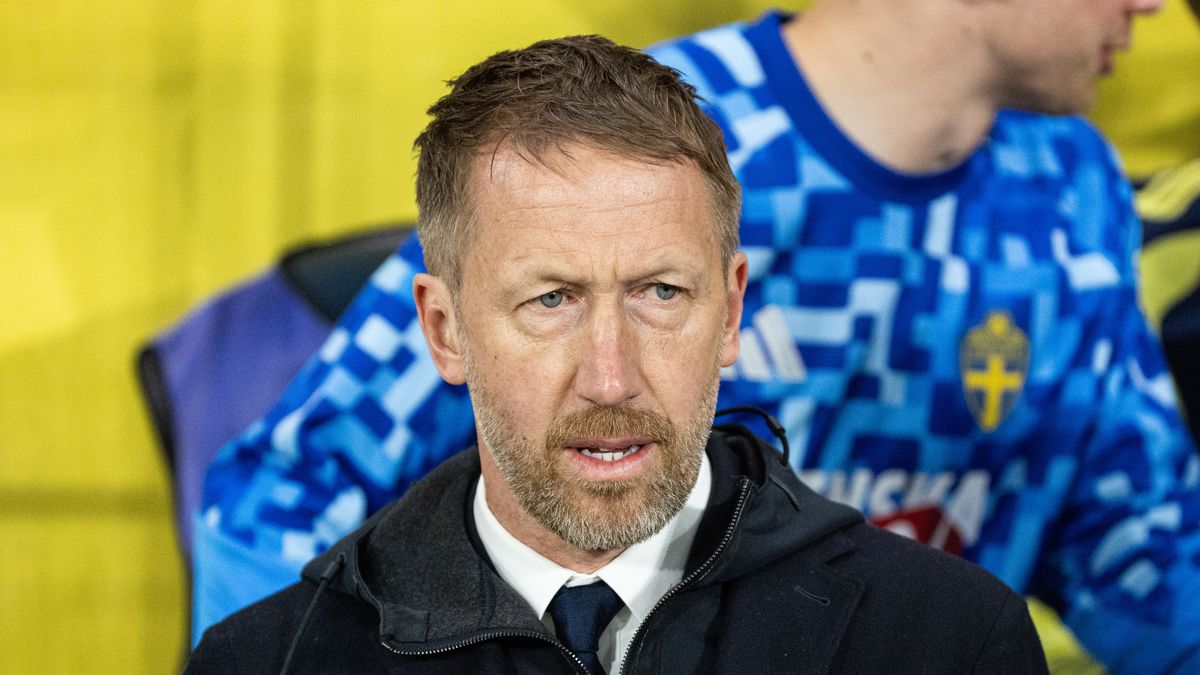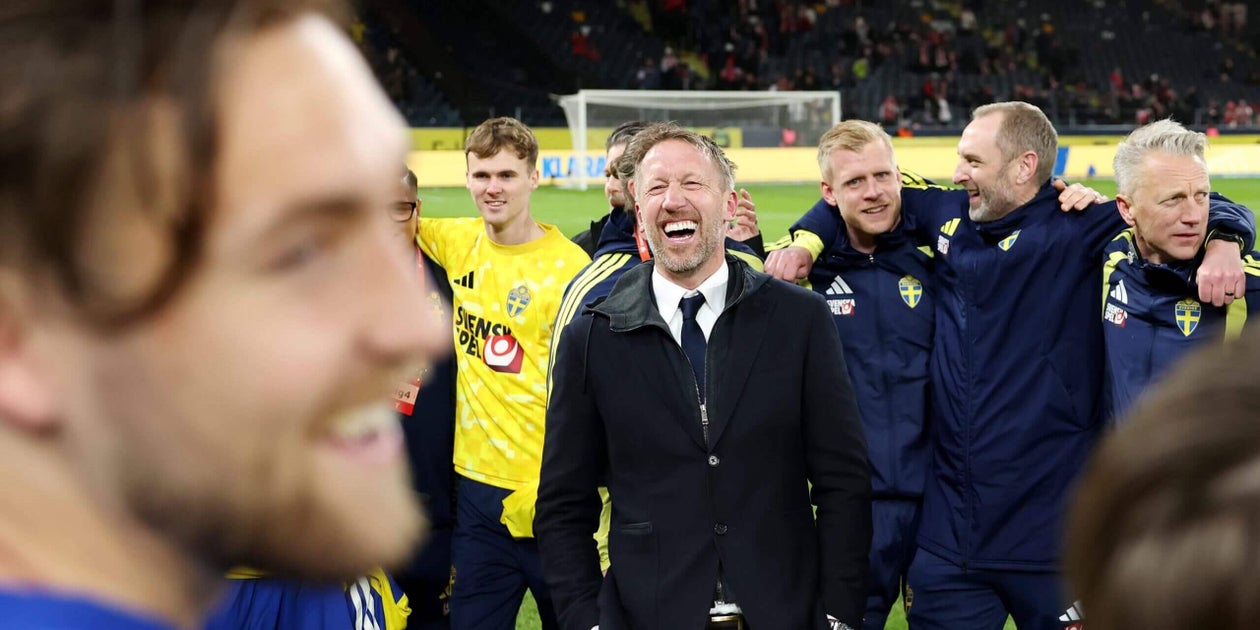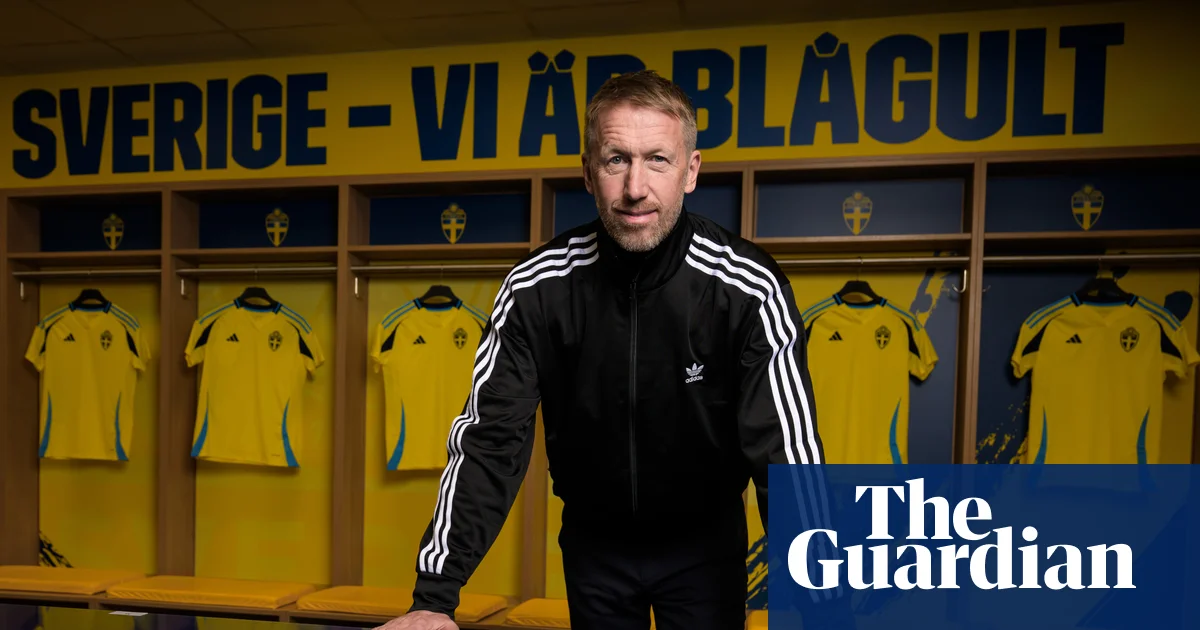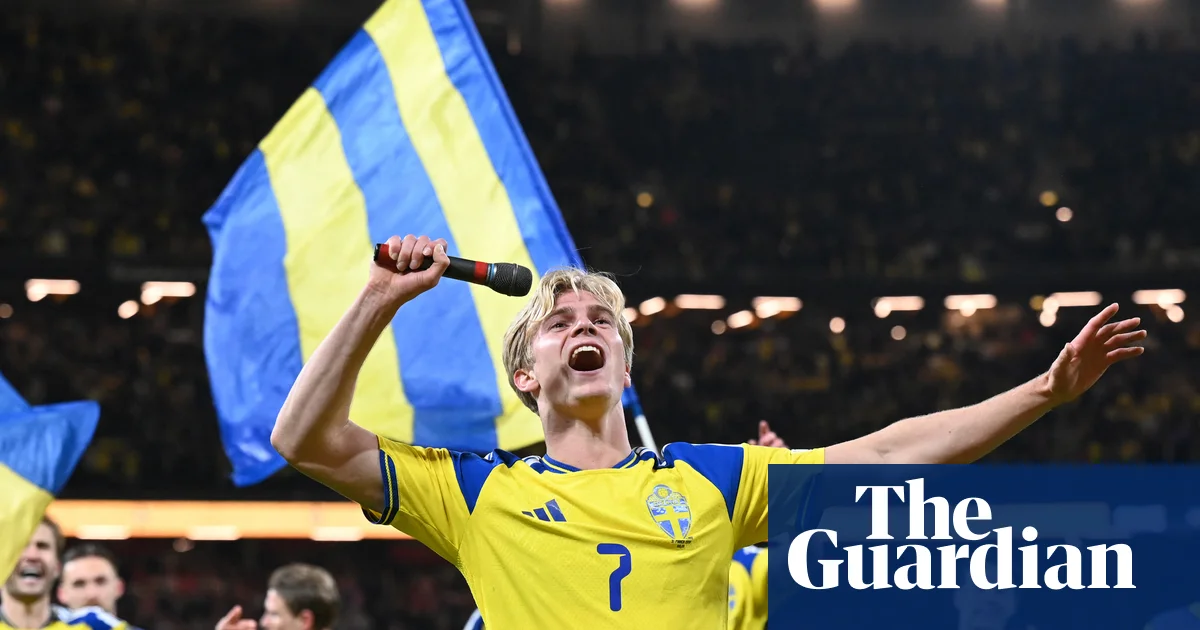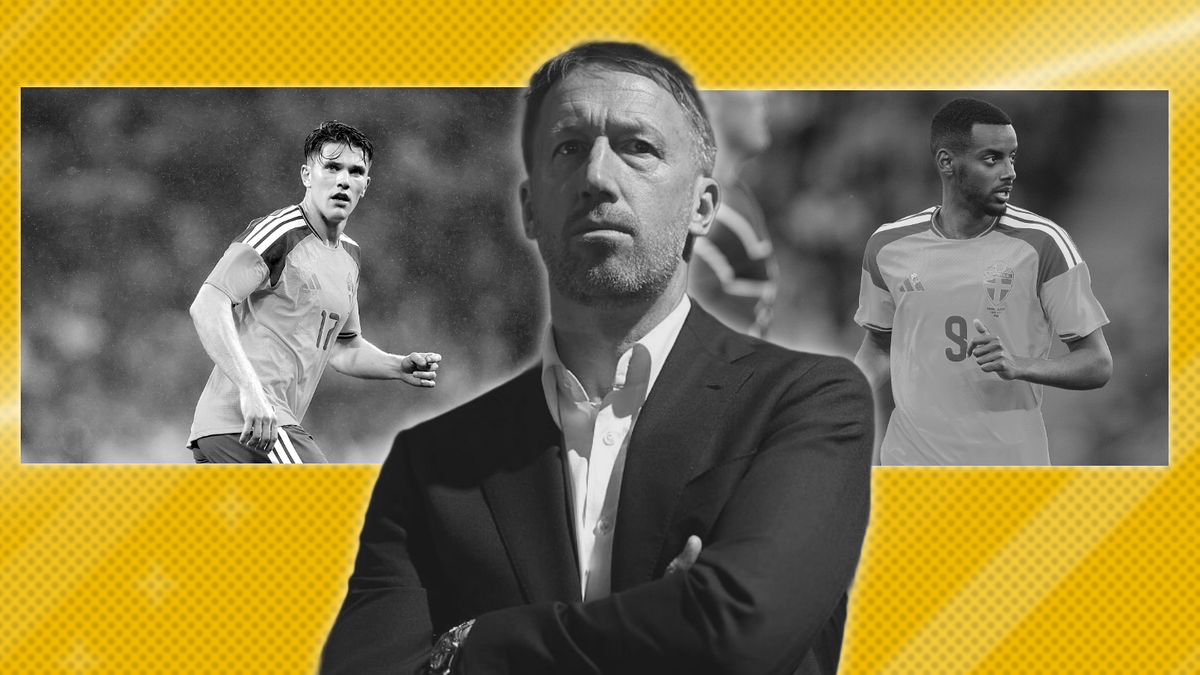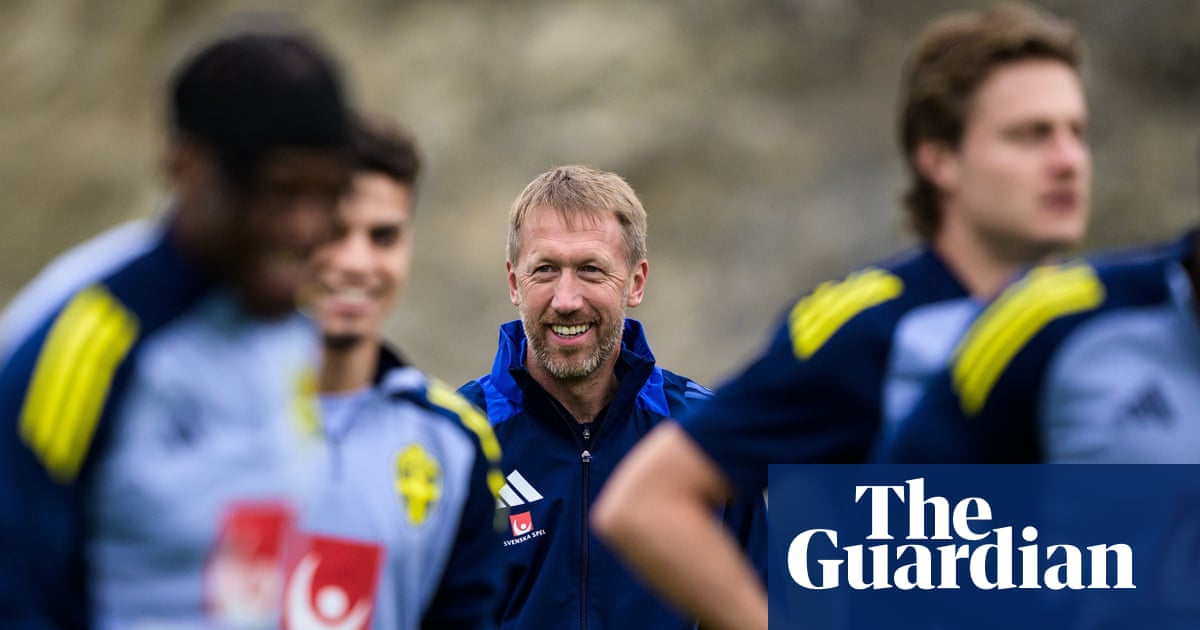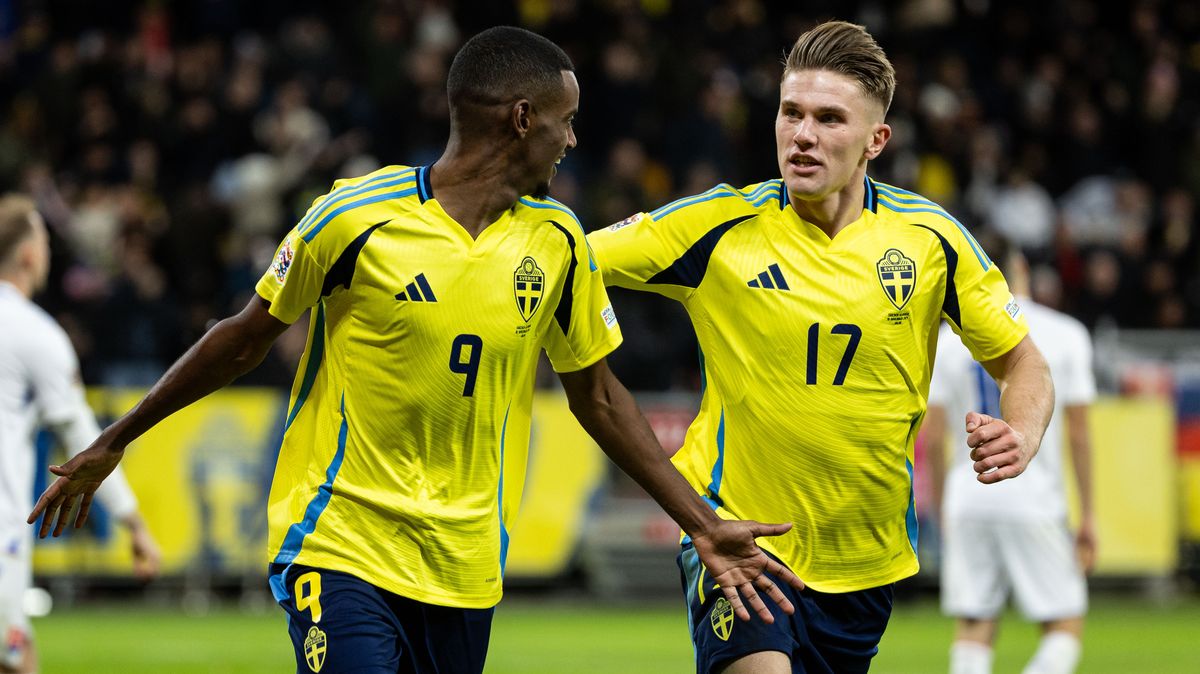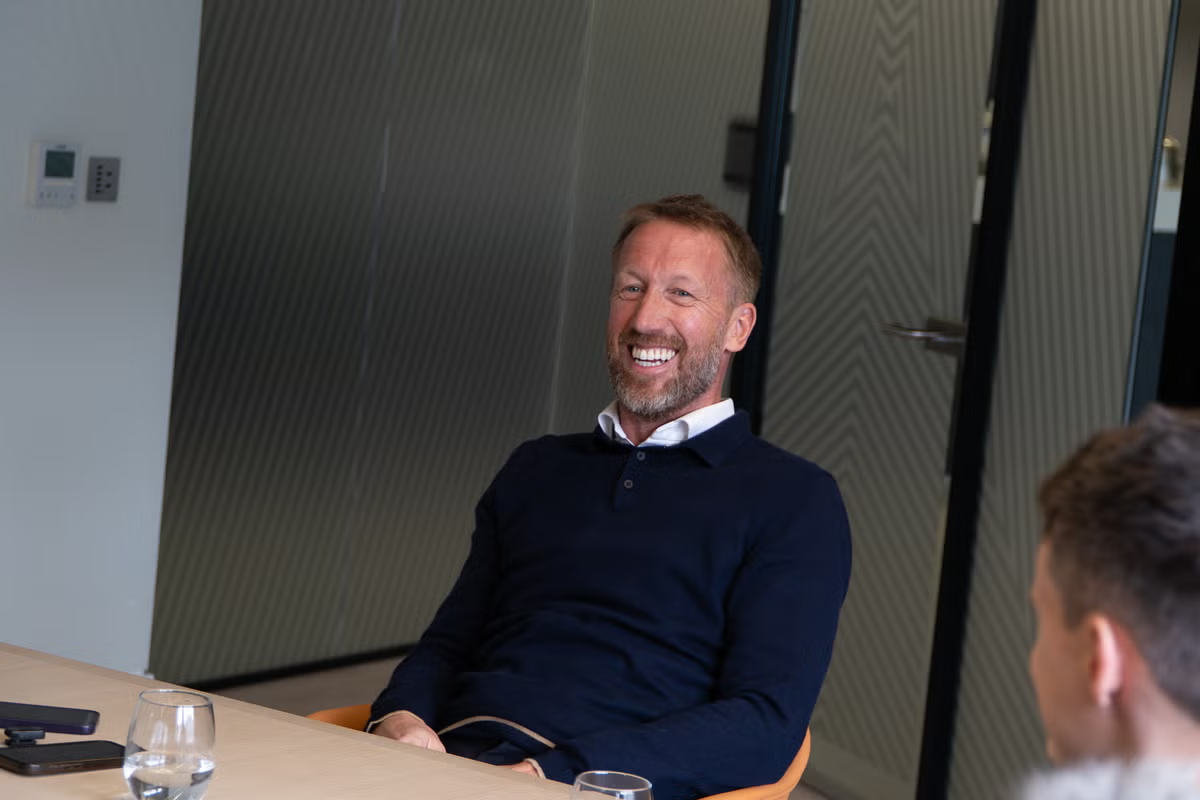
A few minutes after the final whistle blew on their play-off win over Poland, euphoria still coursing through his veins, Sweden manager Graham Potter gathered his players around him. “Look at this, this is a f*****g team,” he said, pointing at them, before breaking into a broad grin. “And we’re going to the f*****g World Cup, baby!”Perhaps it was just a throw away line while high on football’s most potent drug, the World Cup. But Potter’s choice of words offered an insight into the unique task of being an international manager, particularly his task. The Swedish FA gave him one job: ‘Get us to the World Cup’. Potter had four months to prepare for two play-off games. And in reality, once he got the players together, he had about 48 hours until kick-off. There was no time to design complex build-up patterns or pressing structures or set-piece routines. His sole task was to build “a f*****g team”.“You haven’t got the time to develop ideas,” Potter says. He is sitting in the swish London offices of his management company just a few days before setting off for the World Cup, and during an hour-long conversation he is in cheerful mood, laughing heartily, swearing liberally and making jokes at his own expense.“The reality is that you have two days to prepare for a game. It doesn’t matter what you think or your ideas. What matters is getting the players on the pitch that have the best chance of winning a game of football … so then it becomes really simple. There’s not too much else to think about. It’s just about how we can win those games. I think the mistake would be to say, ‘I want to play this way because this is my playing style and this is what I want to do.’ Yes, but I’ve got two days to implement it, so what are the chances of that?”Potter replaced Jon Dahl Tomasson last October at the end of a disastrous World Cup qualifying campaign and was dropped straight into two dead-rubber internationals, which didn’t go particularly well. Sweden were thrashed by Switzerland before a draw with Slovenia. But they had one last shot at salvation through the Nations League play-offs in March.Graham Potter: 'Zlatan sent me a nice message’ (Supplied)Potter spent the next four months flying around Europe meeting his players. One week he was catching up with midfielder Jesper Kalstrom in Udinese, the next sitting with Dejan Kulusevski in his private box at Tottenham. In each meeting, Potter’s goal was to get to know the player, to understand what made them tick.Although he remained living with his family in the south of England, Potter spent much of his time at the Swedish FA’s headquarters in Stockholm with a team of analysts, building a picture of his squad and their play-off opponents, and met with his assistants Bjorn Hamberg and Sebastian Larsson. Another key confidant was his set-piece coach, Andreas Georgson, who works at Spurs and knows both the Premier League and the Swedish Allsvenskan intimately.Their meticulous preparation paid off. In the semi-final, Viktor Gyokeres scored a hat-trick to beat Ukraine, setting up a showdown with Poland in Stockholm five days later with it all on the line.“How many times do you get a chance to play a play-off game in front of your own people to go to the World Cup?” marvels Potter. “Like, one game, booof! As an event, it’s unbelievable. The country stops, everyone is watching.”Sweden and Poland took turns landing blows in front of a raucous crowd gripped by the melodrama. Sweden led twice. Poland equalised twice. Then, with two minutes left, the ball bounced around Poland’s box, came back off the post, and Gyokeres outmuscled his marker to crash home the winner.“Viktor scores and it’s like an out of body experience, I can only describe it as that, because all our subs are just running on the pitch and I’m thinking, ‘That’s yellow cards, that’s problems.’ But of course it’s for the World Cup, so all the rules are out the door!”Viktor Gyokeres celebrates his winning goal against Poland (Getty)Sweden’s joy was Potter’s too. He planted roots in the country after persuading his sceptical wife to move to the subarctic climate of Ostersund in 2011, where winter daylight lasts four hours. Over seven years he dragged Ostersund from the fourth tier to glory in the Swedish Cup, and into the Europa League.So when the Swedish national anthem plays, Potter sings with West Midlands gusto. “I feel very Swedish when I’m working, very Swedish. I look a bit Swedish,” he laughs. “My kids were born in Sweden, two of them were. I had seven unbelievable years there, memories that’ll stay with me for life. I’ve got an incredible amount to be grateful to the country for.”His work at Ostersund gained attention around Europe and earned Potter a move to Brighton and more success, before harder times at Chelsea and West Ham. Potter insists he is grateful for the rough and the smooth of his coaching career. What did he learn from failure? “The learnings you have from those experiences, they’re painful in a way, because you have to go in,” he says, pointing to his stomach. “That’s why I wouldn’t share my learnings with you, because it’s f*****g hurt me to get them. It does. And I think it should, because that’s how you improve.”Then Sweden called with a once-in-a-career challenge.“After West Ham, I could have done two things: I could have sat around and talked and done media, go on TV and all that sort of stuff. Or you can go and work, and do something nice. It isn’t nice if you don’t win, so you have to win. Thankfully we did that.”In those golden hours after the play-off game he received personal messages from the great and the good of Swedish society, including Zlatan Ibrahimovic. “What a guy. Top, top,” Potter says. “He sent me a really nice message.”How did Potter celebrate?“Got f*****g pissed!” he laughs. “I wasn’t really pissed, just a little bit.”Potter’s first World Cup memories were from Mexico ‘86, “11 years old, watching Diego Maradona rip football up”. During his years in Sweden he was made well aware of the country’s greatest tournament in living memory, when Tomas Brolin’s entertainers finished third at USA ‘94. “It was massive,” he says. “Everybody remembers that summer.”Now Potter will compete at a World Cup himself, in one of the most even-looking groups in North America with Tunisia, Netherlands and Japan. Fifa’s rankings rate Sweden as the third best side in the group and it will not be straightforward to progress, but opponents will be wary of one of the best strike forces at the tournament in Alexander Isak and Gyokeres.Potter’s predecessor, Tomasson, struggled to get the best of the duo on the same pitch at the same time, a task Potter has yet to face due to Isak’s fitness struggles. But they are expected to play together at the World Cup and Potter sees them as complementary talents.“I think they’re different in their styles, which is good for us. If you think of how Viktor played in Portugal, a lot on the last line, he’s incredible attacking big spaces. Alex … if we look at his time at Newcastle, he played a little bit wider and also played as a 10.”Gyokeres is an “incredible character,” Potter says, after the striker finished his debut season at Arsenal confounding initial criticism. “He scored four goals in two games and got us to the World Cup, so his impact is incredible.”Coincidentally, a very young Isak made his debut in Swedish football against Potter’s Ostersund. “We were quite happy before the game because the centre-forward wasn’t playing and some 16-year-old kid was playing,” Potter recalls. “And then he scored and we got beat 2-0 and I learned my lesson from that. Sometimes it’s nice, football comes around.”Alexander Isak and Viktor Gyokeres will be paired together in North America (Getty)Isak should be ready for Sweden’s opening game but others, like Kulusevski, failed to prove their fitness. Calling players to tell them they hadn’t made the squad were “probably the toughest conversations I've ever had”, Potter says. “You can’t underestimate the impact of telling somebody, ‘You’re not going to the World Cup’. As a father, as a human being, to have those conversations is very, very tough.” It has been a rush to make World Cup plans since the play-offs in March. Sweden had the last pick of training bases from Fifa’s brochure, and while England are acclimatising in Florida right now, Sweden are still at home.“It was almost surreal when we did win it because it was, ‘OK, what do I have to think about now? Oh yeah, there’s a World Cup in a few weeks’ … We certainly didn’t have the optimal planning time for our preparation, but I think in some ways it has probably worked out really well for us. Our pre-camp is in Stockholm. I think for the boys it’s nice for them to come home, we can train and prepare, but the players can also see family and friends.”Potter has taken the same detailed approach to the play-offs as he has planning for Sweden’s three group opponents, starting with Tunisia in Monterrey on 14 June. And although the real work starts now, he knows he may have already experienced his highest high in football, after only four games as an international manager. From Sweden’s regional leagues to the World Cup, it has been some journey.“I will never forget that night in Stockholm, it was the best night of my career,” he says. “I can’t even explain it, it was just amazing. So while there’s some dark moments that of course you have to experience – and they’re not very nice – then there’s some beautiful moments that you can’t even describe.”
How Graham Potter led Sweden to the World Cup: ‘It was the best night of my career’
Graham Potter spent four months meticulously planning for two play-off games, he tells Lawrence Ostlere. Now the Sweden manager is taking his adopted country into the 2026 World Cup
1,648 words~7 min read