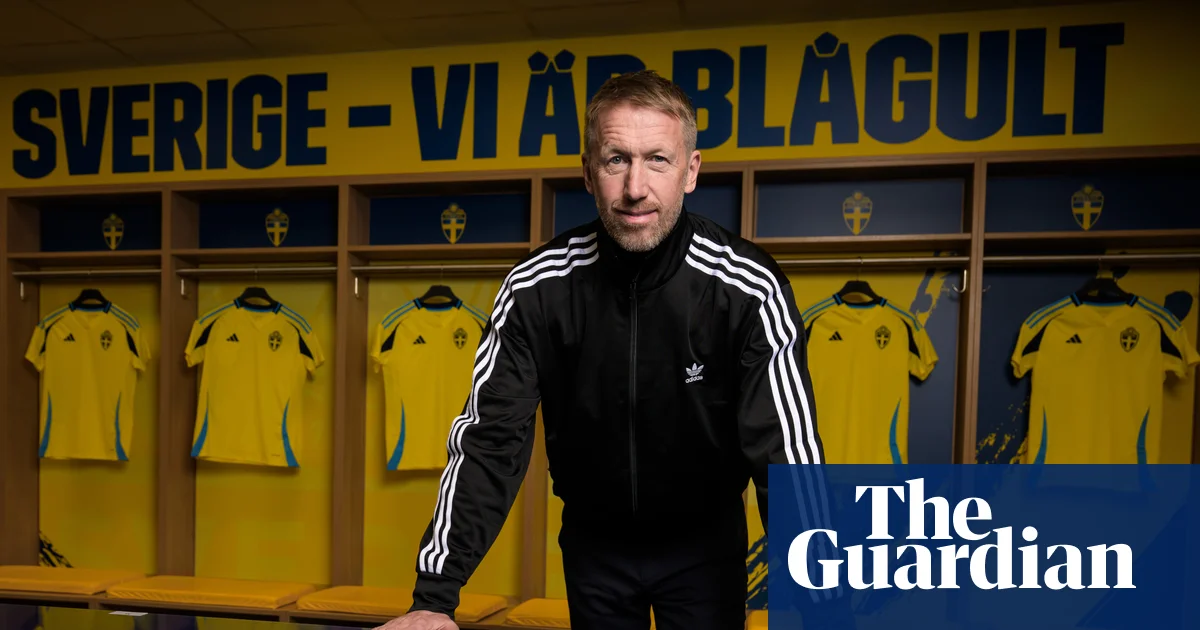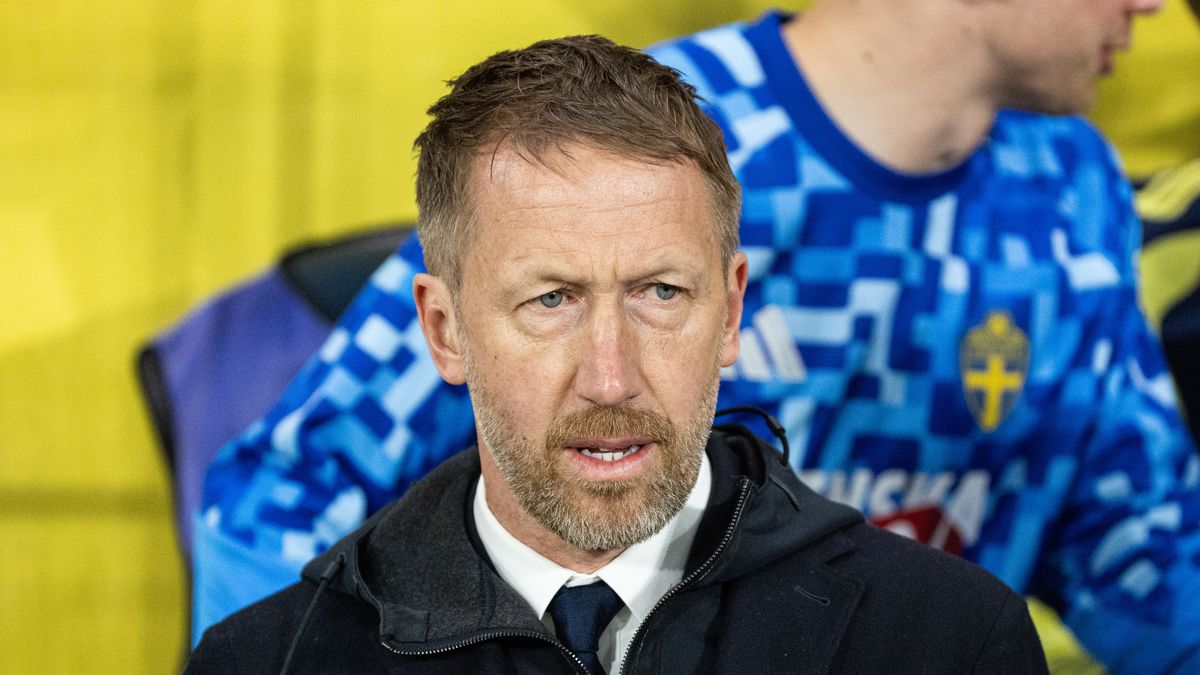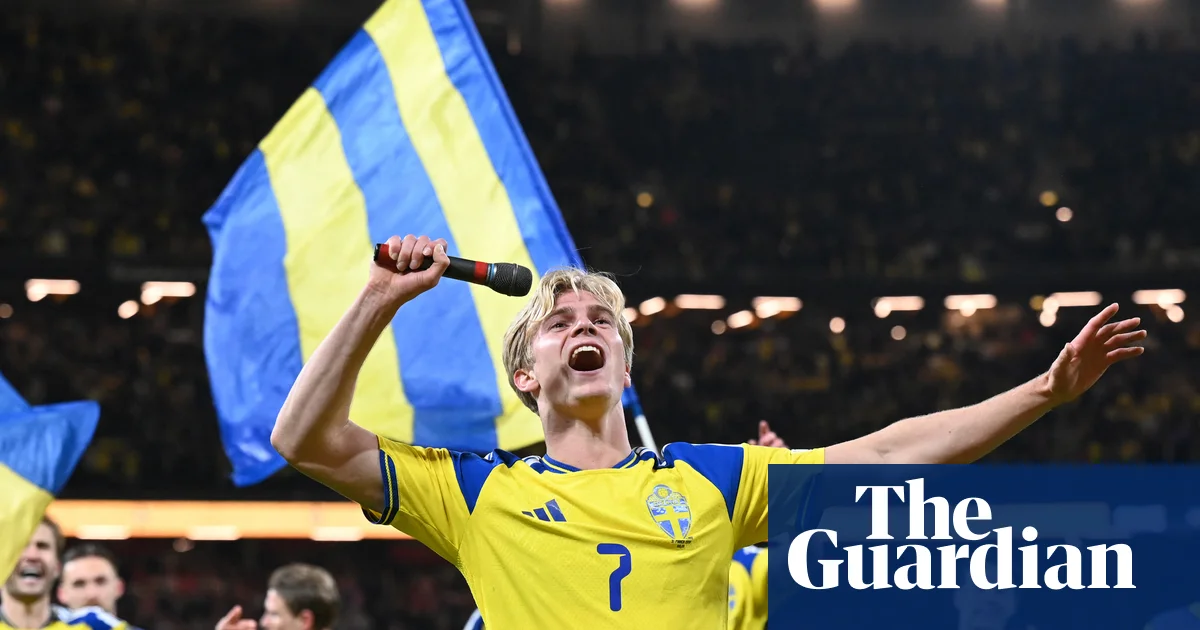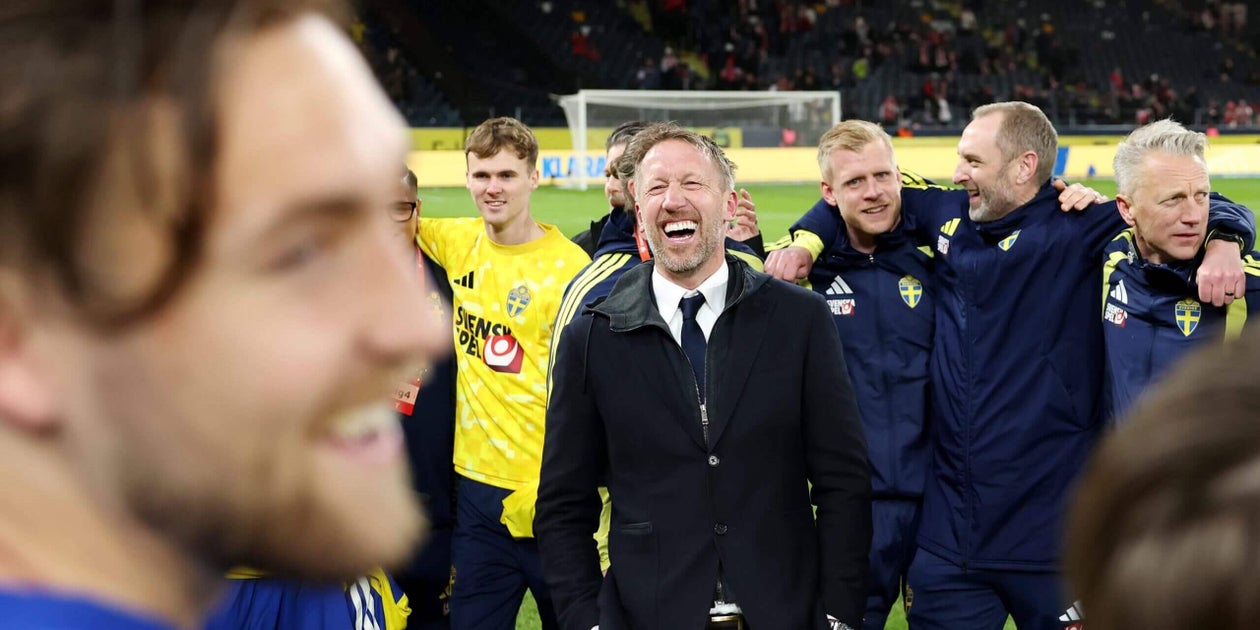
He could have said no. Graham Potter felt bruised after being sacked by West Ham United just six games into the new season. His studies had told him to take his time and embrace “reflective practice”. Getting straight back onto the treadmill was not the plan.But this wasn’t just any job. This was Sweden calling. And as well as the prospect of taking them to the World Cup, there was a sense of loyalty, perhaps even a sense of duty. Swedish football had offered him a start in management — pitching up in the backwater of Ostersunds FK, then in the fourth tier — when no professional club in England would give him the time of day. Nearly 15 years later, Swedish football, at a low ebb, needed him to return the favour.Cut to March 31 and he was leading Sweden into a World Cup qualification play-off against Poland in Stockholm. The winner takes it all, as ABBA sang. “One game. Boof!” he says, trying to describe the tension. “The country stops. Everyone is watching. As an event, it’s unbelievable.”He talks about the intensity, the pride in singing his adopted nation’s anthem, then riding an emotional rollercoaster, feeling it in the pit of his stomach as they took the lead twice and were pegged back twice. Then, with two minutes remaining, Daniel Svensson’s shot was blocked, Lucas Bergvall’s was saved and Besfort Zeneli’s came back off the post before Viktor Gyokeres made it fourth time lucky to secure Sweden’s place at the World Cup.Graham Potter felt a duty to help Sweden (The Team)“And it’s like an out-of-body experience,” Potter says. “I can only describe it as that. All our subs are running to the pitch, and I’m thinking, ‘That’s yellow cards.’ But we’ve just reached the World Cup, so all the rules are out of the door. And the feeling in the stadium was just incredible.”He mentions the YouTube clip of a Swedish commentator yelling in celebration (“just the emotion in the voice”) and how the beer flowed in the post-match celebrations (“What do you think I did? I got f***ing p***ed!”). But he also puts it in the context of the dejection he felt after being sacked by Chelsea after seven months in charge and West Ham after eight months in charge. “You try to move on with your life,” he says, sitting down with a group of reporters at the London office of his management agency. “That’s it really. The learnings you take from these experiences, they’re painful in a way. I won’t share my learnings with you because it f***ing hurt me to get them, you know what I mean? It does. And I think it should. That’s how you improve. You have to be prepared to face the bad stuff. “And then maybe the flip side is that you get these beautiful moments. I will never forget that night in Stockholm. It was the best night of my career. So while there are dark moments that, of course, you have to experience — and they’re not every nice — there are beautiful moments you can’t even describe.”Potter’s unlikely love affair with Swedish football began in late 2010. His main coaching job to that point had been with Leeds Carnegie in the 10th tier of the English pyramid. Despite a varied CV that included spells working with the English Universities team and the Ghana women’s team, as well as a decent playing career with Birmingham City, Stoke City, Southampton, West Bromwich Albion and others, the famed “coaching pathway” seemed closed, with no obvious way back into the professional game.After a series of rejections, he was offered a job by Ostersunds in the regionalised fourth tier of Swedish football. It was a leap of faith for him and his wife Rachel, moving abroad in what must have seemed like the remote prospect of finding success and a viable career in coaching. He is unflattering about the level of football he encountered on arrival.But within four years, backed by ambitious chairman Daniel Kindberg, Ostersunds were playing in the top tier. They won the Swedish Cup and made it to the Europa League, where they reached the knockout stage and beat Arsenal at the Emirates Stadium. It was a remarkable success story which earned media interest back home: the English coach who, like George Raynor in the 1940s and 1950s and Roy Hodgson in the 1970s and 1980s, had found opportunity and, ultimately, success in Sweden.Graham Potter during his time at Ostersunds (Henry Nicholls/AFP via Getty Images)“Sometimes you take opportunities and jobs for the responsibility, for the challenge,” he says of his return to Sweden. “I had seven years in the country, so I knew what it meant. The fourth tier of Swedish football is quite low, so going through the system there, you almost become Swedish from a coaching perspective.“I knew what the country stood for from a football perspective — from a society perspective, if you like. I had an understanding of the culture of Sweden.”
Graham Potter interview: Gyokeres’ ‘incredible impact’, ‘great’ Isak, and ‘living through failure’
The Sweden coach explains the "out-of-body" experience he had when qualifying for the World Cup - and his plans for the tournament
2,108 words~10 min read