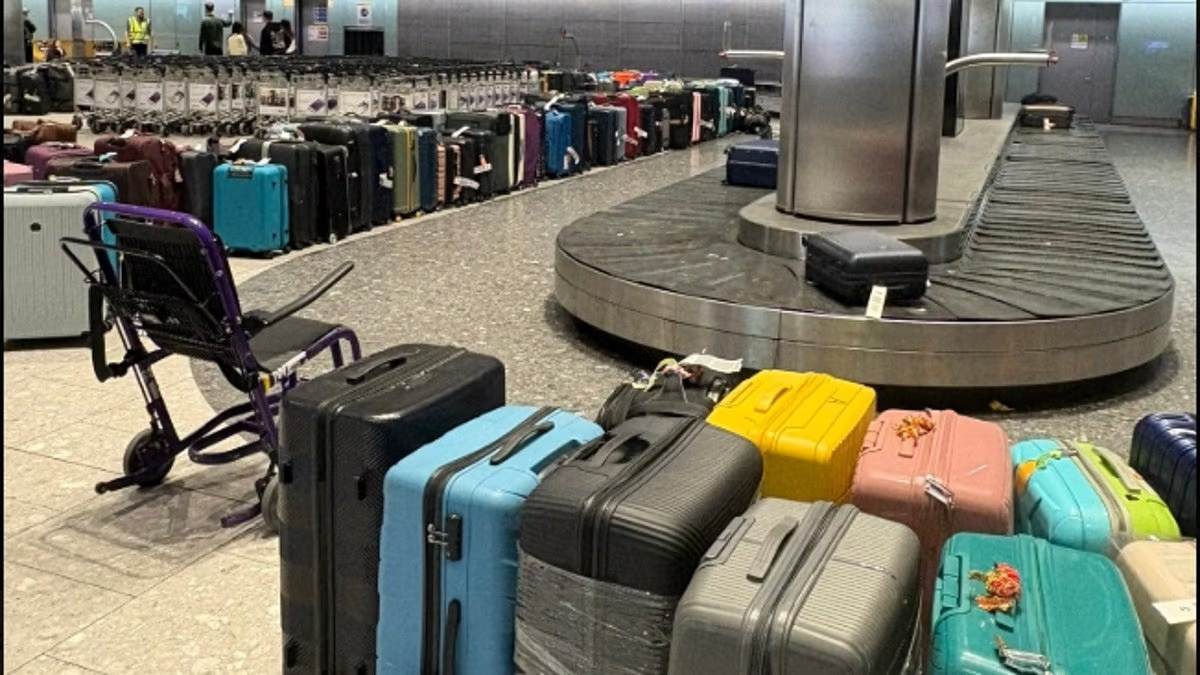
The luggage carousel is turning. Suitcases thud down one by one on to the belt. Relieved passengers hoist their bags off as they get their holidays started. A quarter of an hour passes and there are just a few stray pieces of baggage left, some that look like they’ve been going around in circles since the last century. It quickly becomes apparent you have joined the lost luggage club.If you are arriving home, it is a real nuisance but if it’s the beginning of your holidays, it’s fairly close to a disaster.So, what happens if your luggage does go walkabout when you’re travelling? Who do you contact and what rights have you got? And if you have to start buying replacement clothes, toiletries or other essentials, who ends up paying?The most important thing to know is that once you check in your bags, the airline is responsible if something happens to them. However, for hand luggage, they are only on the hook if they themselves were responsible for any damage.The first step if your suitcases have gone astray is to make a report to the airline in the baggage hall, or with whoever provides that service on their behalf. Look for signs that say things such as “lost and found” or “baggage inquiries” and do not pass through customs into the arrivals hall until you have completed a lost baggage report.You will have to fill out what is known as a property irregularity report (PIR), an official form that covers instances where luggage is damaged, lost or delayed.One important thing to remember is that completing the PIR is not the same as making a compensation claim: that usually has to be done separately through the airline.At first, it might not be clear whether there is simply a delay – as in most cases – or whether your suitcases and bags have disappeared altogether. Either way, you need to make sure that report is filled in before you leave the airport terminal to ensure there is an official record.You will need to provide the usual details: your name, the airline you travelled with, your baggage tag (the sticky stub that is usually affixed to your boarding card or the back of your passport when you check in the bags), the best description of the luggage that you can provide and your contact details.Consumer advice services suggest it is not a bad idea to photograph your bags and cases before you travel, just in case. That advice may not prove too welcome, however, if your stuff’s already gone missing.After completing your property irregularity report, you will be given a 10-character PIR reference. Don’t lose it. This is the reference you need to keep track of your complaint and the location of your bags as they are being hunted down.Tracking of missing luggage is operated through the WorldTracer service, with specific pages available for the two main Irish carriers, Ryanair and Aer Lingus.When your baggage is missing, you can make claims for compensation or short-term emergency purchases either through your own travel insurance or through the airline.For Aer Lingus, this operates for specific items for which you have a receipt and other things that you need to get by, for example toiletries or clothing.For the first full day, the airline’s website says, up to €100 is available as a “first needs payment”, dropping to €50 for the second and third days. The payment then falls to €40 a day and eventually to €20, continuing for a maximum of 21 days.At that point, the luggage is considered lost in line with the Montreal Convention, which governs how airlines deal with delays and losses.For Aer Lingus, the maximum liability it will accept is about €1,900 and supporting receipts will help with any claim.When you are purchasing replacement items, it will make sense to keep expenditure reasonable and not splash out on flashy new clothes. It should also go without saying that packing high-value items in your check-in luggage is never a great idea.Most airlines will decline responsibility for things such as expensive jewellery or high-end electronics, and this will be stated in their terms and conditions.Similarly, before travelling, it is well worth thinking about items you would really struggle without if bags went missing even for one night. It’s straightforward enough to buy new socks and underwear but replacing something such as prescription medications will be much trickier.Bringing a few days’ worth of tablets in your hand luggage will help put your mind at ease.Removing old flight tags and putting contact details inside your bag can also make life easier if things go awry.With Ryanair, the broad rules are similar, and it says it will process delayed or damaged bag claims within 15 working days and lost luggage claims within 28 working days, or when the full tracing process has been completed.If you are unhappy with any settlement offered, you can contact your local alternative dispute resolution body. Advice on this is available through the European Consumer Centre Ireland and damages can be sought through the Small Claims Court.Your travel insurance may also be worth checking but you will usually still need the same basic paperwork, including the PIR, baggage tag, boarding pass and receipts.Time limits vary, and can be tight for damaged bags especially, so you should aim to get your claim filed as quickly as possible.On bags that are damaged rather than lost, separate rules apply and claims are legitimate if something happened in transit. Packing anything fragile is always a risk, however, and general wear and tear to bags, such as scratches, scuffs and minor dents, will likely not be entertained. The Montreal Convention – which we mentioned earlier – applies almost worldwide and is recognised by more than 140 countries. That means a similar set of rules and regulations will almost certainly apply no matter which airline you are flying with.The actual procedure for making claims might be a little different but the terms and conditions of your ticket will help put you on the right track. You can contact us at OnTheMoney@irishtimes.com with personal finance questions you would like to see us address. If you missed last week’s newsletter, you can read it here.
Lost luggage: what action should you take if your bags don’t arrive with your flight?
Passengers have rights if bags fail to arrive at all or are damaged in transit with airlines responsible once you have checked them in
1,034 words~5 min read