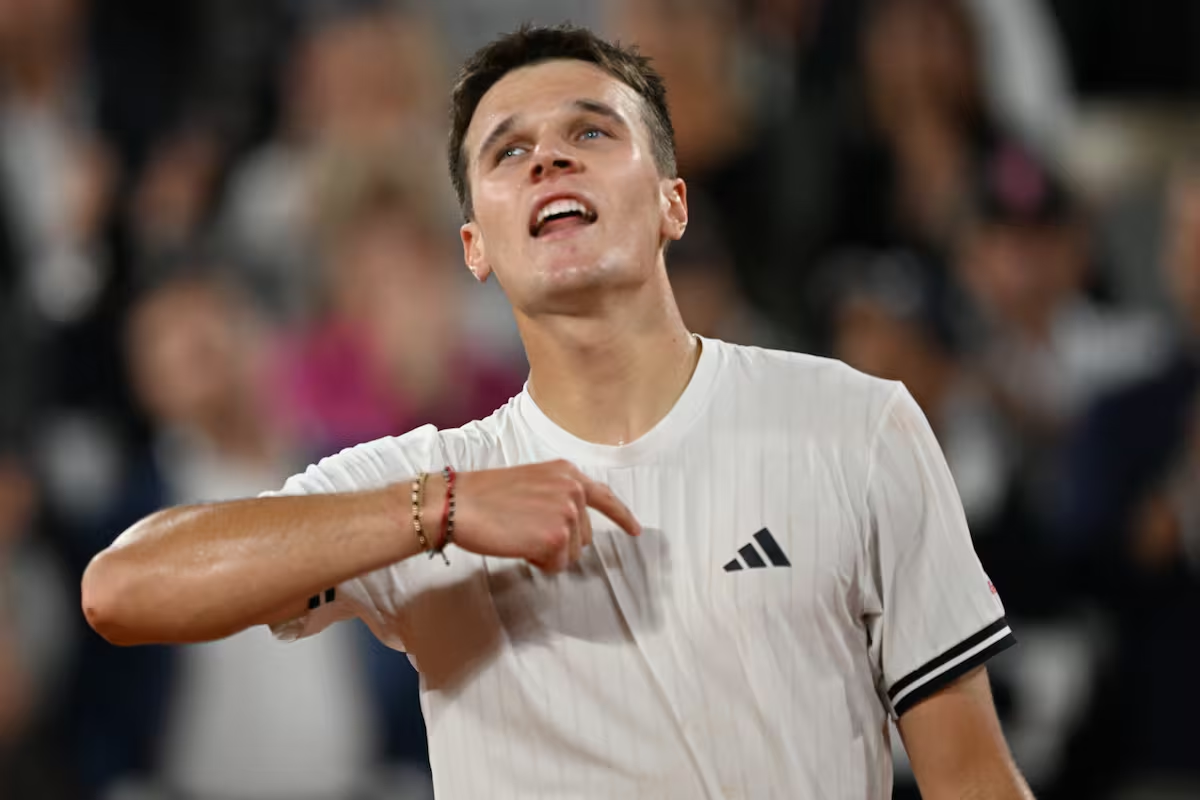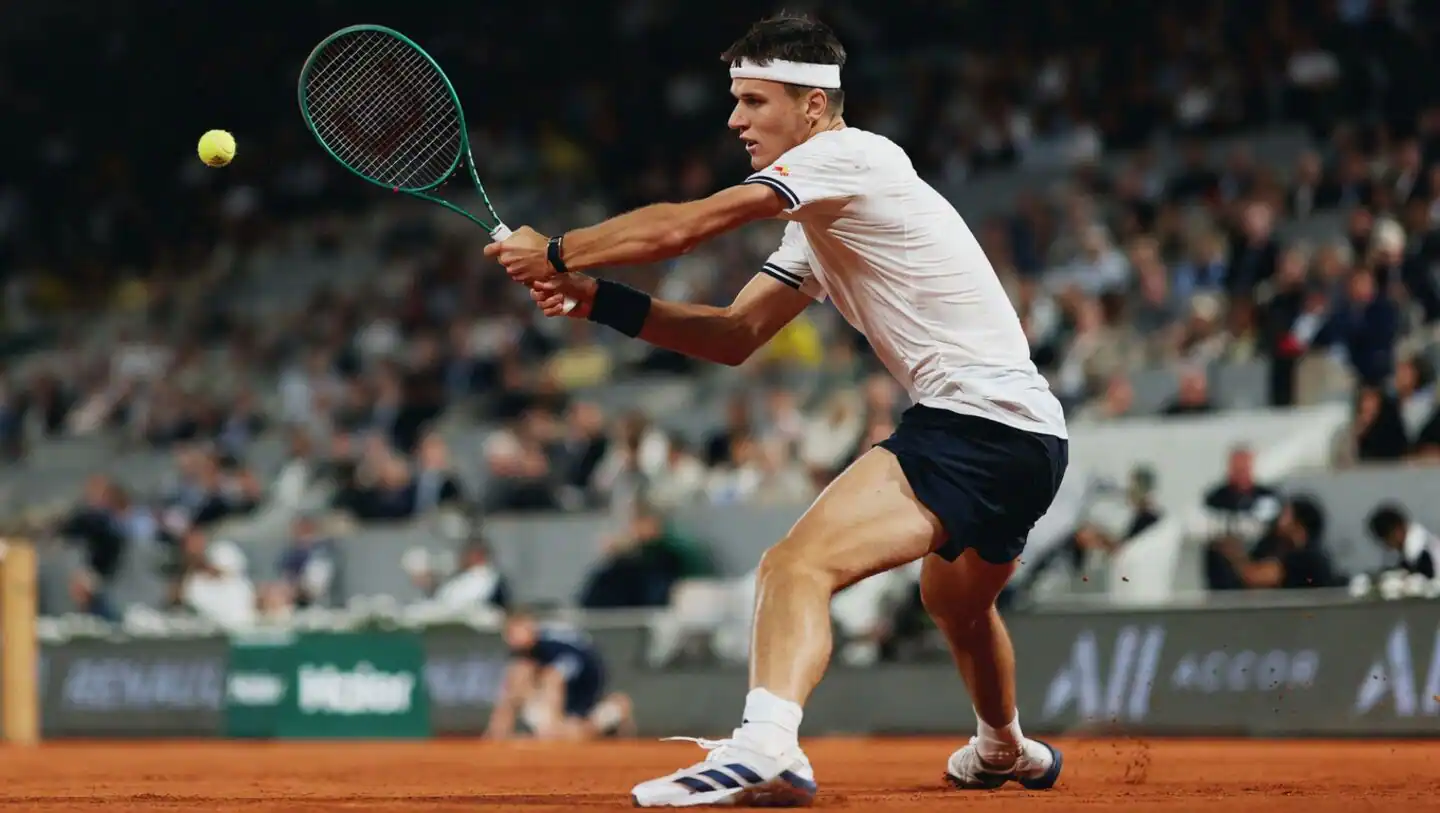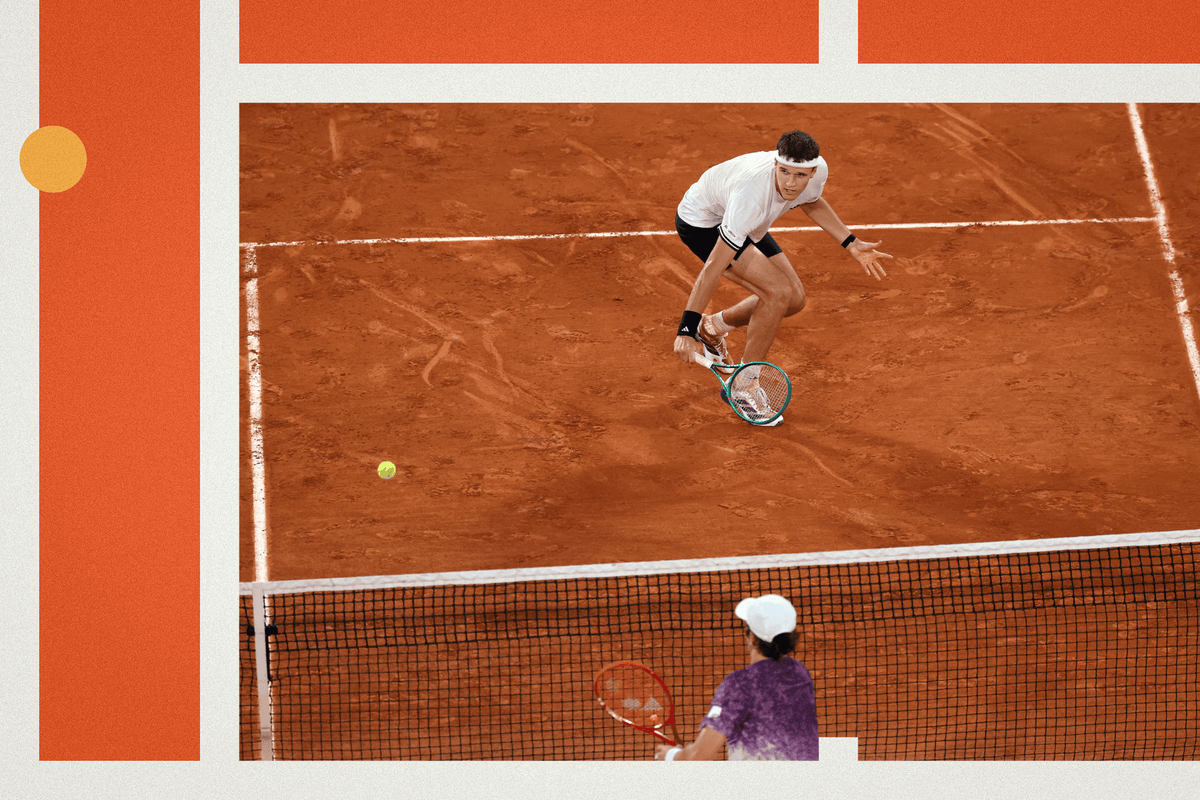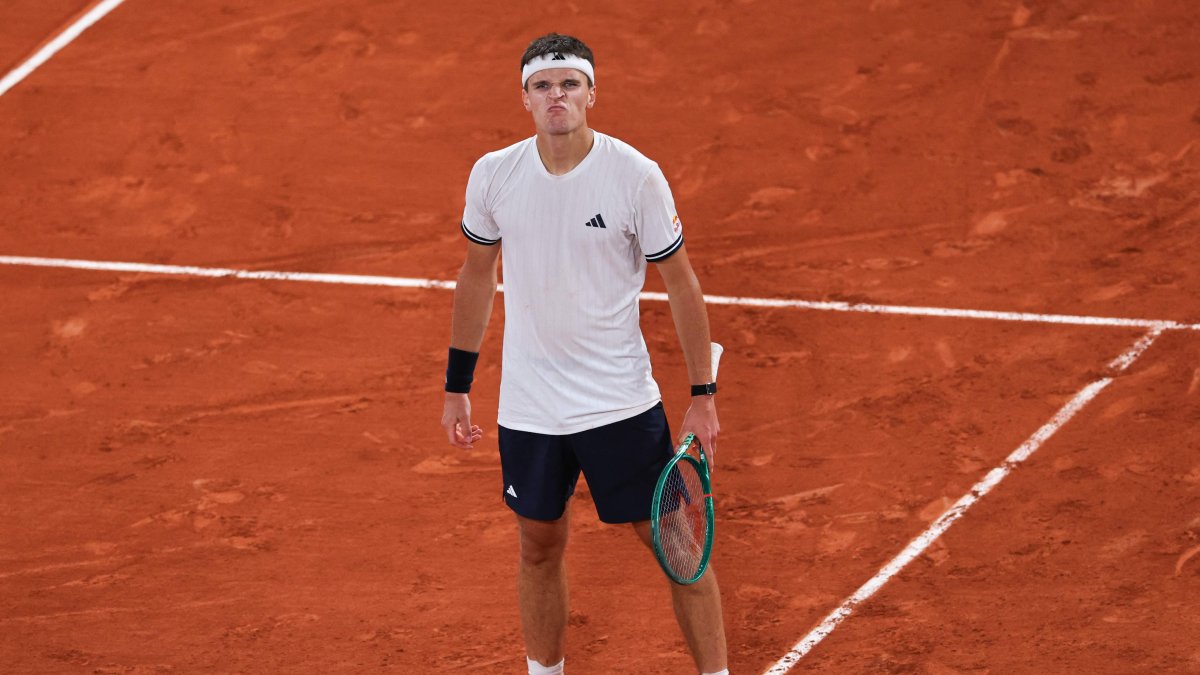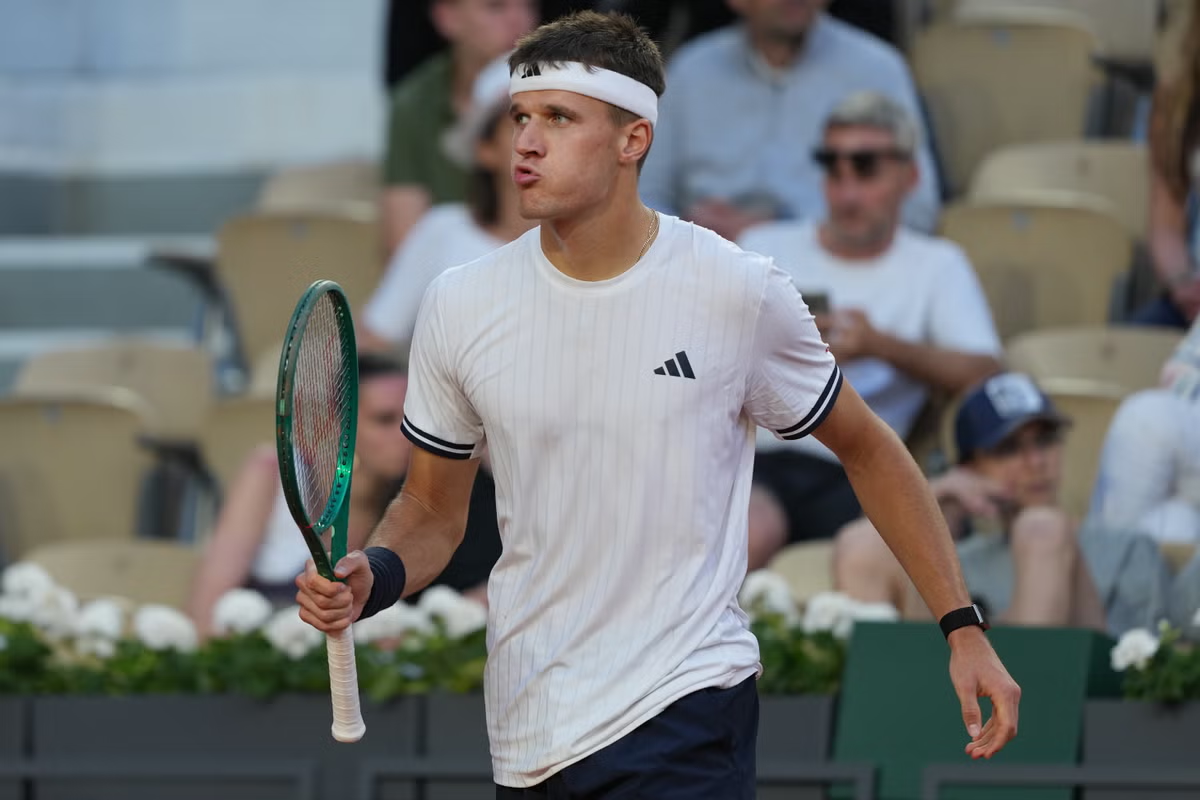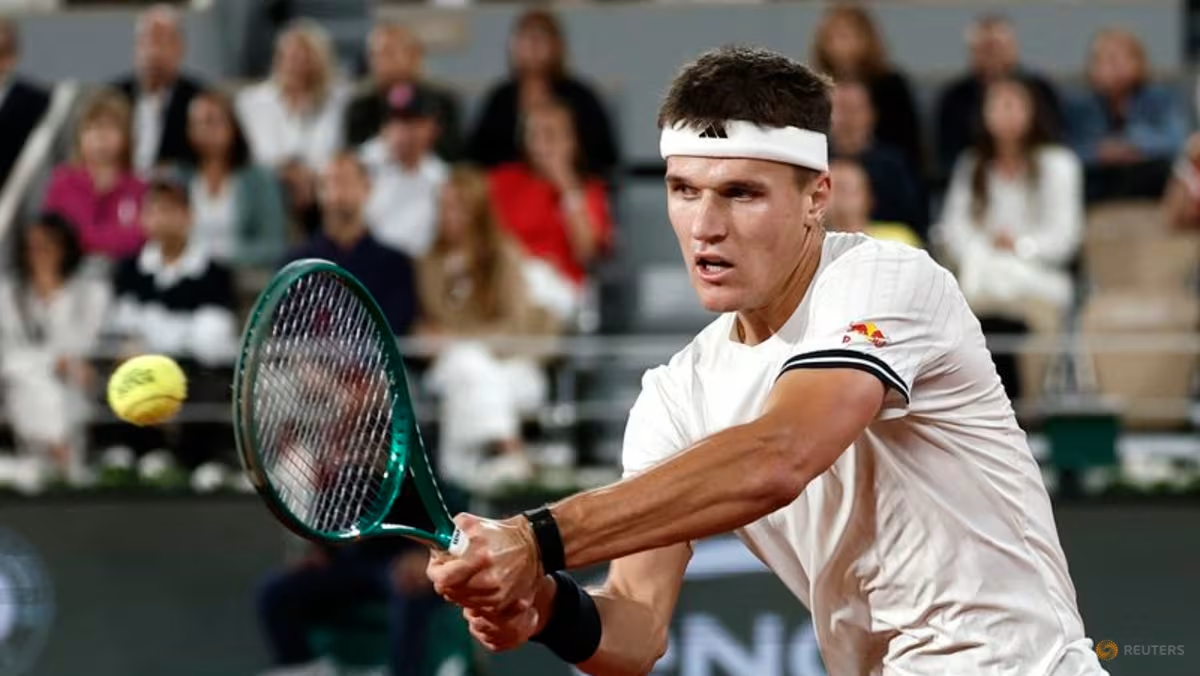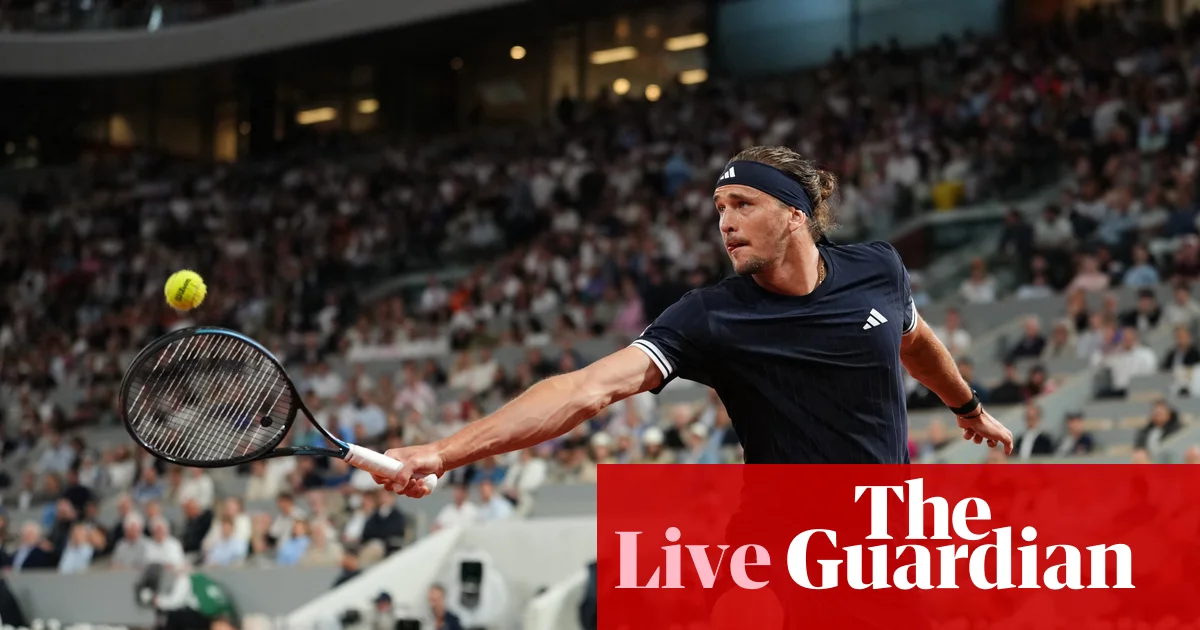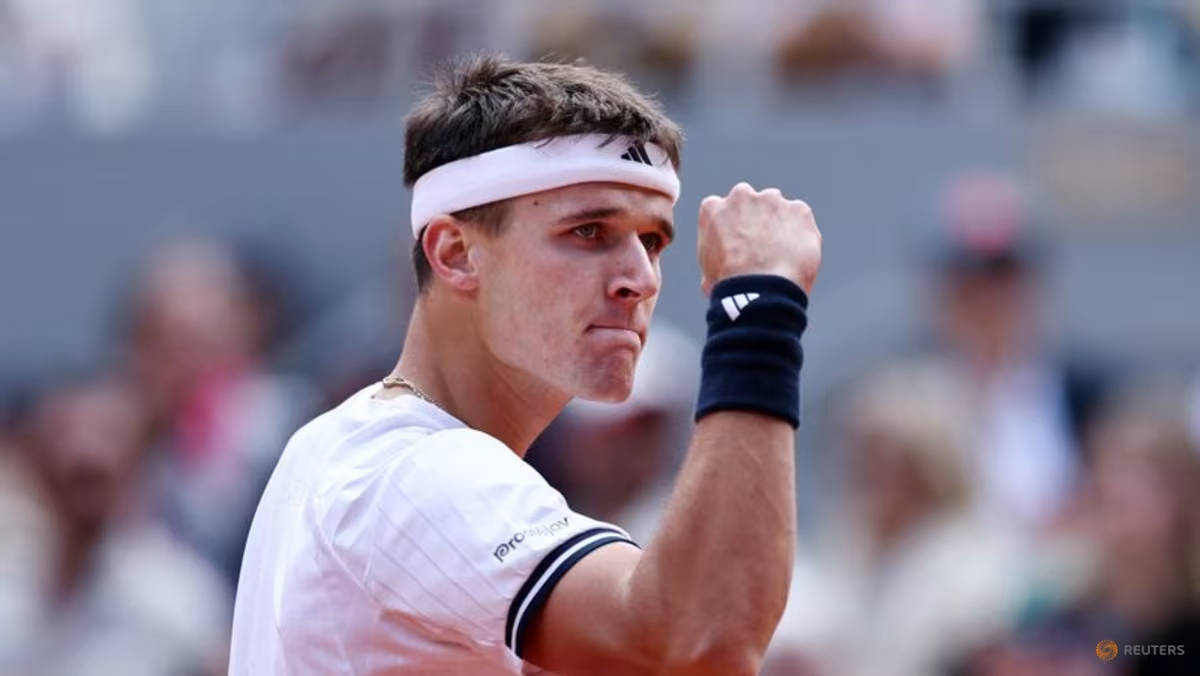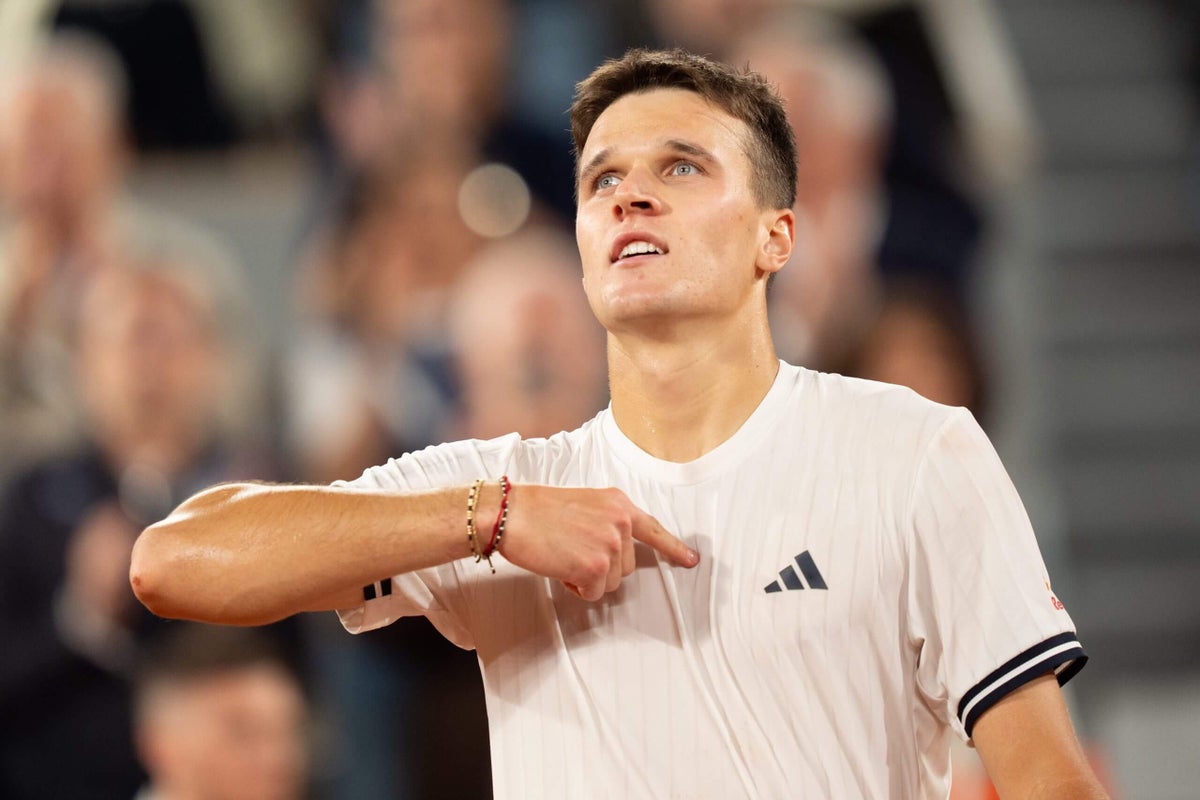
PARIS — Last spring, Jakub Menšík’s rise felt inevitable.He had just beaten Novak Djokovic to win the Miami Open, an ATP Masters 1000 event the rung below the Grand Slams. The 19-year-old from the Czech Republic was oozing confidence.“If I focus, if everything is good, if I’m healthy I can really beat anyone on the court,” Menšík, one of a clutch of players in their late teens and early twenties trying to challenge Jannik Sinner, Carlos Alcaraz and Novak Djokovic, said in an interview ahead of the Madrid Open last April, a few weeks after that Miami success.“We are hungry. We want to play against the best players in the world. We want to show them that we are here. It’s like a boost of energy for us to compete on the biggest courts in the world.”Menšík, now 20, is 6 feet 5 inches with an imposing frame and pale blue eyes, moves with a low-key self assurance that he is destined for big things. On Friday, he takes on world No. 3 Alexander Zverev, the last player standing from the 1990s generation overtaken by Alcaraz and Sinner, in the French Open semifinals. For both players, a first Grand Slam title could be a couple of matches away.Menšík’s path from that Miami Open win to this deep run at Roland Garros has not been straightforward. He has had injury setbacks, as well as a run of early Grand Slam exits with a pattern of agonizing five-set defeats. He went out in the second round of last year’s French Open and U.S. Open, and lost at Wimbledon in the third round.When Menšík did make it to the second week of a major for the first time, at January’s Australian Open, he had to withdraw from his fourth-round match against Djokovic because of an abdominal muscle issue. In the run-up to this tournament, an infection on his right big toe kept him out of the Monte Carlo Masters, which was immediately followed by a viral illness. He reached the Madrid Open quarterfinals in his next event, losing in three sets to Friday’s opponent Zverev, but then won only one match combined at the Italian Open and the Hamburg Open in Germany.Over the past couple of weeks, something has clicked. Menšík nearly lost to Mariano Navone of Argentina in the second round, and was forced to leave the court in a wheelchair after a near-five-hour, five-set win played in searing heat. Menšík’s recovery since, including another five-setter against No. 11 seed Andrey Rublev, has been extraordinary.“We arrived here in Paris, and he was very, very focused,” his coach Tomáš Josefus said during an interview Thursday at the practice courts in the Paris Jean-Bouin club, a few minutes from Roland Garros. “He looked very, very promising and very good during practice sessions.”Josefus, a former world No. 363 also from the Czech Republic, has known Menšík, Kuba to his inner circle, since he was eight years old, and been his main coach since he was 14.He describes a conviction in Menšík that is not typical of their compatriots. “We come from Czechia and I don’t know if it’s part of our mentality, but usually for us in our country it’s not so typical, let’s say. If we compare average mentality in our country and average mentality, for example, in the United States, it’s a big difference.“From an early age he’s different, because he really trusts the process and he knows his abilities. It’s not like a role that he’s playing, being self-confident. It’s natural, because again, he knows that he’s doing a lot of things. He knows that is doing a lot for the game of tennis. And if you know that you are doing a lot of good things and you are a good player, from that it’s like a natural self-confidence, right?”Dragan Vujovič, Menšík’s mental coach since he was only 13 years old, frames things slightly differently.“He closes his eyes, he relaxes and then he prepares visually for the match where he imagines different points in different moments and he’s always winning those points,” Vujovič said in a video interview last year.“He always enters the match with a winning intention. And a lot of players enter the match with a very foggy, unclear intent. They will say, ‘Well, I will do my best today. I’m not feeling too well and he beat me twice before. He’s much better ranked player than me.’“Jakub doesn’t have thoughts like that. He follows his sincere desire. That’s a champion. Sincere desire is a thousand times stronger than self-confidence.After those difficult five-set losses at previous majors, Menšík’s conviction has been evident throughout this tournament, especially during Tuesday’s quarterfinal against João Fonseca. Menšík missed six match points up 6-5 in the third set, including one when he had a very makeable smash, but instantly shrugged off the disappointment to roll through a tiebreak and wrap up a straight-sets win.“The way he deals with the important points is really impressive,” Fonseca said in a news conference.“He knows how to play in important moments. He’s not afraid. He has courage, and I wish him all the best because he’s a nice and humble guy.”Menšík has had some other big mental wins during his career. He beat France’s Alexandre Müller in front of a hostile Roland Garros crowd last year, and asked the fans to make more noise like a musical conductor after winning the third set. His Miami Open win saw Menšík win seven out of seven tiebreaks in his five matches.Vujovič said he and Menšík have developed techniques to help him stay calm.“During the match he has a special technique for his serve, a special mental technique for return,” Vujovič said. When Menšík is having serve difficulties, he puts his fingers together which helps keep him calm.“There is a special mental technique for concentration and inner calmness between the points, a special technique to correct the mistake. A special technique if he loses a set to do the so-called mental shower to change the condition he’s in and correct everything. So he’s got a whole set of tools and he knows exactly what to do mentally at any point in the match, before, during the match and after.”During a U.S. Open qualifying match against Italy’s Fabio Fognini in 2023, a 17-year-old Menšík was able to take a toilet break and reset after losing the first set 6-1. He won the match 1-6, 6-1, 6-1 and ended up reaching the third round.“He goes into this relaxed level, he closes his eyes, and he tells his brain, describes what was inadequate, and then he gives the brain a command how he wants to play — the adequate, the so-called correct things he wants to do in the remaining part of the match,” Vujovič said.“That’s why he always comes out and the other guy says, ‘What happened to this guy? What did he do while he was on the toilet?’ That’s a technique that he always does after a lost set. To reset himself to change the undesired things, to change the incorrect shots or the incorrect physical movements.“After he beat Djokovic in Miami, there was a commentator on TV saying, ‘This guy is so calm and so young.’ And the other person said, ‘Well, he probably has it in his genes.’“He doesn’t have it in these genes. He’s been practising this for six years. It has become a very strong habit.”Menšík said last year in Madrid that: “A lot of things that he (Vujovič) taught me, I’m using that always on the courts, off the court as well. During the years I’m working with him, you can see a very big improvement.”Jakub Menšík’s serve is his most potent weapon. (Thomas Samson / AFP via Getty Images)Menšík’s focus on his on-court strengths, especially his serve and backhand, is just as meticulous. Josesfus is a big advocate of the importance of data and, on Djokovic’s recommendation, used the same analytics company that the 24-time Grand Slam champion does — Gotta Tennis.. Josefus now works with a couple of data and strategy companies, and said that Menšík has embraced data like he has. Menšík’s father works in the information technology industry and helped Josefus manually tag Menšík’s junior matches and scrape data when he was in his early teens.“I remember very well the situation when I introduced this type of work with advanced data. And his answer was, ‘Hey coach, if I will have this type of information, I can’t lose. I can’t lose,” Josefus said during a video interview last year.“Most players are very well prepared technically. But 90 percent of the time, it’s about the strategy. So it’s how to serve, where to serve under pressure, first serve, second serve, how to mix it up. What is this speed and spin? Where is the location or where is the contact points of opponents’ returns and this type of stuff.”Menšík typically favors a kick serve with his second serve, and thinks more about where to put it than how hard to hit it.With the serve and backhand so well established, a priority this season has been improving Menšík’s relatively mediocre forehand. “The forehand has been improving and I’m super happy,” Josefus said Thursday. “We actually made some technical corrections during the clay season. He was able to add some kilometers per hour and some spin on it. His forehand has more variety, he’s able to open up the court more here in Paris, which is super important on clay.”This has been visible during Menšík’s run, with the combination of high bounce (in the first week’s heat) and slow conditions (in the cooler weather during the second) suiting his strike zone and contact point.He has also been getting to the net more frequently, based on the simple calculation that it’s typical for players to win around 50 percent of their baseline points, compared to around two out of three of ones at the net.A creature of habit, Menšík has also established some superstitions during the French Open fortnight. After each practice, he and the team get out a small football and have a little kick-about. Before every match, he and Josefus play the same card game in the locker room, and on days off the whole team play another card game — but always the same one.With everything working well, Menšík has no inclination to change his routine ahead of facing Zverev. Though he departed from an annual tradition at the end of last year by not writing out his goals for the upcoming season and putting them on his fridge.“As the tournament is going, I’m playing better and better,” Menšík said in a news conference after beating Fonseca.“I’m excited for the challenge.”
Jakub Menšík’s tennis rise looks effortless. It is built on tools for when it gets hard
The 20-year-old Czech's self-confidence and calmness on big points appear preternatural. In reality, they are honed by practice.
1,788 words~8 min read