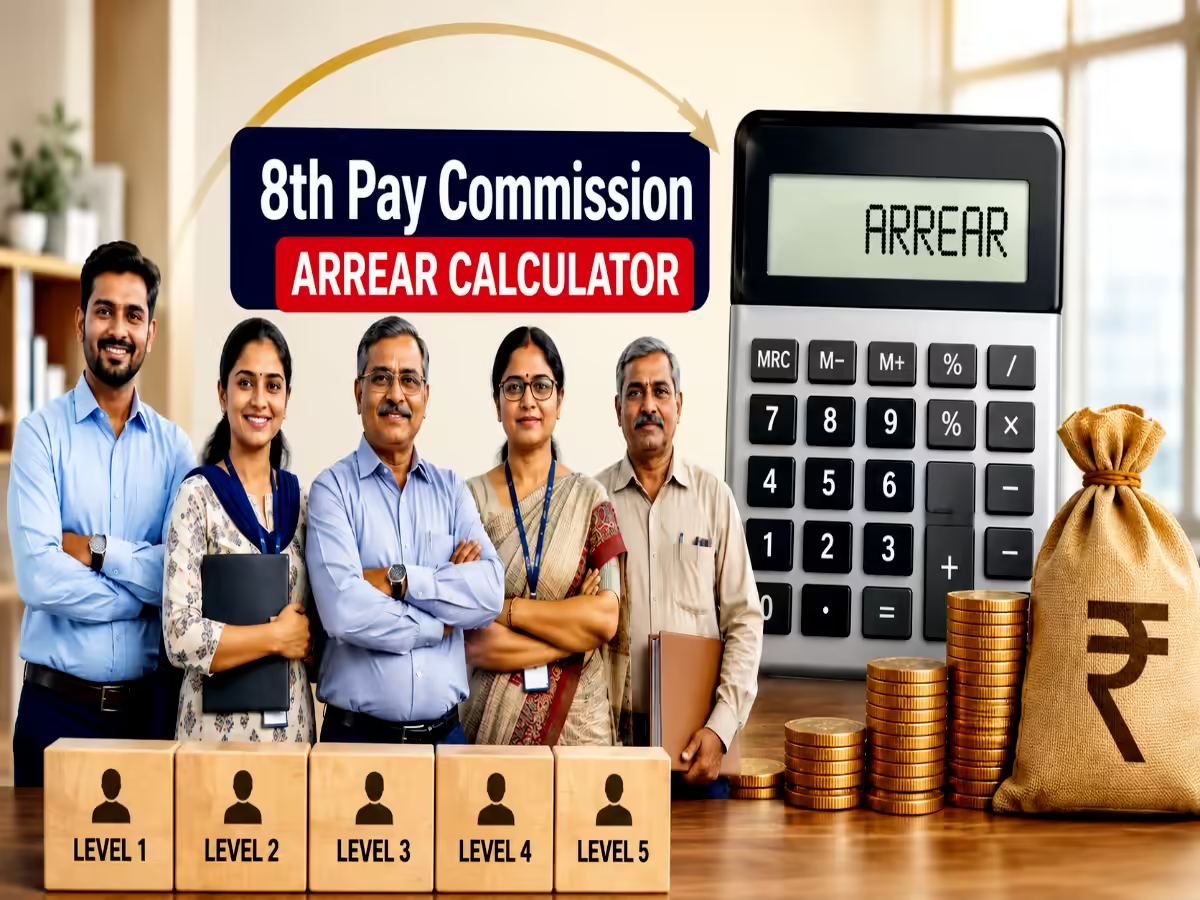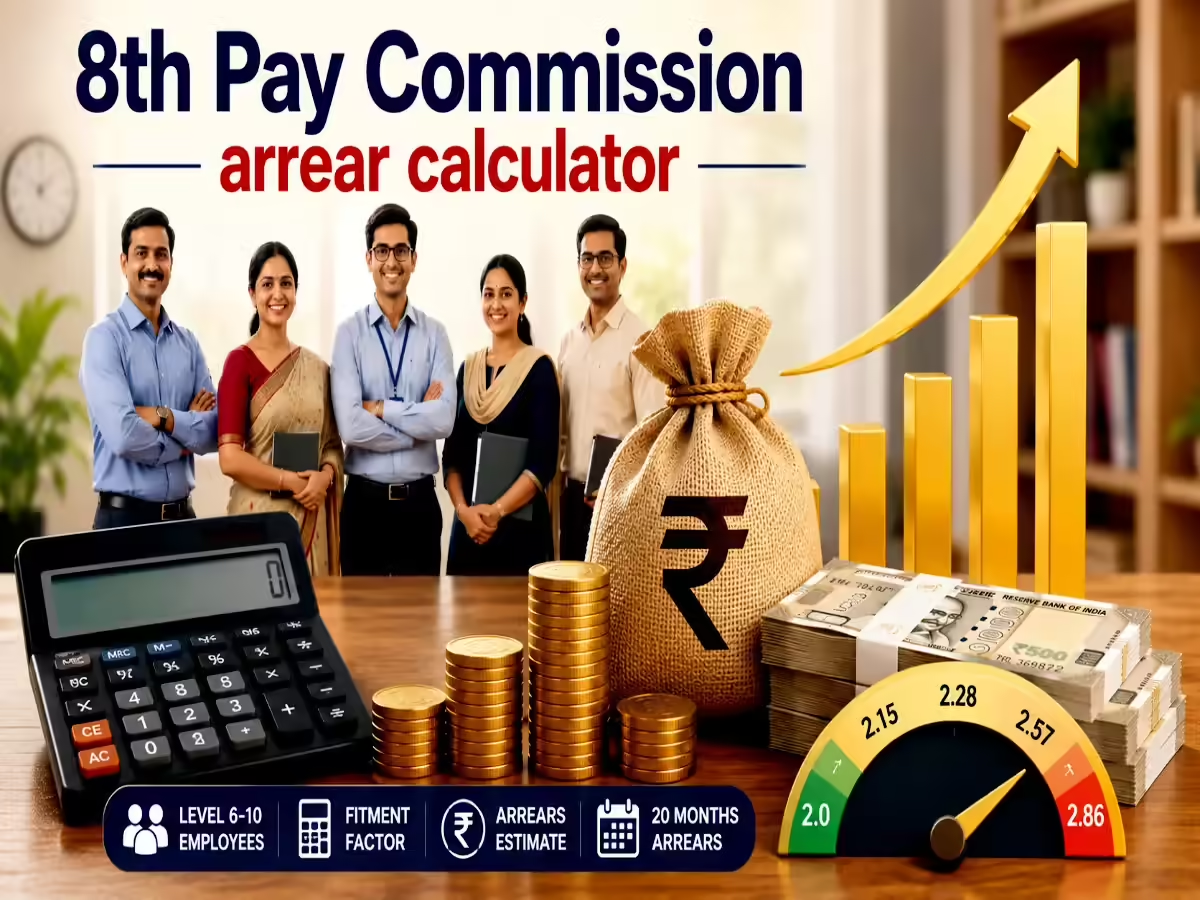
The 8th Pay Commission is holding consultations with employee and pensioner bodies and other stakeholders. It concluded its Jammu & Kashmir meetings on Thursday. As the 8th Pay Commission moves step by step to prepare its report of recommendations, central government employees are curious to know about the hike they will get in the 8th CPC. The hike in their salary will also determine the arrears they will get for the delay in the implementation of the 8th Pay Commission report. While the government may take more than a year to implement the 8th CPC’s report of recommendations, here we present calculations of estimated arrears Level 6-10 employees can get for the 8th CPC report delay. Arrears for 8th Pay Commission report delay As per tradition, central employees get arrears from the next day of the conclusion of the previous pay commission. Since the 7th Pay Commission’s tenure ended on December 31, 2026, employees are most likely to get the arrears from January 1, 2026, onwards. Which are the arrears they can get for the 8th Pay Commission? Central government employees mainly get arrears for an increase in their basic pay. Dearness allowance is factored in the fitment factor, and employees don’t get a separate arrear for this. As far as house rent allowance (HRA), child education allowance (CEA) and transport allowance (TPTA) are concerned, the government revises their rates, but it doesn’t provide arrear for them. How does the government decide on the arrear? The government calculates the difference of an employee’s salary in the previous pay commission and the new pay commission and multiply it by number of the delayed months in the implementation of the pay commission report. For example, the basic salary of a Level 1 employee in the 7th Pay Commission is Rs 18,000. If the government decides on a 2.15 fitment factor for the 8th Pay Commission and delays the report implementation by 20 months, their arrear calculation can be as follows- Particulars Factors Salary in 7th CPC ₹ 18,000 Estimated salary in 8th CPC (at 2.15 fitment factor ₹ 38,700 Salary increment ₹ 20,700 Arrear months (estimated) 20 Estimated arrear ₹ 4,14,000 For how many months, can central government employees get arrears? It will depend on the notification date of the 8th Pay Commission. If the government implements the report in the second half of the year 2027, employees may get arrears for 20-24 months. However, it will be known only when the government notifies the 8th Pay Commission report. Who are Level 6-10 central government employees? Some of the well-known posts in different central government departments for Level 6-10 employees are as follows: Pay Level Basic Pay (Starting) Typical Posts Level 6 Rs 35,400 Inspectors in some departments, Upper Division supervisory staff, Junior Engineers, Section Officers (in certain organizations), Sub-Inspectors in CAPFs Level 7 Rs 44,900 Income Tax Inspectors, GST Inspectors, Preventive Officers, Examiners, Assistant Section Officers (Central Secretariat), Assistant Enforcement Officers Level 8 Rs 47,600 Senior Inspectors, Section Officers in some departments, Assistant Audit Officers (after promotion), Assistant Accounts Officers Level 9 Rs 53,100 Senior Section Officers, Accounts Officers, Private Secretaries, Assistant Directors in some organizations Level 10 Rs 56,100 Entry-level Group A officers such as Civil Services officers after induction/training, Assistant Commissioners in some departments, Assistant Directors, Entry-level Gazetted Officers What will be arrear amounts Level 6-10 employees may get in the 8th Pay Commission? We will present the estimated arrear amounts Level 6-10 central government employees may get at 2.0, 2.15, 2.28, 2.57 and 2.86 fitment factors. We are taking 20 months of time for arrear calculation assuming employees will get payouts for January 2026-August 2027. (Calculation source: Ramachandran Krishnamoorthy, Associate Partner, Managed Services, BDO India) 20-month arrear calculations at 2.0 fitment factor Level Current Basic (Rs) Revised Basic (Rs) Increase in Basic (Rs) Arrears for 20 months (Rs) 6 35,400 70,800 35,400 7,08,000 7 44,900 89,800 44,900 8,98,000 8 47,600 95,200 47,600 9,52,000 9 53,100 1,06,200 53,100 10,62,000 10 56,100 1,12,200 56,100 11,22,000 20-month arrear calculations at 2.15 fitment factor Level Current Basic (Rs) Revised Basic (Rs) Increase in Basic (Rs) Arrears for 20 months (Rs) 6 35,400 76,110 40,710 8,14,200 7 44,900 96,535 51,635 10,32,700 8 47,600 1,02,340 54,740 10,94,800 9 53,100 1,14,165 61,065 12,21,300 10 56,100 1,20,615 64,515 12,90,300 20-month arrear calculations at 2.28 fitment factor Level Current Basic (Rs) Revised Basic (Rs) Increase in Basic (Rs) Arrears for 20 months (Rs) 6 35,400 80,712 45,312 9,06,240 7 44,900 1,02,372 57,472 11,49,440 8 47,600 1,08,528 60,928 12,18,560 9 53,100 1,21,068 67,968 13,59,360 10 56,100 1,27,908 71,808 14,36,160 20-month arrear calculations at 2.57 fitment factor Level Current Basic (Rs) Revised Basic (Rs) Increase in Basic (Rs) Arrears for 20 months (Rs) 6 35,400 90,978 55,578 11,11,560 7 44,900 1,15,393 70,493 14,09,860 8 47,600 1,22,332 74,732 14,94,640 9 53,100 1,36,467 83,367 16,67,340 10 56,100 1,44,177 88,077 17,61,540 20-month arrear calculations at 2.86 fitment factor Level Current Basic (Rs) Revised Basic (Rs) Increase in Basic (Rs) Arrears for 20 months (Rs) 6 35,400 1,01,244 65,844 13,16,880 7 44,900 1,28,414 83,514 16,70,280 8 47,600 1,36,136 88,536 17,70,720 9 53,100 1,51,866 98,766 19,75,320 10 56,100 1,60,446 1,04,346 20,86,920
8th Pay Commission calculator: How much arrears can Level 6-10 employees get at 2.0-2.86 fitment factors - The Economic Times
The 8th Pay Commission is consulting stakeholders before finalising its recommendations, while central government employees await clarity on salary hikes and arrears. If implemented with a 20-month delay, arrears may be payable from January 1, 2026. Depending on the fitment factor, Level 6–10 employees may receive estimated arrears ranging from Rs 7.08 lakh to Rs 20.87 lakh.
857 words~4 min read