Choi Jeong-yoon
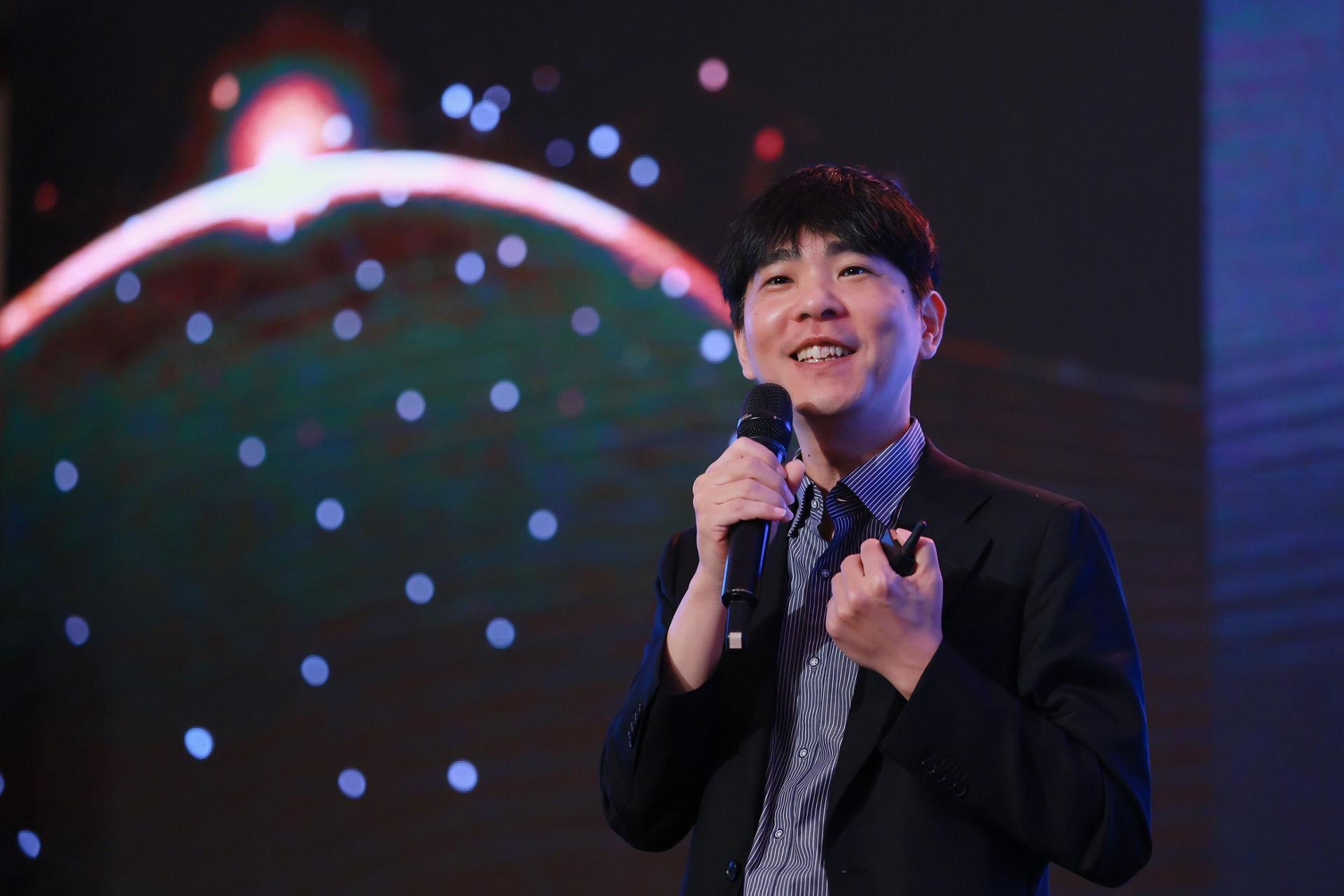
Industry leaders at Upscale Conf SF say the next phase of AI is orchestrating the workflows that produce content, not content itself Joaquín Cuenca, CEO of Mgnific, speaks at Upscale Conference held in San Francisco, Wednesday. (Magnific) Korea Herald correspondent Choi Jeong-yoonSAN FRANCISCO, US — Inside what used to be a warehouse along San Francisco's waterfront, hundreds of technology companies, filmmakers, designers, creators and AI startups gathered this week to discuss what many believe is the next chapter of artificial intelligence.As generative artificial intelligence rapidly expands to individuals and enterprises, Upscale Conference focused on a future in which AI is no longer simply a tool for generating images, videos or text from prompts. The AI-focused gathering was hosted by creative platform Magnific.Those at the conference envisioned AI systems that could manage projects, coordinate complex workflows, manage creative processes and collaborate with teams — transforming the technology from a content generator into what some described as a creative operating system.In other words, AI is evolving beyond a content-creating tool into one that helps run the content creation systems themselves.The change reflects how quickly generative AI has matured. Just a few years ago, creators were experimenting with prompts to produce individual images, videos or blocks of text.AI systems to help creative teams build workflow, rather than just providing answersThat shift was at the center of Magnific's largest product launch to date. The company unveiled a suite of new products — Agents, Flows and Magnific Model Context Protocol — designed to help creative teams build, manage and scale AI-powered workflows across organizations."Access isn't the same as building," Magnific CEO and co-founder Joaquin Cuenca said during the event."Building means your team can run it, not just you. It means the AI remembers your work, not just your last message. It means when you have a story to tell, everything holds together from the first word to the final frame."The announcement addressed a challenge increasingly facing companies adopting AI. While individual employees have become adept at generating content with AI tools, organizations often struggle to preserve expertise, maintain consistency across teams and replicate successful creative processes.Cuenca argued that many of today's AI systems remain fundamentally limited because they focus on delivering answers rather than helping people think through problems."AI today is used to give you the result," he said during his keynote. "It's like asking AI to help you with an exam and getting out the answers, but you don't want the answers. You want to think for yourself. You want to understand the process."He also criticized existing AI editing tools for frequently taking too much creative liberty."More often than not, you ask them for something, and they take some freedom along the way," he said. "Very often they land into a new image, a video, that is not what you wanted." Joaquin Cuenca, CEO of Magnific, speaks at the Upscale Conference held in San Francisco, Wednesday. (Choi Jeong-yoon/ The Korea Herald) His proposed alternative is a system in which AI agents remain transparent, exposing the steps behind their processes and allowing creators to intervene at any point."We want agents to provide clarity," Cuenca said. "We want agents to be transparent into what they do."AI as a collaborator to human creativityThe emphasis on control surfaced repeatedly throughout the conference."There are many reactions today in the world to AI. Not all of them are positive," Cuenca said. "Many people are afraid."Yet he argued that the difference between fear and curiosity comes down to whether users feel in command of the technology."Control converts fear into curiosity," he said. "Control is what makes you understand that this is a tool and that you have agency."The idea represents a notable departure from early narratives surrounding generative AI, which often focused on automation and replacement. Instead, speakers repeatedly framed AI as a collaborator capable of augmenting human creativity."AI should augment your vision and not replace it," Cuenca said. Participants ranging from AI creatives to industry officials gather at the Upscale Conference held at the Midway in San Francisco. (Choi Jeong-yoon/ The Korea Herald) The concept was demonstrated by Martin Leblanc, Magnific's chief experience officer, who walked the audience through a filmmaking project created with AI agents.Rather than generating a single image or video, the system organized project folders, analyzed a script, created characters, generated multiple visual versions, built reusable workflows and assembled draft video sequences."It has all the memory about the context," Leblanc said, describing how AI can retain information across projects and collaborate with teams working on the same production.The shift is also changing how creative professionals think about their own role.During a panel discussion, Kevin Roose, technology columnist for The New York Times and bestselling author, and Casey Newton, founder of the technology publication Platformer, discussed how they have incorporated AI into their own work.For Roose, AI has become a useful research assistant, helping with tasks such as organizing sources, transcribing interviews and reviewing drafts."The writing is the thing that I protect," he said. "I am willing to outsource almost anything to AI if it can free up more time and energy for me to do the actual words on the page." Kevin Roose (left), Casey Newton, Joaquin Cuenca (right) talk as panels during a session titled "Building in the age of AI" at Upscale Conference held in San Francisco on Wednesday. (Choi Jeong-yoon/ The Korea Herald) Newton described a similar approach, using AI for fact-checking and research while remaining cautious about handing over more fundamental aspects of creative work."The idea generation piece is still the part where I want humans to remain in the driver's seat," he said.Roose argued that originality itself could become more important in an era when machines can produce technically competent content at scale."If you are a person who's weird and unhinged, it has never been more profitable to differentiate yourself from sort of average, boring, mediocre output," he said. "You just have to be weird." Niceaunties gives a speech on her creative work and the process during a session for the Upscale Conference held in San Francisco on Wednesday. (Choi Jeong-yoon/ The Korea Herald) Originality becomes more invaluable in AI eraThe conference's most compelling illustration of that idea came from Singaporean artist Wenhui Lim, better known by her artistic persona Niceaunties.Niceaunites has gained international attention for her AI-generated videos featuring surreal depictions of middle-aged Asian women. Her work transforms everyday memories, family dynamics and cultural observations into elaborate fictional worlds populated by aunties.At first glance, her presentation seemed to showcase the power of AI-generated visuals. But her message was something deeper."I love creating with AI because it brings me back to the same level of energy and excitement like I was a child," Lim said. "But without all the memories and experiences before that, I could not create this content."She described drawing inspiration from her grandmother, family members and the aunties she grew up around in Singapore. Those experiences became the foundation for the fictional "Auntieverse" she has spent years building.The technology allows her to visualize those stories, but it does not create the stories themselves.Her presentation offered a glimpse of what many speakers suggested may become the defining distinction in the next phase of AI adoption.A machine can generate an image, extend a video clip, create dozens of variations or assemble a workflow. What it cannot easily replicate are the experiences, emotions, cultural references and personal histories that give creative work meaning, she explained.That distinction was echoed by Cuenca during the unveiling of "Candela," a short film produced by Magnific and shown during the conference. The film was presented not as a demonstration of AI image quality but as an example of how technology can help creators bring personal visions to life."Everything about making is changing, except the part that's yours," Cuenca said. "The vision, the taste, the judgment, the sense of when something is right, and when it still needs work."Not everyone in the industry shares such optimism. Concerns about job displacement, copyright issues, authenticity and the growing volume of AI-generated content continue to fuel debate.Yet even critics increasingly acknowledge that AI is becoming embedded in creative workflows. The challenge, speakers suggested, is ensuring that creators remain active participants rather than passive recipients of machine-generated outputs."Three years after the arrival of image generators sparked fears and fascination across creative industries, the conversation appears to be entering a new phase," Cuenca said."The question is no longer simply whether AI can create. It is how humans will direct what comes next."