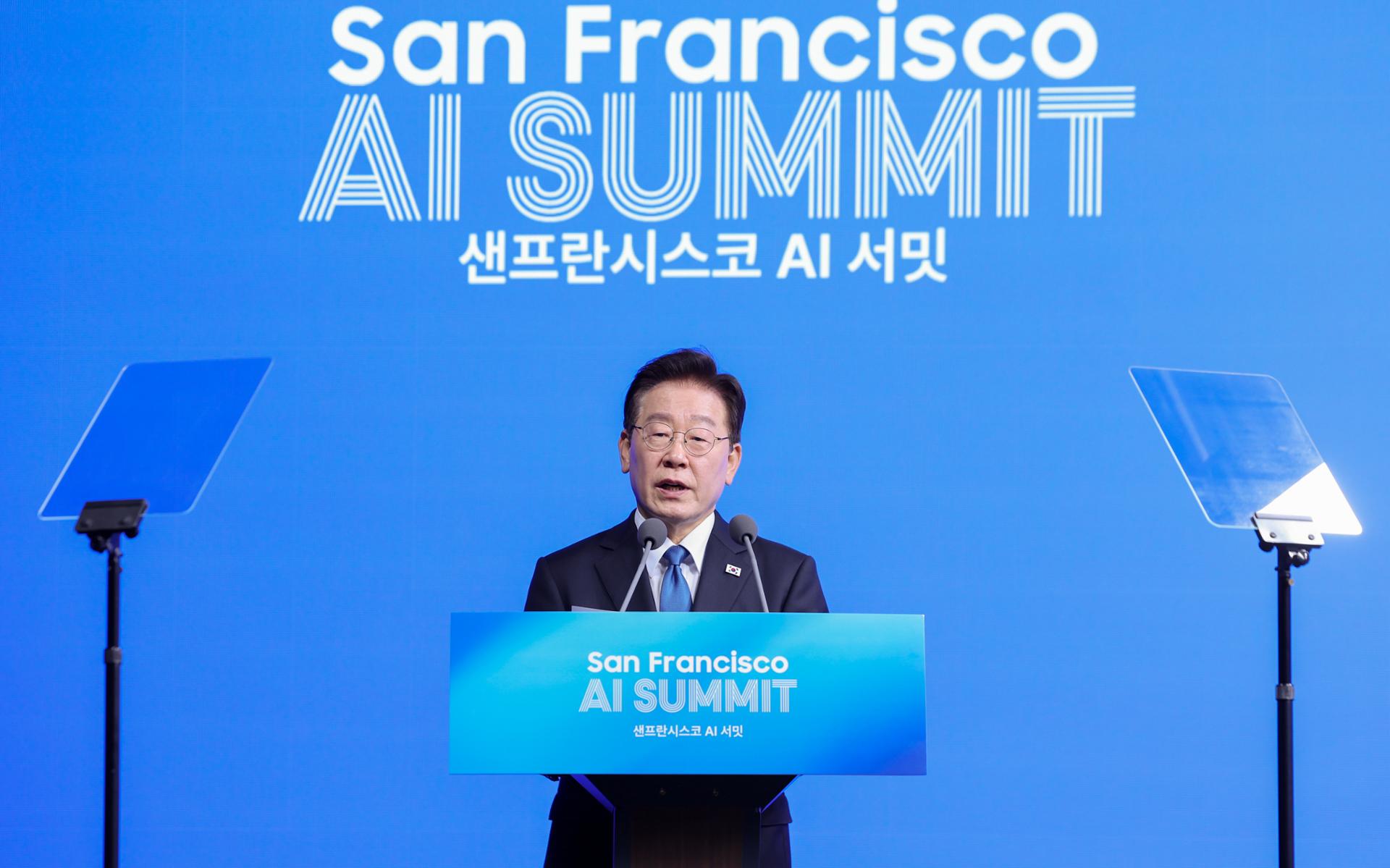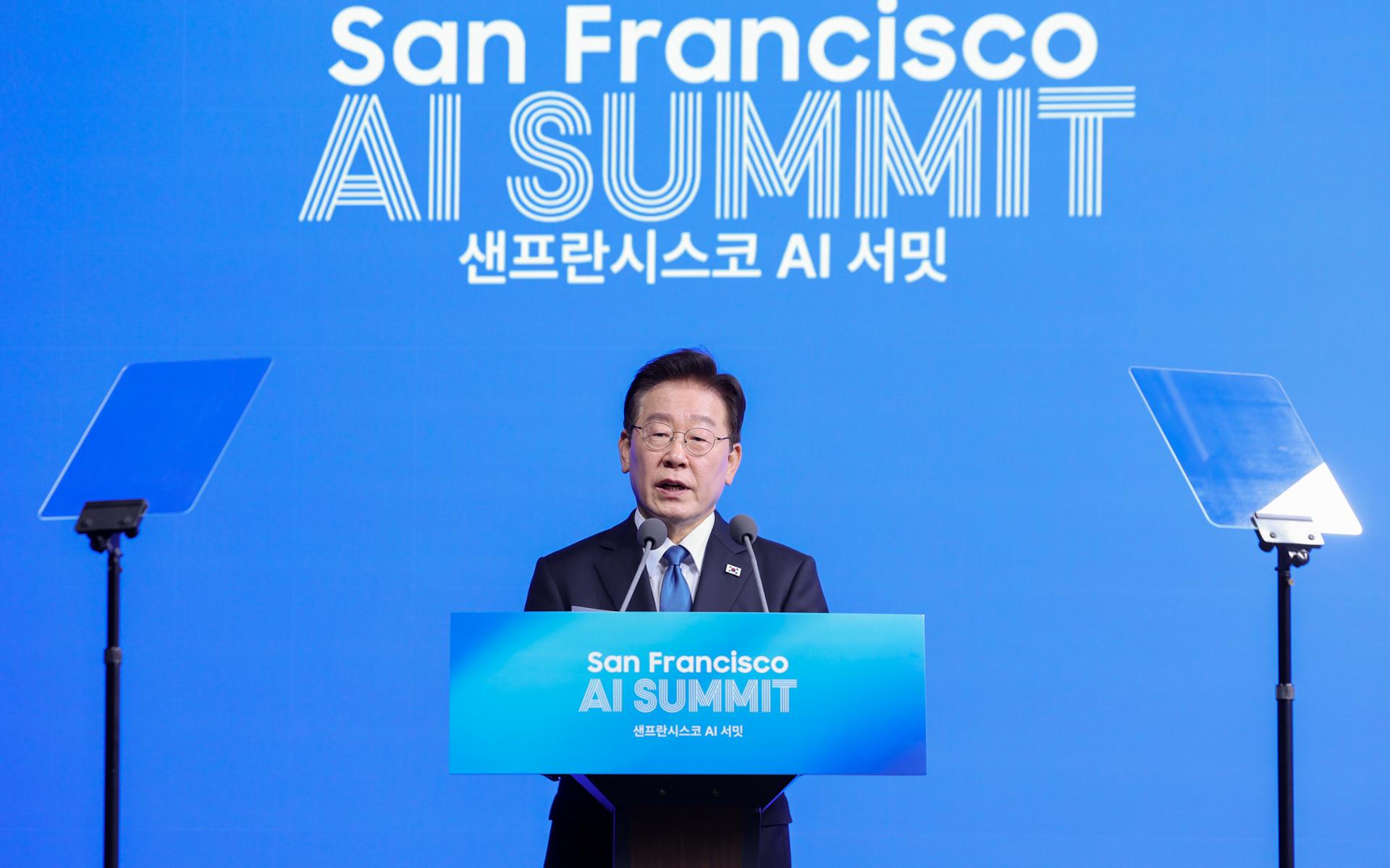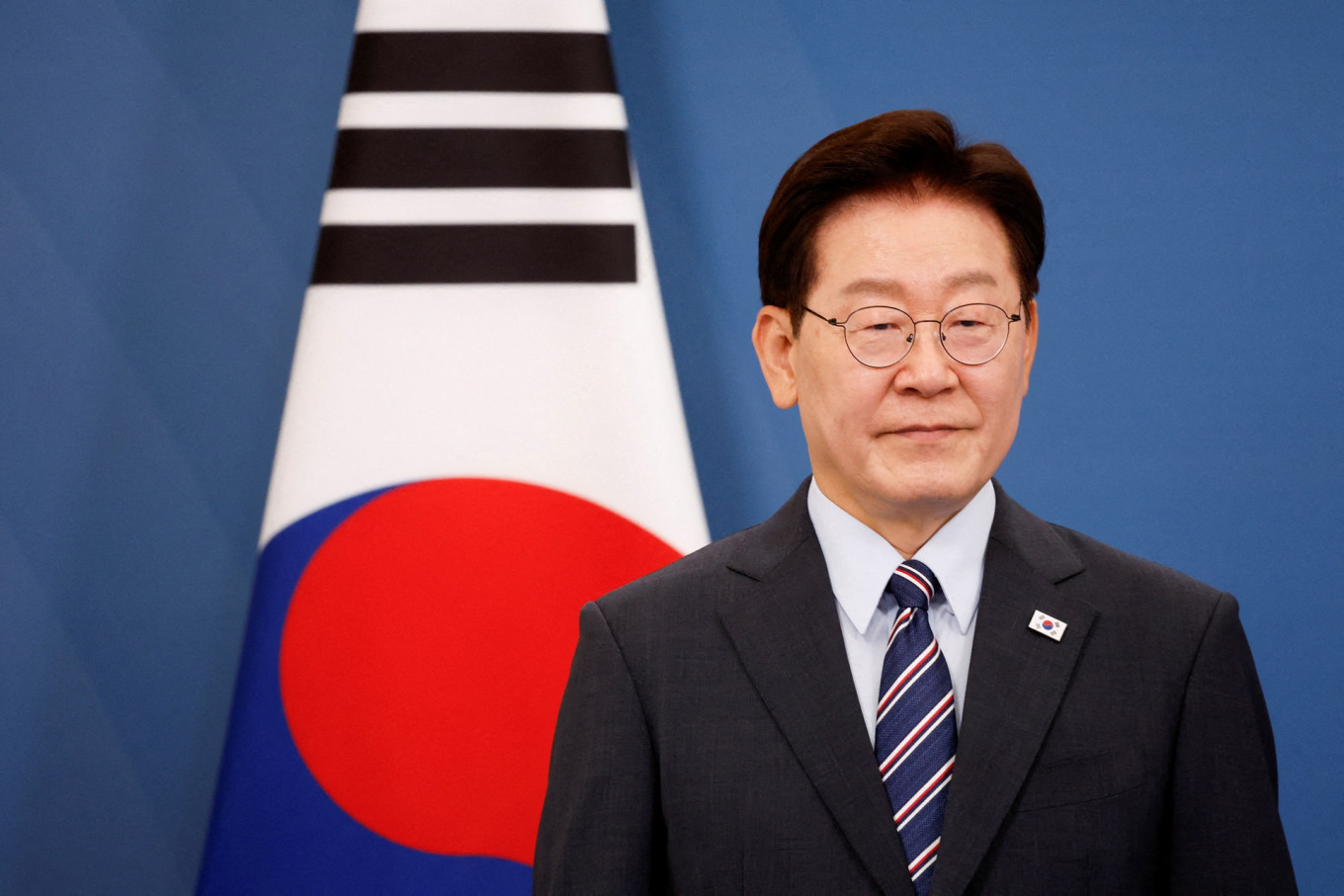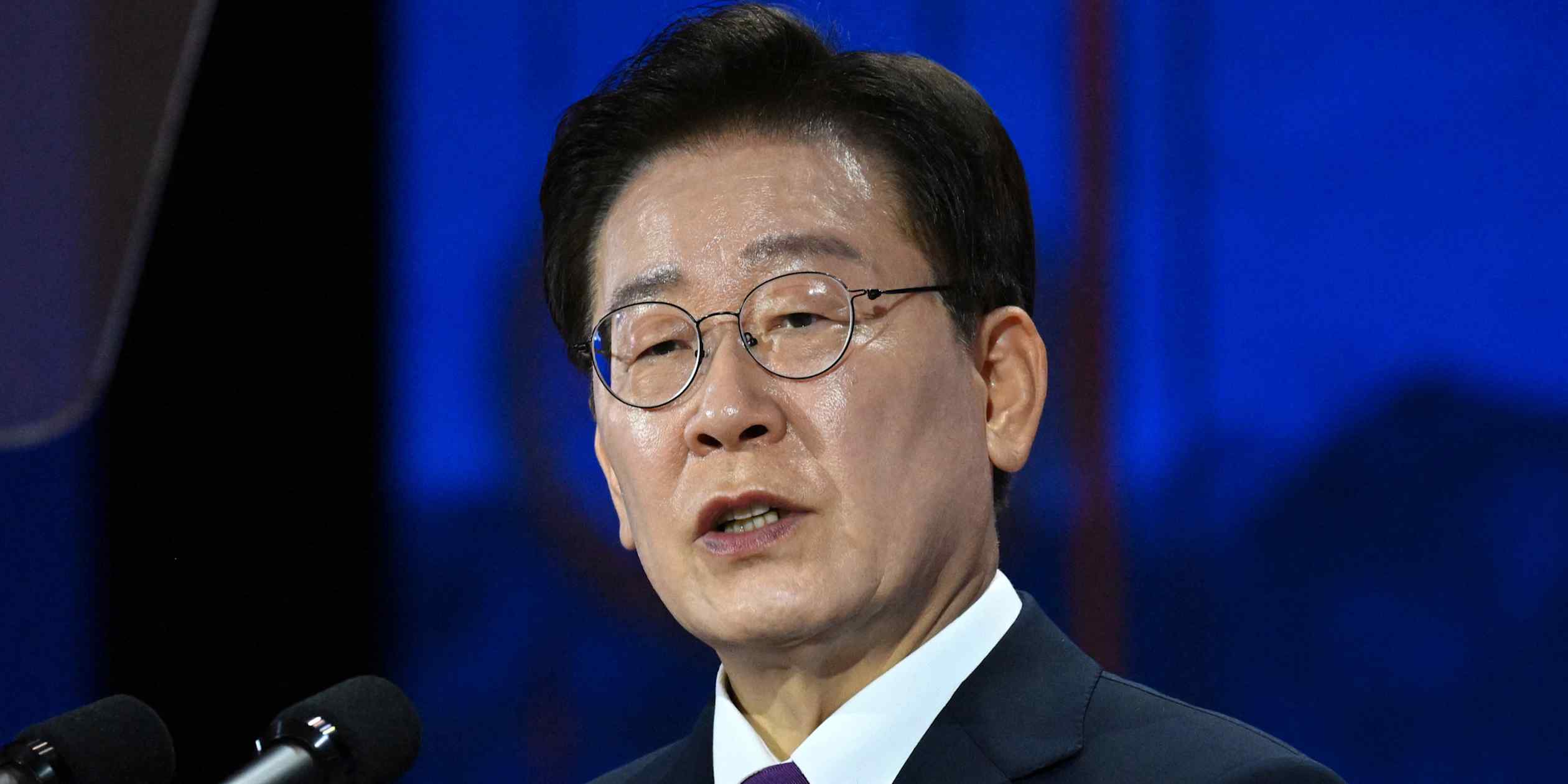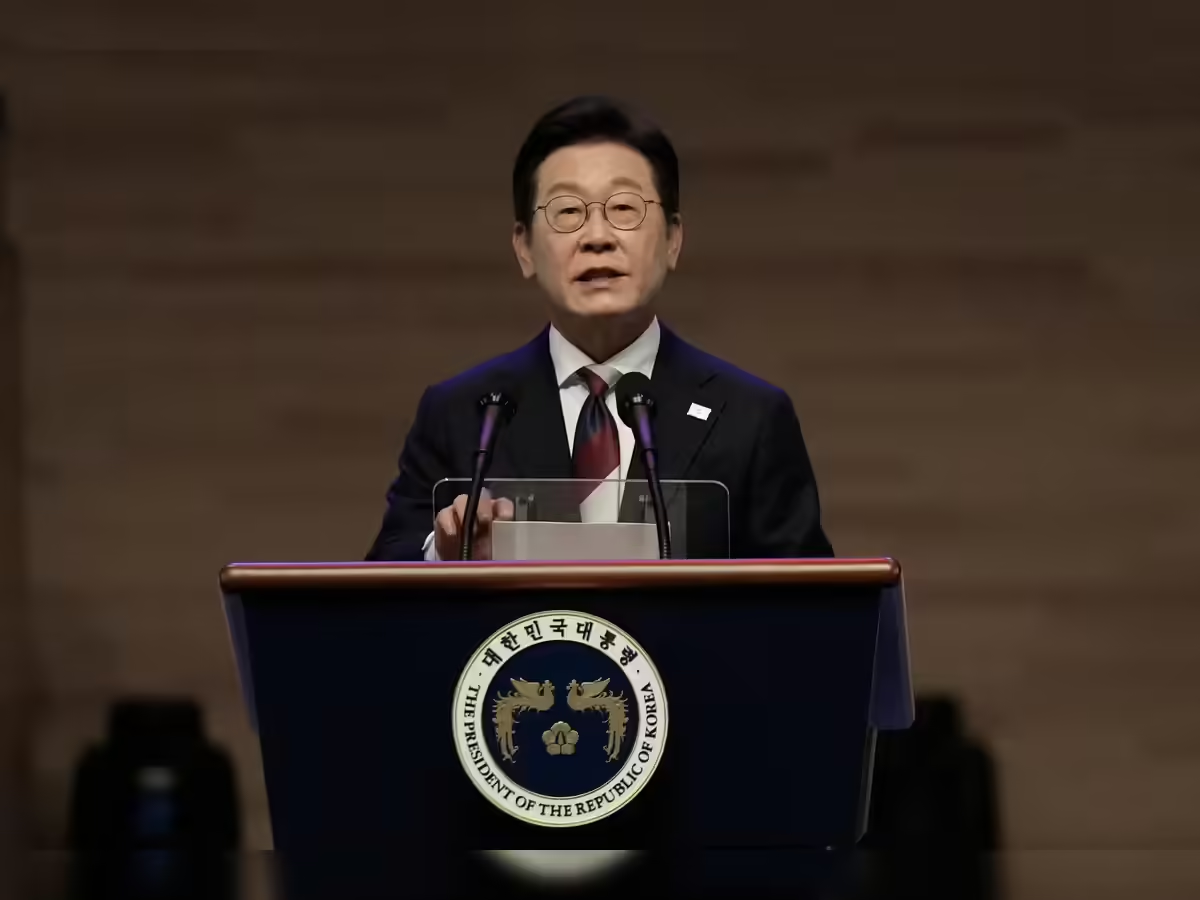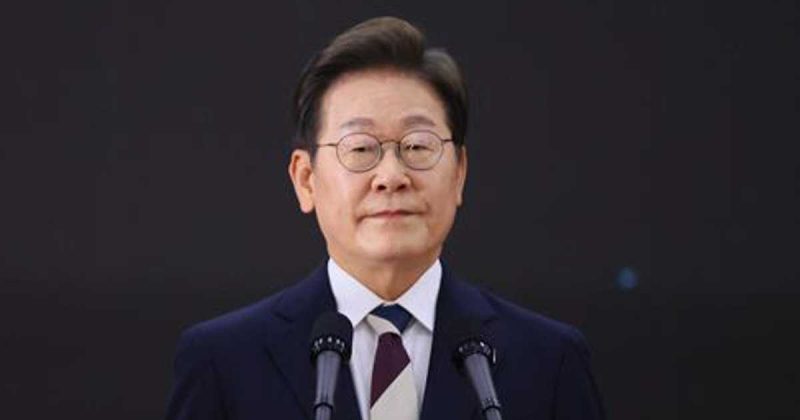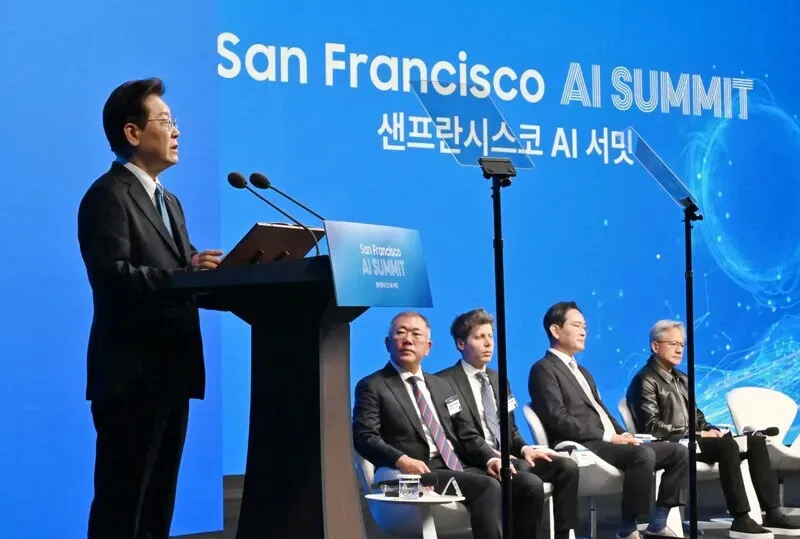
President Lee Jae Myung of South Korea speaks at an AI summit in San Francisco, California, on July 24, 2026. (Yonhap)
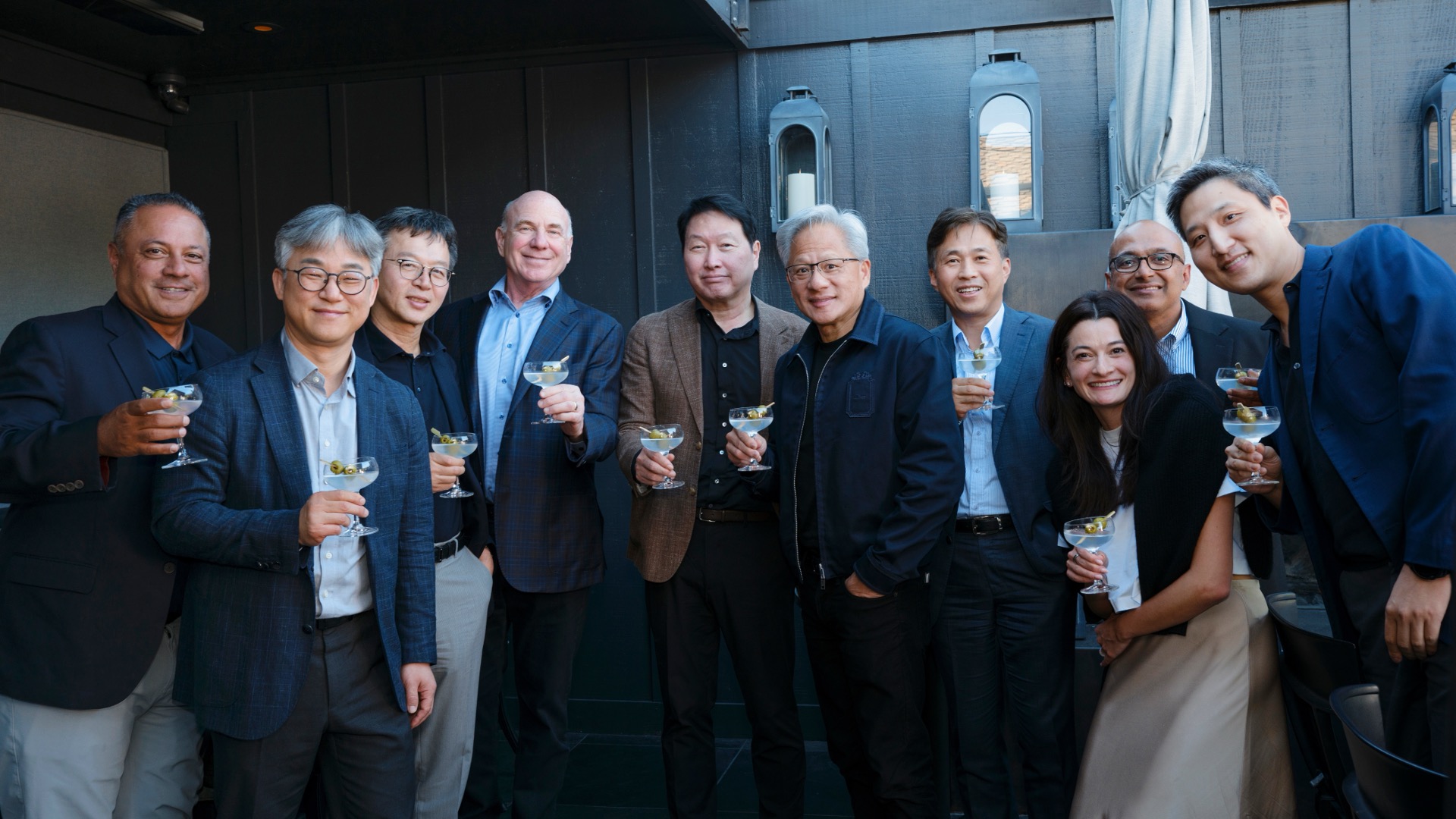
President Lee Jae Myung on Friday announced the San Francisco AI Declaration, outlining Korea's vision for the artificial intelligence era. His plan is to develop the country into a global hub for AI production and application by integrating semiconductors, AI data centers and physical AI. A major policy goal of the Lee administration since its launch has been joining the ranks of the world's top three AI powerhouses, and following its announcement last month of three massive AI megaprojects, Seoul has apparently conveyed its intent to accelerate this initiative.At the summit were major Korean executives like Samsung Electronics Chairman Lee Jae-yong, SK Group Chairman Chey Tae-won, Hyundai Motor Group Chairman Chung Eui-sun and Naver Chairman Lee Hae-jin, joined by those from the US such as Nvidia CEO Jensen Huang, Broadcom CEO Hock Tan, OpenAI CEO Sam Altman and Anthropic CEO Dario Amodei. Their companies agreed on comprehensive collaboration worth a combined US$950 billion in sectors like memory, foundry, AI data centers and autonomous driving.It is rare to see the top executives of the leading companies in the global AI industry convene all in one place, especially at an event like this one that was put on by a single country. Their attendance is a testament to Korea’s rising stature in the AI space. Indeed, Korea produces 80% of the world’s high-bandwidth memory, a key element in AI accelerators, and it ranks behind only the US and China in the number of notable AI models it has developed. The fact that its generative AI diffusion rate (37%) is higher than even that in the US, Germany, Japan and elsewhere goes to show that it has some of the highest demand for AI as well.But a number of challenges need to be addressed in order to make Korea a top three AI powerhouse.First, Korea needs to secure AI sovereignty by successfully developing its own homegrown AI model and core technologies for AI chips. It must also effectively mediate conflict between stakeholders in order to secure the power and water resources necessary for AI factories and data centers.Furthermore, the government must not overlook the various social and economic consequences of increasing AI adoption. Already, dwindling youth job numbers are bearing out concerns that AI could hurt the job market. There are also concerns that polarization could become even worse as the fruits of AI’s development are shared only among a select few corporations and economic classes. The administration needs to understand that failure to consider these issues and come up with action plans could invite fierce backlash to the government’s plans to “upgrade” Korea with AI. Please direct questions or comments to [english@hani.co.kr]