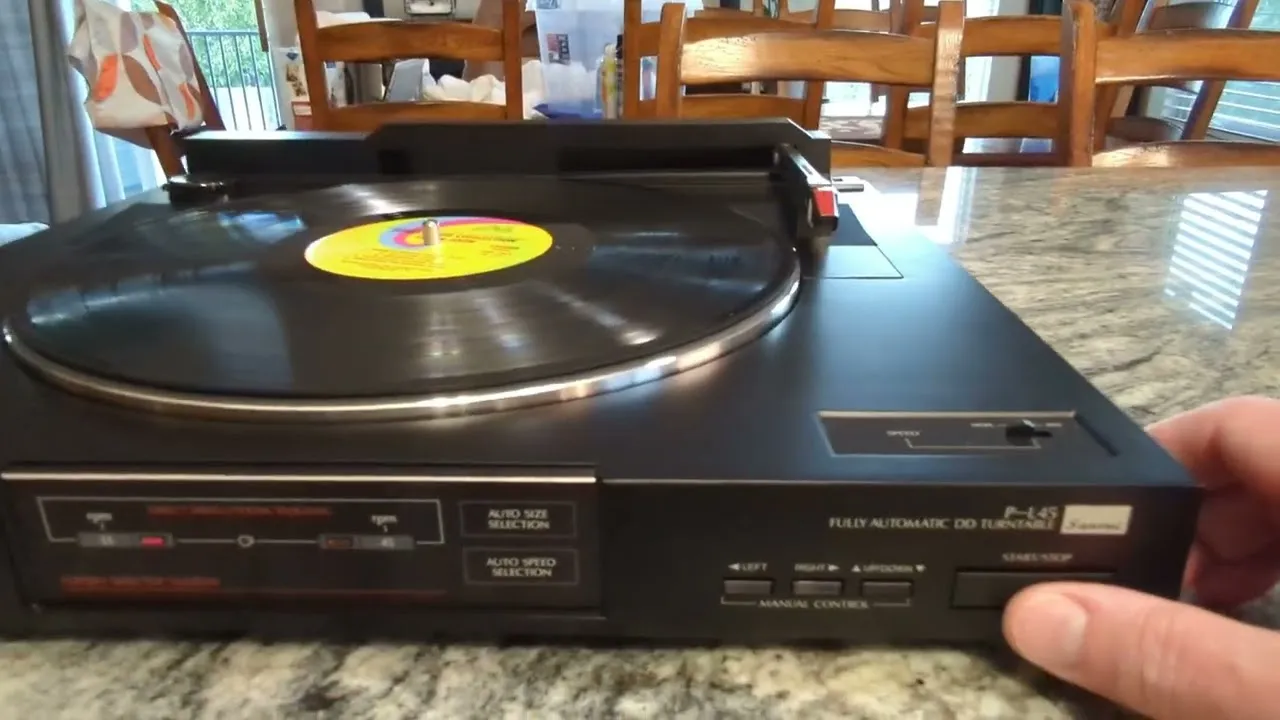
When [Marsupial] picked up a vintage Sansusi P-L45 turntable, he figured it would be an easy fix: a few capacitors, a belt or two, and maybe a new cartridge, the usual. But it turned out the electronics were fried, which set the stage for an upgrade that turned it into what may be the world’s only ESP32-driven, Home Assistant integrated, linear tracking turntable.
That last bit, the linear tracking, is why the turntable originally had a microprocessor in the first place: rather than an arm that pivots along the groove naturally, fancy turntables towards the end of the golden era of vinyl slid the needle along a linear track at a variable speed to follow the spiral groove on the record. You can see that in action in the demo video below, though it’s of a working version owned by [BFinks].
The fancy linear mechanism required electronic control to match the speed to the RPM, and in the example of Sansusi’s P-L45, that was provided by an NEC microcontroller on a daughter-board labelled “F4992 CPU”. CPU is a grandiose title, perhaps, but that’s irrelevant since the chip on the board was deader than disco.
That meant [Marsupial] had some reverse engineering to do — figuring out exactly what that chip did to drive this board, in order to replicate its behavior on an ESP32-S3. Luckily the golden era of vinyl correlated with the golden era of service manuals, and the manuals are still available, so [Marsupial] had a big leg up on that. After making the turntable work like stock, what else to do with the extra capability of the ESP32 than plug it into HA and make it really automatic?