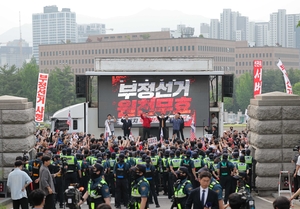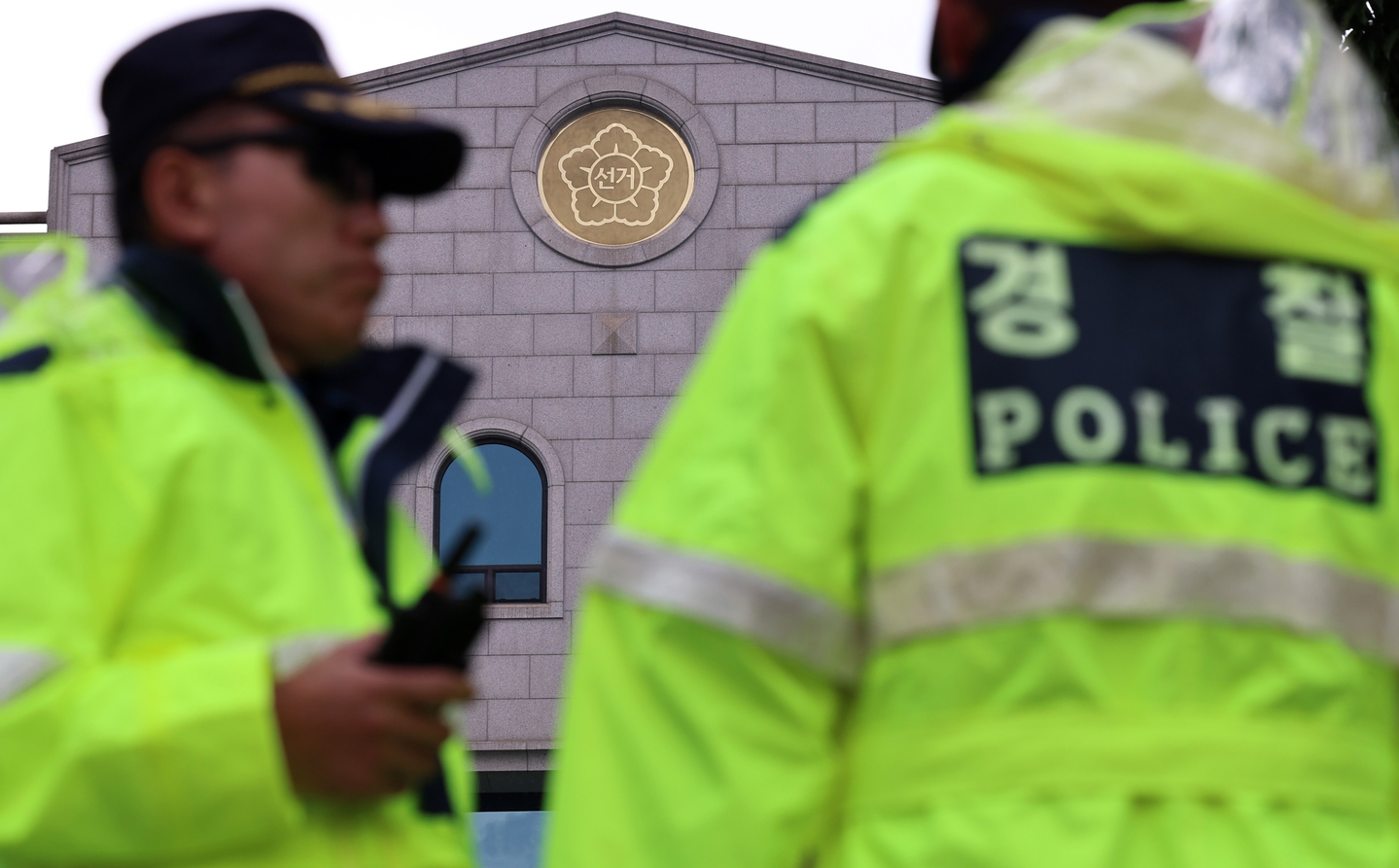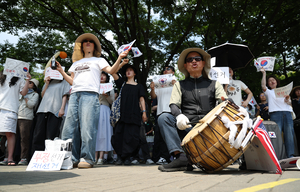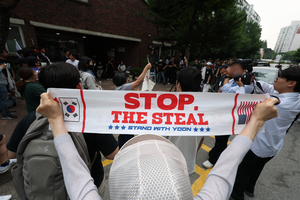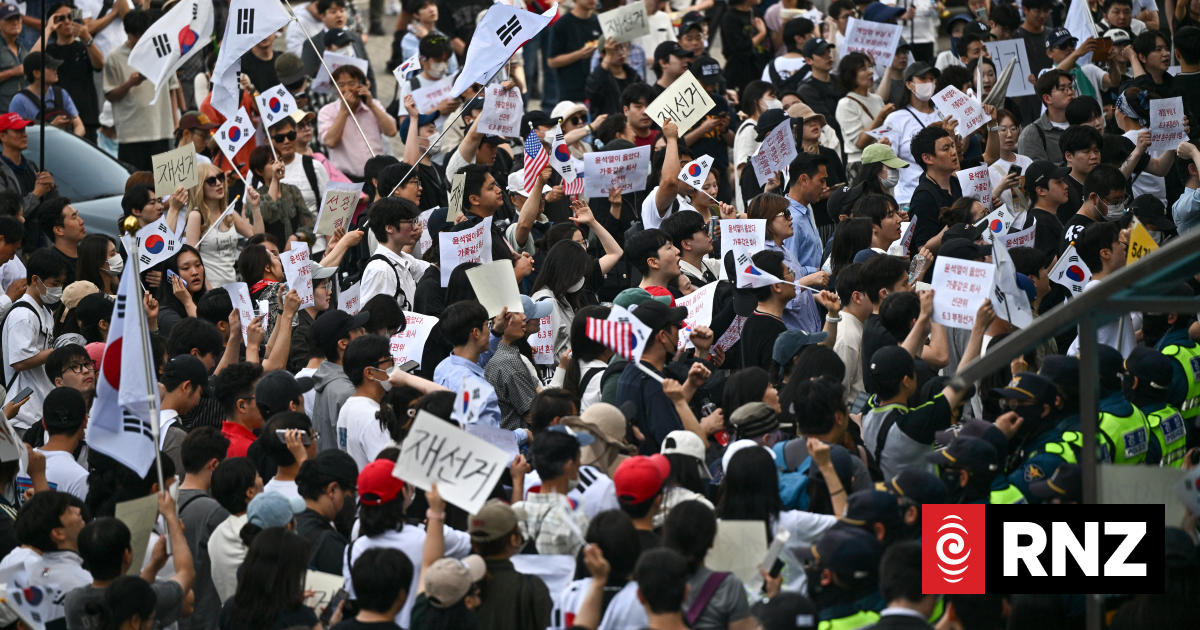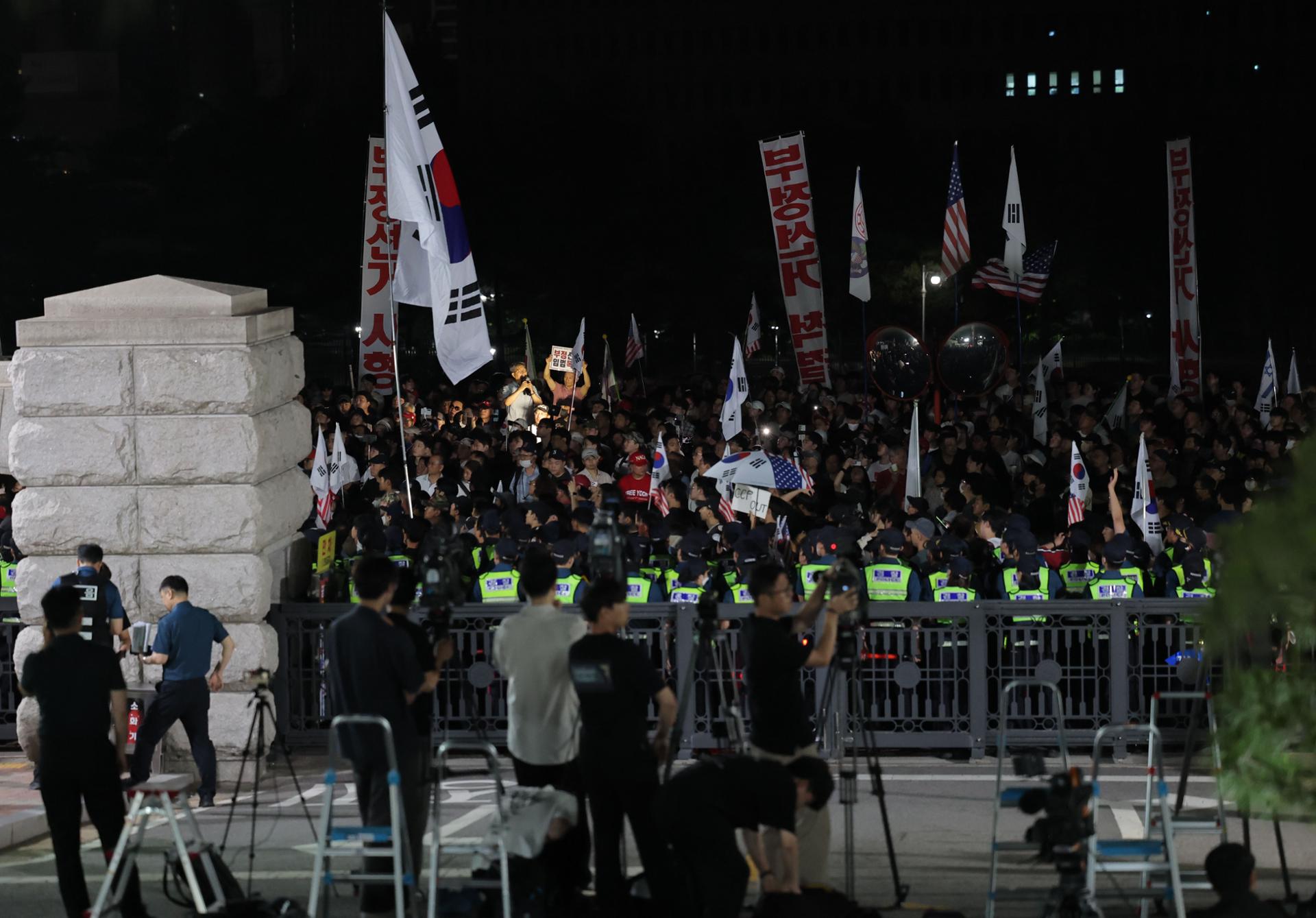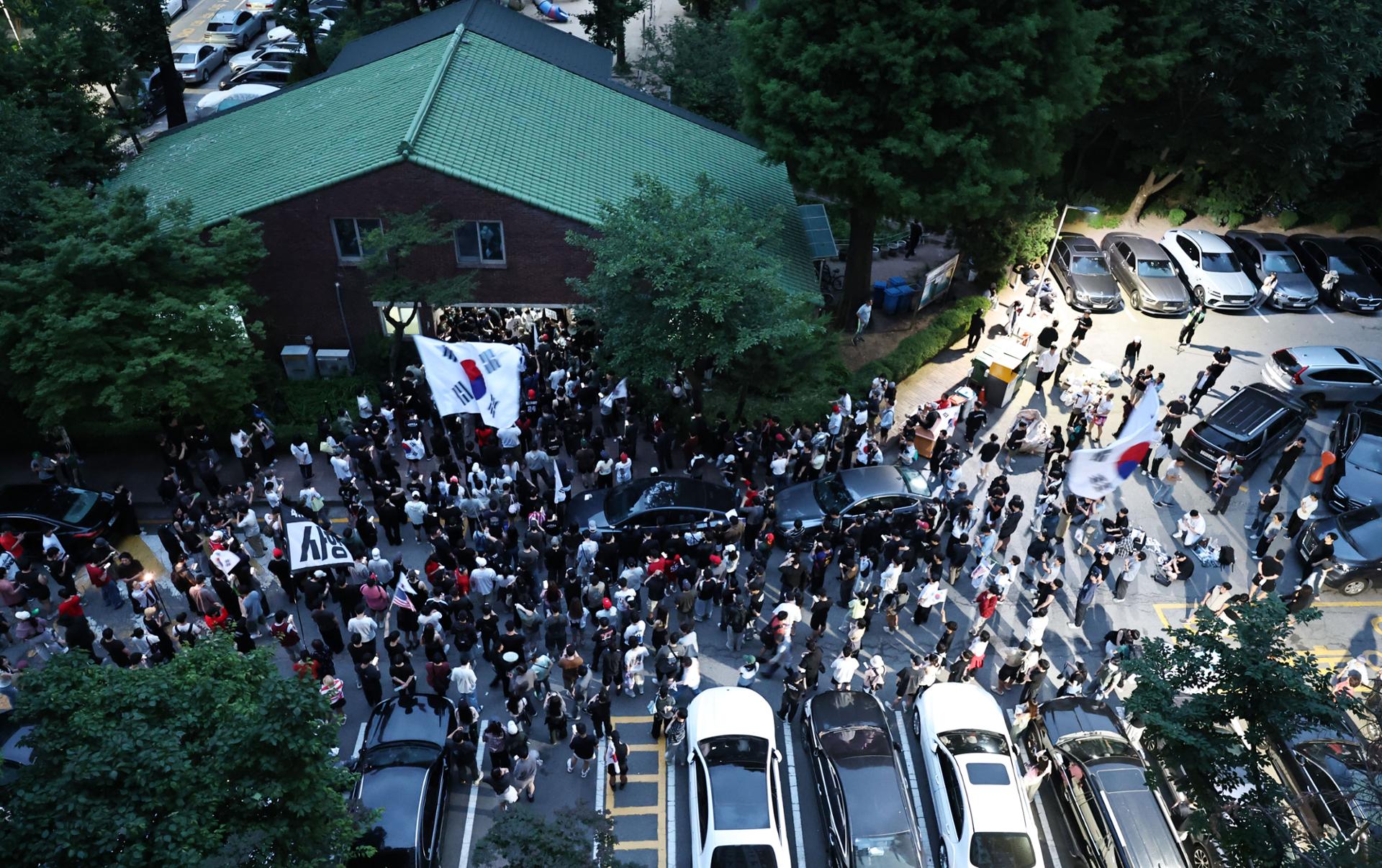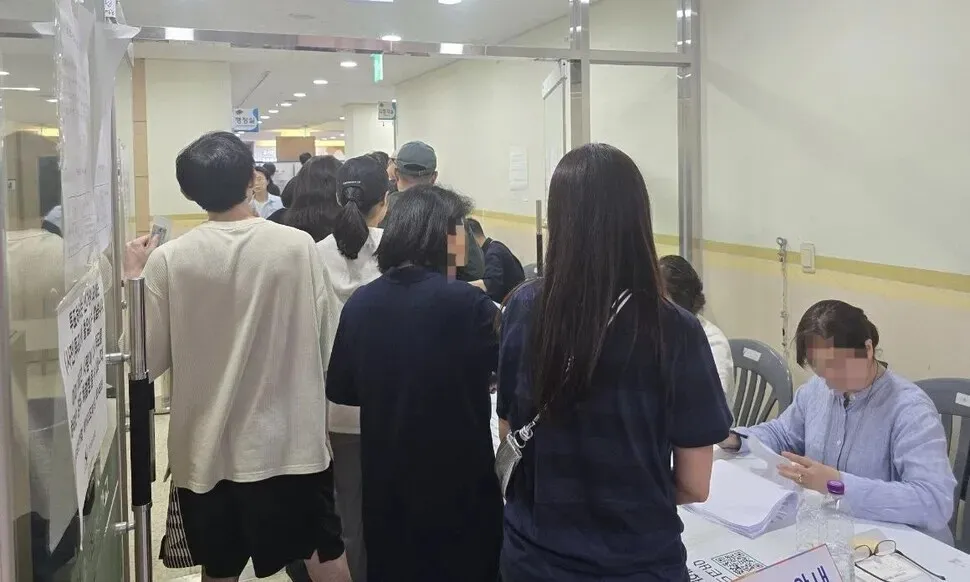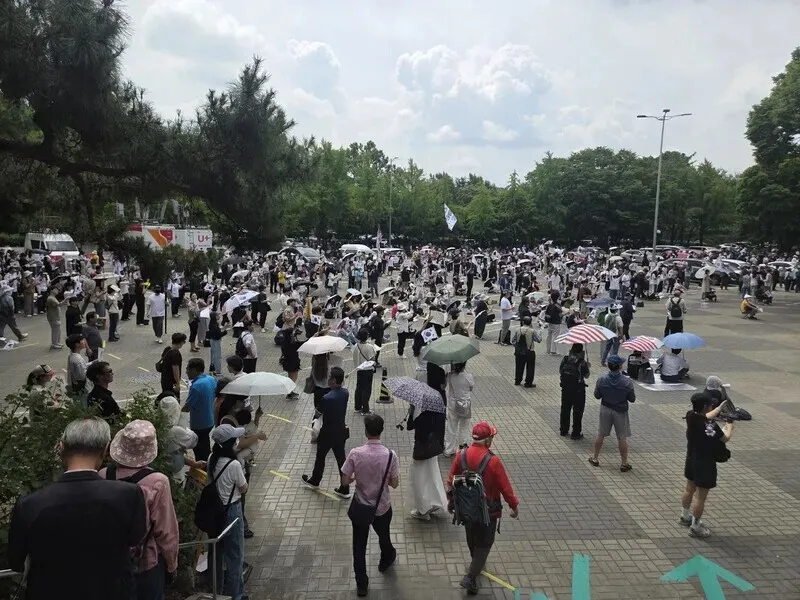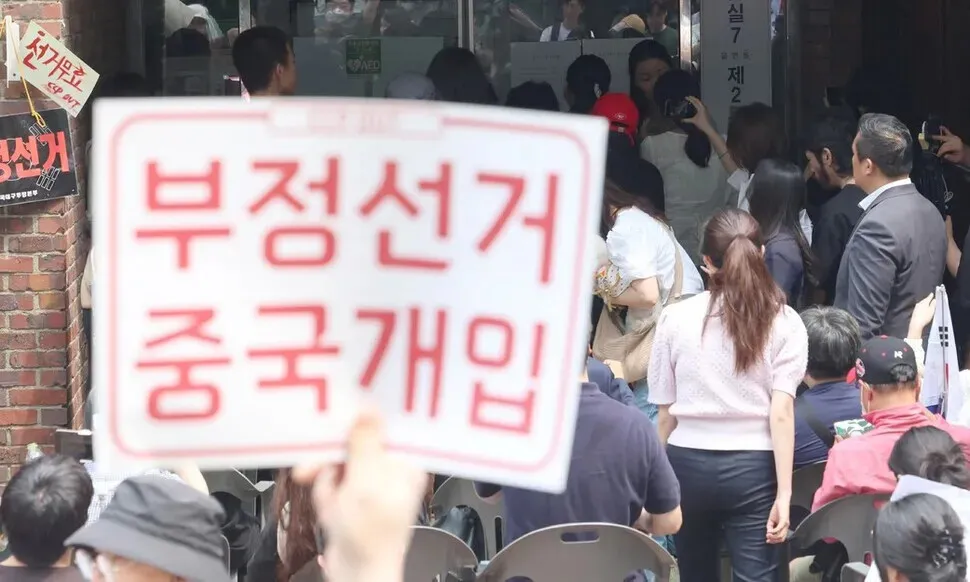
A person holds up a sign reading “Rigged Election, Chinese Interference” as a crowd gathers around a voting site in Seoul’s Jamsil-7 neighborhood on the morning of June 4, 2026, after voting in local elections the day before had been extended to 10 pm after a ballot shortage. (Choi Hyeon-su/Hankyoreh)
“We must protect the ballot boxes inside at all costs.”Jeon Han-gil, a former history lecturer who peddles debunked theories about electoral fraud on his YouTube channel, held the microphone in front of a senior citizen center at an apartment complex in the Jamsil neighborhood of Seoul’s Songpa District at 7 pm on Thursday.Hundreds of people packed inside the complex welcomed Jeon while waving placards accusing China of election-rigging.The crowd had gathered around a polling station in the Jamsil-7 neighborhood. Protesters had kept officials from removing two boxes of ballots from Wednesday’s local elections that were being stored there. Roughly 2,000 ballots remained uncounted in the boxes, preventing the completion of the vote tally and leaving the Seoul mayoral race and other races without final results.The Jamsil polling station, where voting continued until 10 pm on election day because of a shortage of ballot sheets, became ground zero for those convinced that Korea’s elections are being rigged. Protesters who attended a rally that same evening in front of the National Election Commission (NEC) in Gwacheon, Gyeonggi Province, congregated at the Jamsil polling station to block the removal of the ballot boxes, which they regard as evidence of fraud.Hwang Kyo-ahn, the head of the Freedom & Innovation party, and members of the self-styled “Korea-US Election Fraud Joint Investigation Team” who entered Korea along with Morse Tan, a former dean of Liberty University’s Law School, whipped up the crowd with claims about stolen elections.Ironically, it was the NEC’s own concerns about rumors of vote tampering that triggered the situation now supercharging election fraud conspiracy theories. During the 2018 local elections, the NEC printed paper ballots equivalent to about 70% of eligible voters, but for Wednesday’s election, that figure was reduced to 50%.This reflected the decrease in voters in local elections and the increase in early voters, but also because the NEC felt a considerable amount of pressure on the preservation and disposal of residual paper ballots after facing allegations of election fraud after every election.