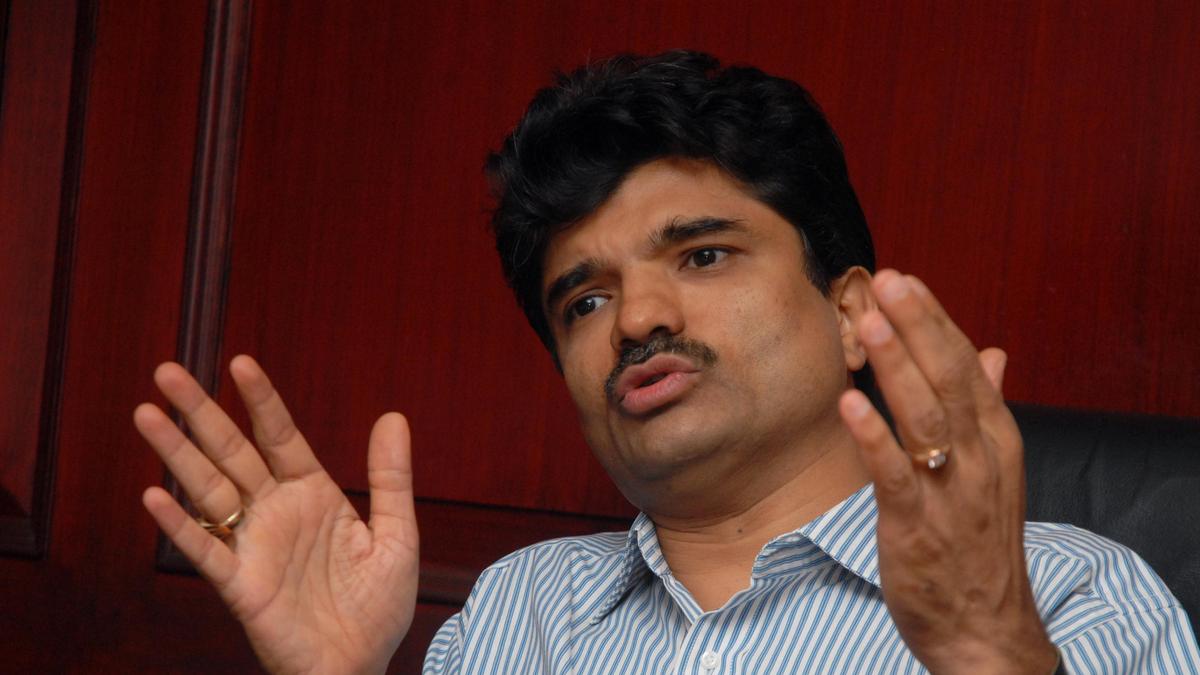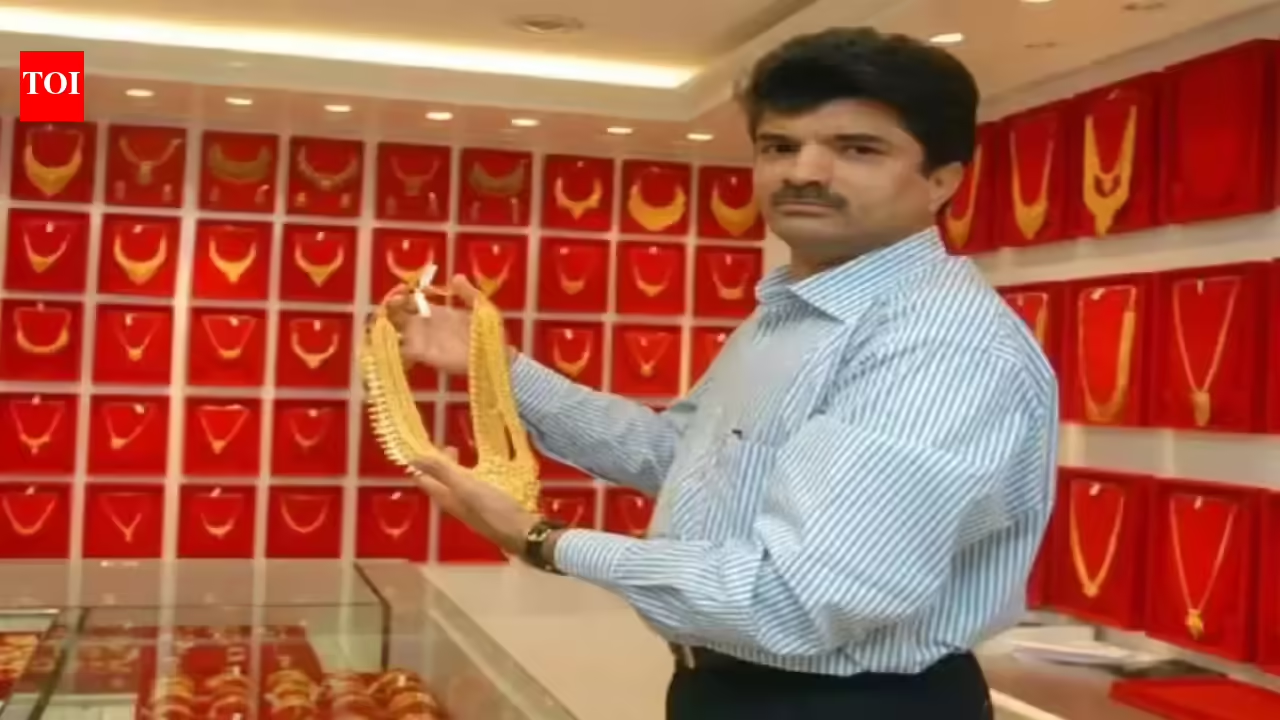
A company with a market capitalisation of just over Rs 2,900 crore now finds itself at the centre of what could be one of the biggest alleged misrepresentation cases in the history of the Indian stock market.Rajesh Exports Ltd (REL), the gold exporter named after its chairman Rajesh Mehta, has been accused by market regulator Sebi of orchestrating an elaborate financial fraud involving alleged inflation of revenues worth Rs 15.15 lakh crore over the years, personal gold trades allegedly passed off as corporate sales, and gold mine investments worth Rs 1,035 crore.In its findings, Sebi alleged accounting irregularities, diversion of company funds into personal accounts and a pattern of conduct designed to mislead investors. The regulator also flagged lapses on the part of the company's auditors and said both the company and its auditors were not fully cooperative during the investigation."The acts of REL constitute a deliberate device, scheme and artifice to mislead and defraud investors dealing in the shares of REL by portraying an inflated and misleading picture of its operational scale, revenue and financial health," Sebi said in its report.REL has denied the allegations. In a press release issued on Thursday, the company maintained that the revenues reported in its financial statements were accurate and argued that the regulator's conclusions stemmed from confusion between revenue and EBITDA figures at Swiss refiner Valcambi SA, an indirect subsidiary. Now, let’s decode.The numbers that raised questionsThe case has drawn particular attention because of the striking mismatch between the company's reported revenues and profits.In FY25, REL reported consolidated revenue of Rs 4.23 lakh crore, while profit after tax stood at just Rs 95 crore, implying a net margin of barely 0.02%. In FY24, the company reported revenue of Rs 2.8 lakh crore and profit of Rs 336 crore.According to experts who reviewed Sebi's report and the company's annual reports, the numbers appeared difficult to reconcile. They argued that the business seemed to be operating at margins that were not thin but structurally negligible.How the investigation beganThe matter originated from a shareholder complaint received in March 2024 that raised concerns over substantial trade receivables reflected in the company's accounts. Following a preliminary review, Sebi launched a detailed investigation covering the period from April 2020 to March 2024 and appointed BDO India Services as the forensic auditor.According to Sebi, between 97% and 99% of REL's consolidated revenue was attributed to overseas subsidiaries, primarily Valcambi. However, Valcambi's own accounts, audited by KPMG SA, showed only processing-fee income amounting to approximately Rs 3,027 crore over five years.The regulator said Valcambi operated as a gold refiner on behalf of clients and did not take ownership of the gold it processed. Consequently, it did not recognise the value of the gold as revenue in its own books.Yet Global Gold Refineries AG (GGR), Valcambi's parent company with no independent operating business, reportedly recorded gross revenues running into hundreds of crores by including the value of gold that belonged to customers, according to Sebi.Rajesh Exports, which owns GGR through a Singapore subsidiary, subsequently incorporated those unaudited figures into its own financial statements, significantly inflating reported revenues, the regulator alleged.Executives claim limited knowledgeOne of the more striking aspects of the investigation was the testimony of senior management regarding the company's overseas operations.According to Sebi's order, several executives stated that overseas activities were handled almost exclusively by Chairman Rajesh Mehta."Valcambi SA does not have any gold mine on its own," managing director Suresh Gowda was quoted as saying. "It refines the raw gold purchased by it from various entities, whose names I do not recollect, as these things are exclusively handled by Rajesh Mehta, chairman of REL. I have never interacted nor involved with any subsidiary/step-down subsidiary of REL, as these were exclusively taken care of by Rajesh Mehta."Alleged personal trades booked as company salesThe investigation also examined transactions involving Affluence Shares and Stocks.According to Sebi, REL recorded sales worth Rs 11,487 crore between FY22 and FY24 to the brokerage firm, which accounted for as much as 66% of the company's standalone revenue during the period.However, Affluence reportedly told the regulator that it had not conducted any business with REL.After tracing the transactions, investigators concluded that the trades were actually personal gold derivative transactions undertaken by promoter Rajesh Mehta through his own brokerage account and subsequently recorded in the company's books as corporate sales.Sebi further alleged that corporate funds were used inappropriately. Bank records examined by the regulator showed that REL transferred Rs 338.90 crore directly into Mehta's personal accounts between April 2020 and September 2025.Forensic audit faces obstaclesThe forensic audit itself encountered significant hurdles, according to Sebi. The regulator said BDO India Services was denied access to the company's ERP systems and was not provided a complete journal dump, making independent verification of transactions difficult.The company also declined to share subsidiary-level records, citing Swiss data protection laws. As a result, investigators were largely restricted to reviewing financial statements prepared by management rather than examining underlying supporting evidence.Sebi said repeated non-cooperation from both the company and its promoter became a key concern during the investigation.According to the regulator, Rajesh Exports failed to provide access to crucial accounting systems, did not furnish important financial records and withheld complete documentation sought during the probe.These shortcomings prevented the forensic auditor from independently verifying a substantial portion of the company's transactions. Sebi noted that only a limited number of sampled transactions could be fully substantiated through supporting documents.With allegations spanning inflated revenues, questionable transactions, fund transfers and alleged non-cooperation during the investigation, Sebi's interim findings have placed Rajesh Exports under intense regulatory scrutiny. The company, however, continues to reject the allegations and insists that its financial reporting remains accurate.REL has disputed this conclusion"The core observation in the order is about the misreporting of the revenues. This has emerged primarily due to confusion because Sebi has considered the EBITDA of Valcambi instead of revenue; hence, it has stated that there is a difference of about 97% in the revenue," the company said."There is no reason for any listed entity to inflate revenue and maintain the earnings; this will only reduce the margins of the company, which would be adverse to the company," it added.(Disclaimer: Recommendations, suggestions, views and opinions given by the experts are their own. These do not represent the views of The Economic Times)
Explained: Inside Sebi's Rs 15.15 lakh crore revenue inflation allegations against Rajesh Exports
Rajesh Exports has come under intense scrutiny after Sebi accused the company and its promoter of inflating revenues, misclassifying personal transactions as corporate sales and diverting company funds. The regulator's interim findings have raised serious governance concerns, though the company has strongly denied the allegations and defended its financial reporting.
1,049 words~5 min read