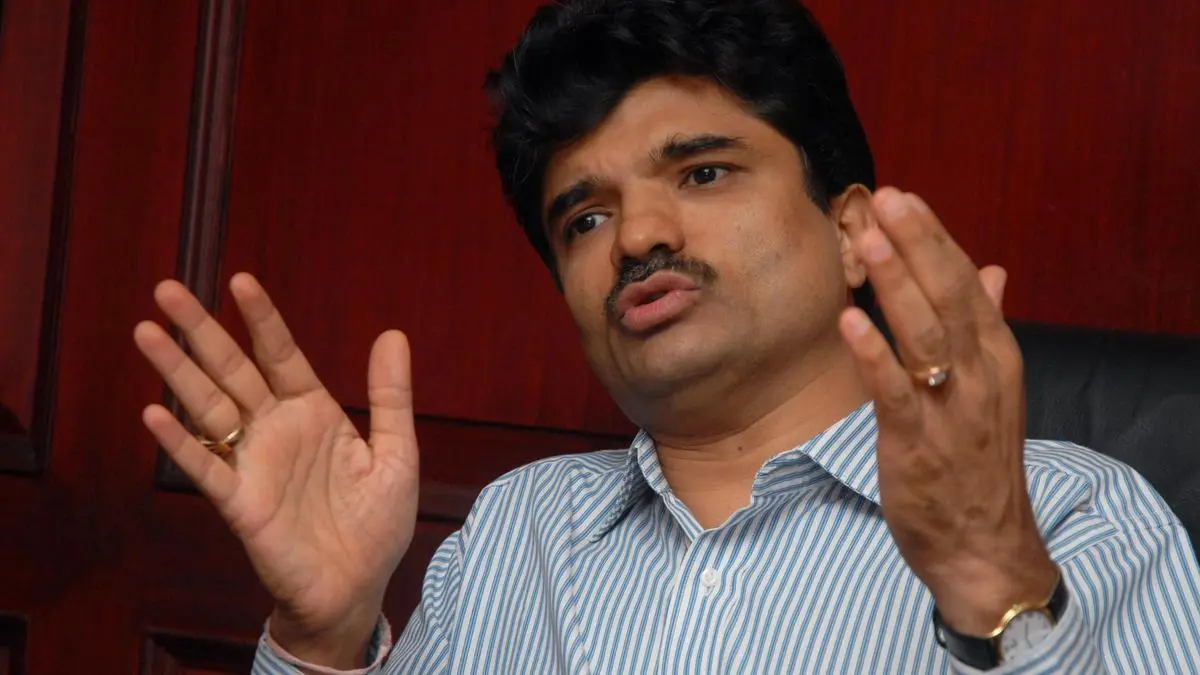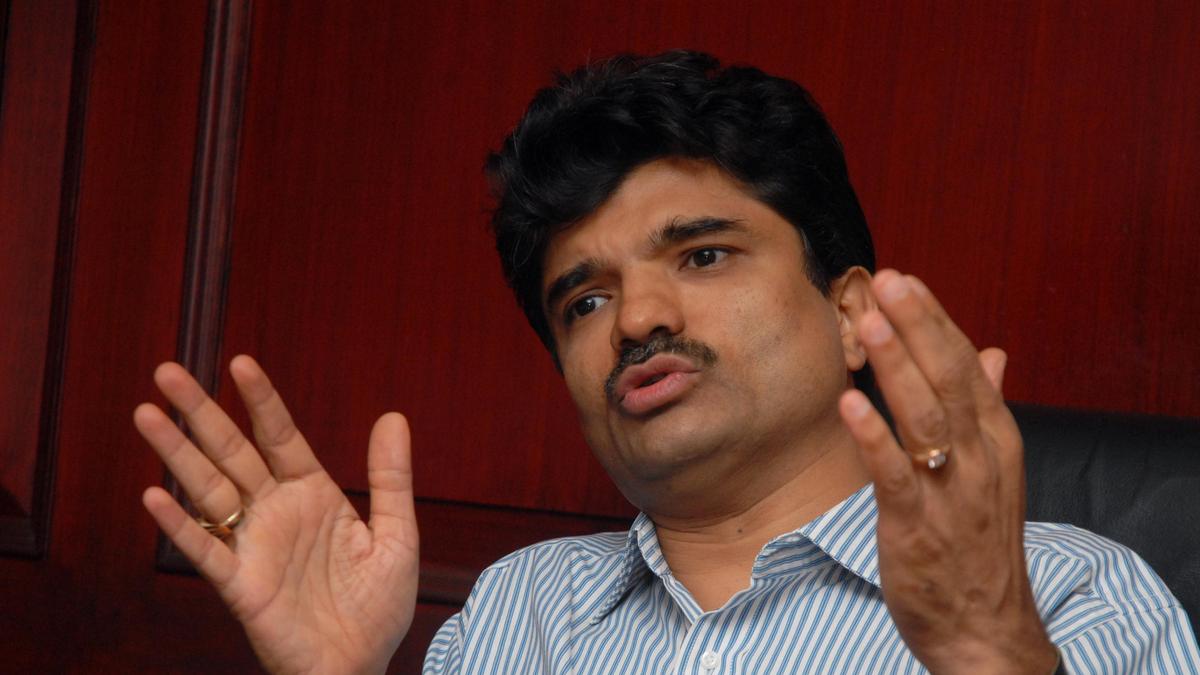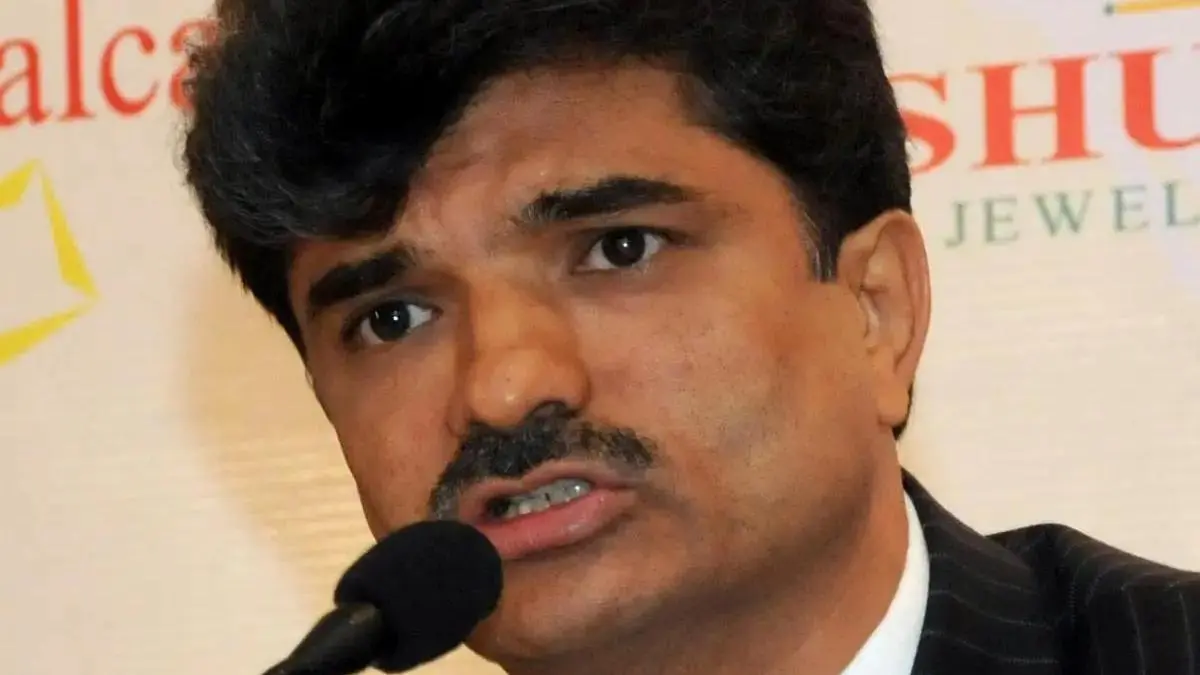
Mumbai: It is India's fourth biggest company by revenue, but the managing director of precious metals trader Rajesh Exports (REL) apparently doesn't know how and from where it gets the biggest chunk of the revenue, show the findings of a regulatory investigation.In its investigation report, the Securities and Exchange Board of India observed allegedly unscrupulous activities by REL's promoters, such as accounting irregularities and siphoning off of company funds into personal accounts, and also pointed out lapses by its auditors. The regulator said the company and its auditors were non-cooperative."The acts of REL constitute a deliberate device, scheme and artifice to mislead and defraud investors dealing in the shares of REL by portraying an inflated and misleading picture of its operational scale, revenue and financial health," Sebi observed in its report.The company, eponymously named after its chairman Rajesh Mehta, is accused of committing an elaborate financial fraud that includes dressing-up of revenues of ₹15.15 lakh crore over the years, personal gold trades covered up as corporate sales and phoney gold mine investments of ₹1,035 crore, according to the interim report.REL denied the charges of misdeeds. In a press release Thursday, the company said the revenues stated in its financials were correct and that the confusion arose because of a mix-up between Ebitda and revenue numbers at Swiss refiner Valcambi SA, an indirect subsidiary.Sebi has not made any adverse observation with regard to earnings, the company said, claiming that the regulator has only observed suspicion with regard to revenues which was primarily because of confusion over the Valcambi numbers.Numbers don't add upIn fiscal 2025, REL reported consolidated revenue of ₹4.23 lakh crore against a profit after tax of just ₹95 crore, translating into a net margin of barely 0.02%. The year before, on ₹2.8 lakh crore revenue, profit was ₹336 crore.Experts who have studied the Sebi report and the company's annual reports say the numbers did not add up. The business appeared to be operating at margins that were not merely thin but structurally negligible, they said."It looks like a case of pass-through accounting. There is no value creation. It was 'flow of gold' being booked as revenue," said a leading auditor on the condition of anonymity.Sebi, which began the investigations in March 2024 following a shareholder complaint about suspected accounting malpractices, said it found that about 97-99% of REL's consolidated revenues were attributed to its overseas subsidiaries, principally Valcambi. But Valcambi's own accounts, audited by KPMG SA, recorded only processing fees that were about ₹3,027 crore across five years.Valcambi refined gold on behalf of clients and never took ownership of the precious metal or recognised the value of gold as revenue in its books. Yet, Global Gold Refineries AG (GGR), the parent of Valcambi that had no independent operating business, recorded gross revenues running into hundreds of crores by including the gross value of gold that actually belonged to others, according to the Sebi report.Rajesh Exports, which owns GGR through a Singapore subsidiary, used those unaudited figures in its financial statements, significantly bumping up the company's revenue, it said.In its press release, REL said: "The core observation in the order is with regard to the misreporting of the revenues. This has emerged primarily due to confusion because Sebi has considered the Ebitda of Valcambi instead of revenue hence it has stated that there is a difference of about 97% in the revenue.""There is no reason for any listed entity to inflate revenue and maintain the earnings, this will only reduce the margins of the company, which would be adverse to the company," it said.Senior management in the darkThe senior management of REL told regulators that most of them were in the dark about the company's overseas operations and only the promoter, Rajesh Mehta, dealt with those activities."Valcambi SA does not have any gold mine on its own," managing director Suresh Gowda was quoted in the Sebi order as saying. "It refines the raw gold purchased by it from various entities, whose names I do not recollect, as these things are exclusively handled by Rajesh Mehta, chairman of REL. I have never interacted nor involved with any subsidiary/step-down subsidiary of REL, as these were exclusively taken care of by Rajesh Mehta," he told the investigators, as per the order.According to the report, REL booked ₹11,487 crore in sales between 2021-22 and 2023-24 to Affluence Shares and Stocks, a broker that made up to 66% of the company's standalone revenue for that period. But Affluence, in formal depositions to the regulator, said it had not done any business with REL.Following the transaction trail, the investigators found out that the transactions were personal gold derivative trades executed by promoter Mehta using his own brokerage account and then recorded in the company's books as corporate sales, the order said.The investigators also found that Mehta used corporate funds. As per the Sebi observations, bank records show REL transferred ₹338.90 crore directly into Mehta's personal accounts between April 2020 and September 2025.Unlike in the case of Nirav Modi or Gitanjali Gems, who are accused of bank fraud, Rajesh Exports doesn't appear to have borrowed big from banks or through sale of bonds, according to regulatory filings.The company's market cap was just over ₹3,000 crore, as per Thursday's closing share price. LIC (10.8%) and Bridge India Fund (8.46%) are its major institutional shareholders."It is striking that, even at a peak market capitalisation of ₹25,000 crore, the company did not hold any analyst calls, a basic expectation for a listed company of that scale," said Shriram Subramanian, founder and managing director of InGovern Research Services, a corporate governance advisory firm.The regulator in 2024 hired BDO India Services to investigate. But the forensic audit faced problems at almost every stage of the investigation. It was denied access to ERP systems and was not provided a complete journal dump, preventing independent verification of transactions recorded in the books, according to the regulatory report.And the company declined to share subsidiary-level records with the investigator, citing Swiss data protection laws, limiting auditors largely to reviewing financial statements prepared by the management itself rather than underlying evidence, it said.What's also come under the scanner was the conduct of statutory auditors for the last few years: CA PV Ramana Reddy, the proprietor at PV Ramana Reddy & Co, and CA PL Venkatadri, partner at BSD & Co.The company's FY24 and FY25 annual reports, filed with the stock exchanges, carry an unqualified opinion from BSD & Co, which concluded that the financial statements presented a "true and fair view" in line with Indian Accounting Standards.The company's FY24 Directors' Report noted that the statutory and secretarial auditors had made no qualifications, reservations or adverse remarks.The Sebi report said for over five months, the auditors sat on the regulator's request for missing documents and statements.Emails sent to both audit firms did not elicit any response.REL closed 5% lower at ₹103.92 Thursday on the NSE. The shares are down from their peak of ₹1,028.40 on February 6, 2023.
The curious case of Rajesh Exports: Massive revenues, meagre profits
India's fourth-largest company, Rajesh Exports, faces a Sebi probe for alleged financial fraud. Investigations point to accounting irregularities and siphoning of funds. The company's top management claims ignorance of overseas operations, attributing them to promoter Rajesh Mehta. Auditors also faced scrutiny for their conduct during the investigation.
1,160 words~5 min read