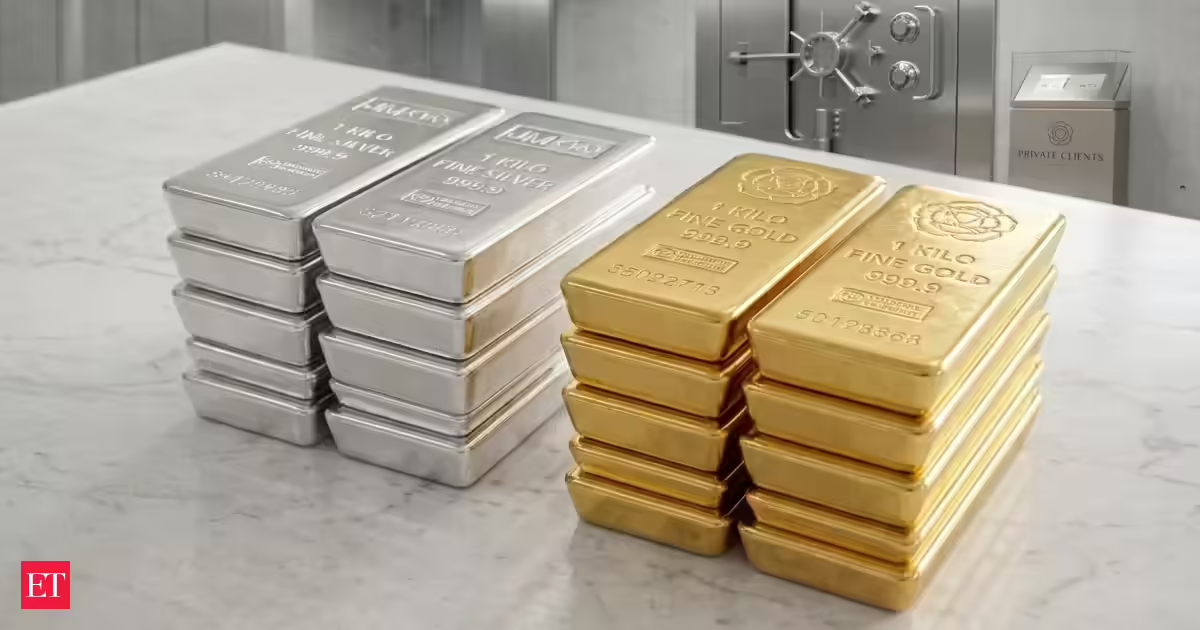
Why are gold and silver prices down today, and will precious metals continue to drop or rise again? This question is drawing attention as precious metals recorded losses during the week. Gold prices fell on Friday and were set for a weekly decline. Silver, platinum, and palladium also moved lower. Investors are closely watching signals from the U.S. Federal Reserve, inflation data, and developments in the Middle East. Market participants are also waiting for the U.S. nonfarm payrolls report, which could influence future interest-rate decisions. Analysts believe these factors will play a major role in determining the next direction for precious metals prices.Gold prices slipped on Friday as investors assessed geopolitical developments and concerns surrounding U.S. monetary policy. According to Reuters, spot gold fell 0.6% to $4,445.51 per ounce as of 0548 GMT. The metal has declined around 2% during the week. U.S. gold futures for August delivery also dropped 0.7% to $4,471.70. One of the major reasons behind the decline is growing concern that U.S. interest rates could remain higher for longer. Investors are becoming cautious because higher rates generally reduce the appeal of gold, which does not generate interest income.At the same time, uncertainty in the Middle East has influenced market sentiment. The Iran-backed Hezbollah group rejected a new ceasefire proposal in Lebanon. Israel also indicated that it would not withdraw its troops from Lebanon. These developments weakened expectations of progress in broader regional peace efforts. Analysts noted that reduced optimism about resolving tensions involving Iran has contributed to pressure on gold prices.Market factors affecting precious metalsSeveral factors are currently influencing precious metals markets. Nicholas Frappell, Global Head of Institutional Markets at ABC Refinery, said pessimism surrounding the resolution of the Iran conflict has been negative for gold. He also noted that expectations for tighter interest-rate conditions are weighing on the metal. Federal Reserve officials have also contributed to market uncertainty.Kansas City Federal Reserve President Jeffrey Schmid said the central bank faces a choice between keeping interest rates steady and raising rates further to control inflation. Inflation has remained above the Federal Reserve's target level for an extended period.Meanwhile, San Francisco Federal Reserve President Mary Daly said future policy decisions would depend on economic performance. She stated that current monetary policy remains in a good position and that policymakers are prepared to respond as conditions change. Because gold is often viewed as a hedge against inflation, investors monitor inflation data closely. However, when interest rates rise, holding gold becomes less attractive compared to interest-bearing assets.Will precious metals continue to drop or rise again?The future direction of gold and silver prices remains uncertain. Market participants are currently pricing in the possibility of another Federal Reserve interest-rate increase before the end of the year. According to CME Group's FedWatch Tool, there is a 51% probability of a rate hike by December.If economic data continues to show strong growth and inflation remains elevated, the Federal Reserve could maintain a tighter policy stance. Such a scenario may continue to put pressure on gold and silver prices. However, precious metals could find support if economic growth slows, inflation eases, or geopolitical risks increase. Gold often attracts investors during periods of uncertainty because it is viewed as a store of value.The upcoming U.S. nonfarm payrolls report is expected to provide important clues about the health of the labor market. Strong employment figures could strengthen expectations for higher rates, while weaker numbers could reduce pressure on precious metals. Therefore, future price movements may depend largely on economic indicators and central-bank actions in the coming months.Analysts insights and market outlookAnalysts believe that investors are balancing several competing factors. On one side, inflation concerns and geopolitical uncertainty can support demand for gold and silver. On the other side, expectations for higher interest rates can reduce investor interest in these metals.Physical demand has also shown signs of weakness. In India, gold demand remained subdued during the week because buyers stayed away from the market amid volatile international prices. Consumers preferred to wait for greater price stability before making purchases.In China, premiums for gold eased, indicating softer buying interest. Since India and China are among the world's largest gold consumers, demand trends in these countries can influence global market sentiment. The market outlook remains closely tied to Federal Reserve policy, inflation trends, economic growth, and geopolitical developments.What should investors do now?Investors may need to remain cautious while monitoring key economic events. The upcoming U.S. jobs report could significantly influence market expectations regarding interest rates. Any change in Federal Reserve expectations could affect gold and silver prices.Investors should also keep an eye on inflation data and developments in the Middle East. Changes in these factors can create volatility in precious metals markets. Rather than reacting to short-term price swings, many market participants focus on long-term economic trends and portfolio diversification strategies. The coming weeks may provide greater clarity regarding the direction of interest rates and the broader outlook for precious metals.Other precious metals also declineThe weakness was not limited to gold. Spot silver fell 2% to $72.36 per ounce. Platinum declined 1% to $1,880.40 per ounce. Palladium dropped 1.7% to $1,298.49 per ounce. All major precious metals were on track to record weekly losses as investors responded to economic uncertainty and interest-rate concerns.FAQsQ1. Why are gold and silver prices falling this week?Gold and silver prices are falling because investors expect higher U.S. interest rates, inflation remains elevated, and uncertainty surrounding Middle East developments has influenced market sentiment and trading activity.Q2. Can gold and silver prices rise again in 2026?Gold and silver may rise if inflation slows, economic growth weakens, geopolitical risks increase, or the Federal Reserve adopts a less restrictive monetary policy stance in coming months.
Why are gold and silver prices down today, and will precious metals continue to drop or rise again? Analysts insights, market outlook and what should investors do now
Why are gold and silver prices down today, and will precious metals continue to drop or rise again? Gold and silver prices declined on Friday and were headed for weekly losses. Concerns over higher U.S. interest rates, uncertainty in the Middle East, and caution ahead of U.S. jobs data affected investor sentiment. Analysts say future price movements will depend on Federal Reserve decisions, inflation trends, economic data, and geopolitical developments.
946 words~4 min read