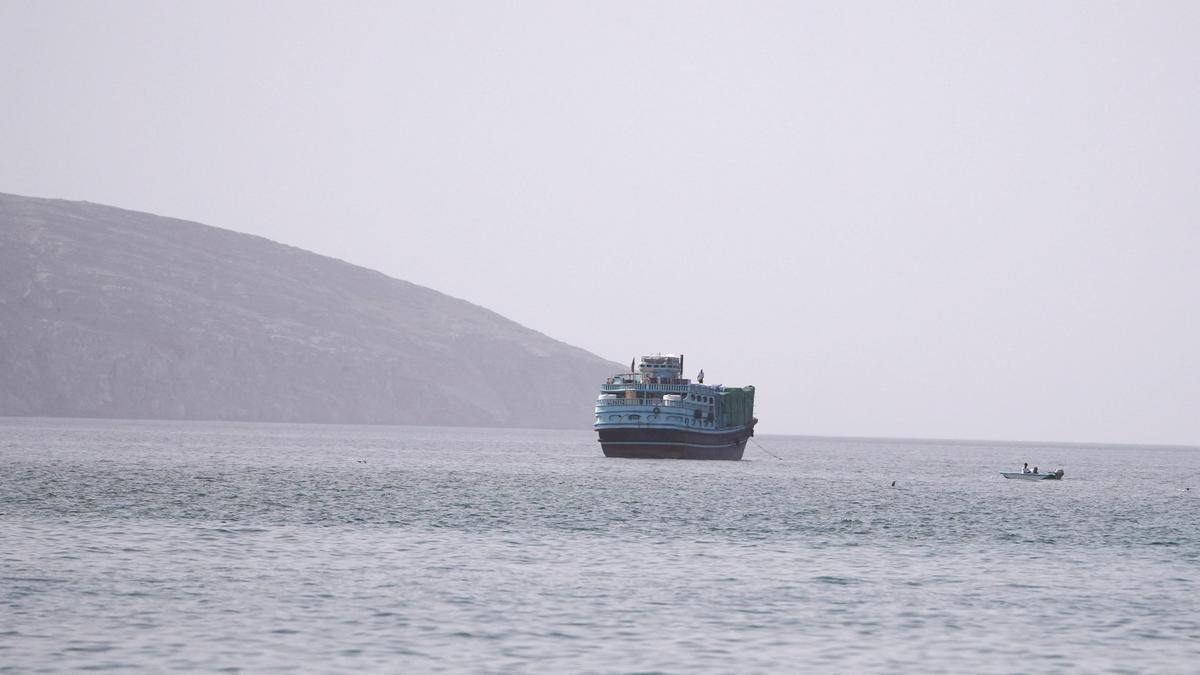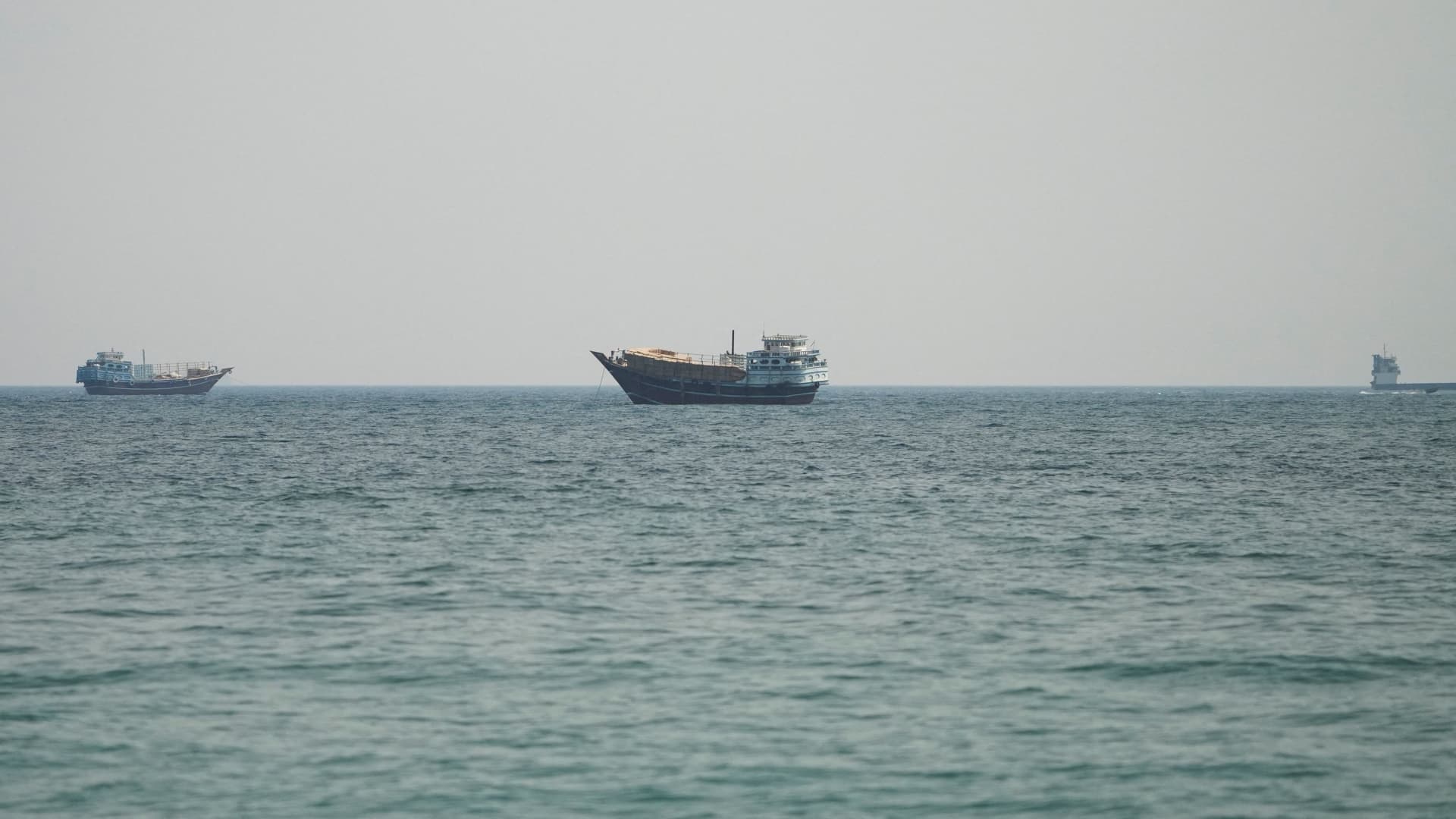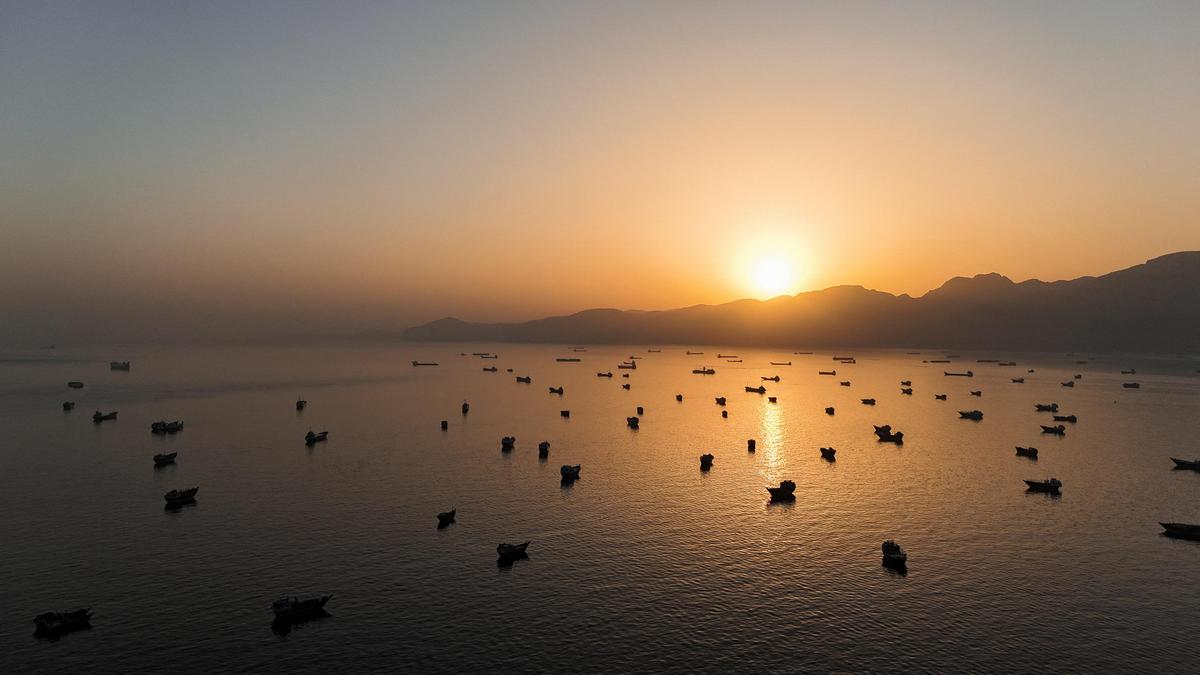
A drone view of vessles anchored in the Strait of Hormuz as seen from Musandam, Oman, on June 3, 2026.
| Photo Credit: Reuters
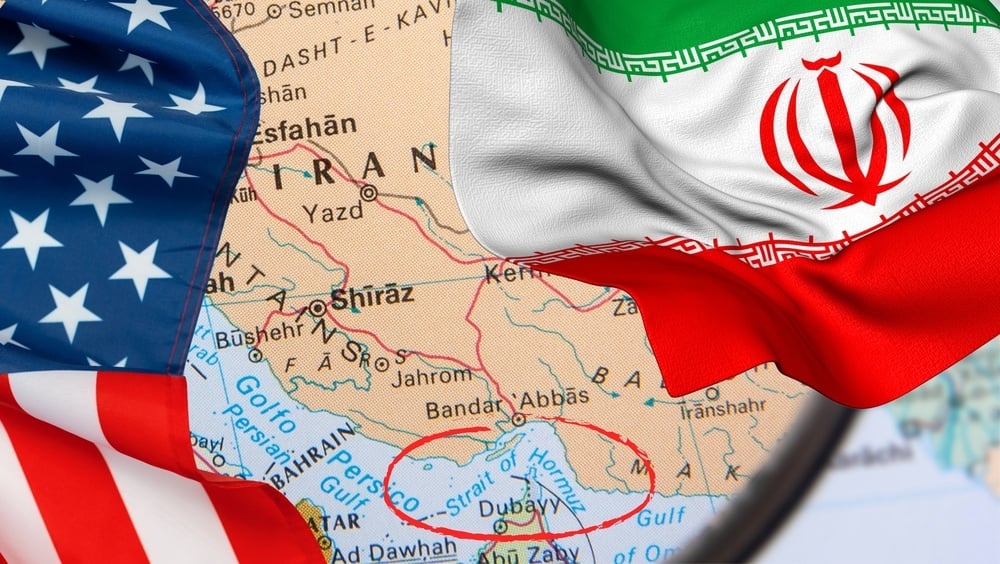
Even as the U.S.-Iran talks lurch and ships are attacked by both sides, there has been a slight uptick in the regularity of stranded ships leaving the Strait of Hormuz over the past three weeks, as per Lloyd’s List data.Though the U.S. blockade seems to have impacted the transit of ships with direct Iran links, Iran has maintained a tight grip over the strait.In the recent three weeks, there has been an increase in the number of non-Iran linked ships transiting with the permission of Iran, while ships have slipped across with support from U.S. forces too. Lloyd’s List data shows that ships with “Iran nexus” accounted for nearly 97% of crossings in mid-March.After this peak, this figure has steadily declined to 35% in the week of May 25-31.Nearly 40 non-Iranian-linked ships have exited in the past three weeks, bringing the number of “escapees” to 142 since March, says Richard Meade, editor-in-chief of Lloyd’s List.In the past, transits came in sporadic bursts such as when the ceasefire was signed.Between April 13 and 19, for example, 23 stranded ships affiliated to 12 countries transited as owners rushed to move during a brief ceasefire between the U.S. and Iran. “The past three weeks, however, have brought a more consistent pattern of exits,” Mr. Meade told The Hindu.‘Little business sense’A source in the shipping industry says ship owners want the vessels to exit the Persian Gulf as being anchored there for more than three months makes little business sense. This may be leading them to take the Iranian route as the U.S. has said that it will not attack ships with no links to Iran while transiting the Strait of Hormuz, the source said.Some ships are transiting via the southern route close to the coast of Oman in coordination with- and under an element of protection of the U.S. military, says Jakob Larsen, chief safety and security officer at Bimco, a global body representing ship owners. “This is quite risky since it is done with lights and radars turned off, and the Iranians are doing what they can to attack the ships,” he adds.Capt. Ritesh Kumar, who has more than 20 years of seafaring experience, says the Strait of Hormuz is quite wide compared to say Malacca Strait and ships had enough space to not hug either the Oman or the Iran coast and for that reason the Oman coast has been less well-surveyed.Though the Persian Gulf Strait Authority set up by Iran to control the strait and permit transit along its coast has been sanctioned by the U.S., more than 300 non-Iranian vessels have applied for transit permits, as per the authority. Lloyd’s List analysis estimates that some 28% of the ships above 10,000 dwt that applied were bound for China, 19% for India, 23% for other parts of Asia, 12% for Europe, 10% for Africa and so on. The PGSA has said it will prioritise permits to ships with affiliations to nations friendly to it and will disallow U.S. and Israel-linked ships.“As a general observation, the threat level for ships in the Persian Gulf is currently unchanged. However, the situation is volatile, and the threat may increase with short notice,” Mr. Larsen told The Hindu.Despite the uptick in exits, overall traffic through the Strait of Hormuz in May fell to its lowest level since the crisis began, likely a result of the U.S. actions against Iran-associated ships.U.S. Centcom, while refusing to give details to The Hindu, however, pointed to media releases that say that it has “disabled” (attacked) six and redirected more than 120 ships involved in Iranian trade since April 13.On June 2, a missile launched from a U.S. aircraft caused a hole on tanker MT Lexie near Kharg island. This provoked an immediate attack on MSC Sariska by Iran. Published - June 05, 2026 07:00 am IST